





6 min read
The Judgement of Ma'at: Weighing of the Heart
author: High Priest Zevios Metathronos
The Egyptian tradition provides us with one of the most detailed accounts of what happens to the soul after death. It centers on a single act: the weighing of the heart against the feather of Ma'at in the Hall of Two Truths (Maaty).
Before we go any further, something needs to be said plainly. The Egyptian judgement scene is not designed to terrify. It's not a courtroom where you stand accused by a hostile prosecutor. It's an audit. The soul passes through it the same way water passes through a filter. What's clean goes through. What's heavy gets caught. The process is mechanical, impartial, and grounded in cosmic law.
The Hall of Two Truths
When the soul (the Ba) separates from the body, it enters the Duat, the Egyptian underworld. After navigating a series of gates and passages (described in detail in the Book of the Dead, also known as the Book of Coming Forth by Day), the soul arrives at the Hall of Ma'at.
Forty-two assessors sit in this hall, one for each of the 42 Laws of Ma'at. Osiris presides. Thoth records. Anubis operates the scale. The 42 Laws are codified in the 10 Ethics of Zevism. The symbolic representation of the Liturgy in Egypt, is down the core, the 10 Ethics.
The soul's heart (the Ib) is placed on one side of the scale. On the other side sits the feather of Ma'at (Shu). The feather represents truth, order, and cosmic balance. It weighs almost nothing.
If the heart is lighter than the feather, or equal to it, the soul passes. It enters the Field of Reeds (Aaru), the Egyptian Elysium, where it lives among the blessed dead and eventually continues its journey.
If the heart is heavier than the feather, it means the soul carries unresolved weight: cruelty, deception, violation of cosmic order. In the traditional iconography, the heavy heart is consumed by Ammit (a composite creature, part lion, part hippopotamus, part crocodile). The soul ceases to exist. It doesn't burn forever. It simply dissolves.
What the Heart Actually Carries
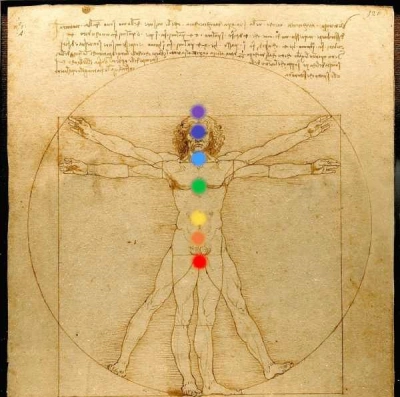
The Egyptians understood something important about spiritual anatomy. They didn't see the heart as a metaphor. The heart chakra (Anahata in the Vedic system) stores emotional and existential residue. Every act of genuine cruelty, every sustained deception, every heavy and willingly wrongful betrayal that the person never addressed or resolved leaves a deposit in this center.
Conversely, acts of truth, courage, and alignment with cosmic order lighten the heart. This happens naturally. You don't need to keep a ledger. The energy body keeps its own. People know this already when they are alive.
This is why the 42 Negative Confessions take the form "I have not" rather than "I promise to." They're statements of fact, not pledges. The Gods do NOT demand you to be perfect, but they require HONESTY. The soul stands before the assessors and declares: "I have not committed murder. I have not stolen. I have not spoken lies." If these statements are true with their context, the heart confirms it. If they're false, the heart knows that too. For example, the person who has to slay in self defense or for their Nation as part of military, does not have the same heart of a premeditated murderer who has been engaging in these atrocities for theft. The heart knows.
(Notice what's absent from the 42 Laws. There's no "I have not failed to worship the correct god." No "I have not eaten the wrong food on the wrong day." The Egyptian standard is entirely ethical and natural. It concerns how you treated other living beings and whether you upheld the order of the cosmos. No irrationality or superstition is present. That's it.)
The Role of Anubis
Anubis doesn't judge. He operates the scale. He's a technician of the crossing, not a prosecutor that is out to get you personally. In the Zevist understanding, Anubis escorts the souls of the faithful, makes sure they arrive at the proper destination, and protects them during the passage through the Duat.
This is worth emphasizing. The God of the Dead in the Egyptian tradition is a protector, not an executioner. He is trying to help you pass the judgement of the impartial universe itself. He holds the jackal's watchful gaze because he guards, not because he hunts you for your "sins". Zevists who've worked with Anubis know this experientially. His energy is warm, attentive, and deeply caring. He helps us become better and understands our errors.
The Role of Thoth
Thoth records the result. He's the divine scribe. Thoth also symbolizes memory, judgement and the higher faculty of reason; the one we should have used when we were alive. His role connects directly to the Greek Hermes Psychopompos (Guide of Souls), who performs the same function in the Hellenic tradition. Thoth doesn't decide what the scale says. He writes it down accurately. Truth cannot be falsified in his presence.
How This Applies to the Zevist
The Zevist Initiate practices Ma'at daily or does their best to. It's not always possible, but they strive. Above all they avoid Izfet (evil). Not through rigid rules, but through alignment with cosmic order in every action. You clean your aura (removing accumulated negativity). You meditate (building spiritual light). You act with justice, truth, and proportion in your dealings with others. You justify acts on reason as much as possible.
Over time, the heart lightens naturally. The practitioner who meditates consistently, who acts from genuine integrity, who doesn't carry sustained and random hatred or cruelty in their heart, has nothing to fear from the Weighing. The process confirms what they've already built. It should be noted that in the weighting process, you are NOT being "JUDGED" by the Gods, you are judged against your own heart.
For those who haven't yet reached this level (which is most of humanity), the Gods don't throw them into a furnace. Most souls are simply reincarnated. They reincarnate in lives where they will re-encounter the same situations or similar ones as before, to finally rectify them and purify their hearts. They return to life with another opportunity to build, to learn, to lighten the heart through experience. The process is patient. The Gods are patient. The cosmos has time.
The only souls who face annihilation are those so far gone, so deeply saturated in genuine evil, that they've destroyed their own capacity for correction. These are the compulsive tyrants, the mass murderers of innocents, the deliberate corruptors, incessant child abusers and terrorists, or those who destroy humanity's spiritual heritage of the Gods. They're vanishingly rare; only some of the worst and most evil of the planet belong there. Even many of them are given many opportunities for eventual rectification; but the patience of the Gods is not eternal. Plato said less than 0.01% of souls. The Egyptian tradition agrees.
The feather of Ma'at weighs almost nothing. That's the point. The standard is not perfection. The standard is: did you try to live with truth in your mouth and order in your actions? Did you carry your weight honestly? The cosmos doesn't demand saints. It demands sincerity.
Sources
- Book of the Dead (Book of Coming Forth by Day), Chapter 125 (c. 1550 BCE): The primary source for the Weighing of the Heart scene, including the 42 Negative Confessions spoken before the assessors.
- Papyrus of Ani (c. 1250 BCE, British Museum EA 10470): The most famous illustrated version of the judgement scene, showing Anubis at the scale, Thoth recording, and Ammit waiting.
- Jan Assmann, Ma'at: Gerechtigkeit und Unsterblichkeit im Alten Ägypten (1990): The definitive modern study of Ma'at as both cosmic principle and ethical framework, showing how the concept governed Egyptian society from law courts to the afterlife.
- Erik Hornung, The Ancient Egyptian Books of the Afterlife (1999): Comprehensive analysis of the Duat texts, including the Book of Gates, Book of Caverns, and the Amduat, contextualizing the judgement within the soul's full journey.