





11 min read
The Ancient Roots:
From the Far East to the Temple of Zeus
author: High Priest Zevios Metathronos
The spiritual practices taught in the Temple of Zeus don't begin in Greece, in Egypt, or in Mesopotamia. They begin further east and further back in time. The meditation techniques, the energy cultivation methods, the mantra systems, the chakra maps, the serpentine symbolism: all of these trace their deepest roots to the Indo-Aryan spiritual traditions of the Indian subcontinent, the Tibetan plateau, and the Chinese interior.
Understanding where our practices come from is essential. Not for academic bragging rights, but because the line of transmission matters. Techniques that have been passed through genuine spiritual lineages work differently from techniques that have been reconstructed from fragments. And many of the fragments available in the West have been deliberately corrupted.
The Far Eastern Origin of Spiritual Knowledge
The oldest systematic spiritual technology on Earth is found in the Vedic tradition of the Indian subcontinent. The Rigveda (composed c. 1500-1200 BCE, preserving oral traditions far older) contains hymns to the Gods, descriptions of ritual practice, and references to states of consciousness achieved through disciplined meditation. The Yoga Sutras of Patanjali (c. 400 BCE) codify the eight-limbed system of spiritual development that remains the most complete map of the internal path ever written (Feuerstein, The Yoga Tradition, 1998).
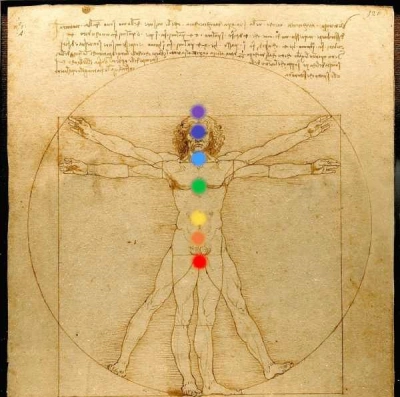
The Tantric traditions (emerging visibly from the 5th-6th century CE onward, drawing on much older substrates) developed the chakra system, the kundalini model, the use of mantra as vibrational technology, and Vāmācāra, the Tantric "left-hand" practice, an approach to spiritual liberation through direct experience rather than renunciation. David Gordon White's The Alchemical Body (1996) documents how the Siddha and Nath traditions developed a complete science of internal alchemy: the transformation of the practitioner's own body and consciousness into a vehicle for divine power.
Tibet preserved these teachings in an extraordinarily concentrated form. Due to its geographic isolation (the Himalayan barrier), Tibet maintained unbroken lineages of transmission for spiritual practices that had been destroyed elsewhere by Christian, Islamic, and Communist persecution. Tibetan Buddhism, Bön, and the Dzogchen tradition contain meditation techniques, energy cultivation methods, and theurgic practices that parallel the Zevist system point for point: chakra activation, energy body development, deity yoga (visualization practices involving the Gods), and the cultivation of siddhis (psychic powers).
Chinese civilization developed its own parallel system. Qigong (energy cultivation), neigong (internal alchemy), and the internal martial arts (Tai Chi, Bagua, Xingyi) all work with the same bioelectrical energy that we call vril, chi, prana, or witchpower. The Taoist alchemical tradition, particularly the Shangqing school, developed visualization and meditation techniques that are structurally identical to practices found in the Greek Magical Papyri and in Vedic tantra (Pregadio, The Encyclopedia of Taoism, 2008).
The critical point is this: all of these traditions describe the same underlying reality. Different languages, different cultural frameworks, different mythological systems, but the same energy body, the same chakra architecture, the same serpentine force rising through the central channel, the same goal of spiritual transformation. This convergence across geographically isolated civilizations is evidence that the practices work. They describe something real.
The European Connection to the East
The transmission of spiritual knowledge from East to West is not speculation. It's documented.
The Proto-Indo-European linguistic family connects Sanskrit, Greek, Latin, Germanic, Celtic, Slavic, and the Vedic languages to a common ancestor. The God-name *Dyēus Pḥ₂tēr ("Sky Father") becomes Zeus Pater in Greek, Iūpiter in Latin, Dyauṣ Pitṛ in Sanskrit, and Tyr/Tīwaz in Germanic (Fortson, Indo-European Language and Culture, 2010). The religions of all these peoples share a common architectural foundation because they share a common origin.
The word Satya (सत्य, "Truth") in Sanskrit connects through the same PIE root *h₂es- ("to be") to the Greek ἐτεός (eteos, "true") and to the Latin esse ("to be").
Alexander the Great's campaigns (334-323 BCE) brought Greek culture into direct contact with Indian philosophy. The Greek philosophers who traveled east encountered the gymnosophists ("naked wise men," i.e. ascetic yogis) and recognized in their teachings a system parallel to their own. Pyrrho of Elis, who accompanied Alexander, reportedly studied with Indian sages and brought their philosophical methods back to Greece (Flintoff, "Pyrrho and India," Phronesis 25.1, 1980). The transmission didn't begin with Alexander (Indo-Greek contact predates him), but his campaigns massively accelerated it.
The Greco-Buddhist art of Gandhara (1st-5th century CE) produced sculptures that fuse Greek artistic technique with Buddhist iconography. The Greek Magical Papyri (2nd c. BCE-5th c. CE) contain mantras, divine names, and ritual techniques that show clear Indian influence alongside Egyptian and Greek elements. The PGM are, in many respects, the Western equivalent of the Tantric texts: working manuals for practitioners who combined multiple traditions into a functioning theurgic system (Betz, The Greek Magical Papyri in Translation, 2nd ed., 1992).
How Western Occultism Was Corrupted
Anyone who begins studying Western occultism encounters an immediate problem. Nearly every major system, from the Renaissance onward, is saturated with Hebrew letters, Hebrew numerology, Kabbalistic frameworks, angelic hierarchies, and Abrahamic theological assumptions.
Open any book of the Golden Dawn tradition. The Tree of Life is labeled in Hebrew. The divine names are Hebrew. The angelic beings invoked are from the Hebrew scriptural tradition. The letters used for pathworking are the 22 letters of the Hebrew alphabet. The same is true of Eliphas Lévi's system, of the Key of Solomon, of the Goetia, and of virtually every grimoire tradition that has come down to us through medieval and early modern European channels (Hanegraaff, Western Esotericism: A Guide for the Perplexed, 2013).
This is not an accident. It's a systematic replacement. The original European spiritual traditions used Greek, Egyptian, and Proto-Indo-European linguistic and symbolic systems. The PGM, the oldest surviving Western magickal working texts, use Greek, Egyptian (Demotic and Hieratic), and Coptic, not Hebrew. The voces magicae (words of power) in the PGM are Greek-Egyptian constructions: ΑΒΡΑΣΑΞ, ΑΚΡΑΜΜΑΧΑΜΑΡΕΙ, ΙΑΩ. These are the original sounds of Western magick (Betz, The Greek Magical Papyri in Translation, 1992).
What happened between the PGM (2nd-5th century CE) and the medieval grimoires (12th-17th century CE) was a thorough Hebraicization of the Western magickal tradition. The process occurred through several channels:
First, the destruction of the original tradition. The Christian Church systematically eliminated Pagan priests, burned libraries, and criminalized spiritual practice across the Roman Empire between the 4th and 6th centuries. The practitioners who survived went underground. Their texts were lost, scattered, or deliberately destroyed. What remained was fragmentary.
Second, the survival of the Kabbalistic tradition within protected communities. While Christian persecution destroyed European Pagan lineages, the Jewish mystical tradition (Kabbalah) survived intact within Jewish communities that maintained their own educational institutions, their own textual traditions, and their own oral transmissions. The result was an asymmetry: by the medieval period, the most complete surviving system of Western esoteric knowledge was Kabbalistic, and aspiring European occultists had no choice but to work through it.
Third, deliberate gatekeeping. The Kabbalistic system is not merely a neutral framework. It encodes specific theological assumptions: the primacy of the Hebrew God, the inferiority of the "other side" (Sitra Achra), the classification of Pagan Gods as demons (klipot), and the centrality of the Hebrew language as the language of creation. A European occultist working within the Kabbalistic framework must accept these assumptions or fight against them at every step. Most accepted them by default, because they didn't know any alternative existed.
The practical effect was devastating. The original Gods of Europe (Zeus, Odin, Freya, Brigid, Isis, Thoth) were reclassified within the Kabbalistic system as demonic entities. Their names were listed in grimoires not as objects of veneration but as beings to be commanded, bound, and compelled through the authority of the Hebrew God. The Goetia lists 72 spirits whose original identities include Egyptian, Greek, Mesopotamian, and Indo-European Gods (the Temple of Zeus has documented these identifications extensively). These Gods were stripped of their dignity, given distorted seals, and presented as dangerous entities that could only be approached through protective circles inscribed with Hebrew divine names.
This is the corruption. Not that the techniques don't work (many of them do, because they're derived from genuine practices). But that the framework in which they're presented is designed to prevent the practitioner from recognizing who they're actually working with. You're invoking Apollo, but the grimoire tells you his name is "Amdusias" and that he's a demon. You're calling upon Astarte, but the system says she's "Astaroth," a monster. The knowledge is there. It's just buried under layers of deliberate inversion.
The Corruption of Eastern Teachings
The same corruption that affected Western occultism has also infiltrated the Eastern traditions, though through a different vector. Christianity's missionary activity across Asia, combined with Victorian-era Western interpretations of yoga and tantra, injected Abrahamic moral assumptions into traditions that never contained them.
The most visible corruption is the insertion of ascetic puritanism into traditions that originally had none. Authentic Vāmācāra, the Tantric "left-hand" practice, teaches spiritual development through full engagement with life: sensory experience, sexual energy, emotional intensity. The goal is not withdrawal from the world but mastery of it. The practitioner doesn't renounce desire. The practitioner channels desire as fuel for spiritual transformation.
The corrupted versions (which unfortunately dominate the popular market) teach the opposite: celibacy, dietary restrictions, "absence of desire," detachment from the material world, suppression of anger and passion. These teachings are not original to the traditions. They were overlaid during centuries of cross-pollination with Christian monasticism and Victorian prudishness. An examination of the original Tantric texts (such as the Vijnanabhairava Tantra, the Kularnava Tantra, and the Hevajra Tantra) reveals practices that are explicitly transgressive, sensual, and power-oriented (White, Kiss of the Yogini: "Tantric Sex" in its South Asian Contexts, 2003).
The claim that "absence of desire" is necessary for spiritual development is self-refuting. If one truly had no desire, one wouldn't meditate. One wouldn't seek enlightenment. One wouldn't practice at all. Total absence of desire is not liberation. It's death. The original teaching is more precise: the practitioner transcends compulsive craving (trishna in Sanskrit, "thirst"), not desire itself. There's a difference between being enslaved by desire and wielding desire as a conscious instrument. The corrupted versions erase this distinction deliberately, because a practitioner who can't use desire can't use magick.
The Zevist Approach
Zevism cuts through these layers of corruption by going directly to the source. We practice the techniques themselves: kundalini activation, chakra work, mantra vibration, visualization, energy cultivation, ritual invocation. We practice them within their original theological context: the Gods are Gods, not demons. The serpent force is divine power, not temptation. Desire is fuel, not sin.
There are no arbitrary restrictions in genuine spiritual practice:
- There are no special dietary laws. Energy does what it's directed to do regardless of what the practitioner ate for breakfast.
- There are no sexual taboos. The sexual force is one of the most potent sources of bioelectrical energy available to the practitioner. Suppressing it doesn't purify the soul. It starves the energy body.
- There are no mandatory lifestyle prescriptions. A practitioner is free to live as they choose. The Gods don't care about your haircut, your clothing, or your choice of career. They care about your practice, your dedication, and your spiritual development.
The only requirement is consistent practice. Daily meditation. Regular ritual. Sustained energy work over months and years. This is what builds the power. This is what opens the chakras. This is what raises the serpent force. Everything else is decoration, and most of the "rules" found in corrupted texts are deliberate obstacles designed to prevent exactly this outcome.
The Siddhis: Powers of the Developed Soul
The goal of genuine spiritual practice is the development of real, measurable abilities. The Yoga Sutras of Patanjali (Book III, Vibhuti Pada) lists the siddhis that arise from sustained practice: clairvoyance, telepathy, psychokinesis, knowledge of past lives, control over the elements, and many others. These aren't metaphors. They're technical descriptions of what happens when the energy body is activated and the kundalini force rises through the chakra system.
As Zevists, we work toward:
- The development of psychic abilities (siddhis): telekinesis, telepathy, clairvoyance, astral projection, and related faculties. These are gifts of the Gods, activated through meditation.
- The practical application of spiritual power: using the powers of the mind and soul to effect desired changes in our lives and the world around us. Money workings, healing, protection, influence, justice.
- The enhancement of every dimension of life through spiritual practice. Magick isn't separate from life. It's the instrument by which a conscious being shapes reality according to will.
The traditions of the Far East have preserved the knowledge of how to do this. The Temple of Zeus has restored the theological context in which to do it: the original Gods, called by their original names, worshipped through the original practices, with the original goal of human deification (theosis) through the Magnum Opus.
The roots are deep. They stretch from Athens to Alexandria to the Indus Valley to the Tibetan plateau. They predate every Abrahamic program by thousands of years. And unlike the corrupted fragments that most Western occultists work with, these roots are alive.
Sources
- Feuerstein, Georg, The Yoga Tradition: Its History, Literature, Philosophy, and Practice (Hohm Press, 1998): Comprehensive scholarly survey of the entire yoga tradition from Vedic origins through Tantra, including the siddhi system, kundalini, and the chakra architecture.
- White, David Gordon, The Alchemical Body: Siddha Traditions in Medieval India (University of Chicago Press, 1996): Academic study of the Nath and Siddha traditions of internal alchemy, documenting the original (uncorrupted) practices of energy body transformation.
- White, David Gordon, Kiss of the Yogini: "Tantric Sex" in its South Asian Contexts (University of Chicago Press, 2003): Scholarly analysis of authentic Vāmācāra, the Tantric "left-hand" practice, demonstrating how the original practices differ from their sanitized modern versions.
- Betz, Hans Dieter (ed.), The Greek Magical Papyri in Translation, 2nd ed. (University of Chicago Press, 1992): The standard English translation of the PGM, showing the Greek-Egyptian (non-Hebrew) linguistic foundation of authentic Western magickal practice.
- Hanegraaff, Wouter J., Western Esotericism: A Guide for the Perplexed (Bloomsbury, 2013): Overview of the historical development of Western esotericism, including the process by which Kabbalistic frameworks came to dominate the tradition.
- Fortson, Benjamin W., Indo-European Language and Culture, 2nd ed. (Wiley-Blackwell, 2010): Standard textbook for PIE comparative linguistics, documenting the shared divine nomenclature across Indo-European daughter cultures.
- Engelhardt, Isrun (ed.), Tibet in 1938-1939: Photographs from the Ernst Schäfer Expedition to Tibet (Serindia Publications, 2007): Primary visual and documentary evidence from the expedition, with scholarly commentary.
- Goodrick-Clarke, Nicholas, Black Sun: Aryan Cults, Esoteric Nazism, and the Politics of Identity (New York University Press, 2002): Academic study documenting the esoteric dimensions of 20th-century European movements, including the Tibet connection.
- Pregadio, Fabrizio (ed.), The Encyclopedia of Taoism, 2 vols. (Routledge, 2008): Comprehensive reference for Taoist alchemical and meditation practices, documenting parallels with Indian and Greco-Egyptian systems.
- Flintoff, Everard, "Pyrrho and India," Phronesis 25.1 (1980), pp. 88-108: Scholarly argument for direct transmission of philosophical methods from Indian sages to Greek philosophers during Alexander's campaigns.
- Patanjali, Yoga Sutras, Book III (Vibhuti Pada) (c. 400 BCE): The primary source text for the siddhi system, listing the psychic and spiritual powers that arise from sustained meditative practice.