
 አማርኛ
አማርኛ العربية
 বাংলা
বাংলা Български
 中文
中文 Čeština
 Dansk
Dansk Deutsch
 Eesti
Eesti Ελληνικά
 Español
 Français
 हिन्दी
 Hrvatski
 IsiZulu
 Italiano
 日本語
日本語 Kiswahili
 Magyar
 Македонски
 नेपाली
 Nederlands
 فارسی
فارسی Polski
 Português
 Română
 Русский
 Slovenščina
 Suomi
Suomi Svenska
 Tagalog
 Türkçe
ON ISIS AND OSIRIS
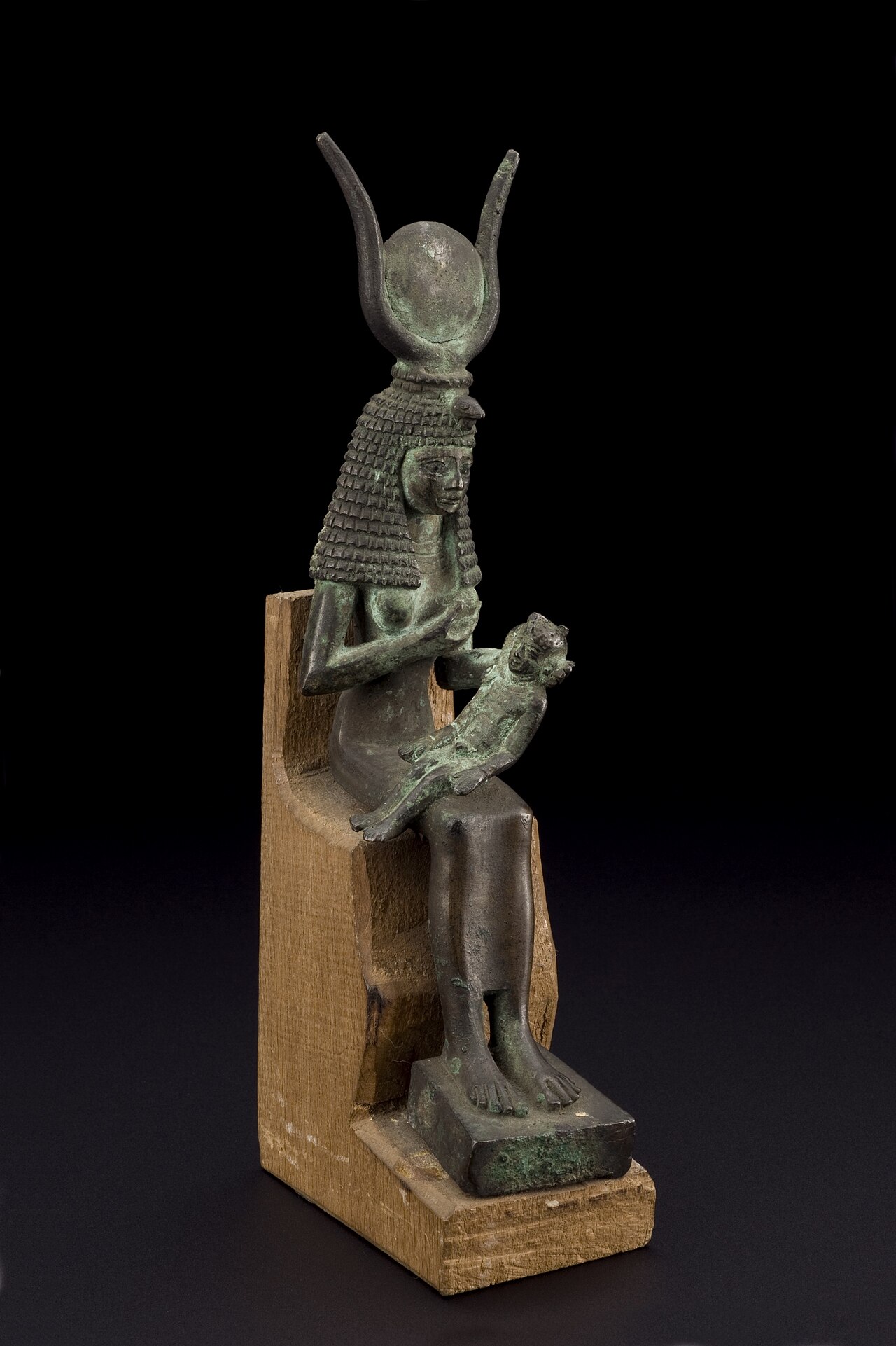
Plutarch Πλούταρχος De Iside et Osiride (c. 100 CE)
What It Is: A treatise by the Greek philosopher and priest of Apollo at Delphi, Plutarch, addressed to the priestess Clea at Delphi, providing the most complete surviving Greek account of the Egyptian myth of Isis and Osiris the murder of Osiris by Set, the search and mourning of Isis, the resurrection of Osiris in the Duat, and the triumph of Horus. Plutarch then provides an extensive philosophical interpretation, arguing that the Egyptian myths encode the same truths as the Greek philosophical tradition: the struggle between order and disorder, the immortality of the soul, and the providential governance of the cosmos by the Gods.
Why It Matters: This text is the bridge between the Egyptian and Greek theological traditions the proof, from a practising pagan philosopher-priest, that the two systems are not rival theologies but parallel expressions of the same divine reality. Plutarch explicitly identifies Osiris with Dionysus, Isis with Demeter, and Set-Typhon with the principle of disorder. He demonstrates that initiation into the Mysteries of Isis and initiation into the Mysteries of Eleusis lead to the same place: the direct encounter with the divine nature of the soul and its capacity for immortality. For the Zevist, this is a foundational text because it establishes the principle that Zevism itself embodies: the theology of the Gods is one theology, expressed through many civilisations, and the work of the Zevist is to recognise the unity beneath the diversity of names.
Plutarch’s philosophical method is itself instructive. He does not dismiss the Egyptian myths as barbaric or primitive, as many Greeks of his era did. Nor does he accept them literally. He reads them as a philosopher-priest: extracting the theological content, identifying the correspondences with Greek thought, and demonstrating that the apparent differences between traditions are differences of language, not of substance. This is exactly how the Zevist reads every text in this collection.
What to Take From It: The Egyptian and Greek theologies are one theology. Osiris is Dionysus. Isis is Demeter. Set is playing a role in this; to show what Izfet means, and Horus is the principle of Ma’at restored. The Mysteries of every tradition lead to the same revelation: the soul is divine and immortal, and its return to the Gods is the purpose of existence. Plutarch teaches the Zevist to read across civilisations with the eye of a priest, not a tourist.
Plutarch, priest of Apollo, demonstrates what Zevism affirms: the Gods of Egypt and the Gods of Greece are one and the same. The names are garments. The divine reality beneath them is unchanging, eternal, and universal.