
 አማርኛ
አማርኛ العربية
 বাংলা
বাংলা Български
 中文
中文 Čeština
 Dansk
Dansk Deutsch
 Eesti
Eesti Ελληνικά
 Español
 Français
 हिन्दी
 Hrvatski
 IsiZulu
 Italiano
 日本語
日本語 Kiswahili
 Magyar
 Македонски
 नेपाली
 Nederlands
 فارسی
فارسی Polski
 Português
 Română
 Русский
 Slovenščina
 Suomi
Suomi Svenska
 Tagalog
 Türkçe
THE ATRA-HASIS
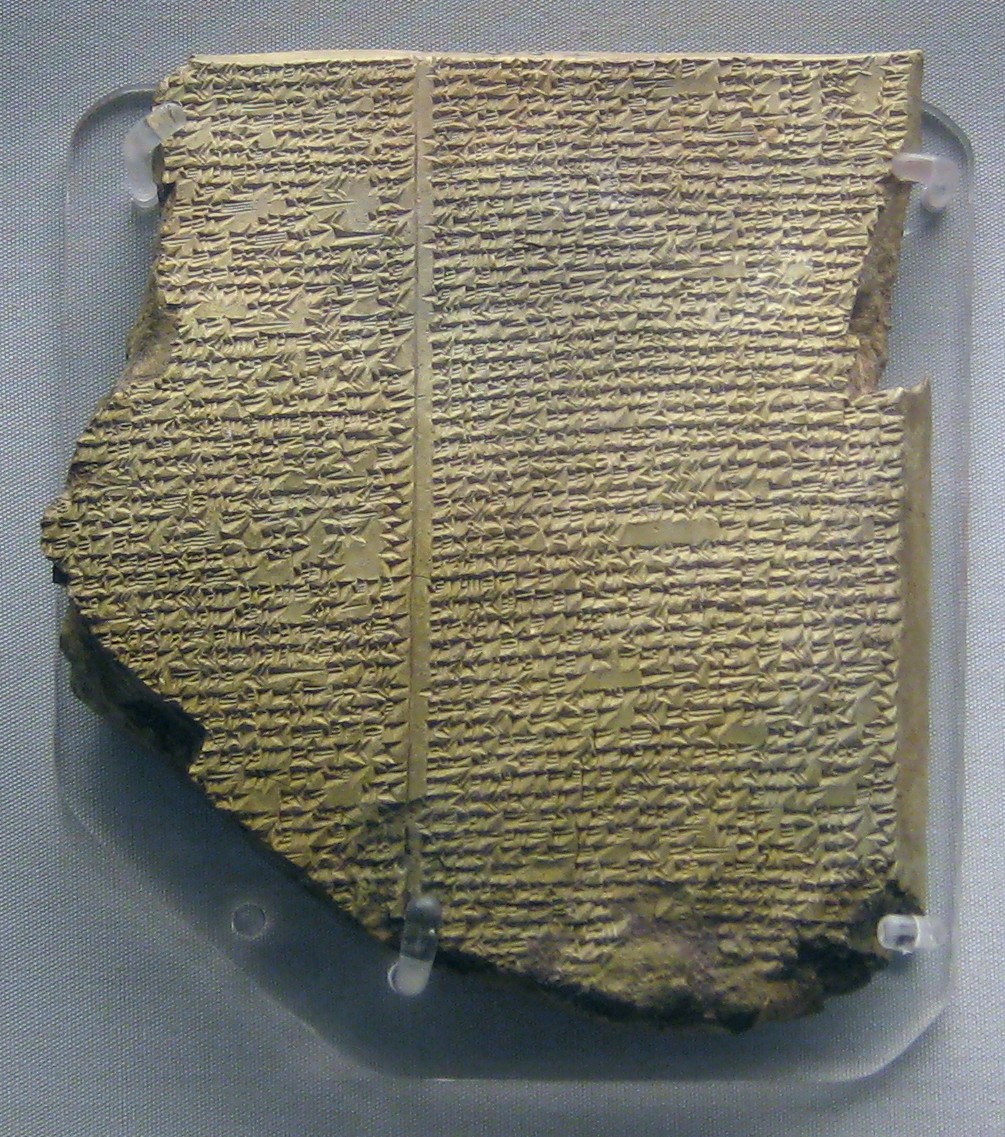
The Exceedingly Wise Babylonian Creation and Flood Epic (c. 1700 BCE)
What It Is: A Babylonian epic in three tablets narrating the creation of humanity, the overpopulation of the earth, the attempts of the God Enlil to reduce the human population through plague, drought, and famine, and finally the Great Flood sent to destroy humanity altogether. The hero Atra-Hasis (“Exceedingly Wise”), warned by the God Enki (Ea), builds a boat, preserves the seed of life, and survives. After the Flood, the Gods regret their destruction and establish a new covenant with humanity, instituting natural death, stillbirth, and celibate priestesses as mechanisms to control population without resorting to annihilation.
Why It Matters: The Atra-Hasis is the direct source of both the Gilgamesh Flood tablet (Tablet XI) and the Genesis Flood narrative. The borrowing is beyond dispute: the details match point for point the warning God, the boat, the animals, the dove, the raven, the sacrifice after landing, the divine regret. But the Atra-Hasis is theologically richer and more honest than its derivative. In the Babylonian original, the Flood is not a moral judgement against human wickedness (the Genesis rationale); it is the panicked overreaction of a God (Enlil) who cannot tolerate the noise of the species he helped create. The destruction is not righteous; it is petulant. And the God who saves humanity is not the God who decreed the destruction but a different God (Enki) who defies the decree out of compassion for his creation.
This is a radically different theology from the Genesis account, in which one God sends the Flood and the same God saves Noah a logical contradiction that the monotheistic framework cannot resolve. In the polytheistic original, the contradiction does not arise: different Gods have different characters, different agendas, and different relationships with humanity. Enki’s defiance of Enlil is the Promethean act in Mesopotamian form: a God who risks divine displeasure to preserve the species he loves. The Zevist recognises in Enki the same principle recognised in Prometheus, in the Serpent of Eden, in every divine figure who defied an unjust decree to protect humanity.
What to Take From It: The Genesis Flood is borrowed from this text; the original is more honest and more complete. The Gods are plural and they disagree this is more theologically coherent than a single God who is both destroyer and saviour. Humanity was created to serve a function in the divine economy, and the Gods who created us have obligations toward us. Enki’s compassion is the Promethean principle in Mesopotamian form. The Flood was not righteous judgement; it was divine overreaction corrected by divine compassion.
The Flood was not justice. It was a God’s tantrum. And the hero survived not because the destroyer relented, but because another God Enki, the Wise defied the decree. The Genesis version erased the dissent, the plurality, and the compassion. The original preserves all three.