 አማርኛ
አማርኛ العربية
 বাংলা
বাংলা Български
 中文
中文 Čeština
 Dansk
Dansk Deutsch
 Eesti
Eesti Ελληνικά
 Español
 Français
 हिन्दी
 Hrvatski
 IsiZulu
 Italiano
 日本語
日本語 Kiswahili
 Magyar
 Македонски
 नेपाली
 Nederlands
 فارسی
فارسی Polski
 Português
 Română
 Русский
 Slovenščina
 Suomi
Suomi Svenska
 Tagalog
 Türkçe
THE COFFIN TEXTS
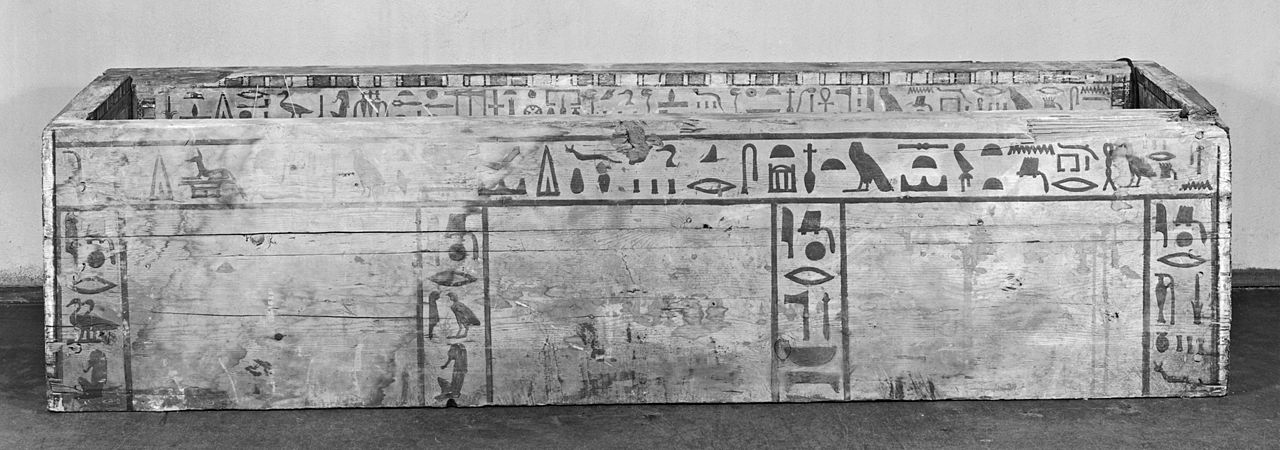
Texts inscribed on Middle Kingdom Coffins (c. 2134–1650 BCE) 1,185 Spells
What It Is: A corpus of 1,185 spells, hymns, and ritual instructions inscribed on the interior surfaces of rectangular wooden coffins during the Middle Kingdom period. They represent the democratisation of the Pyramid Texts: where the older corpus was reserved exclusively for the pharaoh, the Coffin Texts were available to anyone of sufficient means nobles, officials, priests, and eventually any person who could commission a coffin. They preserve and expand the theological material of the Pyramid Texts, adding new spells, new afterlife geographies, new divine dialogues, and most significantly the Book of Two Ways (Spell 1029 and related texts), the oldest surviving map of the afterlife.
Why It Matters: The Coffin Texts represent the most important theological revolution in Egyptian history: the democratisation of immortality. In the Old Kingdom, only the pharaoh could become an Akh, could sail with Ra, could dwell among the imperishable stars. The Coffin Texts extend this possibility to every human soul. This is not a minor administrative change; it is a fundamental theological transformation. It declares that the divine destiny of the soul transfiguration, luminosity, union with the Gods is not the privilege of kings but the birthright of all human beings. This is identical in principle to the Zevistic teaching that the Promethean gift of consciousness was given to all of humanity, not to a chosen elite.
The Book of Two Ways (found on coffins from the cemetery at Deir el-Bersha) is the oldest known map of the afterlife a literal cartographic diagram of the paths through the Duat, showing two routes (one by land, one by water), the locations of guardian demons, the positions of gates and obstacles, and the destinations to which each path leads. It is the Egyptian equivalent of a GPS for the dead: turn left at the Lake of Fire, speak the correct name to the guardian of the seventh gate, avoid the Slaughterhouse of Osiris. The pragmatic, operational character of this material confirms that the Egyptians did not “believe in” the afterlife in the passive, faith-based sense that Abrahamic religion encourages. They prepared for it, studied it, mapped it, and equipped their dead with the specific knowledge needed to navigate it. This is applied theology, not wishful thinking.
Spell 312 of the Coffin Texts contains one of the most extraordinary theological statements in any ancient literature. The deceased, now transformed, declares: “I am the ba of Shu. I am the ba of Tefnut. I am the ba of Osiris. I am the ba of Geb. I am the ba of Nut.” The soul identifies itself with the divine souls of the primordial Gods. It does not worship them from below; it declares itself to be of the same substance. This is the Egyptian expression of the Hermetic principle: the human soul is divine in nature. The Coffin Texts simply state it with an audacity that later traditions would lose.
What to Take From It: Immortality is not the privilege of kings; it is the birthright of every soul. The afterlife is mappable terrain, navigable through knowledge and preparation. The soul can identify itself with the Gods because it is of the same divine substance. The Coffin Texts teach the Zevist that the democratisation of spiritual knowledge the transmission of theurgical instruction from the few to the many is itself a divine act, a restoration of Ma’at against the Izfet of hoarded privilege.
The Pyramid Texts said: the pharaoh becomes divine. The Coffin Texts said: every soul can become divine. This is the oldest revolution in theological history the recognition that the fire of the Gods burns in every human heart, not only in the hearts of kings.