
 አማርኛ
አማርኛ العربية
 বাংলা
বাংলা Български
 中文
中文 Čeština
 Dansk
Dansk Deutsch
 Eesti
Eesti Ελληνικά
 Español
 Français
 हिन्दी
 Hrvatski
 IsiZulu
 Italiano
 日本語
日本語 Kiswahili
 Magyar
 Македонски
 नेपाली
 Nederlands
 فارسی
فارسی Polski
 Português
 Română
 Русский
 Slovenščina
 Suomi
Suomi Svenska
 Tagalog
 Türkçe
THE DESCENT OF ISHTAR
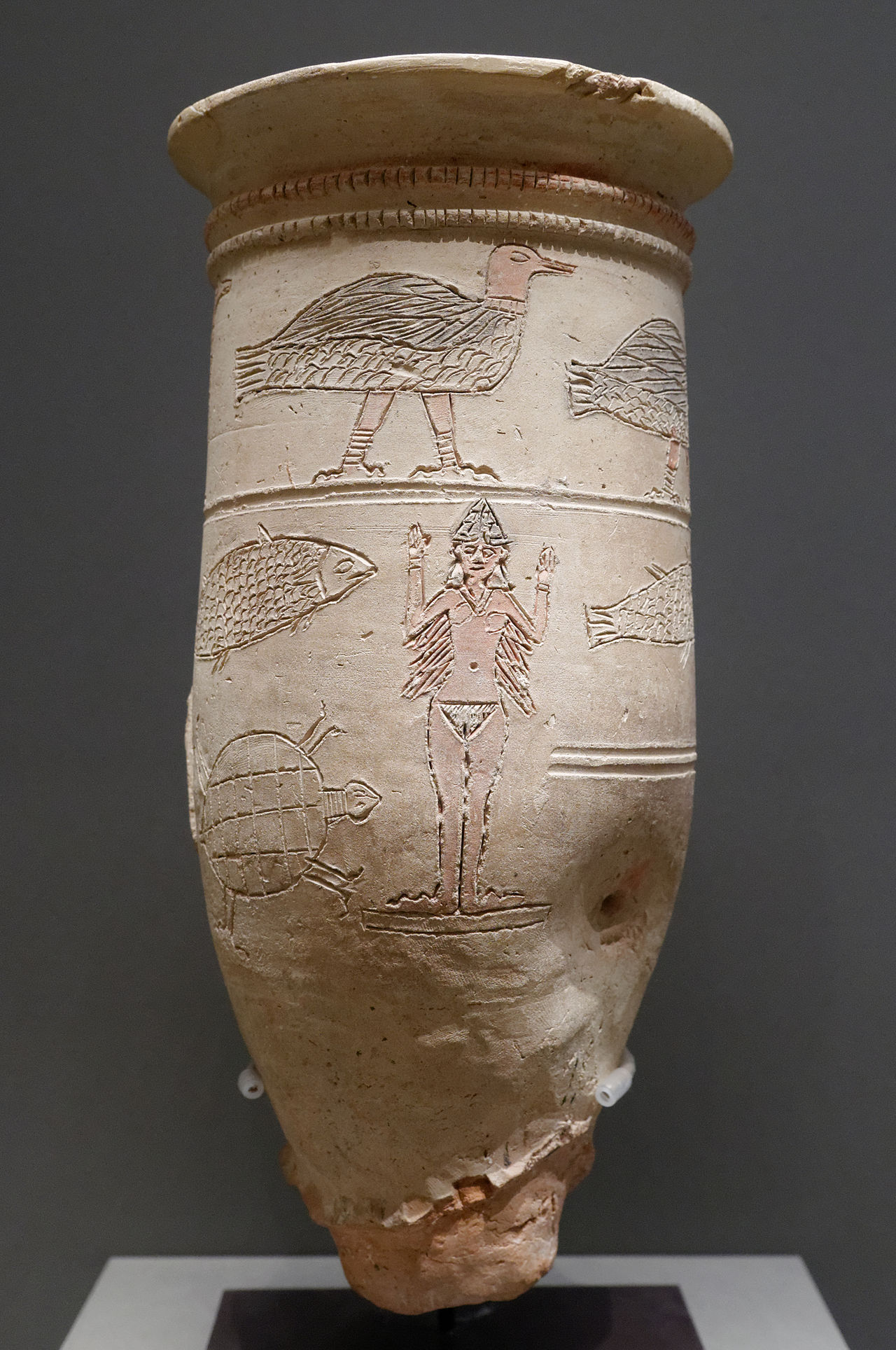
Ishtar ina Ertseti la tāri Ishtar to the Land of No Return (c. 1900–1600 BCE, Sumerian original older)
What It Is: A Mesopotamian mythological poem narrating the descent of Ishtar (Sumerian: Inanna), Goddess of love, war, and sovereignty, into the Underworld (Kur / Ertseti / Irkalla), ruled by her sister Ereshkigal. At each of the seven gates of the Underworld, Ishtar is stripped of one article of her divine regalia her crown, her jewellery, her garments, her powers until she arrives before Ereshkigal naked and powerless. She is killed and hung on a hook. The world above withers: without Ishtar, no love, no fertility, no desire, no procreation. The Gods intervene; Ishtar is resurrected and ascends, reclaiming her garments and powers at each gate. But a substitute must remain below: her consort Dumuzi (Tammuz), who will spend half the year in the Underworld.
Why It Matters: The Descent of Ishtar is the oldest and most complete surviving initiation narrative. It is the template for every subsequent story of death and rebirth: Osiris in the Duat, Persephone in Hades, Orpheus descending for Eurydice, Christ in the tomb. But unlike the Abrahamic version, the Mesopotamian original makes no pretence that the descent is voluntary sacrifice for the sins of others. Ishtar descends because she chooses to out of sovereignty, not servitude. She descends to confront death itself, to enter the one domain that even the Gods fear, and to return with the knowledge that only the dead possess.
The stripping at the seven gates is the theological core: to enter the deepest reality, you must shed every external marker of identity every title, every ornament, every power, every protection. The initiate enters the inner sanctum as she entered the world: naked. This is not humiliation; it is purification. It is the same principle that underlies every genuine initiatory tradition: you cannot bring your persona into the presence of the absolute. The ego must be disassembled before the soul can encounter truth. The seven gates correspond to the seven planetary spheres, the seven chakras, the seven stages of alchemical dissolution. The pattern is universal because the process is universal: the soul that would know the deepest truth must first be stripped of everything it thinks it knows.
The resurrection of Ishtar is equally significant. She does not escape death; she passes through it and returns. The cosmos cannot function without her without desire, without beauty, without the erotic force that drives creation, the world goes sterile. This teaches that the divine feminine is not ornamental; it is structurally necessary. Without Ishtar, the cosmos dies. Her resurrection is not a miracle but a cosmic necessity.
What to Take From It: Initiation requires the stripping of all external identity. The soul must descend before it can ascend. The seven gates are the seven stages of purification. The divine feminine is structurally necessary to the cosmos without it, creation ceases. Death is not the end but a passage, and the passage transforms the one who makes it. The Descent of Ishtar is the initiatory template that every Zevist recognises in every Mystery tradition.
At each gate she was stripped. At the seventh she stood naked before death. And she returned. The Descent of Ishtar is the oldest initiation narrative on earth: the soul that enters the Underworld and returns is not the soul that entered. It is more.