
 አማርኛ
አማርኛ العربية
 বাংলা
বাংলা Български
 中文
中文 Čeština
 Dansk
Dansk Deutsch
 Eesti
Eesti Ελληνικά
 Español
 Français
 हिन्दी
 Hrvatski
 IsiZulu
 Italiano
 日本語
日本語 Kiswahili
 Magyar
 Македонски
 नेपाली
 Nederlands
 فارسی
فارسی Polski
 Português
 Română
 Русский
 Slovenščina
 Suomi
Suomi Svenska
 Tagalog
 Türkçe
THE DEVI MAHATMYA
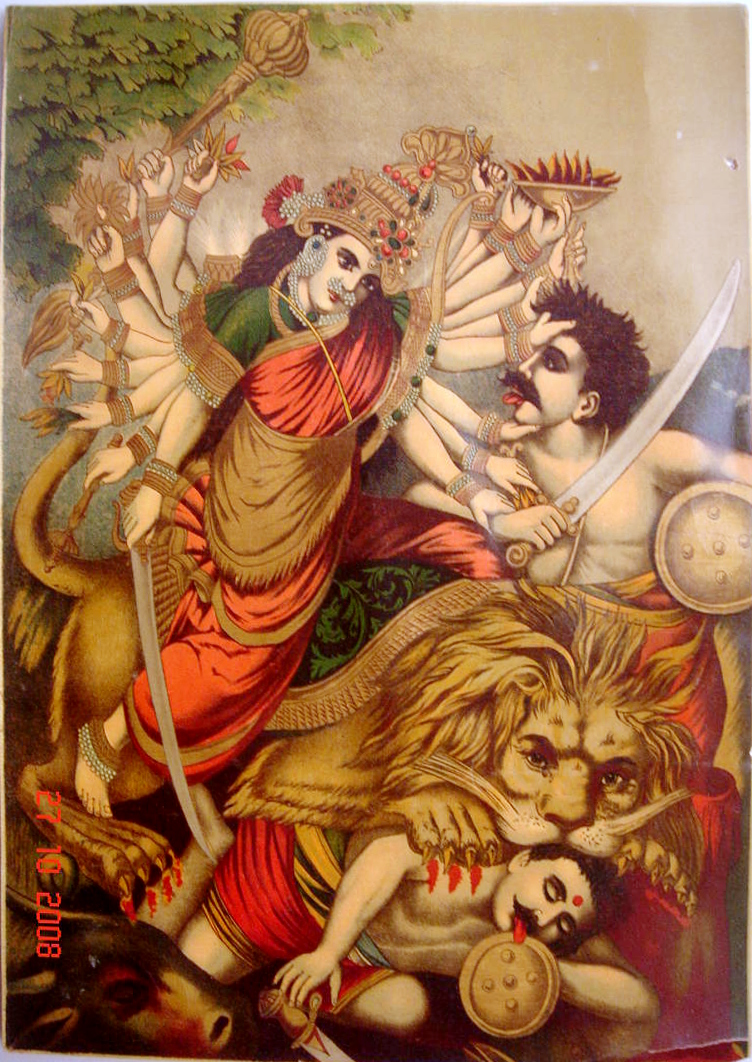
Devī Māhātmya The Glory of the Goddess (c. 500–600 CE) 700 Verses, 13 Chapters
What It Is: A Sanskrit text of 700 verses embedded within the Markandeya Purana, narrating three mythic battles in which the Great Goddess (Devi / Durga / Chandika) manifests to defeat cosmic demons (Asuras) that the male Gods cannot overcome. In the first battle, Devi arises from Vishnu’s cosmic sleep to slay the demons Madhu and Kaitabha. In the second, she manifests as Durga assembled from the combined powers and weapons of all the male Gods to slay the buffalo-demon Mahishasura. In the third, she manifests increasingly fierce forms (Kali, Chamunda) to destroy the shape-shifting demons Shumbha and Nishumbha. The text is recited during the Navaratri festival and constitutes the foundational scripture of Shakta (Goddess-centred) Hinduism.
Why It Matters: The Devi Mahatmya establishes a theological principle that Zevism affirms: the divine feminine is not secondary, subordinate, or decorative. She is the supreme power the Shakti without which the male Gods themselves are powerless. When the Gods face enemies they cannot defeat, it is the Goddess who arises to fight. She is assembled from their combined powers, which means she is not merely their equal; she is their synthesis, their concentration, their operative force. Without her, they are potentials without actualisation. This corresponds precisely to the Zevistic recognition that the divine feminine Aphrodite, Athena, Artemis, Hekate, Isis is structurally necessary to the cosmic order, not a concession to it.
The demons of the Devi Mahatmya are not merely cosmic villains; they are embodiments of specific forms of Izfet. Mahishasura is the brute force that believes physical power is ultimate. Shumbha and Nishumbha are shape-shifters they change form constantly, making them impossible to defeat by any single strategy. They represent Izfet in its most dangerous form: the adaptive, mutating, ever-disguising principle that cannot be defeated by any one approach but only by the all-encompassing power of the Goddess, who contains within herself every weapon, every strategy, every form of divine force. The Devi Mahatmya teaches that Izfet adapts; therefore, the force that defeats Izfet must be equally adaptive, equally total, equally uncompromising.
What to Take From It: The divine feminine is the supreme operative power of the cosmos. The male Gods without Shakti are incomplete. The Goddess arises when all other forces fail. Izfet adapts and shape-shifts; the response must be equally comprehensive. The fierce forms of the Goddess (Kali, Chamunda) are not “destructive” in the Yehuboric sense they are the divine fury of Ma’at against the forces that threaten cosmic order. The Devi Mahatmya teaches the Zevist that the feminine divine is not gentle by nature; she is gentle when gentleness serves, and terrible when terror is what Izfet requires.
When the Gods could not prevail, the Goddess arose assembled from their combined light, wielding their combined weapons, and surpassing them all. The Devi Mahatmya declares what Zevism affirms: without the divine feminine, the cosmos cannot be defended.