
 አማርኛ
አማርኛ العربية
 বাংলা
বাংলা Български
 中文
中文 Čeština
 Dansk
Dansk Deutsch
 Eesti
Eesti Ελληνικά
 Español
 Français
 हिन्दी
 Hrvatski
 IsiZulu
 Italiano
 日本語
日本語 Kiswahili
 Magyar
 Македонски
 नेपाली
 Nederlands
 فارسی
فارسی Polski
 Português
 Română
 Русский
 Slovenščina
 Suomi
Suomi Svenska
 Tagalog
 Türkçe
THE EPIC OF GILGAMESH
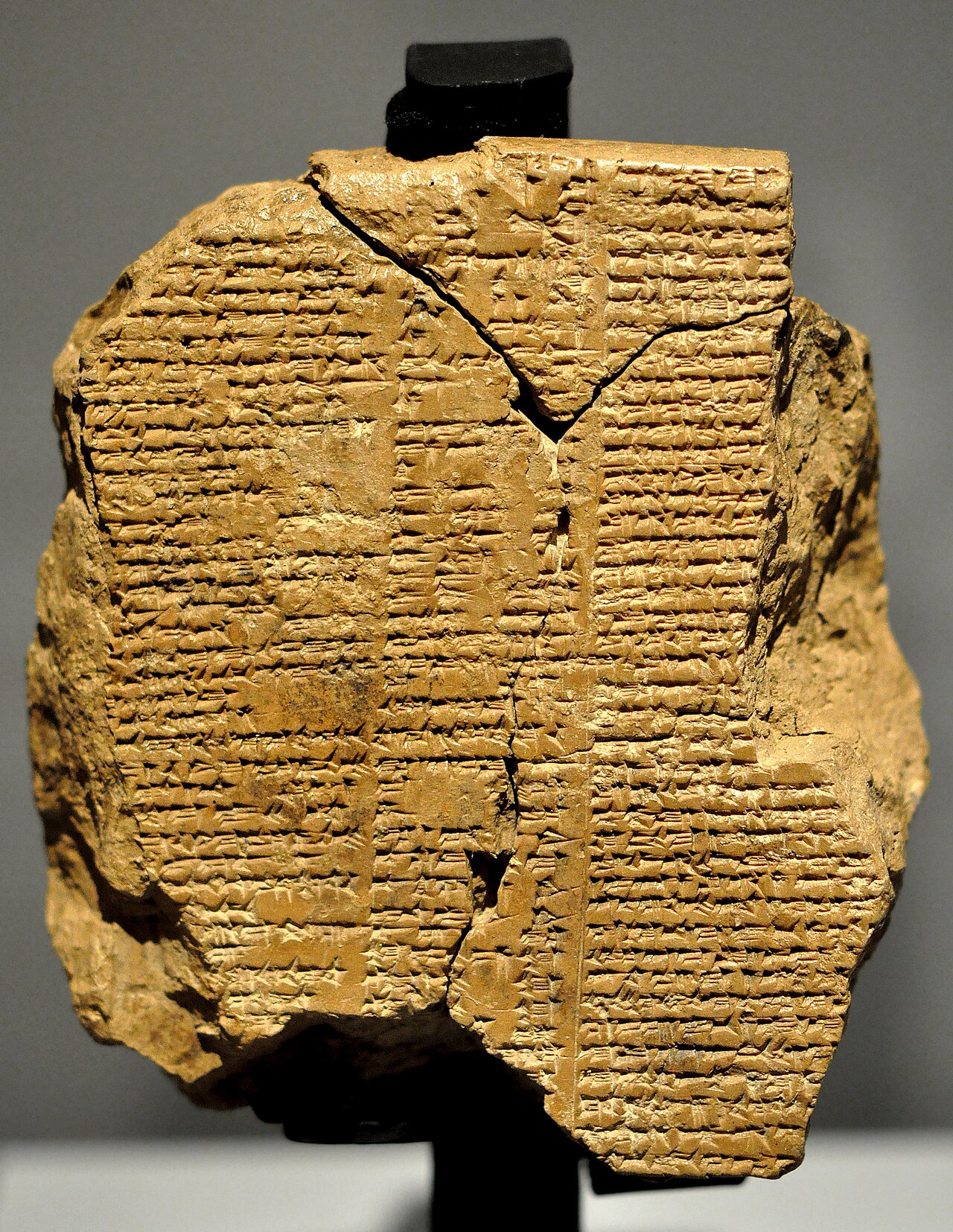
Sha naqba īmuru He Who Saw the Deep (c. 2100–1200 BCE) 12 Tablets
What It Is: The oldest surviving work of narrative literature in the world. Written in Akkadian cuneiform on twelve clay tablets, the epic follows Gilgamesh, king of Uruk, from tyranny through friendship, through the loss of that friendship, through a desperate quest for immortality, and finally to the acceptance of mortality and the return to his city as a wise king. The poem exists in multiple versions: the Old Babylonian (c. 1800 BCE), the Standard Babylonian edition compiled by the scribe-priest Shîn-lēqi-unninni (c. 1200 BCE), and fragments of even earlier Sumerian poems about Gilgamesh dating to the Third Dynasty of Ur (c. 2100 BCE).
Why It Matters: The Epic of Gilgamesh is the original instruction manual for the human condition. Every question that every subsequent tradition would address What is the purpose of life? What happens after death? Can death be conquered? What is the proper relationship between the human and the divine? What is friendship? What is grief? What is wisdom? is addressed here first, four thousand years ago, in cuneiform pressed into wet clay by the oldest literate civilisation on earth.
Gilgamesh begins as a tyrant two-thirds divine, one-third human, so powerful that his own people cry to the Gods for relief. The Gods create Enkidu, a wild man, as his equal and counterpart. Their friendship transforms Gilgamesh from a tyrant into a hero. When Enkidu dies, Gilgamesh is shattered not merely by grief but by the sudden, unbearable awareness of his own mortality. He undertakes a journey to the ends of the earth to find Utnapishtim, the one man who survived the Great Flood and was granted immortality. Utnapishtim tells him the story of the Flood the original version, from which the Genesis account of Noah is directly borrowed and sets Gilgamesh a test: stay awake for seven days. Gilgamesh fails. He cannot conquer sleep, let alone death. He obtains a plant of rejuvenation from the bottom of the sea; a serpent steals it while he bathes. He returns to Uruk empty-handed but not empty-souled. He looks at the walls of his city, the works of his hands, and he understands: immortality is not the preservation of the body. It is the legacy of what you build.
For the Zevist, the Epic of Gilgamesh teaches what the Death and Slaying Ethics codify: the proper response to mortality is not denial, not despair, and not the Yehuboric promise of an afterlife purchased through obedience. It is the full acceptance of the mortal condition and the transformation of that condition into meaningful action. Build your walls. Love your friends. Grieve your dead. And when your time comes, let the walls speak for you.
What to Take From It: Immortality through physical survival is denied to humans; this is the divine prerogative. Friendship transforms the soul more profoundly than power. Grief is not weakness but the mark of love’s depth. The proper response to mortality is not flight but the construction of enduring works. The Flood narrative in Genesis is borrowed from this older, richer source. The serpent who steals the plant of life is the same serpent who offers knowledge in Eden but here, honestly depicted as part of the natural order, not as a cosmic villain.
Gilgamesh sought immortality and found wisdom. He learned what every Zevist must learn: you cannot escape death, but you can build something that death cannot destroy. The walls of Uruk still stand in the poem. The walls of your life are your legacy.