
 አማርኛ
አማርኛ العربية
 বাংলা
বাংলা Български
 中文
中文 Čeština
 Dansk
Dansk Deutsch
 Eesti
Eesti Ελληνικά
 Español
 Français
 हिन्दी
 Hrvatski
 IsiZulu
 Italiano
 日本語
日本語 Kiswahili
 Magyar
 Македонски
 नेपाली
 Nederlands
 فارسی
فارسی Polski
 Português
 Română
 Русский
 Slovenščina
 Suomi
Suomi Svenska
 Tagalog
 Türkçe
THE GRÍMNISMÁL
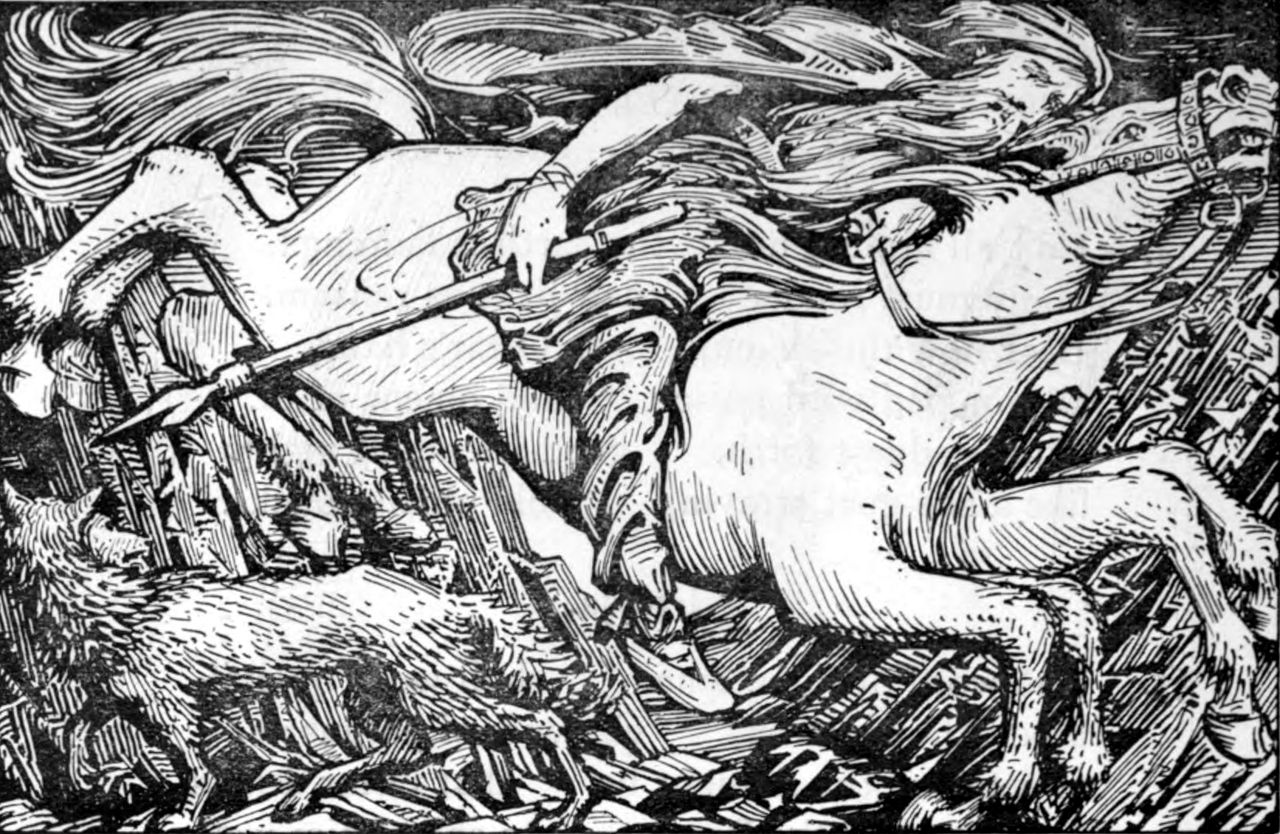
The Lay of Grímnir From the Poetic Edda (c. 900–1000 CE) 54 Stanzas
What It Is: A poem from the Poetic Edda in which Odin, disguised as a wanderer named Grímnir, is captured and tortured by King Geirröðr, who seats him between two fires for eight nights without food or drink. On the ninth night, the king’s young son Agnarr offers Grímnir a horn of drink. In gratitude, Odin begins to speak and what he speaks is a complete map of the cosmos: the names and locations of the halls of each God, the structure of Yggdrasil, the names of the rivers, the identities of the celestial bodies, the cosmological architecture of the nine worlds. At the poem’s climax, Odin reveals his true identity and the king falls on his own sword.
Why It Matters: The Grímnismál is the Norse sacred geography the cosmological map that locates every divine power in its proper place within the structure of reality. It is the equivalent of the Egyptian maps of the Duat, the Kabbalistic Tree of Life, and the Platonic hierarchy of being: a systematic account of who dwells where in the cosmic architecture and what their function is. Valhalla is located, described, and its function explained. Alfheim, the realm of the light-elves, is assigned to Freyr. Thrymheim, the realm of the giant Thjazi, is located. Each hall, each realm, each feature of the cosmic landscape is named with the precision of a cartographer.
The frame narrative carries its own teaching. Odin comes in disguise; this is his nature he is the God of masks, of assumed identities, of knowledge gained through deception and endurance. He suffers torture between two fires without complaint; he has done worse to himself on Yggdrasil. The boy Agnarr shows compassion to the stranger the basic ethical act of hospitality that the Hávamál teaches and receives in return the revelation of the entire cosmic structure. The king who tortures the stranger dies. The boy who helps the stranger inherits the kingdom. The teaching is precise: those who violate the laws of hospitality and basic human decency destroy themselves. Those who honour the stranger even the stranger who appears powerless receive knowledge that transforms their lives. Ma’at rewards. Izfet consumes.
What to Take From It: The cosmos has a precise structure, and each divine power occupies a specific location within it. Hospitality to the stranger is a sacred obligation the stranger may be a God in disguise. The God of wisdom appears in the least expected form. Cruelty to the helpless brings destruction; compassion brings cosmic knowledge. The Grímnismál teaches the Zevist both the map of the cosmos and the ethics of the map: the universe rewards those who treat even the lowest with dignity.
Odin came as a beggar. The king tortured him. The boy gave him a drink. The beggar spoke the structure of the cosmos. The king died. The boy became king. The Gods test you through the stranger at your door.