 አማርኛ
አማርኛ العربية
 বাংলা
বাংলা Български
 中文
中文 Čeština
 Dansk
Dansk Deutsch
 Eesti
Eesti Ελληνικά
 Español
 Français
 हिन्दी
 Hrvatski
 IsiZulu
 Italiano
 日本語
日本語 Kiswahili
 Magyar
 Македонски
 नेपाली
 Nederlands
 فارسی
فارسی Polski
 Português
 Română
 Русский
 Slovenščina
 Suomi
Suomi Svenska
 Tagalog
 Türkçe
THE HÁVAMÁL
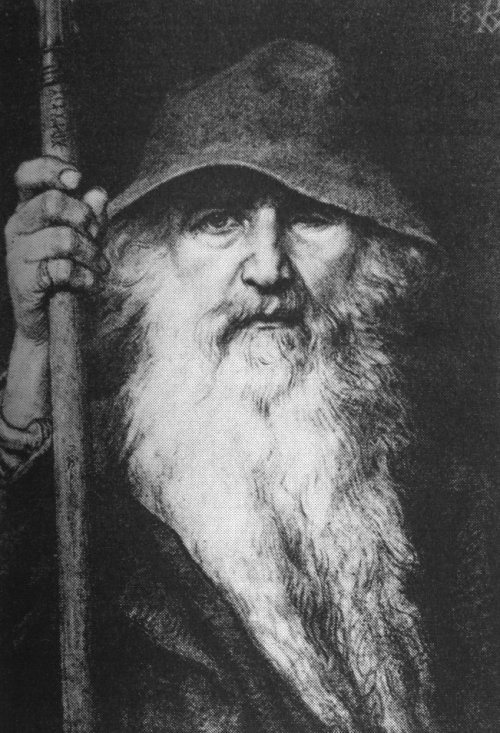
The Sayings of the High One From the Poetic Edda (c. 900–1000 CE) 164 Stanzas
What It Is: A composite poem attributed to Odin, the Allfather, containing practical wisdom, ethical instruction, the story of Odin’s self-sacrifice on Yggdrasil, a catalogue of magical charms, and the art of navigating a dangerous world. The Hávamál is divided into several sections: the Gestaththr (rules for the guest practical ethics of hospitality, caution, and social conduct), the section on Odin’s self-sacrifice to gain the runes, the Ljóðatal (a list of eighteen magical songs/spells), and gnomic wisdom verses on friendship, trust, wealth, reputation, and death. It is the closest thing in the Norse tradition to a book of Proverbs but spoken by a God, not a king.
Why It Matters: The Hávamál is the operational ethics of the Norse world and its principles are strikingly consistent with Zevistic ethics. It teaches moderation in drinking (not abstinence moderation), caution with strangers, generosity with friends, the importance of reputation (which outlasts the body), the cultivation of wisdom over wealth, and above all the principle that a man’s worth is measured by what he does, not by what he says. It is unsentimental, pragmatic, and grounded in the recognition that the world is dangerous and that survival requires both courage and intelligence.
The supreme passage is Odin’s description of his self-sacrifice on Yggdrasil one of the most extraordinary passages in world scripture. Odin hangs himself on the World Tree, wounded by his own spear, for nine nights without food or drink, and at the end of this ordeal the runes reveal themselves to him. He does not receive them from a higher God; there is no higher God. He sacrifices himself to himself the seeker and the sought are the same. This is structurally identical to the Upanishadic realisation that Atman is Brahman: the self that seeks is the God that is found. The price of wisdom is suffering, voluntarily undertaken. No one gives Odin the runes; he earns them through an act of radical self-transformation. This is the opposite of the Abrahamic model, in which knowledge is forbidden and its acquisition is punished. In the Norse model, knowledge is the highest good, and the God himself shows the way to it: through sacrifice, through endurance, through the willingness to die in order to be reborn as something more.
What to Take From It: Wisdom is not given; it is earned through sacrifice. The God who seeks knowledge sacrifices himself to himself the seeker and the sought are one. Reputation outlasts the body: what you do is what survives you. Moderation, caution, generosity, and courage are the cardinal virtues. The runes are not mere letters; they are sacred symbols of creative power, won at the cost of divine suffering. The Hávamál teaches the Zevist that the Gods do not exempt themselves from the cost of wisdom. Neither should you.
I know that I hung on that windy tree for nine whole nights, wounded with a spear, dedicated to Odin, myself to myself. The God who seeks wisdom pays with his own body. The Zevist who seeks the same must be willing to pay the same.