
 አማርኛ
አማርኛ العربية
 বাংলা
বাংলা Български
 中文
中文 Čeština
 Dansk
Dansk Deutsch
 Eesti
Eesti Ελληνικά
 Español
 Français
 हिन्दी
 Hrvatski
 IsiZulu
 Italiano
 日本語
日本語 Kiswahili
 Magyar
 Македонски
 नेपाली
 Nederlands
 فارسی
فارسی Polski
 Português
 Română
 Русский
 Slovenščina
 Suomi
Suomi Svenska
 Tagalog
 Türkçe
THE HYMNS OF ENHEDUANNA
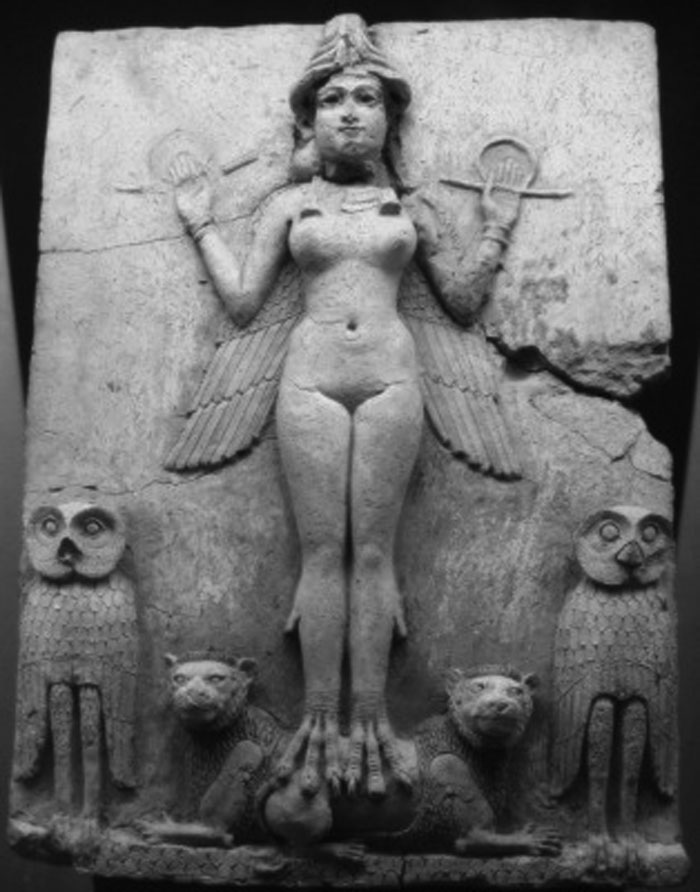
Enheduanna High Priestess of Ur (c. 2285–2250 BCE) The Oldest Named Author in Human History
What It Is: A corpus of liturgical poems composed by Enheduanna, daughter of Sargon of Akkad and High Priestess of the Moon God Nanna at Ur. Her works include the Exaltation of Inanna (Nin-me-šár-ra), a passionate hymn celebrating Inanna as the supreme Goddess of heaven, earth, and the underworld; the Temple Hymns, a cycle of 42 hymns addressed to the temples of Sumer and Akkad; and the Stanzas to Inanna (In-nin-šà-gúr-ra), a personal devotional poem in which Enheduanna describes her own exile and restoration through the power of the Goddess. Enheduanna is the first author in human history whose name is known the first human being to sign her work, to claim authorship, and to speak in the first person about her relationship with the divine.
Why It Matters: Enheduanna is the beginning. Not merely of literature, not merely of theology, but of the individual human voice speaking to the divine and recording the encounter. Everything that follows the Psalms, the Orphic Hymns, the bhakti poetry of India, the Sufi poetry of Rumi descends from this woman’s decision, forty-three centuries ago, to write her name on a tablet and say: I spoke to the Goddess, and this is what happened. Her Exaltation of Inanna is the first recorded instance of a human being addressing a God not with formulaic liturgy but with personal urgency, with passion, with anguish, and with the expectation of being heard. She was exiled from her priesthood by a political rival; she appeals to Inanna for restoration; and she is restored. The poem records not a myth but a theurgical event: the priestess called upon the Goddess, and the Goddess answered.
For the Zevist, Enheduanna is the founding model of what the relationship between the devotee and the Gods looks like: not the cowering submission of the Abrahamic worshipper, not the abstract contemplation of the philosopher, but the direct, passionate, reciprocal encounter between a human being who speaks and a God who acts. Her hymns demonstrate that the divine relationship is personal, emotional, transformative, and operative it changes real conditions in the real world. This is exactly what Zevistic theurgy affirms and practises.
What to Take From It: The oldest named author in history was a priestess who spoke to the Gods and was heard. Devotional poetry is not decoration; it is an operative technology. The divine relationship is personal, reciprocal, and transformative. The feminine voice in theology is not secondary; it is foundational the very first voice. Enheduanna teaches every Zevist that the Gods are not concepts to be studied but presences to be addressed.
Her name was Enheduanna. She was a priestess. She spoke to the Goddess. The Goddess answered. Forty-three centuries later, the conversation continues. Every Zevist who lights incense and speaks a name stands in her lineage.