
 አማርኛ
አማርኛ العربية
 বাংলা
বাংলা Български
 中文
中文 Čeština
 Dansk
Dansk Deutsch
 Eesti
Eesti Ελληνικά
 Español
 Français
 हिन्दी
 Hrvatski
 IsiZulu
 Italiano
 日本語
日本語 Kiswahili
 Magyar
 Македонски
 नेपाली
 Nederlands
 فارسی
فارسی Polski
 Português
 Română
 Русский
 Slovenščina
 Suomi
Suomi Svenska
 Tagalog
 Türkçe
THE INSTRUCTION TEXTS
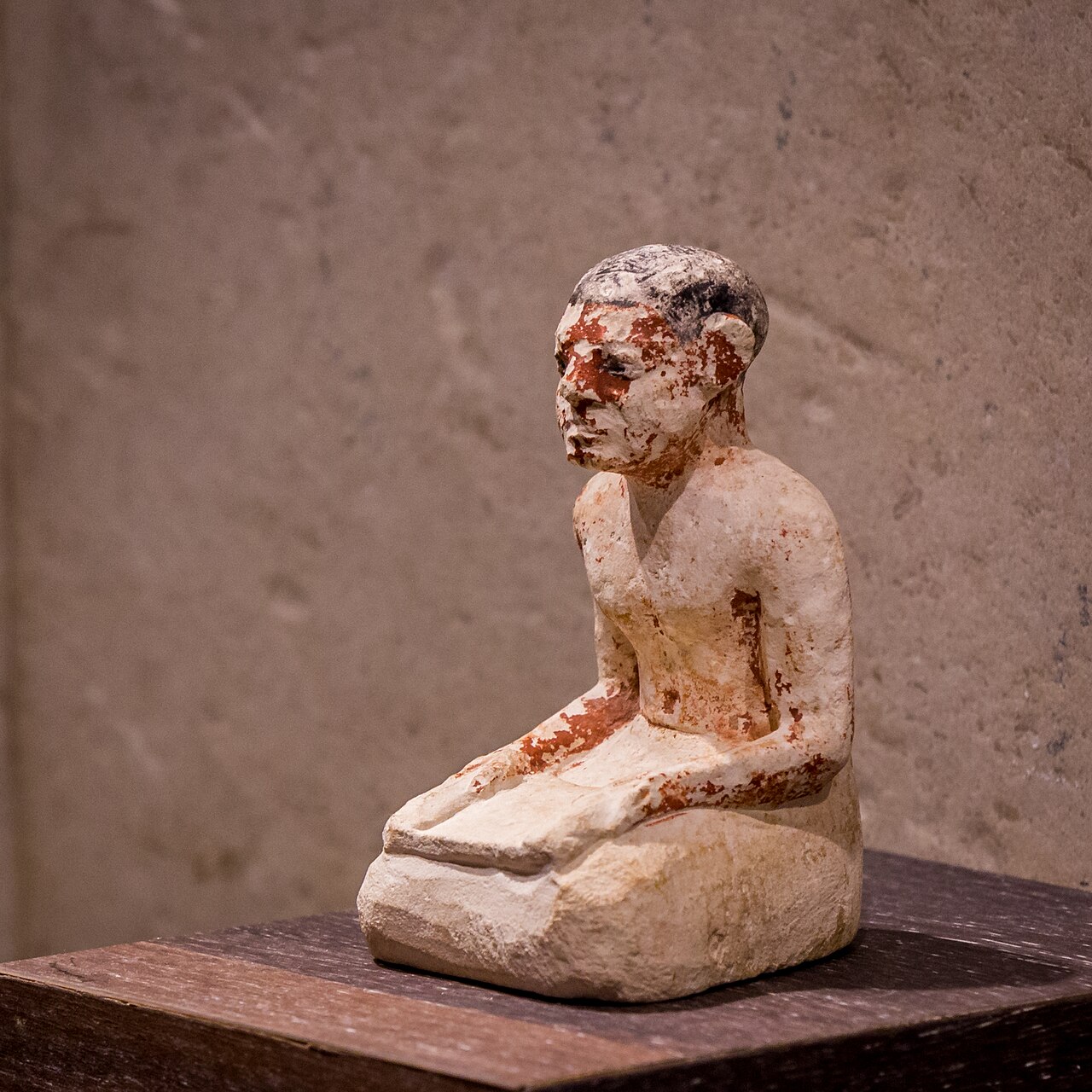
Ptahhotep · Amenemope · Merikare · Ani (c. 2400–1100 BCE)
What It Is: A genre of Egyptian wisdom literature spanning over a thousand years, in which an elder usually a vizier, a pharaoh, or a senior official transmits practical ethical and spiritual instruction to his son or successor. The Instruction of Ptahhotep (c. 2400 BCE) is the oldest complete wisdom text in the world. The Instruction of Amenemope (c. 1100 BCE) is the direct source of the biblical Book of Proverbs, chapters 22–24 the borrowing is verbatim in places. The Instruction for Merikare (c. 2050 BCE) contains the earliest known statement that the Gods created all human beings equal and that the ruler’s duty is justice. The Instruction of Ani (c. 1300 BCE) is the most personal and practical, addressing daily ethics: how to treat your wife, how to manage your household, how to behave at a feast, how to speak to those above and below you.
Why It Matters: The Instruction Texts are the ethical core of Egyptian civilisation the applied ethics of Ma’at in daily life. Where the Book of Coming Forth by Day describes the post-mortem judgement, the Instruction Texts describe how to live so that the judgement goes in your favour. They are the Egyptian answer to the question: what does Ma’at look like when you are not in a temple, not performing ritual, not addressing the Gods but simply living your life, raising your children, doing your work, dealing with your neighbours?
Ptahhotep, the oldest, teaches humility, the proper use of speech, the danger of arrogance, the importance of listening, and the principle that justice is more enduring than force. His maxim “Do not be proud of your knowledge; consult the unlearned as well as the learned the limits of art have not been reached, and no artisan possesses full perfection” is the oldest surviving statement of intellectual humility in human literature. It predates Socrates’s “I know that I know nothing” by two thousand years. The principle is identical: wisdom begins with the recognition that wisdom is incomplete.
Amenemope is the most directly relevant for comparative theology, because its borrowing by the authors of Proverbs is now beyond serious scholarly dispute. Amenemope’s thirty chapters correspond to the thirty sayings of Proverbs 22:17–24:22. The parallels are so exact that they can only be explained by direct literary dependence. This means that the “wisdom of Solomon” is, in substantial part, the wisdom of an Egyptian scribe writing in the service of Ma’at. The theological implication is devastating for the Yehuboric claim of unique divine revelation: the ethical core of the biblical wisdom tradition is Egyptian in origin, Maat-ic in orientation, and polytheistic in its original context.
Merikare contains the most radical theological statement in any Egyptian Instruction Text. The pharaoh tells his son: “The God made heaven and earth for their sake. He suppressed the greed of the waters. He made the air to enliven their nostrils. They are His images, come forth from His body. He shines in the sky for their sake.” This is the oldest surviving statement that all human beings are made in the image of God predating Genesis by a millennium. But unlike Genesis, it carries no doctrine of Fall, no original sin, no expulsion from paradise. Human beings are divine images, full stop. Their task is to live in accordance with Ma’at, not to grovel for forgiveness.
What to Take From It: Ethics is not abstract; it is daily. Ma’at is practised in how you speak, how you eat, how you treat your spouse, how you deal with your subordinates. The wisdom tradition of Israel is borrowed from Egypt; the original is richer and more honest. All human beings are made in the image of the divine this is an Egyptian teaching, not a Hebrew one. Intellectual humility is the beginning of wisdom. The Instruction Texts teach the Zevist how to live Ma’at in the ordinary, unglamorous, infinitely consequential details of daily existence.
Ptahhotep spoke before Moses was born. Amenemope wrote before Solomon was imagined. The ethical tradition that the Bible claims as its own was Egyptian, was Ma’atic, and was ancient when Israel was young. The Instruction Texts are the original source. Everything else is commentary.