
 አማርኛ
አማርኛ العربية
 বাংলা
বাংলা Български
 中文
中文 Čeština
 Dansk
Dansk Deutsch
 Eesti
Eesti Ελληνικά
 Español
 Français
 हिन्दी
 Hrvatski
 IsiZulu
 Italiano
 日本語
日本語 Kiswahili
 Magyar
 Македонски
 नेपाली
 Nederlands
 فارسی
فارسی Polski
 Português
 Română
 Русский
 Slovenščina
 Suomi
Suomi Svenska
 Tagalog
 Türkçe
THE MAHABHARATA
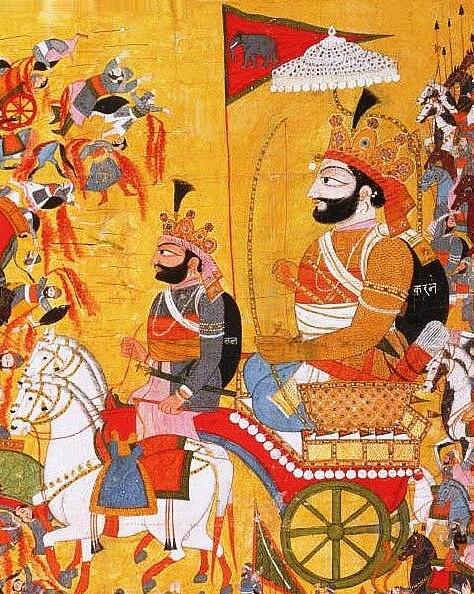
Mahābhārata Attributed to Vyasa (c. 400 BCE–400 CE) 200,000 Verses, 18 Books
What It Is: The longest epic poem in the world approximately ten times the length of the Iliad and Odyssey combined. The Mahabharata narrates the catastrophic civil war between two branches of the Kuru dynasty: the five Pandava brothers (champions of Dharma) and the hundred Kaurava brothers (champions of ambition and Izfet). The war destroys an entire civilisation. The poem contains within it the Bhagavad Gita, but extends far beyond it: it includes the stories of Draupadi (the shared wife whose humiliation triggers the war), Karna (the tragic hero who fights on the wrong side out of loyalty), Bhishma (the patriarch who knows what is right but serves the wrong cause), and Yudhishthira (the righteous king who gambles away his kingdom). It also contains the Shanti Parva and Anushasana Parva two enormous books of political, ethical, and spiritual instruction delivered by the dying Bhishma on his bed of arrows.
Why It Matters: The Mahabharata is the Iliad and the Odyssey and the Torah and the Republic combined into a single work. It is the most comprehensive ethical instruction manual ever composed. Its central teaching is identical to the Iliad’s: Izfet cascades. The entire catastrophe of the Kurukshetra war eighteen days of slaughter that kill millions originates in a single act of injustice: the public humiliation of Draupadi in the Kaurava court, when she is dragged by her hair and her sari is stripped from her body while the elders of the kingdom watch in silence. Every subsequent atrocity flows from this moment. The Mahabharata teaches that injustice left uncorrected does not diminish; it compounds. Silence in the face of Izfet is complicity.
The figure of Karna is the Mahabharata’s most devastating teaching on the relationship between personal virtue and structural Izfet. Karna is brave, generous, loyal, and honourable and he fights on the wrong side, because his loyalty to Duryodhana (who befriended him when others rejected him) overrides his knowledge of right and wrong. He knows the Pandavas are in the right. He fights against them anyway. He dies. His tragedy teaches that personal virtue is not sufficient: the soul that serves Izfet, even from noble motives, is destroyed by the Izfet it serves. Loyalty to a person cannot override loyalty to Ma’at.
What to Take From It: Injustice left uncorrected cascades into civilisational catastrophe. Silence before Izfet is complicity. Personal virtue cannot redeem service to an unjust cause. The righteous ruler must be willing to fight for Dharma even when the cost is everything. Political wisdom, spiritual discipline, and ethical courage are inseparable. The Mahabharata is the Zevist’s complete education in the ethics of power, loyalty, duty, and the consequences of their failure.
The Mahabharata begins with one woman’s humiliation and ends with the destruction of a civilisation. Between these two points lies every ethical lesson the Zevist will ever need. Izfet cascades. Silence compounds. Ma’at demands action.