
 አማርኛ
አማርኛ العربية
 বাংলা
বাংলা Български
 中文
中文 Čeština
 Dansk
Dansk Deutsch
 Eesti
Eesti Ελληνικά
 Español
 Français
 हिन्दी
 Hrvatski
 IsiZulu
 Italiano
 日本語
日本語 Kiswahili
 Magyar
 Македонски
 नेपाली
 Nederlands
 فارسی
فارسی Polski
 Português
 Română
 Русский
 Slovenščina
 Suomi
Suomi Svenska
 Tagalog
 Türkçe
THE MEDITATIONS
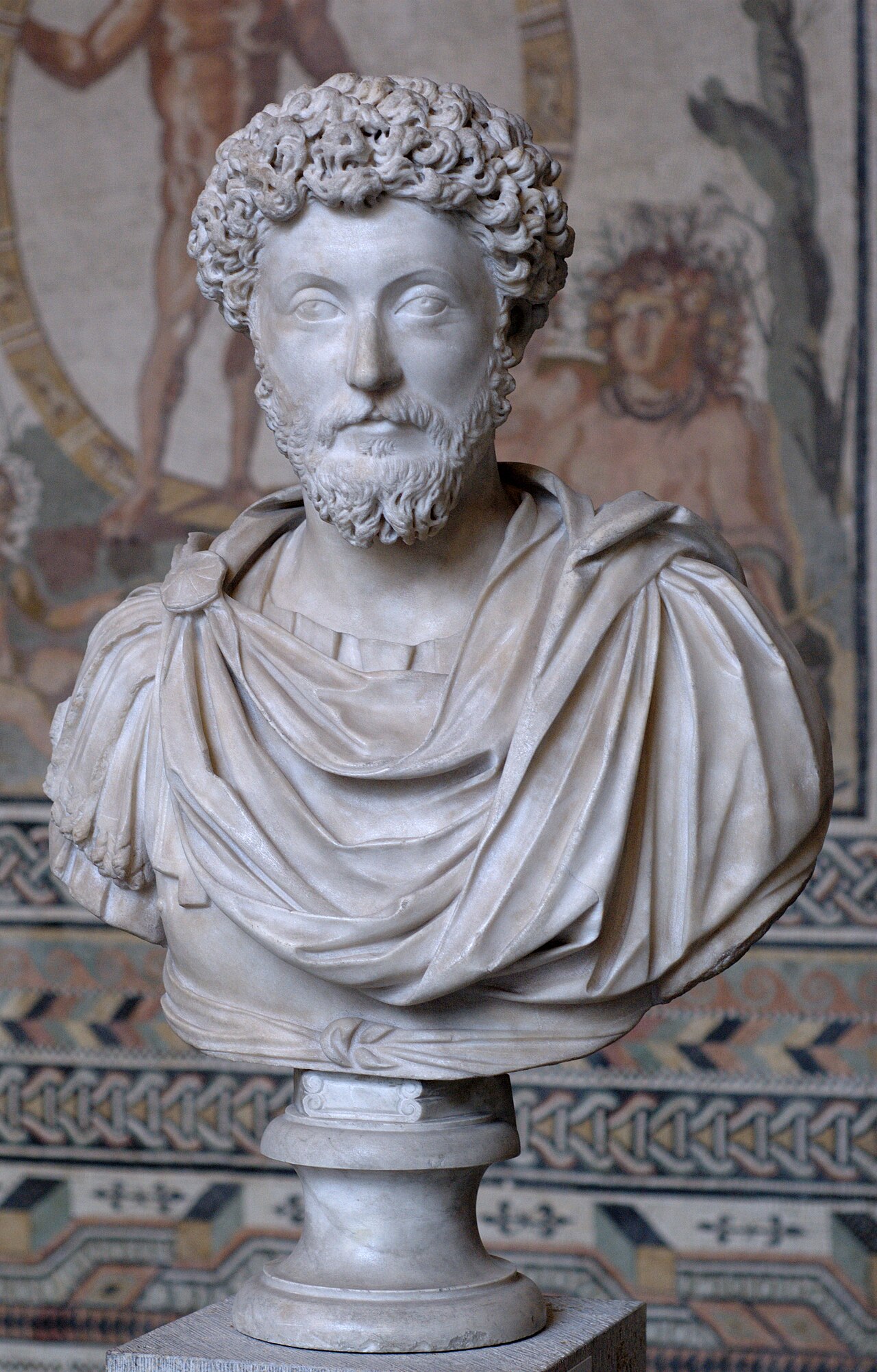
Marcus Aurelius Antoninus Τὰ εἰς ἑαυτόν (c. 170–180 CE) 12 Books
What It Is: The private philosophical journal of the Roman Emperor Marcus Aurelius, written in Greek during military campaigns on the Danube frontier. Never intended for publication, the Meditations are twelve books of self-examination, self-correction, and self-command the record of a man who held the most powerful office on earth attempting, night after night, to hold himself to the standard of Stoic virtue. They address mortality, duty, the transience of fame, the discipline of perception, the governance of anger, and the relationship between the individual soul and the rational order of the cosmos (the Logos). They are the only surviving work of philosophy written by a reigning sovereign.
Why It Matters: The Meditations are the supreme manual of applied ethics in the Western tradition. Where other philosophical works argue for virtue in the abstract, Marcus Aurelius records the daily struggle to practise it under the most extreme conditions: plague, war, betrayal, exhaustion, and the crushing weight of imperial responsibility. For the Zevist, the Meditations are the template of what it means to live under Ma’at while surrounded by Izfet. Marcus does not retreat from the world; he governs it. He does not renounce power; he disciplines it. He does not deny suffering; he transforms it into material for philosophical growth. This is not monasticism. This is the ethics of the active soul the soul that must make decisions, command armies, judge cases, and bury friends, while maintaining interior alignment with the divine order.
Marcus repeatedly invokes the Stoic doctrine that the cosmos is a single living being governed by rational providence a doctrine identical in structure to the Zevistic understanding of Zeus as the governing intelligence of all things. His ethics are grounded in the recognition that every human being participates in the same Logos, and that cruelty, dishonesty, and injustice are therefore violations not merely of social convention but of cosmic law. His treatment of death calm, unsentimental, and utterly without fear is the Stoic equivalent of the Egyptian preparation for the weighing of the heart: the soul that has lived in accordance with reason has nothing to fear from dissolution.
What to Take From It: The discipline of perception: control not events but your judgement of events. The transience of all things is not a cause for despair but for clarity. Duty is not imposed from outside; it arises from the soul’s recognition of its place in the cosmic order. The Emperor and the slave are equally bound by the Logos. Anger is always a failure of understanding. Death is not an evil it is a natural process to be met with the same composure as sleep. The Meditations teach the Zevist how to think, how to endure, and how to govern beginning always with the governance of oneself.
You have power over your mind not outside events. Realise this, and you will find strength. The impediment to action advances action. What stands in the way becomes the way. This is Stoic Ma’at: the transformation of every obstacle into fuel for the soul’s ascent.