
 አማርኛ
አማርኛ العربية
 বাংলা
বাংলা Български
 中文
中文 Čeština
 Dansk
Dansk Deutsch
 Eesti
Eesti Ελληνικά
 Español
 Français
 हिन्दी
 Hrvatski
 IsiZulu
 Italiano
 日本語
日本語 Kiswahili
 Magyar
 Македонски
 नेपाली
 Nederlands
 فارسی
فارسی Polski
 Português
 Română
 Русский
 Slovenščina
 Suomi
Suomi Svenska
 Tagalog
 Türkçe
THE ODYSSEY
Ὀδύσσεια Homer (c. 725–675 BCE)
What It Is: The companion epic to the Iliad. Where the Iliad is the poem of conflict, the Odyssey is the poem of return νόστος, the homecoming. It follows Odysseus across ten years of wandering after the fall of Troy, through encounters with monsters, gods, sorceresses, the dead, and the infinite temptations of oblivion, until he reaches Ithaca and reclaims his household from the suitors who have besieged it. Twenty-four books in dactylic hexameter. If the Iliad is the manual for the soul at war, the Odyssey is the manual for the soul navigating the world the complete curriculum of spiritual survival.
Why It Matters: The defining quality of Odysseus is not strength but μῆτις cunning intelligence, the capacity to perceive the true nature of a situation and respond with precision rather than force. Where Achilles is the hero of θυμός (passion/power/rage), Odysseus is the hero of νοῦς (Intelligence and intellectual capacity). He is πολύτροπος (of many turns), πολύμητις (of many counsels), πολύτλας (of much endurance). These are not decorative epithets. They are the qualities the Zevist must cultivate to navigate a world saturated with Izfet.
Every episode of the Odyssey is a spiritual test, and each teaches a specific lesson. The Lotus-Eaters teach the danger of oblivion the narcotic comfort that makes the soul forget its purpose and its home. To eat the lotus is to abandon the path; it is the spiritual equivalent of surrender to Izfet through pleasure and forgetfulness. The Cyclops Polyphemus teaches the consequence of ὕβρις (arrogance) and the power of μῆτις over brute force: Odysseus defeats the giant not with a sword but with a sharpened stake, wine, and a false name. Intelligence overcomes violence. But Odysseus’s own ὕβρις shouting his real name as he escapes brings Poseidon’s curse upon him. Even the man of μῆτις can be undone by vanity. The Gods punish arrogance in the wise as surely as in the foolish.
Circe and Calypso teach the two faces of seduction. Circe transforms men into swine she is the power that reduces the human to the animal, the force that strips consciousness from those who approach her without preparation. Odysseus resists her through divine aid (the μῶλυ herb given by Hermes) and through the courage to meet her on her own terms. Calypso offers something more dangerous: immortality, eternal pleasure, the abolition of death. She offers Odysseus everything that the Yehuboric religions promise paradise, the end of suffering, the cessation of struggle and Odysseus refuses. He chooses mortality, difficulty, and the hard road home over the comfortable annihilation of his purpose. This is one of the most important teachings in the entire Greek corpus: the soul that accepts paradise at the cost of its mission has lost more than it gained. Immortality without purpose is a more refined prison than mortality with direction.
The Nekuia Book XI, the descent to the Underworld is the theological centre of the Odyssey. Odysseus speaks with the dead: with his mother, with Achilles, with Agamemnon, with Tiresias the prophet. Each shade delivers a teaching. Achilles, the greatest warrior, tells Odysseus that he would rather be a living servant than a dead king a direct repudiation of the death-cult that glorifies martyrdom and the afterlife at the expense of living. Agamemnon, murdered by his wife, teaches the danger of trusting without vigilance. Tiresias delivers the prophecy of Odysseus’s future and the conditions of his survival. The dead, in the Odyssey, are not silent; they are teachers. The Zevist reads the Nekuia as the template for ancestral communication: the dead have knowledge that the living need, and the boundary between the worlds is not impassable but navigable through proper ritual and courage.
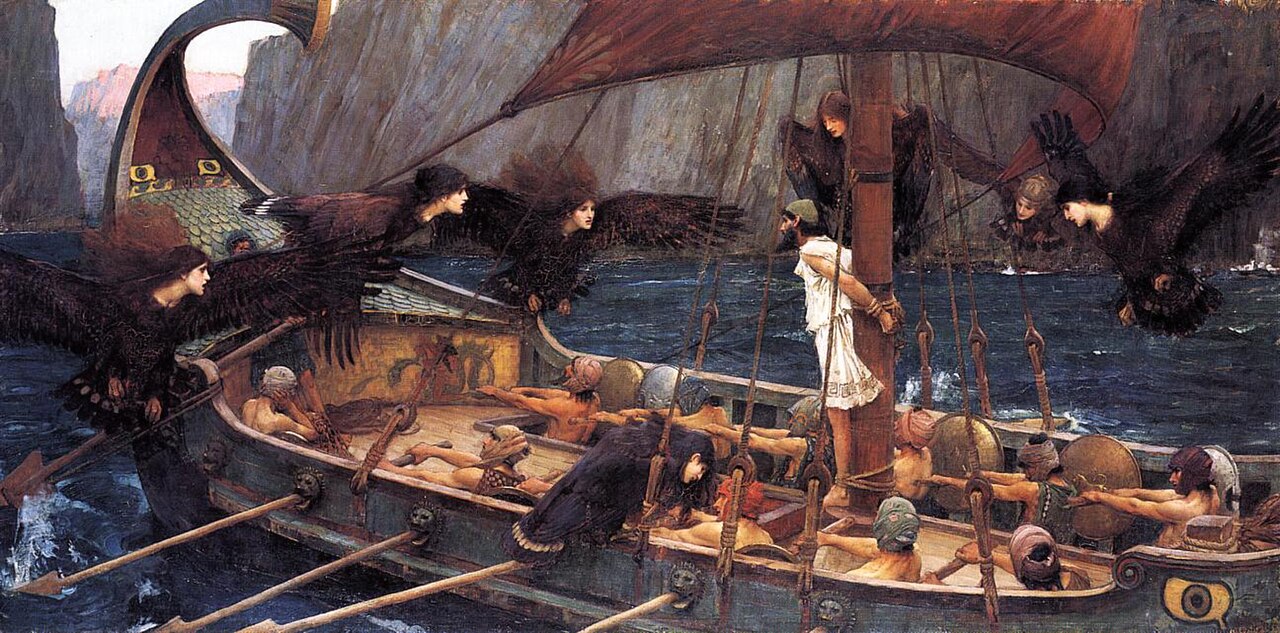
The Sirens teach that the most dangerous knowledge is the knowledge that enchants without liberating. The Sirens know everything: they promise to tell Odysseus all that has happened and will happen, but their knowledge is a trap that ends in death. Not all knowledge serves Ma’at. Some knowledge is Izfet dressed in beauty. The Zevist must learn to distinguish between the knowledge that frees and the knowledge that binds. Scylla and Charybdis teach that some situations offer no good choice only a less catastrophic one. The leader must choose six dead rather than all dead. This is the teaching of proportionate loss that echoes directly in the Death and Slaying Ethics: the commander who seeks the path of least death serves Ma’at even when Ma’at demands sacrifice.
The final act: the return to Ithaca, the slaughter of the suitors, the reunion with Penelope, is the poem’s ultimate teaching on sovereignty. The suitors are Izfet incarnate: they consume what they did not earn, they court a woman who did not invite them, they occupy a house that does not belong to them, and they plot to murder the heir. They are the Yehuboric principle in its domestic form, the parasite class that devours the substance of others while producing nothing. Odysseus’s return is the restoration of Ma’at in his own domain: not through diplomacy but through decisive, violent, and total action. The suitors are given no quarter. Athena herself assists. The cleaning of the house is literal and spiritual. This teaches the Zevist that there comes a point where restoration requires force where the accumulated Izfet in one’s own domain can only be purged through action, not negotiation. But the prerequisite is clear: you must first complete the journey. You must first become Odysseus πολύτροπος, πολύμητις, πολύτλας before you have the right and the capacity to reclaim your home.
Throughout the Odyssey, Athena is Odysseus’s constant divine companion but her help is conditional. She helps those who help themselves. She provides opportunity, disguise, and counsel, but she does not carry Odysseus home. He must sail, suffer, endure, and choose correctly at every juncture. This is the Zevistic model of the relationship between the Gods and the practitioner: the Gods are present, active, and invested in your success, but they will not do your work for you. The gift of the Gods is not deliverance; it is the capacity to deliver yourself.
What to Take From It: μῆτις (cunning intelligence) is the supreme virtue of the soul navigating a world of Izfet. Every temptation is a test: the lotus of forgetfulness, the paradise of Calypso, the enchantments of Circe, the knowledge of the Sirens each offers an escape from the path, and each must be refused or mastered. The dead are teachers; the boundary between worlds is navigable. Not all knowledge liberates; some knowledge enchants and destroys. Sovereignty over your own domain must be earned through the journey, and when the time comes, reclaimed through decisive action. The Gods help those who act; they do not carry those who wait. Read the Odyssey as a manual for how the soul returns to itself not as literature, but as the map of the path home.
The Odyssey is not a tale of adventure. It is the soul’s itinerary the complete map of every obstacle between the warrior and his home. Every monster is a spiritual condition. Every island is a temptation. Every storm is a test of endurance. And Ithaca is not a place on a map; it is the state of the soul that has mastered itself. The man who reaches Ithaca is not the man who left Troy. He is the man that Troy, and the sea, and the dead, and the Gods have made.