
 አማርኛ
አማርኛ العربية
 বাংলা
বাংলা Български
 中文
中文 Čeština
 Dansk
Dansk Deutsch
 Eesti
Eesti Ελληνικά
 Español
 Français
 हिन्दी
 Hrvatski
 IsiZulu
 Italiano
 日本語
日本語 Kiswahili
 Magyar
 Македонски
 नेपाली
 Nederlands
 فارسی
فارسی Polski
 Português
 Română
 Русский
 Slovenščina
 Suomi
Suomi Svenska
 Tagalog
 Türkçe
THE PROSE EDDA
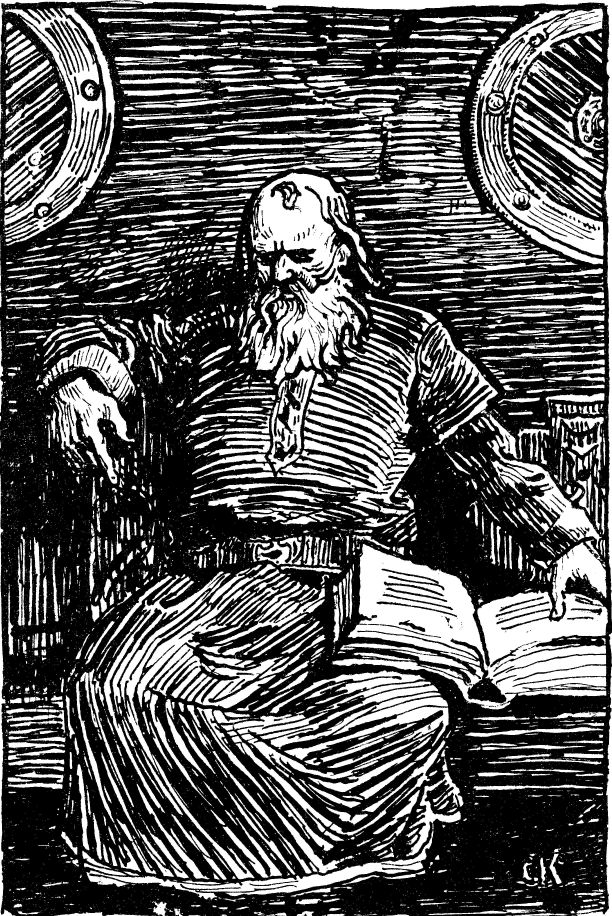
Snorri Sturluson Edda (c. 1220 CE) Gylfaginning · Skáldskaparmál · Háttatal
What It Is: A systematic handbook of Norse mythology and poetic technique compiled by the Icelandic chieftain, historian, and poet Snorri Sturluson in the early thirteenth century. It consists of three parts: Gylfaginning (“The Deception of Gylfi”), in which the Swedish king Gylfi visits Asgard in disguise and is told the entire mythological cycle from creation to Ragnarök by three enthroned figures; Skáldskaparmál (“The Language of Poetry”), a dialogue explaining the kennings (poetic metaphors) that encode mythological knowledge; and Háttatal (“List of Verse Forms”), demonstrating the metrical systems of skaldic poetry. Snorri wrote it to preserve the mythological knowledge that was being lost as Iceland completed its conversion to Christianity.
Why It Matters: Without Snorri, we would possess only fragments of Norse mythology. He wrote as a Christian in a Christian country, but his instinct was that of a preserver, not a propagandist. He recorded the myths with accuracy, sympathy, and detail that no Christian apologist would have bothered with unless he loved the material. Gylfaginning is the most complete surviving prose account of the Norse cosmogony, theogony, and eschatology. It preserves stories, names, genealogies, and cosmological details that would otherwise have been lost to the systematic destruction of pagan knowledge that accompanied Christianisation across Northern Europe.
The frame narrative is itself significant: Gylfi is “deceived” by the Gods, who appear as three enthroned figures named High, Just-as-High, and Third. When the teaching is complete, the hall vanishes. Snorri may have added this frame to protect himself from charges of paganism the myths are presented as a “deception” but the content he preserves is complete, detailed, and reverential in its precision. The Zevist reads through Snorri’s Christian frame to the theological substance beneath: the creation from Ginnungagap, the world-tree Yggdrasil, the nine worlds, the Aesir and Vanir, the binding of Fenrir, the death of Baldr, and the full narrative of Ragnarök. Snorri is the conduit through which the Northern theology survived the Yehuboric programme of destruction. He is honoured accordingly.
What to Take From It: The Prose Edda is the most complete systematic account of Norse cosmology. It preserves what would otherwise have been lost. The kenning system encodes mythological knowledge within poetic form the poets were the priests, and the poems were the scriptures. Snorri wrote under Christian compulsion but preserved pagan substance. The Zevist reads the Prose Edda as the Northern equivalent of Plutarch’s On Isis and Osiris: a scholarly preservation of theological knowledge at the moment of its suppression.
Snorri Sturluson wrote under the shadow of the cross, but what he preserved was the light of the Northern Gods. Without him, the theology of the nine worlds would be silence. He is the Plutarch of the North: the man who saved what the conquerors sought to destroy.