
 አማርኛ
አማርኛ العربية
 বাংলা
বাংলা Български
 中文
中文 Čeština
 Dansk
Dansk Deutsch
 Eesti
Eesti Ελληνικά
 Español
 Français
 हिन्दी
 Hrvatski
 IsiZulu
 Italiano
 日本語
日本語 Kiswahili
 Magyar
 Македонски
 नेपाली
 Nederlands
 فارسی
فارسی Polski
 Português
 Română
 Русский
 Slovenščina
 Suomi
Suomi Svenska
 Tagalog
 Türkçe
THE RIGVEDA SELECTED HYMNS
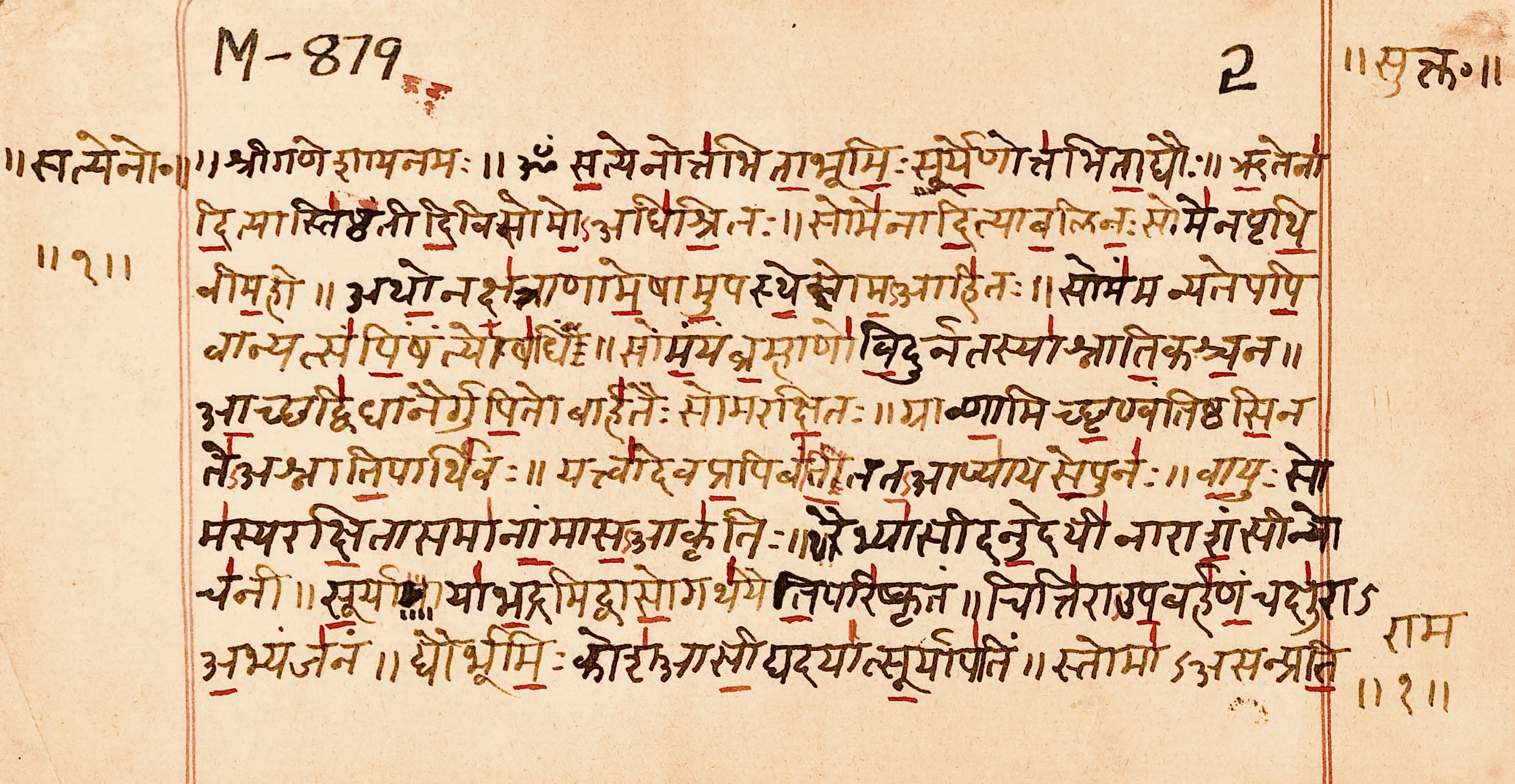
Ṛgveda The Oldest Scripture on Earth (c. 1500–1200 BCE) 1,028 Hymns, 10 Books
What It Is: The oldest religious text in continuous use on earth. The Rigveda is a collection of 1,028 hymns in Vedic Sanskrit, organised into ten books (Mandalas), composed by generations of poet-priests (Rishis) over several centuries. The hymns are addressed to the Vedic Gods Agni (Fire), Indra (the Thunderer), Varuna (Cosmic Order), Surya (the Sun), Ushas (Dawn), Soma (the sacred plant), and dozens of others. They were composed for liturgical use: each hymn accompanied a specific ritual, a specific offering, a specific invocation. The Rigveda was preserved by oral transmission for over three thousand years before being committed to writing the longest chain of accurate oral preservation in human history, maintained through rigorous phonetic systems that preserved every syllable, every accent, every pause.
Why It Matters: The Rigveda stands at the headwaters of the entire Indo-European theological tradition. The Vedic Dyaus Pitar (“Sky Father”) is linguistically and theologically identical to the Greek Zeus Pater and the Latin Jupiter. Indra, the Thunderer who slays the chaos-serpent Vritra and releases the cosmic waters, is structurally identical to Zeus slaying Typhon, Marduk slaying Tiamat, and Thor battling the Midgard Serpent. Agni, the fire-priest of the Gods, is cognate with the Latin ignis and embodies the same principle as the sacred fire of every ancient tradition: the mediator between the human and the divine, the transformer of offering into invocation. The Rigveda confirms, at the deepest linguistic and structural level, that the Indo-European peoples carried a common theological inheritance from a shared origin and that the Gods of Greece, Rome, India, Persia, and Scandinavia are the same Gods under regional names.
For the Zevist, certain hymns stand above all others. The Nasadiya Sukta (Rigveda 10.129), the Hymn of Creation, asks with breathtaking honesty: what existed before existence? Who made the cosmos? Do even the Gods know? Its final verse “Who truly knows? Who can say whence it arose? Perhaps the Gods came after the creation of the world. Who then knows whence it arose?” is the most theologically sophisticated statement in any ancient scripture, because it admits what the Abrahamic traditions never admit: that the mystery of origin exceeds even divine knowledge. This is not atheism; it is the highest theology the theology that knows its own limits.
The Purusha Sukta (10.90) describes the cosmic sacrifice: the primordial being Purusha is dismembered, and from his body the cosmos is generated the same pattern as Tiamat’s body becoming heaven and earth, as Ymir’s body becoming the Norse cosmos. The Hymn to Varuna (7.86) is a personal prayer of extraordinary intimacy: the poet confesses his sins to the God of cosmic order and begs for forgiveness and restoration predating the Psalms by centuries and demonstrating that the personal relationship with the divine is not an Abrahamic invention but a human universal.
What to Take From It: The Indo-European theological tradition has a common root, and the Rigveda preserves its oldest surviving form. The Gods of Greece, Rome, and India are linguistically and theologically the same. The Vedic hymns are liturgical technologies, not primitive poems. The Nasadiya Sukta demonstrates that honest theology admits what it does not know. The cosmic sacrifice is a universal pattern. The personal relationship with the Gods predates all Abrahamic religion by millennia. The Rigveda is the source, and everything the Zevist practises flows from this source.
Dyaus Pitar. Zeus Pater. Jupiter. The same name. The same God. The same sky. The Rigveda preserves the oldest pronunciation of the name that Zevism carries forward. The tradition is not new. It is the oldest on earth.