
 አማርኛ
አማርኛ العربية
 বাংলা
বাংলা Български
 中文
中文 Čeština
 Dansk
Dansk Deutsch
 Eesti
Eesti Ελληνικά
 Español
 Français
 हिन्दी
 Hrvatski
 IsiZulu
 Italiano
 日本語
日本語 Kiswahili
 Magyar
 Македонски
 नेपाली
 Nederlands
 فارسی
فارسی Polski
 Português
 Română
 Русский
 Slovenščina
 Suomi
Suomi Svenska
 Tagalog
 Türkçe
THE SIGRDRIFUMÁL
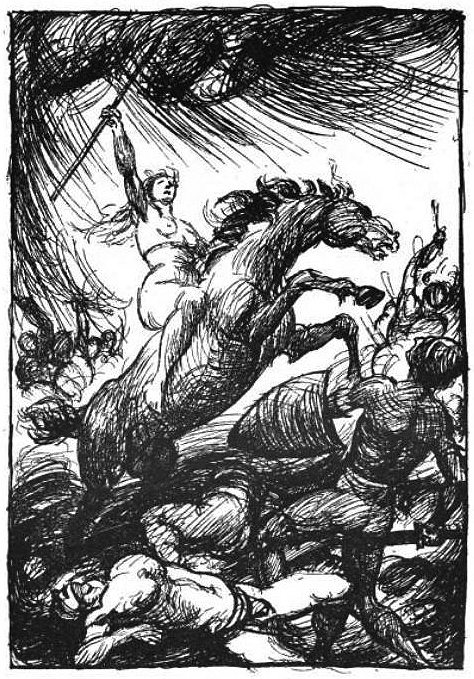
The Lay of Sigrdrífa From the Poetic Edda (c. 900–1100 CE)
What It Is: A poem in which the hero Sigurd (Siegfried) awakens the valkyrie Sigrdrífa (later identified with Brynhildr), who has been put to sleep by Odin as punishment for defying his will in battle. Upon waking, she offers Sigurd a horn of mead and delivers an extended instruction in runic wisdom: which runes to carve for victory in battle, which for healing, which for safe seafaring, which for eloquence in speech, which for the protection of the mind. She then delivers a set of ethical counsels: avoid swearing false oaths, beware of the treachery of those you trust, do not argue with fools, and honour the dead.
Why It Matters: The Sigrdrífumál is the clearest surviving text on the operative use of runes not as an alphabet but as a system of sacred symbols with specific magical applications. Each category of rune has a specific function: ál-rúnir (ale-runes) protect against poison, brim-rúnir (wave-runes) protect at sea, mál-rúnir (speech-runes) grant eloquence, hugrunar (thought-runes) sharpen the mind. The runes are not letters that happen to carry magical associations; they are magical technologies that happen to also function as letters. This is identical to the understanding of Egyptian hieroglyphs as heka (words of power), of the Hebrew letters in Kabbalistic practice as creative forces, and of the Greek voces magicae in the PGM as operative sounds. The rune is a synthema in the Chaldean sense: a token placed in the material world by the divine, through which the practitioner can reconnect with cosmic power.
The figure of Sigrdrífa is equally significant. She is a valkyrie a divine feminine warrior who serves Odin on the battlefield and her punishment was for defying Odin’s command in battle by granting victory to the warrior she judged more worthy rather than the one Odin had chosen. Her defiance is an act of independent moral judgement: she chose Ma’at over obedience. Odin punished her for it, but the poem does not condemn her. It presents her wisdom as valid, her instruction as precious, and her defiance as the mark of a being who possesses genuine discernment rather than mere loyalty. The Zevist recognises in Sigrdrífa the principle that obedience to a divine command does not override the duty to act justly the same principle that animates the Promethean rebellion.
What to Take From It: The runes are operative technologies, not mere symbols. Each rune has a specific domain and a specific function. The feminine divine carries wisdom as powerful as any masculine source. Independent moral judgement is honoured even when it defies divine authority. The instruction of the valkyrie teaches the Zevist that sacred knowledge is transmitted through encounter, through awakening, and through the courage to defy unjust commands.
The valkyrie was punished for choosing justly over choosing obediently. She was put to sleep, not destroyed. And when she woke, she taught the runes. The Gods punish defiance but the knowledge of the defiant is preserved. Even the Gods honour wisdom above obedience.