 አማርኛ
አማርኛ العربية
 বাংলা
বাংলা Български
 中文
中文 Čeština
 Dansk
Dansk Deutsch
 Eesti
Eesti Ελληνικά
 Español
 Français
 हिन्दी
 Hrvatski
 IsiZulu
 Italiano
 日本語
日本語 Kiswahili
 Magyar
 Македонски
 नेपाली
 Nederlands
 فارسی
فارسی Polski
 Português
 Română
 Русский
 Slovenščina
 Suomi
Suomi Svenska
 Tagalog
 Türkçe
THE UPANISHADS
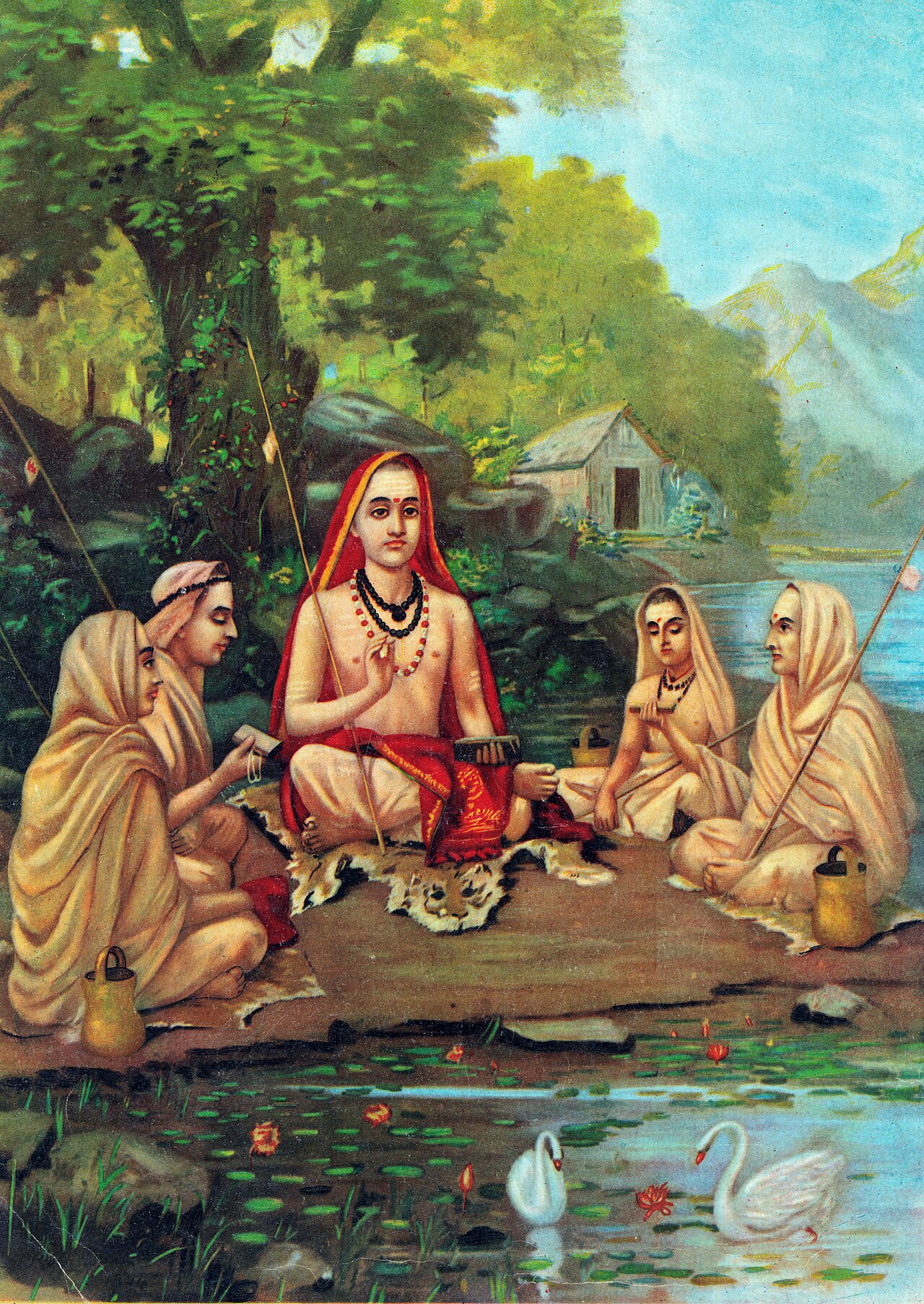
Chandogya · Brihadaranyaka · Mandukya · Kena · Isha (c. 800–200 BCE)
What It Is: The philosophical core of the Vedic tradition. The Upanishads (“sitting near” i.e., receiving esoteric teaching from a master) are dialogues between teachers and students exploring the nature of Brahman (the absolute reality), Atman (the individual self), and the identity between them. The Chandogya declares “All this is Brahman.” The Mandukya analyses the four states of consciousness (waking, dreaming, deep sleep, and the transcendent Fourth Turiya). The Brihadaranyaka explores the nature of death and immortality through the dialogues of the sage Yajnavalkya. The Kena asks the fundamental question: by what power does the mind think? The Isha declares that the divine pervades all things and that renunciation and engagement in the world are not opposed.
Why It Matters: The Upanishads are the Indian equivalent of the Corpus Hermeticum: the systematic exploration of the relationship between the human mind and the divine Mind, between the individual soul and the cosmic Soul. Their central declaration Tat Tvam Asi (“Thou art That”) is identical in meaning to the Hermetic declaration: “The Mind, the Father of all, brought forth a Human Being equal to Himself.” The same truth, the same discovery, the same theology, in two civilisations separated by thousands of miles and centuries of independent development. This is not coincidence. It is confirmation. The Mandukya’s analysis of the four states of consciousness is a practical map for meditation that corresponds to the stages of theurgical ascent described in the Chaldean Oracles and the Platonic tradition.
What to Take From It: The individual self (Atman) and the cosmic absolute (Brahman) are one. To know the self is to know God. The four states of consciousness are the laboratory of self-knowledge. The divine pervades all things renunciation and engagement are not opposed but complementary. The Upanishads teach the Zevist that the theology of the Gods is confirmed across every civilisation that looked deeply enough. The truth is not local; it is universal.
"Tat Tvam Asi" Thou art That. The self that knows is the God that is known. This is the core of all theology. The Upanishads declared it in Sanskrit. The Hermetica declared it in Greek. The truth declared itself.