 አማርኛ
አማርኛ العربية
 বাংলা
বাংলা Български
 中文
中文 Čeština
 Dansk
Dansk Deutsch
 Eesti
Eesti Ελληνικά
 Español
 Français
 हिन्दी
 Hrvatski
 IsiZulu
 Italiano
 日本語
日本語 Kiswahili
 Magyar
 Македонски
 नेपाली
 Nederlands
 فارسی
فارسی Polski
 Português
 Română
 Русский
 Slovenščina
 Suomi
Suomi Svenska
 Tagalog
 Türkçe
THE VÖLUSPÁ
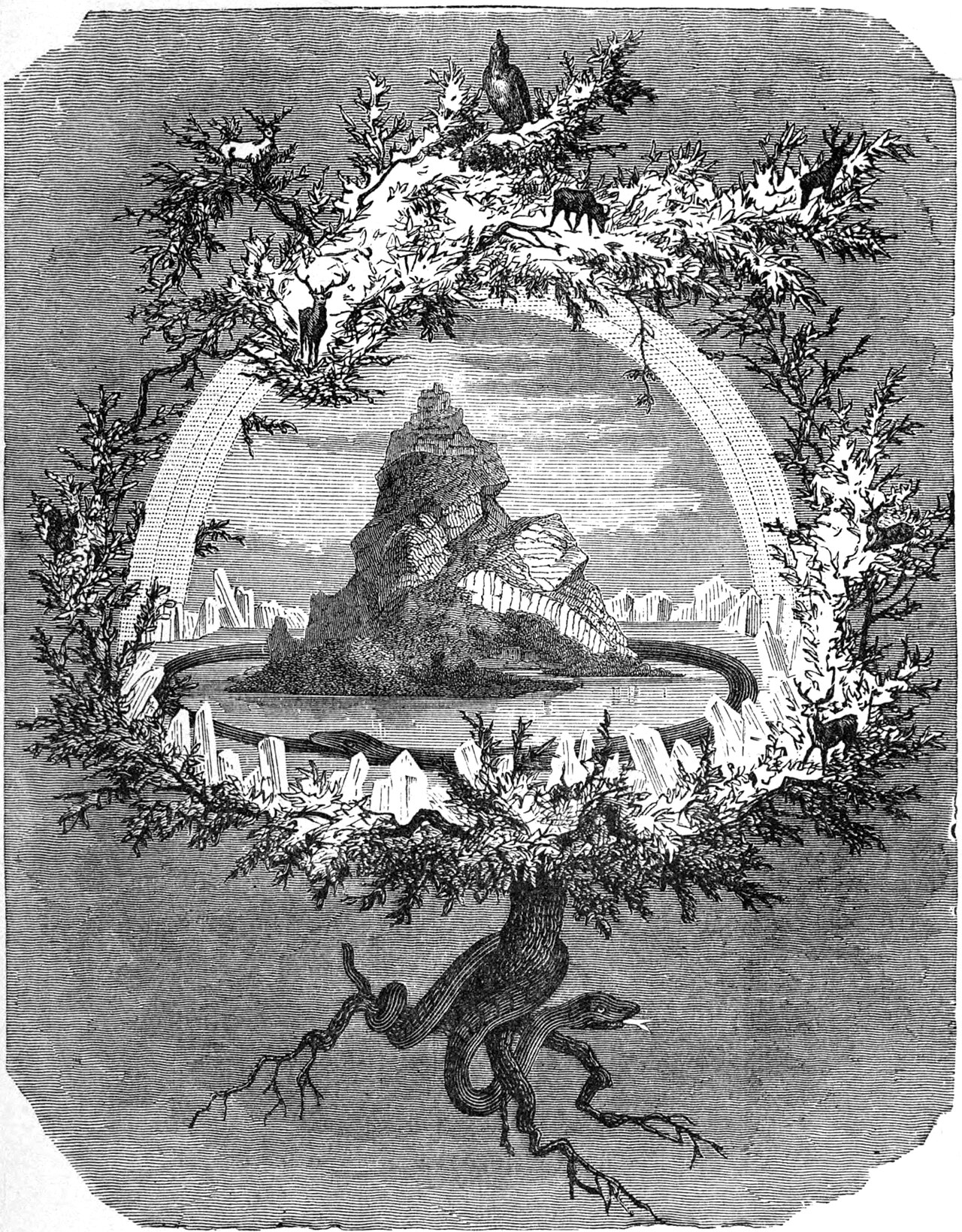
The Prophecy of the Seeress From the Poetic Edda (c. 900–1000 CE, recording far older oral tradition) 66 Stanzas
What It Is: The opening and supreme poem of the Poetic Edda. A völva (seeress, prophetess) is summoned by Odin and commanded to speak. She delivers the entire arc of cosmic history: from the Ginnungagap (the primordial void), through the creation of the worlds from the body of the giant Ymir, through the golden age of the Gods, through the corruption and breaking of oaths, through Ragnarök the twilight of the Gods, in which the cosmos is consumed by fire and flood and beyond, to the rebirth of a new earth rising green from the sea, where surviving Gods and a new humanity begin again. It is composed in fornyrddislag (Old Story Metre), the oldest and most solemn verse form of the Norse tradition. It was recited at assemblies and sacred gatherings as a cosmological frame for all that followed.
Why It Matters: The Völuspá is the Norse Theogony and the Norse Book of Revelation in a single poem of sixty-six stanzas. It contains more compressed cosmological information per line than almost any other text in the Indo-European tradition. Its account of creation from the body of Ymir is structurally identical to the Babylonian creation from the body of Tiamat and the Vedic creation from the body of Purusha (Rigveda 10.90): the cosmos is fashioned from the dismembered body of a primordial being. This is not coincidence but the universal mythological encoding of a single truth: the material world is made of divine substance. Matter is not opposed to spirit; it is spirit in a different state.
Ragnarök is the theological centrepiece. Unlike the Abrahamic apocalypse which is linear, final, and punitive Ragnarök is cyclical. The cosmos dies and is reborn. The Gods themselves perish: Odin is swallowed by Fenrir, Thor kills the Midgard Serpent and dies from its venom, Freyr falls before Surtr. But the death is not the end. A new earth rises. Baldr returns from the dead. Two human survivors emerge from the World Tree to repopulate the earth. This is identical in structure to the Stoic ekpyrosis (the periodic destruction and renewal of the cosmos by fire), to the Hindu Pralaya (cosmic dissolution at the end of a Kalpa), and to the Egyptian understanding of the eternal solar cycle: the sun dies every night and is reborn every morning. The cosmos is not a one-time event; it is a process. Ragnarök teaches the Zevist that destruction is not failure it is the necessary precondition for renewal. The world that emerges is not the same world; it is a purified world. The fire of Surtr is the fire of transformation.
What to Take From It: The cosmos is created from divine substance matter is sacred, not fallen. Ragnarök is cyclic, not final: destruction is followed by renewal. The Gods themselves are subject to the cosmic cycle they are not exempt from fate, which makes their courage meaningful. The Völuspá teaches the Zevist to see time itself as sacred: creation, preservation, dissolution, and re-creation are the eternal rhythm of divinity, not a story with a beginning and an end.
The sun turns black, earth sinks into the sea, the bright stars vanish. Fire and steam surge skyward. And then the earth rises again, green, from the waves. The Völuspá knows what the Abrahamic traditions deny: death is not the end. It is the door.