
 አማርኛ
አማርኛ العربية
 বাংলা
বাংলা Български
 中文
中文 Čeština
 Dansk
Dansk Deutsch
 Eesti
Eesti Ελληνικά
 Español
 Français
 हिन्दी
 Hrvatski
 IsiZulu
 Italiano
 日本語
日本語 Kiswahili
 Magyar
 Македонски
 नेपाली
 Nederlands
 فارسی
فارسی Polski
 Português
 Română
 Русский
 Slovenščina
 Suomi
Suomi Svenska
 Tagalog
 Türkçe
THE YOGA SUTRAS
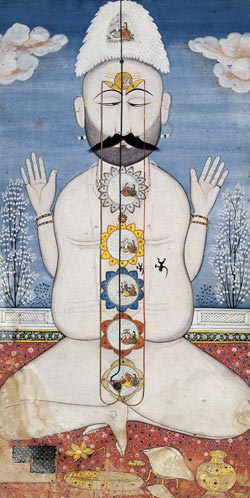
Patanjali Yoga Sūtras (c. 200 BCE–400 CE) 196 Aphorisms, 4 Chapters
What It Is: A systematic treatise of 196 terse aphorisms (sutras) codifying the theory and practice of Yoga the science of consciousness, concentration, and liberation. Attributed to the sage Patanjali, the text is divided into four books: Samadhi Pada (on meditative absorption), Sadhana Pada (on practice), Vibhuti Pada (on supernatural attainments), and Kaivalya Pada (on ultimate liberation). It defines Yoga as “the cessation of the modifications of the mind” (yogas citta-vrtti-nirodha) and presents the eight-limbed (Ashtanga) path: ethical restraints (Yama), observances (Niyama), posture (Asana), breath control (Pranayama), sense withdrawal (Pratyahara), concentration (Dharana), meditation (Dhyana), and absorption (Samadhi).
Why It Matters: The Yoga Sutras are the most systematic surviving manual of consciousness technology in any tradition. Where the Bhagavad Gita provides the theology and ethics of spiritual practice, Patanjali provides the engineering. The Sutras are not philosophical speculation; they are a technical manual for the systematic development of the soul’s faculties. Every meditation practice in the Zevistic system chakra activation, energy circulation, concentration exercises, astral development operates on principles that Patanjali codified two millennia ago. He did not invent these techniques; he organised and systematised a body of practice that was already ancient in his time.
The eight limbs of Yoga correspond structurally to the stages of theurgical ascent described in the Neoplatonic and Chaldean traditions. The ethical foundations (Yama and Niyama) correspond to the Zevistic requirement that the practitioner’s life be aligned with Ma’at before advanced practice is attempted. The control of breath (Pranayama) corresponds to the use of sacred sounds and breathing patterns in theurgical ritual. The withdrawal of the senses (Pratyahara) corresponds to the Hermetic instruction to “turn inward” and close the gates of perception to external distraction. The stages of concentration (Dharana), meditation (Dhyana), and absorption (Samadhi) correspond to the ascending stages of theurgical union described in the Chaldean Oracles: the soul progressively concentrates its awareness until it achieves direct contact with the divine source.
The Vibhuti Pada the chapter on supernatural attainments (siddhis) is particularly relevant. Patanjali describes, with clinical precision, the psychic powers that arise from advanced concentration: telepathy, clairvoyance, levitation, knowledge of past lives, mastery of the elements. He does not present these as miracles but as natural consequences of the systematic development of consciousness. This is identical to the Zevistic understanding of psychic faculties: they are not supernatural but natural latent capacities of the soul that become operative through disciplined practice.
What to Take From It: Yoga is a science, not a religion a systematic technology for the development of consciousness. The eight-limbed path is the structural equivalent of the theurgical ascent in every tradition. Ethical alignment is the prerequisite for advanced practice. Supernatural attainments are natural consequences of systematic training, not miracles. The cessation of mental noise is the gateway to direct perception of the divine. Patanjali teaches the Zevist the mechanics of what the theology describes.
Yogas citta-vrtti-nirodha Yoga is the cessation of the modifications of the mind. When the noise stops, what remains is the divine. Patanjali does not speculate about this. He provides the engineering.