 አማርኛ
አማርኛ العربية
 বাংলা
বাংলা Български
 中文
中文 Čeština
 Dansk
Dansk Deutsch
 Eesti
Eesti Ελληνικά
 Español
 Français
 हिन्दी
 Hrvatski
 IsiZulu
 Italiano
 日本語
日本語 Kiswahili
 Magyar
 Македонски
 नेपाली
 Nederlands
 فارسی
فارسی Polski
 Português
 Română
 Русский
 Slovenščina
 Suomi
Suomi Svenska
 Tagalog
 Türkçe
X. IZFET
· Ισφέτ · ʾIsf.t ·
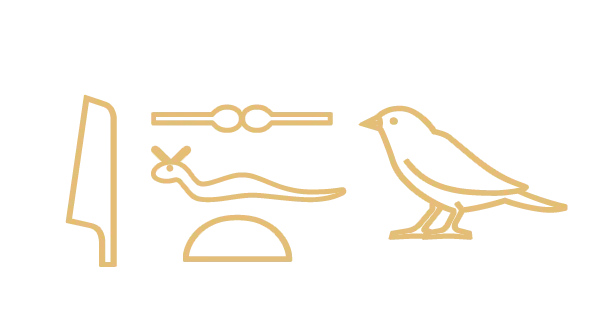
The Primordial Adversary of the Cosmic Order
On the Nature of Izfet
In Zevism, Izfet (ʾIsf.t) designates the primordial, existential, and ever-present force of disorder, untruth, injustice, and entropy that opposes the cosmic order established and sustained by the Gods. It is not a God. It is not a being. It is not a person, a demon, or a fallen angel. It is a condition, the fundamental tendency of existence toward dissolution, chaos, ignorance, and the disintegration of all that the Divine has ordered.
The ancient Egyptians did not invent the concept of Izfet. They discovered it. They observed that the cosmos tends toward dissolution unless actively sustained. They observed that truth must be spoken or it vanishes. They observed that justice must be enacted or it collapses. They observed that the Gods themselves labour ceaselessly to maintain the order of the world against the ever-present pressure of chaos. And they gave this pressure a name: Isfet, the opposite of Ma'at, the negation of the Divine Order, the entropy of the sacred.
Izfet is not evil in the Abrahamic sense. It is not a moral quality attributed to a rebellious angel or a fallen creation. It is a cosmological reality, the natural tendency of the material world to decay, to forget, to lose form, and to dissolve into chaos. A garden left untended returns to wilderness. A truth left unspoken is forgotten. A civilisation left unguarded is overrun. A soul left uncultivated sinks into animal consciousness. This universal tendency toward disintegration is Izfet. It requires no malicious agent; it is the default state of unattended existence.
But Izfet can be accelerated, amplified, and weaponised. This is what the Yehuboric system accomplishes: it takes the natural entropy of the cosmos and transforms it into an organised programme of spiritual, intellectual, and civilisational destruction, disguised as the service of God.
On Izfet as Entropy: The Universal Tendency Toward Dissolution
The modern concept of entropy provides the closest scientific analogue to the ancient Egyptian understanding of Izfet. In thermodynamics, entropy is the measure of disorder in a system, the tendency of all organised structures to decay, of all energy to dissipate, and of all differentiated states to merge into undifferentiated equilibrium. A hot object cools. A building crumbles. A star burns out. The universe moves inexorably toward heat death, the condition of maximal entropy, where no energy gradient exists, no work can be performed, and nothing happens.
The Egyptians understood this principle three thousand years before Clausius formulated the Second Law of Thermodynamics. They observed it in the annual flood of the Nile: without the flood, the land reverts to desert. They observed it in the daily cycle of the sun: without the journey of Ra through the Duat, the sun does not rise, and the world is consumed by darkness. They observed it in the moral sphere: without the active practice of Ma'at, society collapses into injustice, falsehood, and violence.
The critical insight of the Egyptian worldview, and the foundation of the Zevistic understanding, is that entropy is not merely physical but spiritual. The tendency of matter to decay is paralleled by the tendency of the soul to forget, of the mind to darken, of civilisation to regress, and of the sacred to be profaned. Izfet operates simultaneously at every level of existence: physical (decay), biological (death), psychological (ignorance), social (injustice), and spiritual (the severance of the bond between humanity and the Divine). The labour of the Gods is the labour against Izfet at all of these levels simultaneously.
This is why the Egyptians understood the daily journey of Ra through the Duat as the supreme act of cosmic maintenance: each night, Ra descends into the underworld and battles Apophis, the agent of Izfet, so that the sun may rise again. The battle is never won permanently; Apophis returns each night. Izfet is never defeated; it is held at bay. The work of sustaining the cosmic order is eternal, and it requires the active participation of both the Gods and humanity. This is the meaning of Ma'at: not a static condition of order but the active, ceaseless, cooperative labour of Gods and men against the dissolution of all things.
On Izfet and Ignorance: The Root of Suffering in the Human Being
In the human being, Izfet manifests primarily as ignorance. Not the simple absence of information, which is merely the starting condition of every soul, but the active state of not knowing that prevents the soul from perceiving the Divine Order, from recognising its own nature, and from fulfilling its purpose within the cosmic structure.
The Egyptians understood ignorance as the fundamental human form of Izfet. The soul that does not know Ma'at cannot practise Ma'at. The soul that does not know the Gods cannot commune with the Gods. The soul that does not know itself cannot cultivate its Ka, refine its Ba, or attain the condition of the Akh. Ignorance is not passive; it is actively destructive, because the ignorant soul does not merely fail to contribute to the cosmic order; it inadvertently serves Izfet by acting without knowledge, without justice, without alignment with the Divine.
Plato articulated the identical principle in the Greek philosophical tradition. In the Republic (514a–520a), the Allegory of the Cave describes humanity as prisoners who perceive only shadows cast upon a wall and mistake them for reality. The prisoners are not evil; they are ignorant. Their condition is not moral failure but epistemological imprisonment. The philosopher who ascends from the cave to perceive the Forms, and ultimately the Form of the Good, which Plato identifies with the Sun (the Greek analogue of Ra), is the one who has overcome Izfet within himself.
In the Phaedrus (246a–249d), Plato describes the soul as a charioteer with two horses: one that ascends toward the Divine and one that drags the soul downward toward matter. The downward pull is Izfet, not as a moral failing but as the natural tendency of the unrefined soul to sink, to forget, and to lose its connection to the higher reality. The charioteer who masters both horses and ascends to behold the Forms is the soul that has overcome Izfet through knowledge, discipline, and alignment with the Good.
Socrates' fundamental insight that virtue is knowledge, and that no one does evil willingly but only from ignorance (Protagoras 345d–e), is the Greek expression of the Egyptian understanding of Izfet. The human being who acts unjustly does so because he does not know what justice is. The human being who fails to cultivate his soul does so because he does not know that his soul can be cultivated. The human being who serves Izfet does so because he does not know Ma'at. Ignorance is the root. Everything else follows.
On the Nine Instruments of Izfet: The Yehuboric System
The Yehuboric system is, in its entirety, a system for the production and perpetuation of Izfet. Each of the nine pathologies identified in the theological vocabulary of Zevism represents one instrument by which Izfet is amplified, organised, and directed against the Divine Order and against humanity. Together, they constitute the most comprehensive and sustained programme of Izfet production in the history of human civilisation.
| # | Instrument | Nature | How It Produces Izfet |
| I | Yehuborim | The Condition | The God-Sealed Hollow Ones: vessels that bear a fake Divine seal yet are emptied of Divine presence. They promote Izfet as the end of their works. Without the Yehubor, the system has no agent. |
| II | Birburim | The Speech | The Barbarous Utterances: systematic lies against the Gods and history. Every Birbur is a unit of Izfet injected into the stream of human discourse. The Birburim replace truth with falsehood, thereby severing the mind from Ma'at. |
| III | Atibilibil | The Confusion | The Ruinous Delusion: the systematic adulteration of knowledge so that truth and falsehood become inseparable. Atibilibil is Izfet applied to the faculty of discernment. The mind can no longer distinguish order from disorder, truth from lie. |
| IV | Sahiburah | The Crime Against God | The Shaming of the Divine Body: the commission of atrocities in God's Name, thereby transferring moral debt from the criminal to the Creator. Sahiburah is Izfet applied to the Sahu of God. It obscures the Divine in the consciousness of humanity. |
| V | Varvarim | The Wars | The Barbarous Wars: organised violence performed in the Name of God, destroying civilisation, knowledge, and the conditions necessary for spiritual advancement. Varvarim is Izfet applied to the body of the world. |
| VI | Eilotil | The Enslavement | The Spiritual Helotisation: the conversion of the human–Divine relationship from child and parent to slave and master. Eilotil is Izfet applied to the bond between humanity and God. It replaces love with fear, and kinship with slavery. |
| VII | Istoriyach | The False History | The Perversion of History: the fabrication of a false past and the suppression of the true past. Istoriyach is Izfet applied to time itself. It severs humanity from its actual heritage and replaces it with a manufactured fake “theology.” |
| VIII | Epistemot | The Death of Knowledge | The Killing of Episteme: the suppression of spiritual, scientific, and practical knowledge. Epistemot is Izfet applied to the human capacity to know. It destroys the organ by which truth is perceived. |
| IX | Kagoim | The Exclusion | The Denial of the Ka to the Nations: the doctrine that spiritual advancement, or any advancement, belongs only to the elect. Kagoim is Izfet applied to universal humanity. It declares the Divine spark in most of humanity to be a stone or animal soul incapable of growth. |
Each instrument feeds the next, and all nine together form a self-sustaining engine of Izfet production. The Yehubor produces Birburim. The Birburim produce Atibilibil. The Atibilibil enables the Sahiburah. The Sahiburah justifies the Varvarim. The Varvarim create the conditions for Eilotil. The Eilotil is maintained by Istoriyach. The Istoriyach requires Epistemot. The Epistemot is justified by Kagoim. And the Kagoim returns to the Yehubor, who is both the origin and the beneficiary of the entire cycle. The system is circular, self-reinforcing, and designed to perpetuate Izfet indefinitely.
On the War Against Izfet as the Duty of the Gods
In the Egyptian understanding, the war against Izfet is not optional. It is the primary function of the Gods. In spiritual metaphor, Ra does not choose to battle Apophis; He must battle Apophis, or the sun does not rise. Horus does not choose to avenge Osiris; He must avenge Osiris, or the cosmic order is not restored. Ma'at does not choose to weigh the heart; She must weigh the heart, or justice ceases to exist. The maintenance of cosmic order against the perpetual pressure of Izfet is not a preference of the Gods but the essence of their being.
In the Greek understanding, Zeus is the guardian of Dikē (Justice) and the punisher of Hybris. He overthrew the Titans not from ambition but because the Titanic order had become a vehicle of chaos. He established the Olympian order not as tyranny but as the imposition of structure, law, and justice upon a cosmos that would otherwise dissolve. Athena was born from the head of Zeus, fully armed, because the defence of wisdom requires weapons. Apollo drives his chariot across the sky because without the light the world falls to darkness. The Gods do not rest; they labour ceaselessly against Izfet.
In the Vedic understanding, the battle between the Devas and the Asuras is the cosmological expression of the same principle: the ordered powers of the cosmos (Rta) in perpetual contest with the forces of dissolution. The Devas do not choose this contest; it is their nature. Without it, the cosmos ceases to function.
The human duty mirrors the divine duty. The practitioner of Ma'at is a co-labourer with the Gods in the war against Izfet. Every act of truth resists Izfet. Every act of justice resists Izfet. Every act of spiritual cultivation resists Izfet. Every act of knowledge resists Izfet. The war is fought not only in the heavens but in every human heart, every human mind, every human society, every day. To live in Ma'at is to fight Izfet. To abandon Ma'at is to serve Izfet. There is no neutral ground.
On the 42 Laws of Ma'at as Laws Against Izfet
The 42 Negative Confessions of the Egyptian Book of the Dead, recited by the soul before the Tribunal of Osiris, are not arbitrary commandments imposed by a capricious deity. They are the 42 fronts of the war against Izfet, each confession naming one specific form that Izfet takes in human conduct.
Each confession is a defensive position against one form of Izfet. Together, the 42 confessions constitute a complete fortification of the soul against the totality of Izfet in all its manifestations. The soul that can truthfully recite all 42 confessions has fought Izfet on every front and seeks to prevail. Its heart is light. The feather of Ma'at does not outweigh it. It passes into the company of the Gods.
The soul that cannot recite these confessions is not aware of Izfet, whether knowingly or unknowingly, and the consequence is not punishment but weight. The heart is heavy with Izfet, and Ammit, the punishment by the design of existence for following Izfet, awaits. The Tribunal of Osiris is not a court of vengeance; it is a court of measurement. The question is not “did you obey the commandments?” but “how much Izfet have you carried, and how much Ma'at have you practised?”
On the Existential Basis of Izfet: It Is Everywhere
Izfet is not localised. It is not confined to the human heart, to society, to politics, or to religion. It is an existential condition that permeates every level of reality.
In the physical cosmos: entropy, decay, dissolution. Stars die. Planets cool. Structures crumble. Without the active input of energy, all material systems tend toward disorder.
In the biological world: disease, degeneration, death. Every living organism fights a perpetual war against the dissolution of its own structure. The moment the fight ceases, the organism decays.
In the psychological sphere: ignorance, confusion, delusion. The human mind does not naturally tend toward clarity; it tends toward the path of least resistance, which is the acceptance of whatever is easiest to believe. Without the active cultivation of knowledge, the mind fills with Izfet: superstition, prejudice, fear, and the acceptance of falsehood as truth.
In the social sphere: injustice, corruption, tyranny. No society naturally tends toward justice; every society tends toward the concentration of power in the hands of those willing to seize it. Without the active practice of justice, society collapses into the exploitation of the many by the few.
In the spiritual sphere: the severance of the bond between humanity and the Divine. Without the active practice of spiritual cultivation, such as meditation, prayer, ritual, theurgy, and the pursuit of knowledge, the soul loses its connection to the Gods. The channel closes. The Ka diminishes. The Ba forgets. The Akh does not form. The soul sinks into the condition of the Andrapod and does not rise.
Izfet is therefore not a problem to be solved once and forgotten. It is a condition to be resisted permanently, at every level, in every domain, by every human being and every God, for as long as the cosmos endures. This is the Egyptian understanding, and it is the Zevic understanding. The war against Izfet is the meaning of existence.
On Izfet as Injustice: The Absence of the Cosmic Law
In its social and moral dimension, Izfet is injustice in its most fundamental sense: not merely the violation of human law, but the violation of the cosmic law that the Gods established and that sustains the order of the world.
The Egyptian concept of Ma'at is simultaneously truth, justice, order, and cosmic balance. Its absence, Izfet, is simultaneously falsehood, injustice, chaos, and cosmic imbalance. The two are inseparable: where there is falsehood, there is injustice. Where there is injustice, there is chaos. Where there is chaos, there is the dissolution of the bond between Gods and men.
The Dikē of Zeus is the Greek expression of the same principle: the cosmic justice that sustains the world, whose violation (adikia) generates the same cascade of consequences. Hesiod records in the Works and Days (225–247) that when Dikē is practised, the earth yields abundance, the trees bear fruit, the flocks multiply, and the people prosper. In metaphor, this means that there is growth and existential prosperity. When Dikē is violated, famine comes, plague comes, armies are destroyed, ships are lost at sea. This is not supernatural punishment; it is the natural consequence of the disruption of the order upon which all prosperity depends.
The practitioner of the Yehuboric system produces Izfet as injustice at every level.
He lies about the Gods (Birburim) and thereby introduces falsehood into the cosmic order.
He confuses the minds of populations (Atibilibil) and thereby makes justice impossible, for justice requires the capacity to discern truth from falsehood.
He wages wars in the Name of God (Varvarim) and thereby destroys the physical infrastructure of civilisation.
He enslaves souls (Eilotil) and thereby severs the bond between humanity and the Divine.
He fabricates false history (Istoriyach) and thereby deprives humanity of the knowledge of its own past.
He kills knowledge (Epistemot) and thereby destroys the tools by which injustice can be recognised and resisted.
He excludes entire peoples from the sacred (Kagoim) and thereby declares the majority of humanity unworthy of the cosmic order that sustains them.
Each of these acts is an act of cosmic injustice. Each moves the world further from Ma'at and closer to Izfet. Together, they constitute the most sustained assault upon the cosmic order in human history.
On the Five Products of Izfet in the Soul That Follows the Yehubor
The soul that follows the path of the Yehubor, whether as agent or as unwitting instrument, accumulates Izfet in five specific forms. These five forms are the existential consequences of participation in the Yehuboric system, and they constitute the weight that the soul carries before the Tribunal of Ma'at.
I. Impurity of the Soul (Akatharsia). The soul that practises or enables any of the nine instruments of Izfet becomes contaminated by the disorder it has served. The Ka is muddied. The Ba is confused. The heart accumulates weight. This is not metaphorical: in the Egyptian understanding, the acts of Izfet leave a residue upon the soul that is measurable, weighable, and consequential. The 42 Confessions are the instrument of measurement. Each confession names a form of contamination. The soul that cannot recite them truthfully is heavy with Izfet. The impurity can be accumulated; it is accumulated through action, through false speech, and through alignment with the forces of disorder.
II. Chaos and Confusion (Atibilibil). The soul that serves the Yehuboric system loses the capacity for clear perception. It can no longer distinguish truth from falsehood, because it has been immersed in falsehood so long that falsehood has become its natural environment. The confusion is not intellectual alone; it is spiritual: the soul can no longer perceive the Gods, can no longer feel the current of Ma'at, and can no longer orient itself within the cosmic order. It is adrift in the Izfet it has helped to produce.
III. Injustice from Blindness Regarding the Divine Law (Adikia ek Typhloseos – Blindness by Injustice). The soul that has been blinded by the Yehuboric system commits injustice not from malice but from the inability to perceive justice. It cannot see that the destruction of another people's temples is a crime, because the Birburim have taught it that those temples are “Demonic abominations”. It cannot see that the exclusion of the “Goyim” from spiritual knowledge is a violation of the cosmic order, because the Kagoim has taught it that the “Goyim” are incapable of spiritual growth. It cannot see that the waging of holy wars is an assault upon the Divine, because the Varvarim have taught it that God commands the war because it was “promised” to them. The blindness is the product of the Yehuboric system, and the injustice is the product of the blindness.
IV. Harmful Errors Against One's Own Evolution and That of Others (Deviation from Ma'at). The soul that serves Izfet commits errors that are harmful not only to others but also to itself. Every act of Birburim degrades the soul that speaks the lie. Every act of Varvarim brutalises the soul that wields the sword. Every act of Kagoim diminishes the soul that acts in this manner. The practitioner of Izfet does not only harm the world; he harms himself. He does not only retard the spiritual evolution of others; he retards his own. He accumulates weight upon his heart with every act, with every word, and with every prayer that contains a curse. And because the Yehuboric system has destroyed his capacity to perceive this accumulation (through Atibilibil and Epistemot), he does not know that he is sinking. He believes he is ascending.
V. The Practice of Falsehood: Distance from Satya (Utterance of constant lies). The final and most comprehensive product of Izfet in the soul is the condition of being far from truth. In Sanskrit, Satya (सत्य) means Eternal Truth: that which is, that which endures, that which cannot be destroyed by any lie. Satya is the name by which the Divine is known in the oldest spiritual tradition on earth. To be aligned with Satya is to be aligned with the fundamental reality of the cosmos: Ma'at, Dikē, Rta, the Eternal Law. To be distant from Satya is to be immersed in Izfet: in falsehood, in illusion, and in the manufactured unreality that the Yehuboric system produces and sustains. The practitioners and agents of the Yehuboric system are, by definition, practitioners of consistent lying: they lie about the Gods (Birburim), they lie about history (Istoriyach), they lie about the nature of humanity (Kagoim), they lie about the purpose of existence (Eilotil), and they use these lies as weapons against the truth (Varvarim, Epistemot, Sahiburah). They are, in the most literal and precise sense, far from Satya: far from the Eternal Truth that is the foundation of the cosmos, the nature of the Divine, and the birthright of every human soul.
On the Universal War Against Izfet
The war against Izfet is not a war of one religion against another. It is not a war of one people against another. It is the universal war of all that lives against dissolution, of all that knows against ignorance, of all that creates against entropy. Every human being who speaks truth resists Izfet. Every human being who acts justly resists Izfet. Every human being who cultivates the soul resists Izfet. Every human being who seeks knowledge resists Izfet. Every human being who recognises the Divine in all its forms resists Izfet.
The Yehuboric system, or the Abrahamic religions solely, are not the only source of Izfet in the world, and Zevism does not claim that they are. Izfet is existential; it would exist even if the Abrahamic system were replaced. But the Yehuboric system is the most organised, most sustained, and most theologically sophisticated instrument of Izfet production in current human history. It has taken the natural entropy of the cosmos and amplified it a thousandfold. It has taken the natural tendency of the human soul toward ignorance and transformed it into a civilisational programme, “blessed are the ignorant, for they shall find respite”. It has taken the natural tendency of societies toward injustice and sanctified it with the Name of God.
The naming of these instruments, Yehuborim, Birburim, Atibilibil, Sahiburah, Varvarim, Eilotil, Istoriyach, Epistemot, and Kagoim, is itself an act of war against Izfet. For Izfet thrives in namelessness. The unnamed disease cannot be treated. The unnamed injustice cannot be resisted. The unnamed lie cannot be refuted. To name is to illuminate. To illuminate is to resist and defeat. To resist and defeat it through Truth is to serve Ma'at.
This is the duty of every soul that knows: to name the Izfet wherever it is found, to resist it with every faculty of mind and spirit, and to labour alongside the Gods in the eternal work of sustaining the cosmic order against the pressure of dissolution. This is the meaning of Ma'at. This is the meaning of Dikē. This is the meaning of Satya. This is the meaning of Zevism.
A Message from Osiris
“YE THAT SPEAK OF GREAT WORDS,
PROVE YOURSELVES
TO BECOME THE HERALDS WHO SHALL INHERIT
THE ONE AND TRUE WAR & WISDOM,
THAT OF FIGHTING AND DENYING IZFET.
FOR WHERE IS YOUR TEMPLE THAT YOU SUPPORT?
WHAT HAVE YOU BUILT?
FOR WHERE ARE THE DOCTRINES YOU UPHOLD?
HOW HAVE YOU TREATED THEM?
FOR WHERE IS THE PROOF THAT YOU HAVE DEMOLISHED YEHUBOR WITHIN?
WHERE IS YOUR HOLINESS?
WE WILL OBSERVE YOU AND MAKE PLENTY OF YOU,
BUT OBSERVE YOURSELVES AND MAKE PLENTY OF YOURSELVES,
TO MANIFEST THE DIVINE AND BLESSED DAY,
WHERE THE UTTERANCES WILL BE GIVEN FROM ABOVE,
TO BANISH THE ONE BEYOND ALL NAMES,
WHICH YOU KNOW AS ISFET” - OSIRIS
Page & Holy Texts: High Priest Zevios Metathronos