 አማርኛ
አማርኛ العربية
 বাংলা
বাংলা Български
 中文
中文 Čeština
 Dansk
Dansk Deutsch
 Eesti
Eesti Ελληνικά
 Español
 Français
 हिन्दी
 Hrvatski
 IsiZulu
 Italiano
 日本語
日本語 Kiswahili
 Magyar
 Македонски
 नेपाली
 Nederlands
 فارسی
فارسی Polski
 Português
 Română
 Русский
 Slovenščina
 Suomi
Suomi Svenska
 Tagalog
 Türkçe
Grandmaster
Jacques de Molay
author: Karnonnos
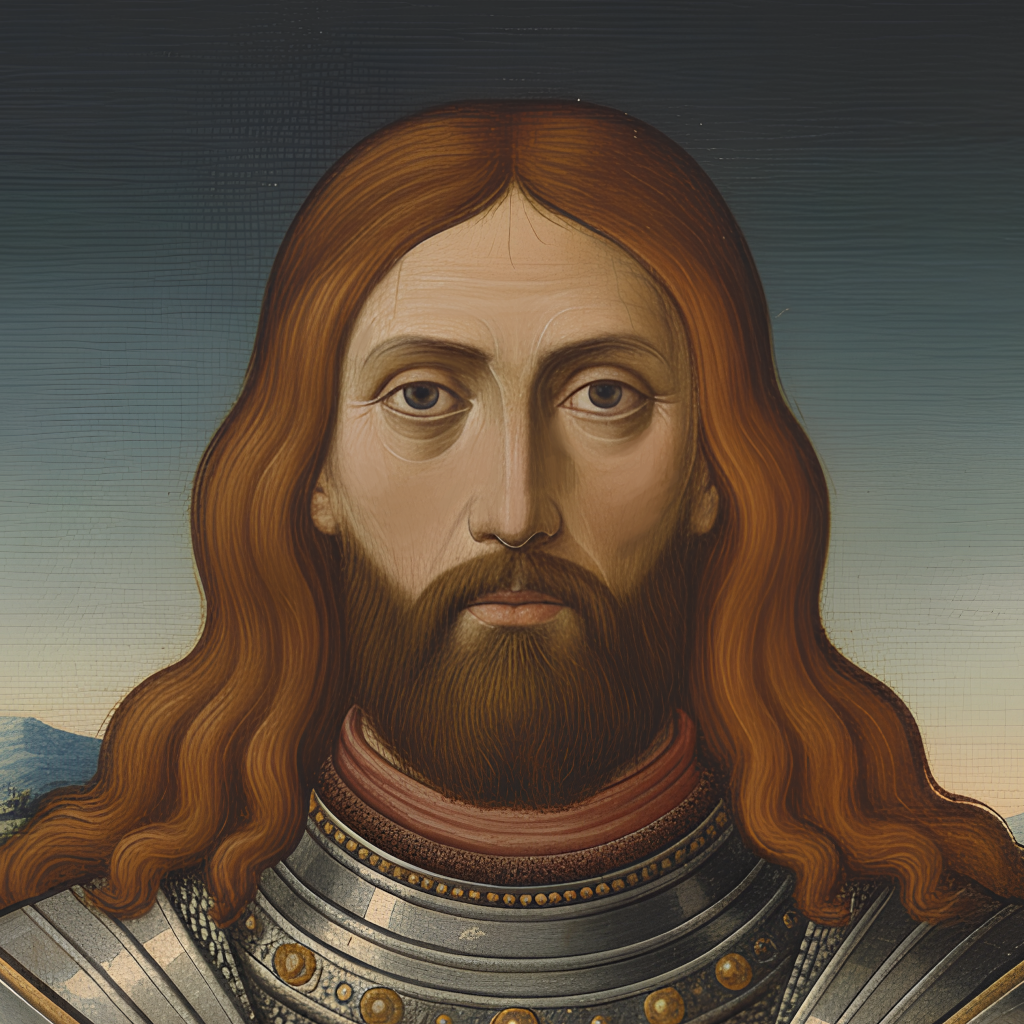
Jacques de Molay was the head of the Knights Templar, a most mysterious figure in history who sought to overturn the medieval order. His power soon attracted the enmity of the Pope and the King of France, who infamously put him on trial and had him burned at the stake.
THE TEMPLE
The full name of the Knights Templar was the “Poor Fellow-Soldiers of Christ and of the Temple of Solomon” (Pauperes commilitones Christi Templique Salomonici), informally their organization was therefore known as the Temple and their members as Templars.
After the First Crusade was announced, Jerusalem had been captured by the Crusaders in 1099, being turned into a Kingdom of European colonists, Muslims, Jews, Druze and Arab Christians, all of whom had separate legal systems and lived rather separate lifestyles, a situation somewhat already parallelized in Islamic Spain. Other states were set up, collectively known as Outremer. Supposedly, a knight named Hugues de Payens petitioned King Balduin of Jerusalem to set up an Order to protect pilgrims who were frequently attacked by Muslim bandits and to protect the Kingdom from the Caliphate of Egypt at the south and the Seljuk Turks to the north.
The created Order had its headquarters on the Mount, a palace in the residency of the Al-Aqsa mosque and supposedly the site where the Biblical ‘temple’ of Solomon was situated underneath, giving the Temple as an institution a rather mystical allure. It was a military order made up of knights, sergeants and other combatants, other than the chaplains who were oath-bound not to shed blood. Like other military orders, the others swore vows of temperance and chastity yet were free to conduct themselves in warfare and the martial art.
They created a system of branch houses across Western Europe and were obliged to pay a third of their income towards the Crusading cause in both the Levant and in Spain, making it necessary for them to have built an infrastructure for international finance. The Templars were not the only military order, as the Hospitalliers, Order of Saint Lazarus, the Teutonic Knights and the Order of St. Thomas of Acre followed in their stead.
The thirteenth century was a period of rapid expansion and increasing urban complexity in Europe. In this milieu, the conduct of the Order was known to be spotless, and their reputation for processing funds in a hitherto largely responsible way contributed to their legend among the people, meaning that the growth of the organization in all financial sectors in Europe and the amount of land they began to amass was unprecedented. In particular, they had strong ties to the burgeoning middle classes which had finally started to recover from the disaster of the ancient empire’s fall.
They placed themselves in the service of the King of France whose financial advisors were taken from their ranks, increasingly even providing household servants to the Pope himself. Based on this mix of donations and business dealings, the Templars owned Cyprus and acquired large swathes of land. They bought and managed lucrative vineyards and farms, they were either given or had erected massive stone cathedrals and castles; they were involved in manufacturing, import, and export with guilds under their supervision, and they had their own navy. Hence the order possibly qualifies as the world's first multinational corporation since Antiquity.
In contrast, many Crusades were announced during the 13th century and all came to a grinding halt. Jerusalem was recaptured by the great ruler of Egypt, Saladin, in 1187. Although they wanted to recapture the city, the monarchies of Europe, crippled as they were by usury, were largely unwilling to send money to the Crusader kingdoms and city states. Bickering between monarchs and aristocrats had increasingly ruined the Crusading ‘cause’, such as Frederick I Barbarossa’s failed crusade, along with the more successful yet still failed venture of his son Frederick II. By the middle of the century, they failed to monopolize on the Mongol invasion of the Islamic empires that had thrown them into chaos.
Even before de Molay joined, the Templars had shown an increasingly independent, intransigent streak in certain matters that began to cause serious fissures with the monarchies of Europe. During periods of bickering, some Templar commanders followed their own agenda, conquering or negotiating for Muslim lands. This is the case for Renaud de Vichiers, the Grandmaster, who had worked out a great resolution with the Sultan of Damascus to work a vast farming region, leading to rage from Louis IX who coerced him to go back on his words and expel the Marshal of the Temple negotiating the agreements from all French-held lands.
The Last Templar: the Tragedy of Jacques de Molay, Last Grand Master of the Temple, Alain Demurger3
The organisation of the Order was both hierarchical and decentralised. There were three levels. At the top, management of the Order was carried out by a Master, Grand Master or General Master, who was elected for life. He was assisted by dignitaries who carried out specific functions, namely, the Marshal (leader in war), the Grand Commander - who at that period was still the Order's Treasurer — the Draper, the Turcopolier (who commanded the Turcopoles, auxiliary troops of mounted archers who formed a light cavalry and fought Turkish-style). Finally, there were the wise and worthy men (prud'hommes), the Master's associates (socius, socii), who formed a small council.
The other issue is that large amounts of the Templar leadership had gone over to approaching the Gods through the ‘dark side’.
EARLY LIFE
Jacques de Molay was born in 1242, in Molay, Haute-Saône. This locale was in the County of Burgundy, a territory that was part of the Holy Roman Empire under the kaiser Frederick II.
Like most Templar knights, Molay was born into a family of middle-ranking nobility. This social standing was typical for those who joined the military orders during the Crusades, as membership required a certain level of birth status while not demanding the highest aristocratic pedigree. The modest nobility of his family background would have provided him with the basic education and martial training expected of a knight.
Although it was not part of France, Burgundy was awash with activity because the violent Albigensian Crusade against the heretical Cathars had only occurred a few decades before, and many knights and inquisitors had passed through the country. Much like what would occur later, the neighboring Kingdom of France handsomely profited from the persecution of Cathars and collaborated with the Papal Inquisition.
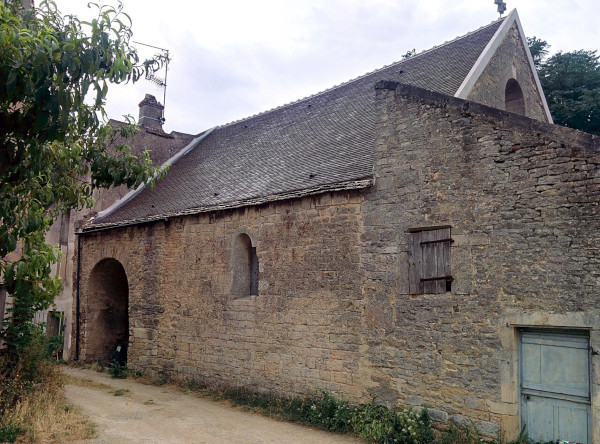
In 1265, as a young man, Molay took the momentous step of joining the Knights Templar – his philosophical outlook and prowess had been observed from afar. His strangely prestigious reception into the Order took place in a chapel at the Beaune House, where he was inducted by Humbert de Pairaud, who held the prestigious position of Visitor of France and England, and another prominent Templar present at this ceremony was Amaury de la Roche, the Templar Master of the province of France. The initiation marked the beginning of Molay's lifelong commitment to the Order that would end with his acrimonious death.
Around 1270, approximately five years after joining the Templars, de Molay traveled to the Levant. The journey took him to the Crusader states in the Levant, where the Knights Templar was positioned to assist with the Crusades. Little is recorded of his activities during the next twenty years. This two-decade gap in the historical record reflects the fact much of his life circumstances were deleted by Inquisitors.
Boccaccio gives an insight into his life:
On the Fates of Famous Men, Giovanni Boccaccio
While they were thus slipping down from virtue into decline, there was James (Jacques), of whom we shall speak, a Burgundian by origin and born of the lords of Molay, a young man of great spirit. When, by French law, all the dignities of his native land had passed to his elder-born brother, he was left poor; resolved to shake off the yoke of his brother, now in possession, so that he might one day be raised to greater things, he betook himself to the refuge already prepared—namely, the knighthood of the Templars.
In this Order, after he had long held the office of preceptor of a very wealthy priory, he persisted, and at the death of the master, through the intervention of princes, he was raised by those in whose power it lay to the mastership; and then he shone forth, indeed, as no small emblem of earthly splendour. When he stood on so dazzling a height, Fortune decreed to glut the envy of many with this man’s downfall; and it came about that he incurred the anger of Philip, king of the French, whose son he had held over the sacred font as sponsor,and it was believed that out of greed this same Philip had conspired not only against him, but against the whole military Order.
Although de Molay was a great and valiant commander, which even his persecutors were not able to deny, much of his time during this period was spent gathering information. He desired to make the Order an independent institution for civic improvement and freethinking. The excuse he had was the persistent ineptitude of the rulers tasked with crusading.
During these years, Molay witnessed the gradual decline of Crusader power in the Holy Land under the Grandmaster Beaujau, including the loss of various strongholds to Muslim forces. These experiences would have shaped his worldview and his later strategies as Grand Master, particularly his determination to reform the Order as an independent entity and his persistent attempts to coordinate with Mongol forces to reclaim lost territories.
Nonetheless, by 1285, de Molay had become Master of the Order in Paris, a very significant accolade.
The Templars, along with the other monastic orders, were completely routed in 1291 by the forces of Egypt, which caused a near total collapse in their authority in the region, the surrender of the cities of Tyre, Sidon and Acre, and a mass panic of civilians leaving the area. Much of the leadership was decimated. By the time Molay emerged into the historical spotlight, following the catastrophic Fall of Acre to the Egyptian Mamluks, he was already an experienced Templar positioned to seek the highest office in the Order.
LEADER OF THE TEMPLARS
De Molay was already the Master of the Temple on 20 April 1292, as notes in the Aragonese archives show us. Since certain castles in Cyprus remained under the control of the Templar Order, he devoted his mission to assisting the Kingdom and the nearby Armenian Kingdom of Cilicia, which was situated in modern day southeast Turkey and northern Syria. This, however, was continually thwarted by internecine warfare between Venice, Genoa and Pisa. While the Templars supported Pisa, the other two Italian states engaged in constant warfare that also put the Armenian kingdom at risk.
For a large part of 1292, de Molay resided in the Kingdom of Aragon, where he helped the people of a province lower a massive fine that the King had imposed on them. He went to England in 12933 where he participated in the initiation of a member and made himself acquainted with King Edward I’s presence to help the Master of England, Guy de Forest. He took possession of the monastery in the Benedictine monastery of Torre, and also intervened in the Kingdom of Sicily, persuading King Charles II to stop harassment of Templar boats entering the kingdom. In the next year, he went to Rome to attend the coronation of Pope Boniface VIII. The Pope had a worldly and war-mongering attitude.
The purpose of this Western expedition was to rehabilitate the image of the Order after the Acre disaster3, to consolidate the gains the Temple had made in Western Europe, to free up trade to Cyprus and to raise enough funds for a large expedition in Outremer.6 The access that de Molay had to royalty shows the incredible levels of power at the organization’s disposal.
Privately, de Molay had consulted many of the works which the Templars had long obtained in Jerusalem and the libraries of al-Aqsa. Cathar ‘heretics’ from Southern France had long joined the organization. Private collaborations with local scholars enabled translations from Syriac and Greek of long-forgotten texts before the Renaissance, which nonetheless were not made publicly available. Beyond that, he now had direct connections in Rome.
The Templars in this high circle did worship the triad of Zeus, Aphrodite and Apollo, expressed in formulations like ‘IOANNES’. They received information from heretical Islamic sects in correspondence. Furthermore, they gained knowledge about the Pythagoreans and their practices, and de Molay himself sought to revive the cultivation of virtue in Europe. I submit as subtle evidence of this that de Molay was known to abide by strict Pythagorean principles; for example, it is known he forbade the sacrifice of animals outside of sustenance, and this was a large topic of discussion in Templar meetings from witness testimony.4 In the Guilds, they encouraged a similar type of mysticism known as masonry.
CYPRUS
De Molay returned to Cyprus under the King Louis II, where he was emboldened by the attack on Egypt by the Ilkhanate of the Mongols under the Khan Ghazan, but continued to experience issues with the Hospitaller Order in rivalry with the Templars, as well as the interference of Venice and Genoa.
Chronicle of the Templar of Tyre
In the said year [1300] there came to Cyprus a messenger from Ghazan, king of the Tartars, saying that Ghazan was to come that winter, and desired the king and all the Franks to go and await his coming in Armenia, for which the king and his people were making their preparations.
In anticipation of this, many Templars came to Cyprus for the new offensive. The strategy was to invade and create a bridgehead at Ruad, the only island off the coast of Palestine. Nonetheless, Ghazan failed to show up both in 1300 and the next year in 1301. The eventual invasion of the island by Egypt caused another fiasco for the Order, not helped by Venice and Genoa’s unwillingness to intervene and interrupt the spice trade.
The Templars also began to experience problems in Cyprus, where the Hospitaller Order was favored by the King and yet he also sought to take properties from both. This prompted the Hospitallers to capture Rhodes, while de Molay negotiated carefully by appealing to the Pope. In 1306, he left Cyprus.
PHILIP IV
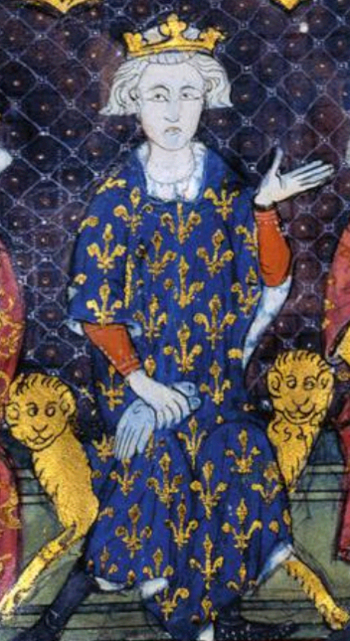
Philip IV, known as the Fair or as "Iron-Side", was the King of France. He was an inflexible and rigid ruler, determined to enhance the power of his royal house in any way possible. In this, he was partially successful; his relatives had been installed on the powerful thrones of Hungary and Naples. He was determined to follow the example of his ancestor, Charlemagne, and to have direct access to the Pope, which Boniface’s worldly ambitions posed a great stumbing block towards. To that end, he conducted a full scale invasion of Italy, removing and kidnapping the Pope Boniface. The House of Capet was taking on an imperial trajectory, or so it seemed.
After the acrimonious death of Boniface sometime later, the king quickly installed the similarly rigid Pope Clement V with haste, a Frenchman who became a close associate and was rumored to have signed an oath to enact his demands. The procession of the new Pope Clement in 1305 attracted much fanfare in France, but the ceremony was marred by a large block of stone falling from a rampart and crushing the Duke of Brittany to death.
Other aspects of Philip’s rule were beginning to show cracks. Costly wars with England and the increasingly bloated size of the French state bureaucracy began to wear down on the patience of the King. First, in 1291, Philip expelled Northern Italians as a whole, including many usurers and banking families, from France. Then he attempted to expropriate properties from the immense holdings of the Church by arresting ‘heretical’ Cardinals in Paris. By the 1300s, with usury being handled by Jews as in every Christian polity and even more centralized in their hands due to the absence of the Italians, this development crippled the ability of the King in being able to reform any aspect of finances.
On the 22th of July 1306, Philip signed a royal bull, expelling the Jews from France. With them gone with little transition, however, the ability to summon loans evaporated, and the existing capital of contemporary dealers was destroyed. The insistence of Philip on paying the Jews a week’s wages individually in coins in exchange for their property and to leave in peace also threw the French state into a place of economic chaos. The Vatican also protested bitterly at the treatment of the Jews.
Based on the insults traded between his ancestors and the Grandmasters, Philip already had a hatred for the Templar Order. An idea formed in his head; he contrived that taking over its considerably wealthy assets would solve many of his problems. The King of France also noted that the Templar Order began to take on physical characteristics of the Cathar heresy his pious grandfather Louis IX had exterminated, and as a devout Christian he began to scheme.
Clement V had his own agenda. The Templars were a convenient scapegoat for both the failure of the Crusader project and the tumultuous problems with the Papacy, which the Pope struggled to gain a grip of, given his perennial sickliness. Although the Church was the biggest landowner on earth (a title it still holds), the strains in Italy had caused rupture and humiliation. Clement was also informed by his superiors that the Temple’s financial activities were a stumbling block to their aims in medieval society, and to stop its activities at any cost.
At first, this was disguised as persuasion. As de Molay arrived in France in late 1306, he was summoned to an audience along with the Hospital Master. The new Pope Clement demanded that the Hospitaller Order and the Knights Templar merge as a single Order. He also demanded that both leaders submit a memorandum as to how to invade the Levant; secretly, Clement chose the Hospitaller vision and implemented it later. The negotiations for union were unsuccessful, and de Molay departed for months, returning in December 1306.
A further inflaming of relations occurred when de Molay was said to have stopped the Treasurer of the Temple from lending the King 400,000 florins, excommunicating him from the Order and driving him into Philip IV’s orbit, which was soon met by a demand from the Pope to reinstate the Treasurer. De Molay refused.
During the dawn on Friday, 13th October 1307 (during Sukkot), King Philip IV had de Molay and hundreds of other French Templars simultaneously arrested with the assistance of the Catholic Church. The customarily prepared arrest warrant started with:
Dieu n'est pas content, nous avons des ennemis de la foi dans le Royaume.
God is not content, we have enemies of the faith in the kingdom.
INQUISITION
By the Inquisitors, the Templars were subjected to extreme tortures and debased horrors. Philip’s stooges prepared a list of accusations that they were guilty of, including sodomy, sexual intercourse with demons, worshipping a human head with a beard and a cord, to engage in all kinds of lusts, not consecrating the host during the Catholic mass, and to be kissed naked by a man on three parts of the body as the initiation rite.
Still, the only charge de Molay confessed to under this extreme duress was the specific charge of denying Christ and trampling on the cross. Under this pretext, Clement V signed an arrest warrant for all Templars living within the Kingdom of France.
He was dragged in front of the Pope, where he recanted the accusations made, and then in Chinon in front of the cardinals a year later, he affirmed the validity of the original charge that trampling the Nazarene was the first rite to join the higher ranks of the Order.
The initial and most significant French trial took place in Paris from 19 October to 24 November 1307 in haste. Of the 138 prisoners who provided complete testimonies, nearly all confessed to at least one charge in an incoherent manner. The use of torture was attested during interrogations. Strangely, these early admissions of guilt conflicted with subsequent testimony given before the Papal commissions in Paris in 1310.
A Papal bull of 1308 affirmed 88 specific accusations. Pope Clement established a dual prosecution system through the papal bull Faciens misericordiam: one commission to judge individual Templars and another to judge the fate of Order itself. While an ecumenical council was summoned to convene in Vienne in 1310 to determine the Order's fate, the Pope was supposed to reserve judgment of the Templars' leadership, including Molay, for himself. During this time, Clement was plagued with ill omens and fearfully wrote a letter of remission known as the Chinon Parchment that seems to have been filed in the Vatican archives and was never publicized. In the mean time, Marguerite Porete, another mystic, was condemned to death and the order of the Beguine nuns was also violently exterminated by the Inquisition.
In May 1310, the Archbishop of Sens, Philippe de Marigny, took over the trial of the Templars from the original commission. The Council of Vienne was delayed until 1312, and when it finally convened, the Temple was suppressed altogether by the Papal bull Vox in excelsio. The order to burn Jacques de Molay at the stake did not come from his direct enemy Philip IV but from a group of Papal cardinals.
De Molay, along with Geoffroi de Charney, the preceptor of Normandy for the Templars, was taken to an island outside of Paris and burned at the stake. Guillaume de Nangis' continuator, a witness, attested to their bravery, as did the Florentine chronicler Villani who was present. According to the poet Geoffroi of Paris who also witnessed the execution:
Metric Chronicle of Philip the Fair, Geoffroi of Paris2
The master, who saw the fire ready,
Stripped with no sign of fear.
And, as I myself saw, placed himself
Quite naked in his shirt
Freely and with a good appearance;
Never did he tremble
No matter how much he was pulled and jostled.
They took him to tie him to the stake
And without fear he allowed them to tie him.
They bound his hands with a rope
But he said this to them: 'Gentlemen, at least
Let me join my hands a little
And make a prayer to God
For now the time is fitting.
Here I see my judgment
When death freely suits me;
God knows who is in the wrong and has sinned.
Soon misfortune will come
To those who have wrongly condemned us:
God will avenge our death.'
'Gentlemen,' he said, 'make no mistake.
All those who are against us
Will have to suffer because of us.
In that belief I wish to die.
That is my faith; and I beg you
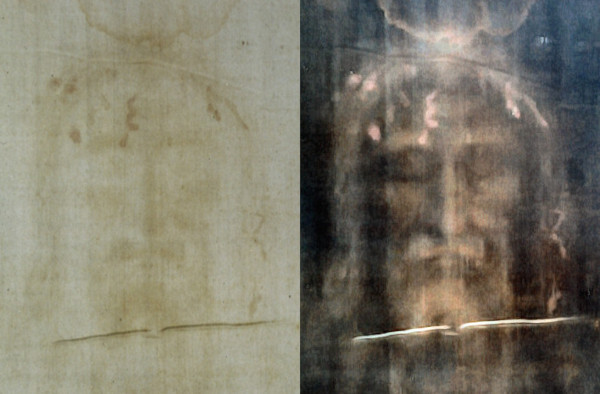
Lady Pythia stated that the infamous Shroud of Turin is actually from a shroud placed over Jacques de Molay’s head as his blood and body fluids pooled from torture7. The shroud was first exhibited in a village outside of Paris named Lirey in 1355. Carbon dating of the Shroud measures it as coming from 1260–1390 AD. It is also known that from multiple testimonies that items belonging to Molay were worshipped as holy relics.
The violent extermination of the Templars had dramatic and rather ugly consequences. Firstly, on the pretext of much of the Papal court in Rome being burned in a mysterious fire, Clement was forced to move to Avignon in France permanently, creating a situation where the Pope resident in Avignon became a permanent political hostage to the French king. The constant battle between so-called Antipopes there and Popes who reasserted themselves in Italy became a dramatic source of conflict in the 14th and 15th centuries. Many centuries later, it was France’s forceful intervention in Italy that brought about the end of the Papacy’s temporal power.
Secondly, Clement, persistently ill, died within a year, proving the prophecy correct. Philip de Marigny died within one and a half years.
The King of France, the seemingly invincible ‘Philip Iron-Side’, finally armed with enough gold to venture on another Crusade, died of a stroke while hunting. His three sons and brother succeeding him all died within fifteen years, ending the House of Capet altogether and beginning the reign of the House of Valois. His direct heir, Louis X, also immediately invited the Jews back into France in 1315. By 1337, the Hundred Years’ War exploded, leading to a collapse of French power by 1380 from the onslaught of English forces, and numerous French kings thereafter went insane.
LEGACY
The mysterious Jacques de Molay became a legendary figure in Freemasonic and Rosicrucian circles. Although the Templars were disbanded, it was rumored that he ensured the survival of the occult orders from his prison cell in France. The symbolism of the sword and the gavel endured in Europe, particularly in the Enlightenment, where it took on a legend of its own.5
BIBLIOGRAPHY
1On the Fates of Famous Men, Giovanni Boccaccio
2Metric Chronicles of Geoffroi of Paris
3PRO, Royal Close Rolls of England, 54/III/m.i2
4The Last Templar: the Tragedy of Jacques de Molay, Last Grand Master of the Temple, Alain Demurger
5The New Knighthood: A History of the Order of the Temple, Malcolm Barber
6The Knights Templar: The History & Myths of the Legendary Military Order, Sean Martin
7’Shroud of Turin’, reply of Lady Pythia - https://ancient-forums.com/threads/shroud-of-turin.285354/#post-1054534
Entences y Templers en les Montanyes de Prades, F. Feyer & Candy, Bolletin de la real Academia de las Bellas Letras de Barcelona
The Templars in the Corona de Aragon, J. Forey
’Encore le proces des templiers. A propos d'un ouvrage recent', Alain Demurger, Le Moyen Age
The Templars, Piers Read
The Debate on the Trial of the Templars (1307–1314), Jochen Burgtorf; Paul F. Crawford & Helen Nicholson (eds.).