
 አማርኛ
አማርኛ العربية
 বাংলা
বাংলা Български
 中文
中文 Čeština
 Dansk
Dansk Deutsch
 Eesti
Eesti Ελληνικά
 Español
 Français
 हिन्दी
 Hrvatski
 IsiZulu
 Italiano
 日本語
日本語 Kiswahili
 Magyar
 Македонски
 नेपाली
 Nederlands
 فارسی
فارسی Polski
 Português
 Română
 Русский
 Slovenščina
 Suomi
Suomi Svenska
 Tagalog
 Türkçe
King of Rome
Numa Pompilius
authors: Elite, Karnonnos
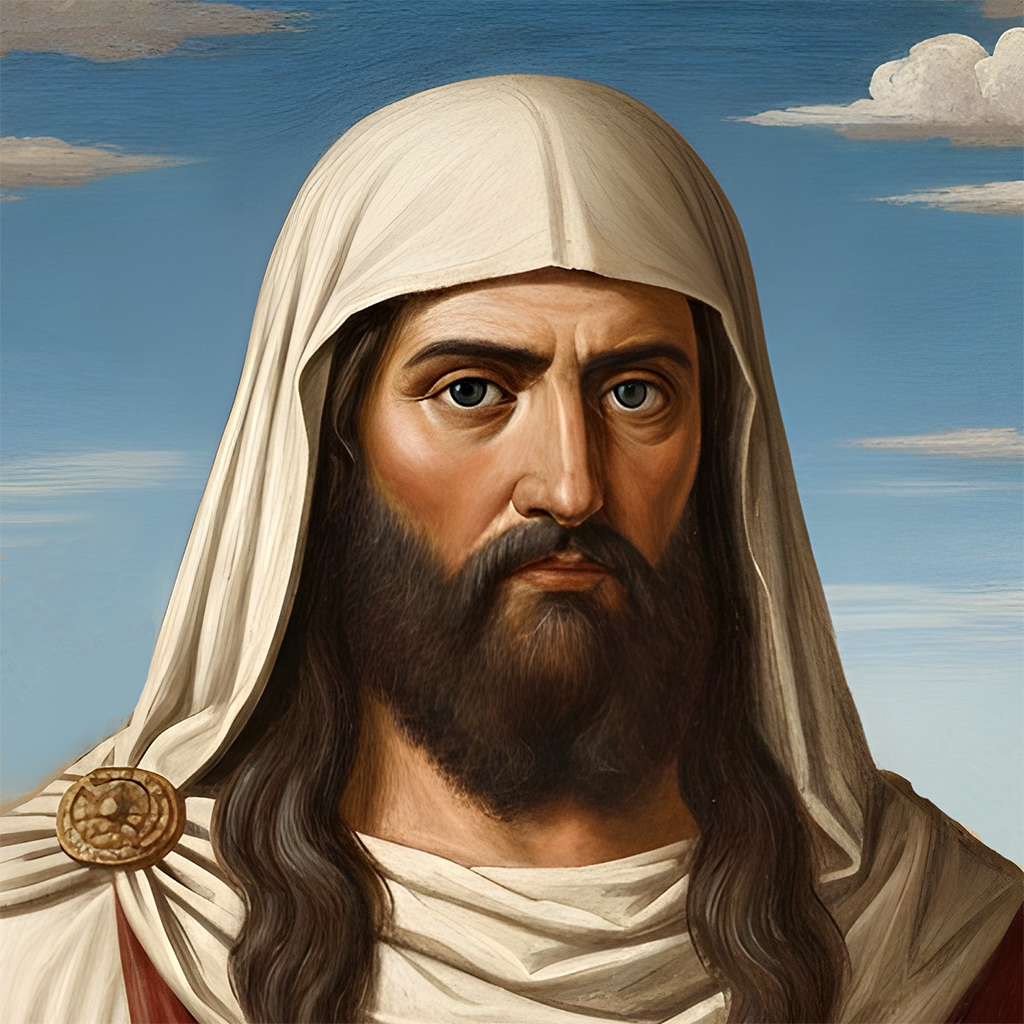
Julian, Against the Galileans1
But when after her foundation many wars encompassed her, she won and prevailed in them all; and since she ever increased in size in proportion to her very dangers and needed greater security, then Zeus set over her the great philosopher Numa. This then was the excellent and upright Numa who dwelt in deserted groves and ever communed with the Gods in the pure thoughts of his own heart. [...] It was he who established most of the laws concerning temple worship.
Numa Pompilius, hailing from a Sabine family who originally according to the myths were Lacadaemonian settlers in Italy, was born on same day of Rome's foundation date (April 21, 753 BC.), and he became the Second King of Rome after Romulus.
He is best known for organizing Roman religious life and traditions, and bringing into beng the holiest and all-sacred aspects of the kingdom.
THE INTERREGNUM
In the time of Romulus's disappearance and later his being declared a divine being after he fulfilled his life purpose, Rome, the city that was destined to be the greatest among them all, was kingless.
The Sabines, being partially integrated into Rome by the former king, were looked down on by the Romans, but in an interregnum, when Rome itself was discussing to select a candidate from another nation to be king in order to end the quarrel between the Romans and Sabines, the aristocrats thought about nominating a Sabine whom they could decide on. In any event, this was better than a Roman king decided by Sabines rising up and using force, thus they ended up nominating and unanimously electing Numa for his universally acknowledged virtues. The Sabines also accepted his kingship, as one of their kinsman and as a highly virtuous man.
Numa, at the time, was living in another settlement of Sabines outside of Rome, and when he was elected and announced to the people, representatives of the Senate arrived the Cures, and begged for him to be their king.
He had met with Pythagoras the Spartan and learned from him the Spartan way of government and thus, according to the ancient annals, accordingly shaped Rome in Sparta's image. Therefore, these two brotherly states carried similar traditions, martial and harsh. Numa, however, avoided conflict and war as something to be viewed with gravity and heaviness.
He was naturally virtuous and practiced every virtuous act, moreover, he hardened himself by discipline and any other natural or self-inflicted hardships. He sought wisdom and let himself be free of virtueless rapacitie. Naturally, as all virtues are from and lead to the Gods, he became very devoted to Gods and thus spent most of his time acting for them.
The King of the Sabines, Tatius, impressed by his divine pursuits and virtuous inclinations, married his daughter to Numa. But he was still leading an ascetic life by his choice, instead of spending his time or enjoying a luxury life, Numa cared for his elderly father and acted as a counselor to the common folk.
Plutarch, Life of Numa2
Then Numa, forsaking the ways of city folk, determined to live for the most part in country places, and to wander there alone, passing his days in groves of the gods, sacred meadows, and solitudes. This, more than anything else, gave rise to the story about his goddess. It was not, so the story ran, from any distress or aberration of spirit that he forsook the ways of men, but he had tasted the joy of more august companionship and had been honoured with a celestial marriage; the goddess Egeria loved him and bestowed herself upon him, and it was his communion with her that gave him a life of blessedness and a wisdom more than human. However, that this story resembles many of the very ancient tales which the Phrygians have received and cherished concerning Attis, the Bithynians concerning Herodotus, the Arcadians concerning Endymion, and other peoples concerning other mortals who were thought to have achieved a life of blessedness in the love of the gods, is quite evident. 3 And there is some reason in supposing that Deity, who is not a lover of horses or birds, but a lover of men, should be willing to consort with men of superlative goodness, and should not dislike or disdain the company of a wise and holy man. But that an immortal god should take carnal pleasure in a mortal body and its beauty, this, surely, is hard to believe.
And yet the Aegyptians make a distinction here which is thought plausible, namely, that while a woman can be approached by a divine spirit and made pregnant, there is no such thing as carnal intercourse and communion between a man and a divinity. But they lose sight of a fact that intercourse is a reciprocal matter, and that both parties to it enter into a like communion. However, that a god should have affection for a man, and a so‑called love which is based upon affection, and takes the form of solicitude for his character and his virtue, is fit and proper
History of Rome, Livy3
There was living, in those days, at Cures, a Sabine city, a man of renowned justice and piety-Numa Pompilius. He was as conversant as any one in that age could be with all divine and human law.
In the age of 40, companions of Romulus named Patroculus and Velesus were sent to him as envoys to ask for him to be king. He, when hearing of this offer, said these words:
Plutarch, Life of Numa2
Every change in a man's life is perilous; but when a man knows no lack, and has no fault to find with his present lot, nothing short of madness can change his purposes and remove him from his wonted course of life, which, even though it have no other advantage, is at least fixed and secure, and therefore better than one which is all uncertain. But the lot of one who becomes your king cannot even be called uncertain, judging from the experience of Romulus, since he himself was accused of basely plotting against his colleague Tatius, and involved the patricians in the charge of having basely put their king out of the way. And yet those who bring these accusations laud Romulus as a child of the Gods, and tell how he was preserved in an incredible way and fed in a miraculous manner when he was an infant. But I am of mortal birth, and I was nourished and trained by men whom you know. Moreover, the very traits in my disposition which are to be commended, are far from marking a man destined to be a king, namely, my great love of retirement, my devotion to studies inconsistent with the usual activities of men, and my well-known strong and inveterate love of peace, of unwarlike occupations, and of men who come together only for the worship of the gods and for friendly intercourse, but who otherwise live by themselves as tillers of the soil or herdsmen. Whereas, unto you, O Romans, whether you want them or not, Romulus has bequeathed many wars, and to make head against these the city needs a king with a warrior's experience and strength. Besides, the people has become much accustomed to war, and eager for it because of their successes, and no one is blind to their desire for growth by conquest. I should therefore become a laughing-stock if I sought to serve the Gods, and taught men to honour justice and hate violence and war, in a city which desires a leader of its armies rather than a king.
However, Romans insisted he must be a king because they were divided, stuck between factions and needed a virtuous leader like him. Also, his father and his kinsman Marcius, suggested to him these words in order to re-consider:
Plutarch, Life of Numa2
"Even though," they said, "thou neither desirest wealth for thyself, because thou hast enough, nor covetest the fame which comes from authority and power, because thou hast the greater fame which comes from virtue, yet consider that the work of a true king is a service rendered to God, who now rouses up and refuses to leave dormant and inactive the great righteousness which is within thee. Do not, therefore, avoid nor flee from this office, which a wise man will regard as a field for great and noble actions, where the gods are honoured with magnificent worship, and the hearts of men are easily and quickly softened and inclined towards piety, through the moulding influence of their ruler. This people loved Tatius, though he was a foreign prince, and they pay divine honours to the memory of Romulus. And who knows but that the people, even though victorious, is sated with war, and, now that it is glutted with triumphs and spoils, is desirous of a gentle prince, who is a friend of justice, and will lead them in the paths of order and peace? But if, indeed, they are altogether intemperate and mad in their desire for war, then were it not better that thou, holding the reins of government in thy hand, shouldst turn their eager course another way, and that thy native city and the whole Sabine nation should have in thee a bond of goodwill and friendship with a vigorous and powerful city?
These, were then, strengthened by the auspicious omens of his fellow-citizens, and they requested him blending and setting all the citizens on a good path.
Then, Numa accepted this offer, and he set out for Rome. The Senate and people were overjoyed by him and greeted him on the way, with joyous cries. He was elected as king unanimously by the Roman citizens… but he again wanted to hear what Gods would say, and headed out to the Capitol. With the presence of the priests, he waited for omens, and an auspicious sign of birds flew by the forum. Thus, the most beloved of Gods and men was elected as the king by the approval of both parties.
EGERIA
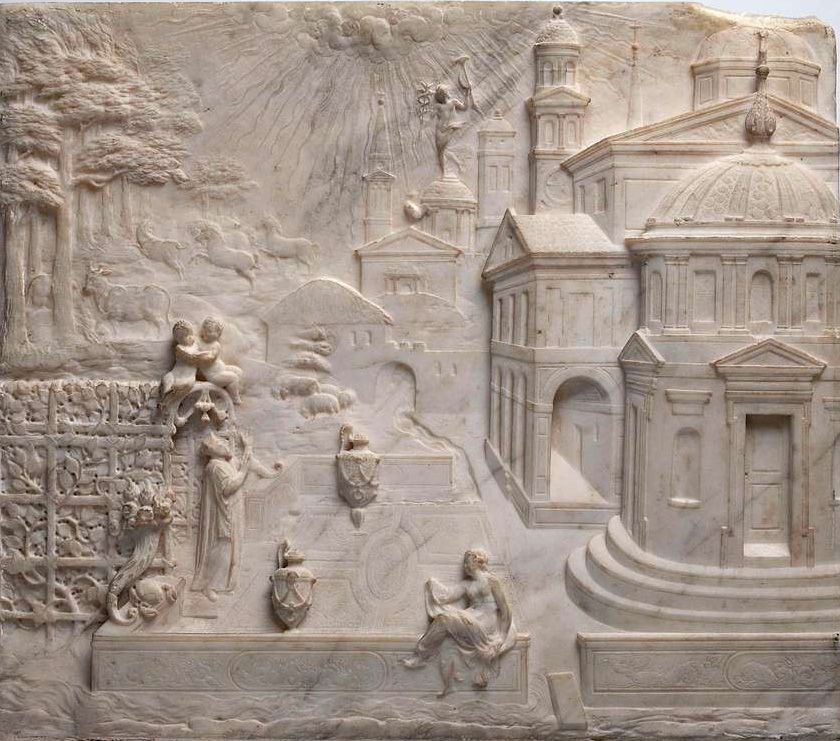
According to the myths, King Numa was able to speak to the Gods directly and advised by a nymph of the Gods named Egeria, whom he held mysterious meetings with by night. It was from her counsel that many of his innovations came to the fore, and the rustic inhabitants of Rome hence held him in a sort of suspicious reverence. Numa himself always attributed his excellence to divine counsel.
History of Rome, Dionysius of Halicarnassus4
For they fabulously affirm that a certain nymph, Egeria, used to visit him and instruct him on each occasion in the art of reigning, though others say that it was not a nymph, but one of the Muses. And this, they claim, became clear to every one; for, when people were incredulous at first, as may well be supposed, and regarded the story concerning the goddess as an invention, he, in order to give the unbelievers a manifest proof of his converse with this divinity, did as follows, pursuant to her instructions. He invited to the house where he lived a great many of the Romans, all men of worth, and having shown them his apartments, very meanly provided with furniture and particularly lacking in everything that was necessary to entertain a numerous company, he ordered them to depart for the time being, but invited them to dinner in the evening. 7 And when they came at the appointed hour, he showed them rich couches and tables laden with a multitude of beautiful cups, and when they were at table, he set before them a banquet consisting of all sorts of viands, such a banquet, indeed, as it would not have been easy for any man in those days to have prepared in a long time. The Romans were astonished at everything they saw, and from that time they entertained a firm belief that some Goddess held converse with him.
The cult of Egeria later became ingrained into Roman culture, and she was celebrated and given rites at sacred groves. Numa is known to have written down all the teachings of Egeria in "sacred books" that he had buried with him. An invasion unearthed them. The Senate believed they were inappropriate in distribution to the people, and ordered their destruction, but other authors claimed that the Pontifex Maximus kept them well-hidden from the public. A similar deity from the Etruscan lands called Vegoia also handed them down law books and rites.
THE REFORMS
His first order was to disband the 300 Man-at-Arms force of personal bodyguards that King Romulus had instated, refusing to distrust his citizens. He wanted to establish trust between them and himself. As for his second command, this was to establish the priesthood of Flamen Quirinalis as the Priest of Romulus (Quirinus), added to the second priests of Jupiter and Mars.
After taking these measures and further earning the goodwill of Romans, he went to the next step of changing Rome's war-like temperament into a wiser and justice-led people.
To make these changes, as Rome was very warrior-oriented society, he needed the help of the Gods. Numa did extensive rites for this purpose. When the Roman people attended these rites, they received benefits from them and were greatly mollified. He also heralded the awesome forces of the Gods in public demonstrations, making the populace listen to and abide by them. He also taught Romans to worship the Muses; especially the one Muse called Tacita, who has her domain in Silence, in so doing honoring the first step of the Mysteries and the divine insight.
The new king banned any worship of images. As the Gods were higher than any sense perception and only could be understood by the Nous (Mind), he did not want to be so impious as if to drag them down to sensible realms, thus keeping the violent Romans on a straight path. Sacrifices were by his order not to involve bloodshed. He also founded the post of the Pontifex, a religious office.
From Plutarch:
Life of Numa, Plutarch2
The chief of the Pontifices, the Pontifex Maximus, had the duty of expounding and interpreting the divine will, or rather of directing sacred rites, not only being in charge of public ceremonies, but also watching over private sacrifices, and preventing any departure from established custom, as well as teaching whatever was requisite for the worship or propitiation of the Gods.
He built the Temple of Vesta and lit the perpetual fire, and in organizing its priesthood, King Numa also was the overseer of the Vestal Virgins, to whom sacred fire is entrusted. He appointed the first four holders of the office of that institution, one that would last until the physical fall of Rome many centuries later. He also organized the rites for the ancestors and underground Deities – the he simplicity of the worship that Numa inaugurated impressed many Greek visitors.
He also established many other priestly offices. One of them was the Fetiales. These priests' duties were to put end to the disputes through speaking and to act as diplomats. They were the Guardians of Peace. Fetiales also held the right to enforce literal peace on a state. If there were no other viable options left, and there were unjust behavior, they had the right to pray to the Gods and enact calamities upon themselves and the country. The King, before consulting them, could not wage wars, and if war was justified by the Priests, then the monarch should do it in the fairest manner.
It is also said, when Rome illegally mistreated these priests, then consequence was the disastrous sack of the city by the Gauls. The consequence of the Vestals being mistreated by Christians was for Rome to fall altogether.
THE TEMPLE OF JANUS
The most important initiative of Numa was to establish the Temple of Janus. The Temple was the gateway from the Forum to the rest of Rome, and it had a highly symbolic aspect in light of that that the king knew how to play on, since Janus himself was tied to household entities. This holy complex functioned as a sort of threshold similar to the holy space within a Roman household cordoned off from the rest. The gates of the temple were to be held open during times of war and kept closed when Rome was not engaged in conflict.
Life of Numa, Plutarch2
[Janus] also has a temple at Rome with double doors, which they call the gates of war; for it always stands open in time of war, but is closed when peace has come. The latter was a difficult matter, and it rarely happened, since the realm was always engaged in some war, as its increasing size brought it into collision with the barbarous nations which encompassed it round about. But in the time of Augustus it was closed, after he had overthrown Mark Antony; and before that, when Marcus Atilius and Titus Manlius were consuls, it was closed for a short time; then war broke out again at once, and it was opened.
History of Rome, Livy3
Thinking that the ferocity of his subjects might be mitigated by the disuse of arms, he built the temple of Janus at the foot of the Aventine as an index of peace and war, to signify when it was open that the State was under arms, and when it was shut that all the surrounding nations were at peace.
Keeping the doors shut after long conflicts and triumphs was a sign of prestige for the rulers of Rome, typically interpreted as a sign that they had learned the lessons that Numa had imparted to the Roman populace. Janus as a God became a major patron of Rome, tied to all of its victories and nadirs. Roman rulers such as Emperor Marcus Aurelius and Emperor Julian tied the role of Numa to the worship of this mysterious God.
The Temple was made entirely of bronze and had a cuboidal shape. Supposedly, its architecture was inspired by the Etruscan background of the king; it also had Middle Eastern influences in design. The quaint and modest nature of the temple, as if it was not erected for seeking glory but for contemplation, was remarked upon by visitors to Rome for many centuries.
It was also said Numa divided the year into twelve months3 and understood the lunar cycles enough to interpret time in this way. Thus, in many ways, he is the father of the calendar.
THE ANCILE
In the eighth year of his reign, a pestilence occurred in Italy and destroyed whatever was in its path, which distracted Rome. In these disheartening times, a majestic shield named the Ancile fell from heaven while a heavenly voice claimed that Rome would be mistress of the world if the shield was preserved. Thereafter, it came into Numa's hands. As he heard from Egeria and the Muses, if the shield was honored, it would also save the city from the plague. He ordered eleven more shields to be made [to make it harder for thieves to distinguish], in the same size and fashion, and also to find the original item where it had dropped. With other measures and orders from the king, the pestilence ended.
The Ancile was seen as a sign that Numa had pleased the heavenly father, Jupiter. This story is also an allegory of a 12-sided protection from each zodiac sign and celestial house. He also founded the Office of the Salii Palatini, an order of priests dedicated to Mars. They had the duty of carrying the shields throughout the city while doing ritualistic dances on ceremonial dates to ensure the protection of Rome.
After establishing and regulating priestly orders, the second king of Rome spent most of his time performing sacred functions, teaching the priests and meditating. At all public and solemn holidays, he bade people to stop all labour, and to engage in divine things. As Pythagoreans had instructed the same, he wanted people to fully engage with all their focus and concentration, with the mind prepared for breaching divinity.
Numa's teachings still lived on in the era of the Roman Empire. For example, when a magistrate was taking auspices or sacrificing, people would cry "Hoc age", which meant "Mind this!" and gathered the people as a flock in an attentive and orderly fashion.
He taught mysterious precepts with hidden meanings, such as:
Life of Numa, Plutarch2
"Turn round as you worship"; and "Sit down after worship." The first two rules would seem to teach that the subjection of the earth is a part of religion; and the worshippers' turning round is said to be an imitation of the rotary motion of the universe; but I would rather think that the worshipper who enters a temple, since temples face the east and the Sun, has his back towards the sunrise, and therefore turns himself half round in that direction, and then wheels fully round to face the god of the temple, thus making a complete circle, and linking the fulfilment of his prayer with both deities; unless, indeed, this change of posture, like the Aegyptian wheels, darkly hints and teaches that there is no stability in human affairs, but that we must contentedly accept whatever twists and turns our lives may receive from the Deity. And as for the sitting down after worship, we are told that it is an augury of the acceptance of the worshipper's prayers and the duration of his blessings.
By listening to and abiding by religious programme which encompasses training and schooling, city became a lot of more tractable and stood in awe in front of Numa' divine powers. To this effect, he built the temple of Jupiter Elicius, whose auguries were consulted.
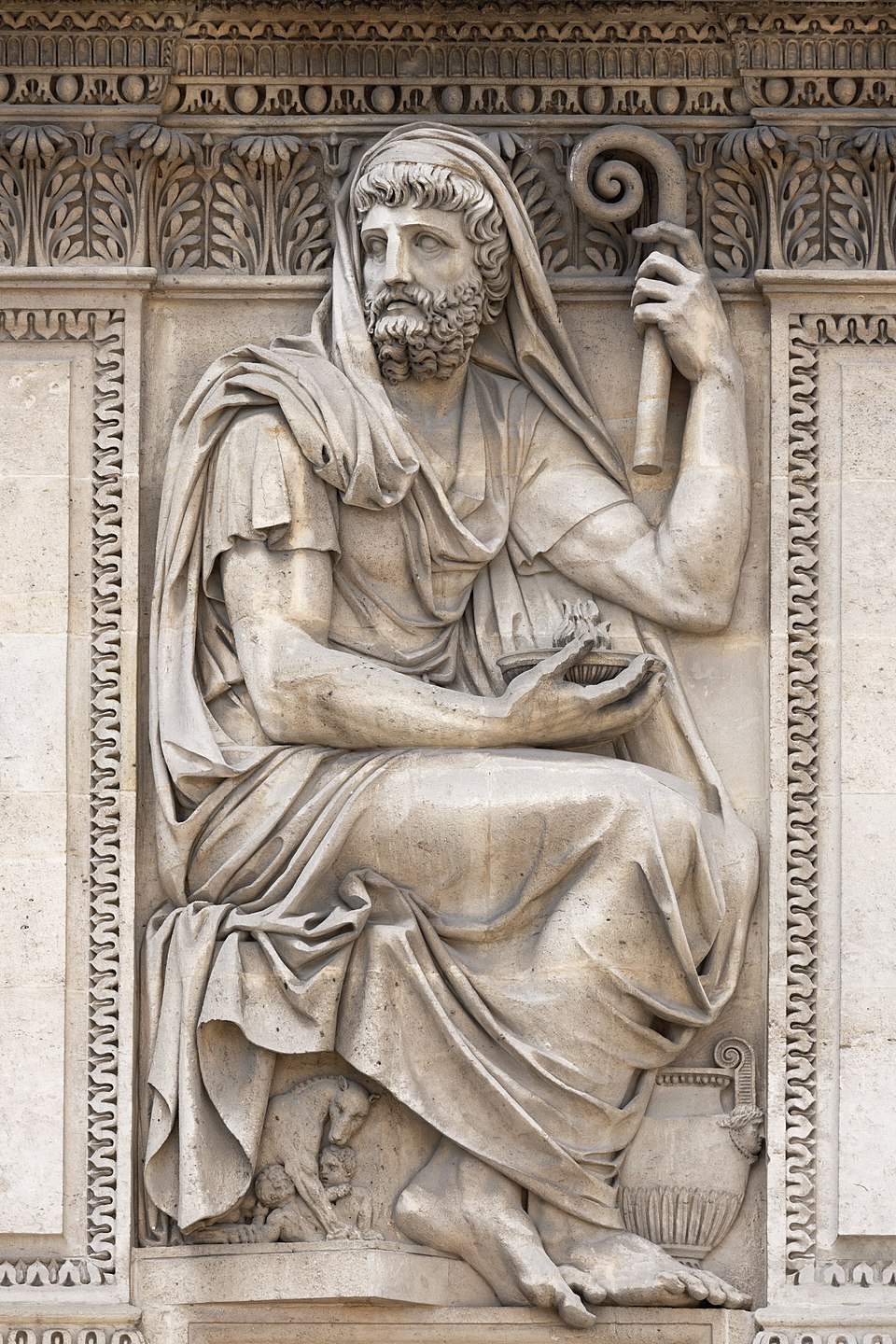
Along with other miraculous stories told by him or about him, the story about His conversation with Jupiter is notable. When he captured two Satyrs known as Picus and Faunus, they foretold and taught to Numa, or more accordingly summoned Zeus, and he taught the king, as in this conversation:
Life of Numa, Plutarch2
Some, however, say that it was not the imps themselves who imparted the charm, but that they called Jupiter down from heaven by their magic, and that this deity angrily told Numa that he must charm thunder and lightning with "heads." "Of onions?" asked Numa, filling out the phrase. "Of men," said Jupiter. Thereupon Numa, trying once more to avert the horror of the prescription, asked "with hair?" "Nay," answered Jupiter, "with living—"sprats?" added Numa, as he had been taught by Egeria to say. Then the god returned to heaven in a gracious mood,—"hileos," as the Greeks say,—and the place was called Ilicium from this circumstance; and that is the way the charm was perfected.
These are allegories, of course, but definitely this way Numa learned to control thunder and lightning. Numa had great confidence in Gods to the extent it was repeated in the annals that when he was informed the city was being besieged, he only replied with a smile: "But I sacrifice to the Gods!", trusting their favor of turning the tide.
STATE POLICIES
He also built the temples of Fides and Terminus, teaching their ways to the Romans. He taught the oath by Fides, and Terminus' wisdom and organized sacrifices to him. As the God also was the guardian of peace, he knew unnecessary expanding would destroy it, and so he set the borders of Rome. He knew accordingly that setting borders would promote the stately and heavenly order.
King Numa also tried to alleviate poorness and allocated properties accordingly, giving the men the right fields for them to sow. In this way, he shunned the wrongdoings that come from imposing poverty and deprivation. In this clever way, the warrior society both fought for their own agricultural allotment, and preserved their warrior qualities, but also refrained from the indignity of an unchecked warlike temperature.
He would sometimes check the status of the farms. The reason for these inspections was to judge the characters of owners. If they had fostered the farm well, he would give them the positions of honor and trust, but if they were careless, he would reproach the owner to turn them back to being sensible, saving them from laziness.
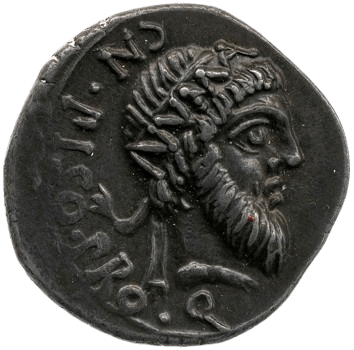
King Numa thus designed many ritualistic and material ways for the kingdom's citizens to improve and live their lives in a numinous way; he built the civic and religious foundation for the Roman state.
He, again, in a shrewd and elegant fashion, distributed the people of the city of Rome into the groups according to their trades and arts. Thus making them forget they were factions or Romans and Sabines, but they were in same lodges and held conversations. He also not only divided them, but bestowed onto them each the rituals and worshipping ways according to their ways, ultimately benefiting for quality of their life.
BIBLIOGRAPHY
1Against the Galileans, Emperor Julian
2Life of Numa Pompilius, Parallel Lives, Plutarch
3History of Rome, Livy
4History of Rome, Dionysius of Halicarnassus