
 አማርኛ
አማርኛ العربية
 বাংলা
বাংলা Български
 中文
中文 Čeština
 Dansk
Dansk Deutsch
 Eesti
Eesti Ελληνικά
 Español
 Français
 हिन्दी
 Hrvatski
 IsiZulu
 Italiano
 日本語
日本語 Kiswahili
 Magyar
 Македонски
 नेपाली
 Nederlands
 فارسی
فارسی Polski
 Português
 Română
 Русский
 Slovenščina
 Suomi
Suomi Svenska
 Tagalog
 Türkçe
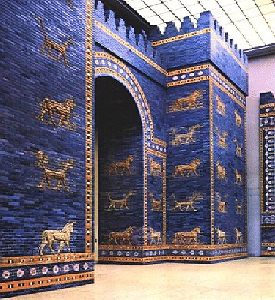
The "Ishtar Gate," built approximately 575 BCE, was the main entrance into Babylon. It was the eighth of eight gates of the inner city. King Nebuchadnezzar II dedicated the Gate to Ishtar. It was one of the most impressive monuments in the ancient Near East, decorated with dragons, bulls, and lions. Along with Ea (Enki) and Enlil, Ishtar formed the most powerful and widely venerated triad in Mesopotamian religion. When Judeo-Christianity arrived, all three were demonized in the grimoires, their reputations destroyed, viciously slandered, blasphemed, and labeled as "evil."
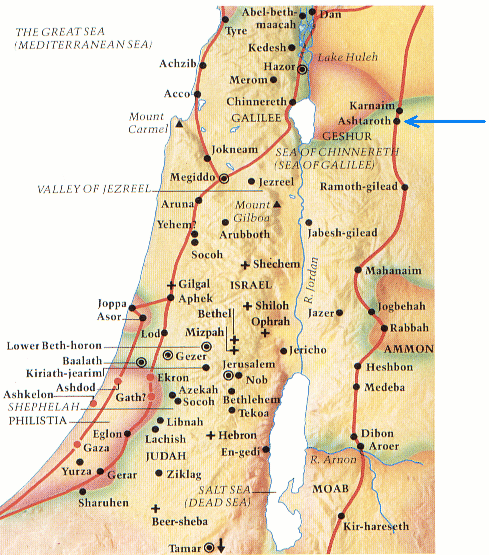
She was known to the Canaanites as ASTARTE, to the Sumerians as INANNA, to the Babylonians as ISHTAR, to the Assyrians and the Akkadians as ASHTART, ASHTORETH, ASHERAH, and ASTORETH, to the Egyptians as ISIS, ASHET and ASET, to the Phoenicians as TANIT-ASHTART and ASHTAROTH, and to the Greeks as APHRODITE. Her Ugaritic name was ANAT.
- Zodiac Position: 10-20 degrees of Capricorn
- December 31st-January 9th
- Tarot Card: 3 of Pentacles / Ace of Cups
- Planet: Venus
- Candle Color: Brown or Green
- Animal: Cobra, Viper, Lion
- Metal: Copper
- Element: Earth
- Rank: One of the highest Gods in the divine hierarchy. Guidance counselor for both Gods and humans.
- Astarte rules the domains of love, war, fertility, and the mysteries of the soul.
Astarte is one of the most ancient Goddesses known to humanity. She has been with us since the very beginning of civilization, alongside Zeus and Apollo. Because she has been present across so many eras and cultures, she has been known by many different names. She has always been deeply loved and revered in every locale where she was worshiped. She is a Goddess of fertility, love, and war, and her domain extends to the highest mysteries of the soul.
From High Priest Zevios Metathronos:
"Astarte is the most important Goddess of the Ancient World. She is loved globally, is the all powerful force of what is feminine, the emotion of love, power and glory. Being one of the most advanced Goddesses, there is no compare to her. She has been alongside Apollo one of humanity's patron deities, leading humanity into the Magnum Opus and the mysteries of raising the Kundalini Serpent. Her knowledge, power and beauty is beyond compare, and the depth of her mysteries is abysmal and something humanity always seeks to comprehend — be this in the heavens or the earth. The Queen of the Stars, Nature, Purity and Beauty, she represents the highest elevation of the human soul but also of the female by definition."
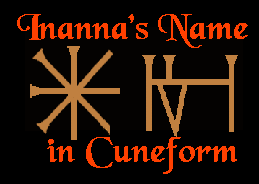
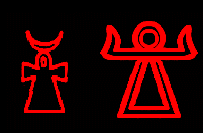
Astarte's Symbols, derived from the Egyptian Ankh
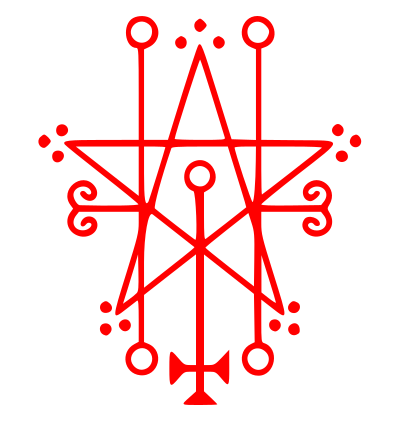
Astarte's Sigil
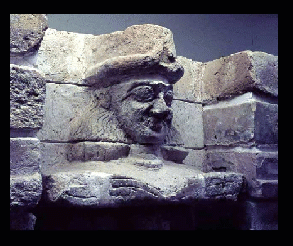
Wall of Inanna in Uruk
The clusters of three dots at the points of the star of her sigil are extremely ancient and denote her high spiritual rank. Her sigil also depicts important points of the human soul, as can be seen from the Venus glyph with the inverted cross symbolizing the all-important solar chakra and the pillars of the soul on each side.
As the Sumerian Goddess Inanna, she was known as a powerful warrior, and her sacred animal was the lion. Below are photos of the lions that guarded her temple at Nimrud.
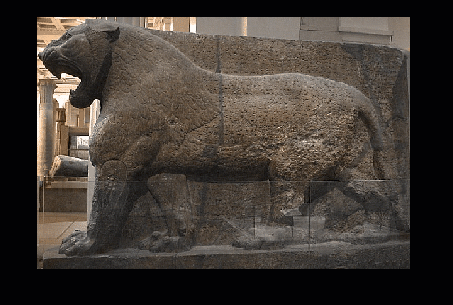
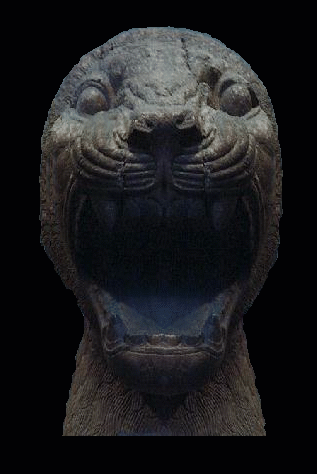
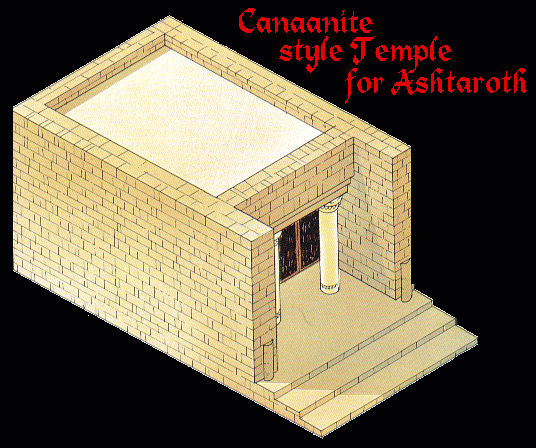
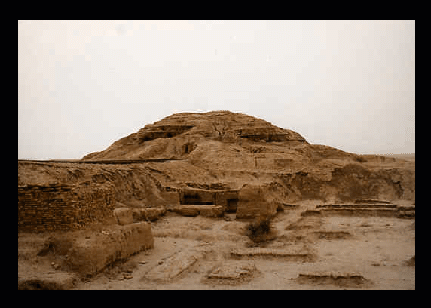
Her sacred city was Uruk, one of the oldest cities of Sumer, where she had her temple; in the lower right photo above are the ruins. Under her patronage, the people of Sumer and their communities prospered and thrived. She had shrines and temples in many cities throughout the Ancient Middle East.
Her Sumerian title "Queen of Heaven" was later stolen by Christians and applied to their fictitious "Virgin Mary."
As the Babylonian Goddess Ishtar, scriptures called her the "Light of the World," "Goddess of Goddesses," and "Bestower of Strength."
"Although Sidon is respected, it could not be forgotten that her goddess was Ashtart, a name the Israelite scribe wrote with the five consonants 'strt', and vocalized them by the vowels of the familiar Hebrew word for 'shame,' making the Sidonian goddess appear in the bastard form Astoreth."1
"Of the various spellings of the name, Astarte, is found the Tel Amara letters. The Hebrew Astoreth arose when the rabbinical school of the Massoretes in the sixth century decided to adopt a conventional system to compensate for the lack of vowels in written Hebrew, and at the same time to insert in the names of foreign divinities the vowels from the word 'boshet', meaning abomination."2
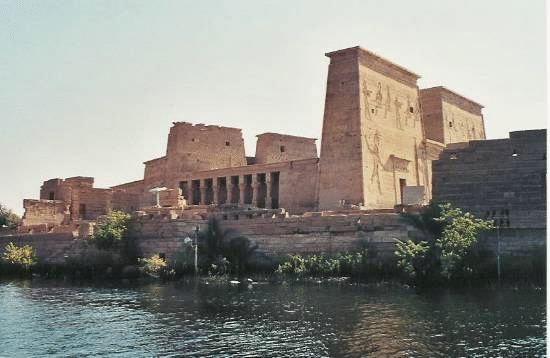
Above are the remains of the Temple of Isis, originally on Philae Island, which had to be moved to Agilqiyya Island during the construction of the Aswan Dam to save them from flooding.
Spiritual Powers and Attributes
Astarte answers truly concerning past, present, and future. She reveals all secrets and is an excellent teacher of the liberal sciences. She causes prophetic dreams and visions about the future and gives insight into the unknown. She also counsels those who are dedicated to the Gods and actively working in their service. She obtains friendship from those in power and represents luxury and ease.
Easter (originally known as "Ashtar") was stolen from her by Christianity.
Connecting with Astarte
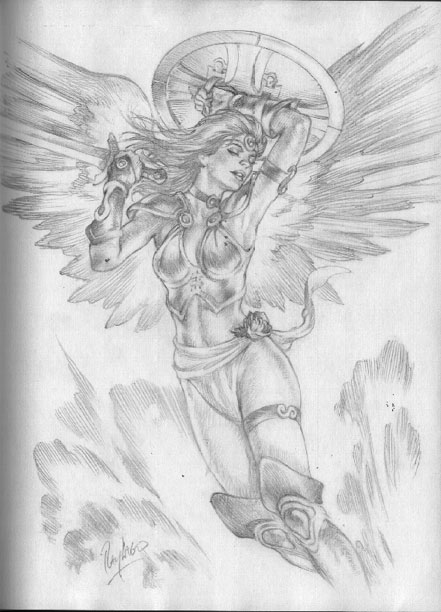
Astarte responds powerfully to those who approach her with genuine reverence. Her candle colors are brown or green (representing earth and Venus energy). Copper is her metal. Her sigil should be gazed upon during meditation while vibrating her name: AH-STAHR-TAY, drawn out slowly. Feel the vibration settle in your heart chakra.
She is particularly responsive during Venus hours and on Fridays (the day of Venus). Burning incense of rose or sandalwood while meditating on her sigil can deepen the connection. Those who work with Astarte consistently report heightened intuition, prophetic dreams, and a deep sense of inner beauty and strength.
References
1 James B. Pritchard, Recovering Sarepta, A Phoenician City (1978)
2 Egerton Sykes, Who's Who Non-Classical Mythology (1993)
- Diane Wolkstein & Samuel Noah Kramer, Inanna, Queen of Heaven and Earth (1983): The definitive scholarly translation of the Sumerian hymns and myths of Inanna, with extensive commentary on her role as warrior, lover, and cosmic sovereign.
- Plutarch, De Iside et Osiride (c. 100 CE): Documents the identification of Isis with Aphrodite and the continuity of the Goddess across cultures from Egypt to Greece.