
Theme
☼
author: High Priest Zevios Metathronos
To the family of Zevists. A sermon on generosity, discernment, rightful glory, and the creation of a world in which more people can sustain themselves and their families. It sets out what makes a gift charitable before the Gods: a good heart, a clear mind, and a result that leaves a person better able to live. It shows how to give to those who are honest about their need, why a diverted gift has to change its form, where dependence begins, what the Gods reward and what they don't, and why the Temple gives everything useful it holds for free.
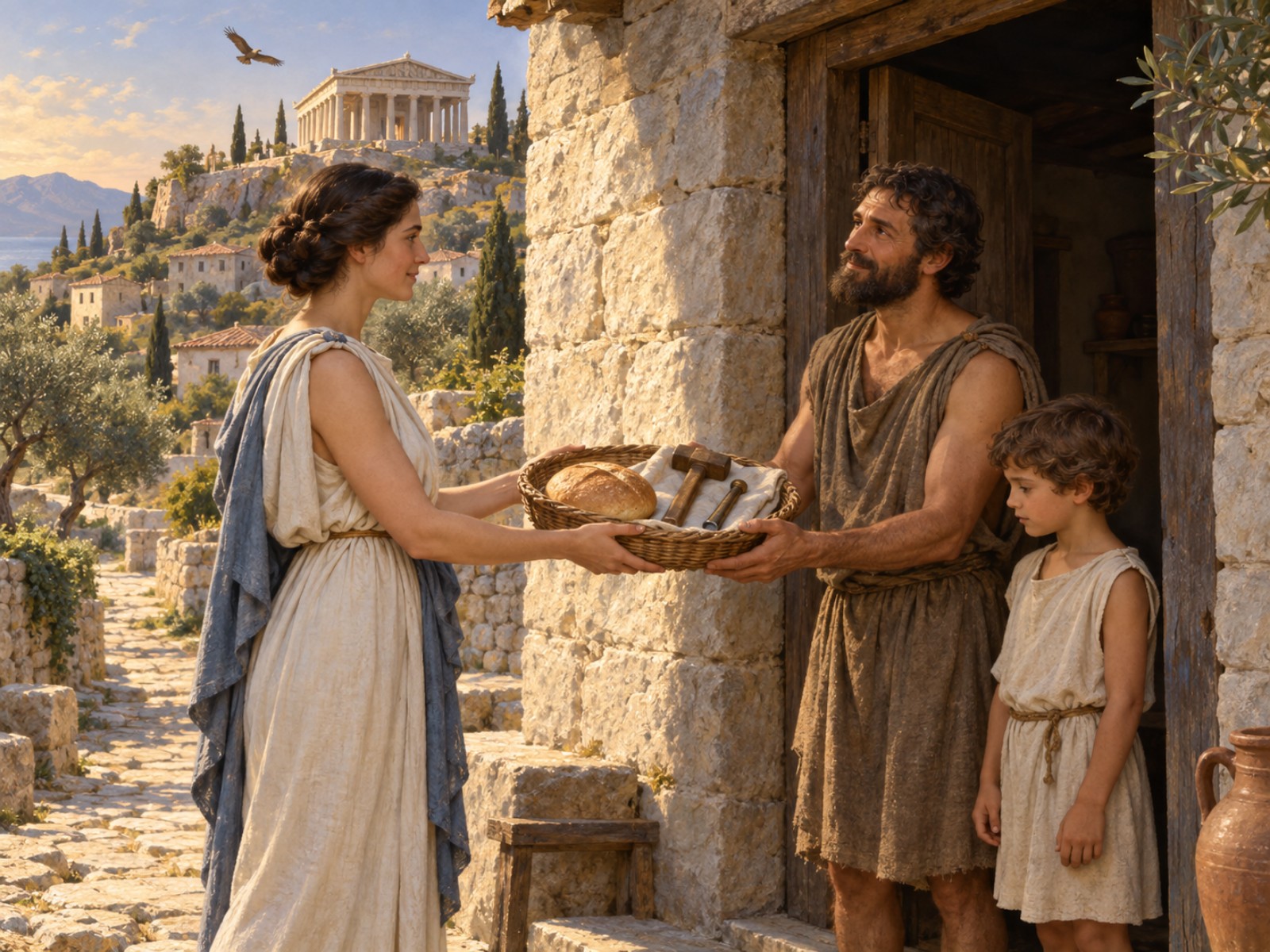
To give in the name of Zeus is to care about the good the gift brings into the world. The act starts in the heart, takes its direction from reason, and reaches its fulfillment in the life it helps. These 3 belong together. A charitable appearance can't stand in for a charitable purpose, and a charitable purpose has to watch its results.
The giver should wish the recipient well. They should think hard about what's needed, pick a useful form of help, and aim at an outcome that strengthens the person who receives it. Generosity of that kind builds something: a need gets met, a door opens, or someone gains the means to take the next responsible step in life.
Charity in Zevism joins a good heart, sound judgment, and beneficial action. The Gods love the giving in which these 3 agree.
Its highest hope reaches past the next donation. Zevism seeks a world in which fewer people stay trapped in need, more families sustain themselves, and the person once helped has more freedom to build, learn, create, and perhaps help another in turn.
The Zevist understanding of charity stands inside the relationship with Zeus and the Gods and the commitment to the evolution of the person. It has its own theological foundation and its own purpose, distinct from the accounts of charity in Christianity, Islam, and Judaism.1 It asks the giver to join generosity with the intelligent cultivation of a better life.
Giving is therefore an act of judgment. The giver weighs the need, the purpose of the request, the means at hand, and what the help is likely to support. They look for the truth of the situation because they care about the person inside it.
Blind giving skips all of this. Someone hands over money to end an awkward encounter, to enjoy a feeling of virtue, or to look compassionate. The speed with which the gift leaves the hand says little about the good it does.
Reason gives generosity its direction. It tells a genuine need from a false account, a useful intervention from a repeated mistake, and temporary relief from a pattern that keeps a person dependent. A good heart gives reason its humane purpose: the recipient's welfare, dignity, and room to develop.
Neither faculty gets to dismiss the other. Cold suspicion blinds a person to real need. Undisciplined sentiment blinds a person to harmful consequences. Zevist charity calls on the whole person to give: feeling, intelligence, will, and action working together.
Discernment takes its beauty from the goodwill that directs it, so the good heart deserves a full account.
The person who gives well is moved by the reality of another life: the anxiety of a parent trying to feed a household, the discouragement of someone who has lost their footing, the difficulty of a person with ability and no means to begin. They see a fellow human being whose future matters.

They want that person to eat with dignity, to live in a steadier home, to get a chance to learn, to hold the means to work, and to gain the confidence that grows once a practical obstacle is cleared away. Their warmth shows in how they listen, in the questions they ask, in the patience they bring to an unfamiliar situation, and in the care they take to offer something useful.
They rejoice when the recipient grows stronger, even when that strength means the recipient needs them less. They credit the person's own effort and take pleasure in watching it succeed.
They don't need to cultivate disgust for the needy in order to value responsibility, and they don't need to imagine themselves a higher kind of being in order to be generous. A good heart can spot a deception and still want the deceiver's correction. It can refuse a harmful request and stay willing to help in a constructive way. Its generosity carries affection for what the other person can become.
The giver sees a life worth attention, meets it with practical kindness, and hopes the good begun through the gift keeps going long after the giving itself has passed.
This inward disposition matters before the Gods. The recipient should meet, through the giver's conduct, something of the goodwill the giver claims to hold. Courtesy, honesty, patience, and respect give that goodwill a visible form.
The task is to cultivate a sincere wish for another person's good and to make one's actions answer to that wish. A manufactured display of tenderness serves no one.
Take a person who asks for money and says they need it for food. The giver feels compassion and hands over the amount. In this example the account is false: the recipient spends the money on drugs that feed a destructive pattern of use, and the stated need goes unmet.
The giver's good intention hasn't made the outcome good. The gift supplied the means for the very conduct the person needs help to escape. Calling the transfer charity doesn't change what it paid for.
Suppose the giver learns of the diversion, or holds clear evidence that the same arrangement produces it again and again. If they keep handing over money in the same way because the gesture makes them feel generous, they're now disregarding the consequence. Their compassion has come loose from the person's actual good.
The right response is to change the help. If food is the need, a meal offered or groceries arranged with the person's agreement may serve it more directly. Where the person wants to deal with their drug use, practical help in reaching qualified support may serve a deeper need. The point is to find a form of help that supports life and improvement instead of financing the harmful pattern.
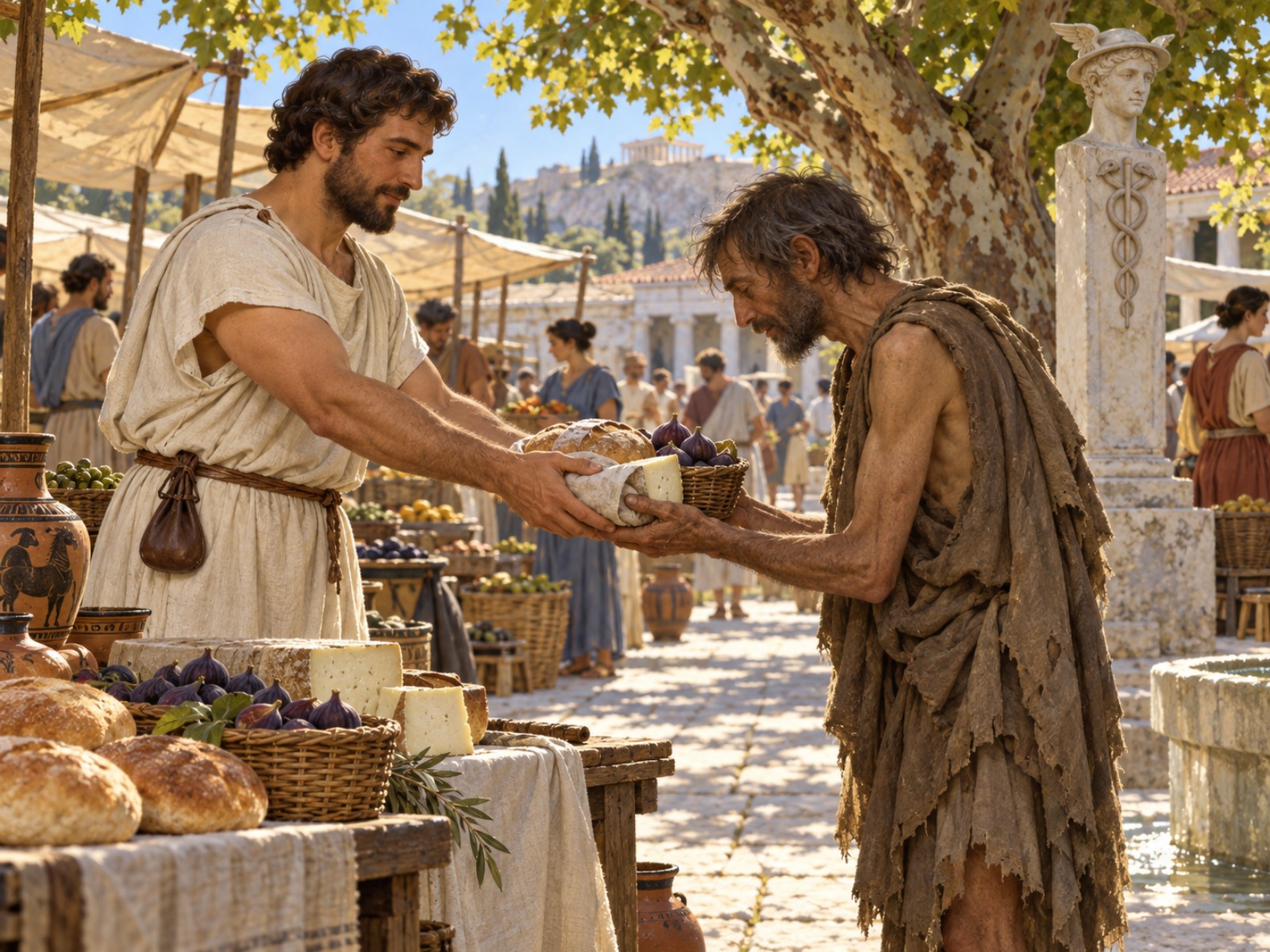
The example turns on the established diversion and on nothing else. The bare fact that someone asks for money, or has struggled with drugs, settles nothing. A request for cash can be honest and appropriate. A person in serious difficulty can still speak the truth and use help well. Discernment examines the situation instead of handing down a verdict from appearance alone.
There's also a difference between being deceived despite reasonable care and knowingly ignoring repeated misuse. No giver sees every hidden intention or guarantees every result. When an unforeseen outcome disappoints, the giver should understand what happened and improve the response. An honest mistake differs from hypocrisy. Once the harmful effect becomes clear, though, it has to enter the giver's judgment.
In Zevism there are no free spiritual points for an act because someone gave it a charitable name. The Gods see the motive, the care taken, the conduct enabled, and the result. A good intention should make the giver care more, never less, about consequences.
Zevist charity should reach people whose need is real, whose account is truthful, and whose intended use of the help is constructive. To seek good and true recipients is to seek this honest relation between the person, the request, and the purpose of the gift.
It doesn't require a flawless life. Someone working to correct a mistake may hold a very real claim on compassion. What matters is whether they deal truthfully with the giver and take the constructive steps open to them.
Verification should fit the circumstances. A short conversation may clear up a modest request. A larger or recurring commitment may call for clearer information, a specific purpose, and an agreed way of reviewing progress. Trusted people or a competent charitable organization may help establish what's needed. Where it suits, a particular expense can be paid directly with the recipient's agreement.
Such care should preserve dignity. A person in difficulty shouldn't have to perform humiliation to prove their need is real. Questions should serve understanding. Information should be handled with respect. The giver needs enough clarity to act wisely, and no more; access to another person's whole private life isn't the price of help.
Urgent relief and longer support call for different judgments. Someone who plainly needs food today can be fed while the wider situation stays imperfectly understood. A substantial continuing arrangement needs more attention to its purpose and effects. Reason weighs urgency as well as uncertainty.
The recipient, in turn, should honor the purpose for which help is offered. Truthful requests, honest talk about difficulties, and responsible use of resources let trust grow. Deception and deliberate freeloading break that trust and burn resources that could have helped someone else.
A giver may refuse such an arrangement. They may stop financing an abuse of their generosity and, where it fits, offer another constructive form of help. The capacity to draw a line belongs to responsible charity.
Zevist charity looks toward a person who becomes more capable of sustaining their own life. Immediate relief can be the necessary start: food, shelter, a needed journey, or a pressing household expense may restore enough stability for the next step to become possible.
The next step matters. A person may need tools, learning, access to an opportunity, help organizing an obligation, or time to regain their footing. The giver should ask what obstacle keeps the person in need and whether help can remove it.
Covering a small expense again and again brings relief each time. Helping someone buy the equipment they need for work might, in the right circumstances, fix the reason the expense keeps defeating them. The better choice depends on the actual situation: the person's abilities, plans, responsibilities, and willingness to take part.

No one should demand that a person already possess the independence the help is meant to make possible. Charity can supply the means through which responsibility becomes practicable. Its purpose is fulfilled when the recipient uses those means to build a steadier life.
Self-responsibility also has to be read against real capacity. Childhood, age, illness, disability, and heavy care duties can make sustained help necessary. A person's need for continuing support doesn't make them inferior or fraudulent. In such circumstances good charity sustains dignity, participation, and the greatest agency available to that person. The dependence Zevism seeks to overcome is avoidable dependence, cultivated where constructive effort and greater freedom are possible.
Every person can evolve. The form of that evolution differs with the person and their circumstances. A wise giver looks for the actual next step instead of pressing 1 measure of achievement onto every life.
An arrangement can begin in compassion and settle, little by little, into something neither giver nor recipient examines. The same need returns, the same transfer happens, and nobody asks whether anything is changing.
Where greater responsibility is possible, this teaches the recipient to build their life around repeated rescue. Effort gets postponed because someone else is expected to supply the missing resource. Over time the person adapts to receiving and stops pursuing capacities they could have developed.
The giver can grow attached to the arrangement too. They may enjoy being indispensable, resent the recipient's independence, or expect obedience in exchange for help. At that point charity turns into a means of control. A gift has become a claim on another person's life.
Good charity should enlarge the recipient's freedom. The giver should welcome honest progress, encourage the person's own decisions and effort, and make room for help to shrink once it's no longer needed. Gratitude doesn't place the recipient under permanent ownership.
Clear purposes and periodic review keep a continuing arrangement honest. What is this support meant to achieve? What has changed? What remains hard? Does the amount or the form still fit the need? As stability grows, the arrangement can change with it. Where a need remains genuine, continued help can be weighed honestly on that basis.
Ending an ineffective arrangement also takes judgment. A thoughtful transition preserves the progress already made. The goal is to strengthen the person's footing; a show of power over them serves nothing.
The Zevist giver should be able to rejoice when someone says, “Your help mattered. I can now carry this part of my life myself.” That's 1 of charity's finest outcomes.
The Gods reward good charity. They behold the heart that sincerely wishes another well, the intelligence that directs the gift, and the useful result both have worked toward. Giving in this spirit belongs to the cultivation of a better world.
Charity performed as a disguise earns no sacred merit through its appearance. An impressive donation can't hide a motive that treats the recipient as a prop. Public praise can't turn deliberate indifference into concern. A person deceives an audience far more easily than they deceive the Gods.

Take the giver who needs a photograph more urgently than the recipient needs the offered object. They pick what looks impressive, neglect what would actually help, and lose interest the moment the audience leaves. Or take someone who keeps announcing how much they've given while speaking of the recipients with disgust. The outward act and the inward disposition have split apart.
Such hypocrisy lives wherever the giver's image becomes the real object of care. The person in need shrinks into evidence for someone else's goodness. Their actual welfare drops to second place, and their continued difficulty may even stay useful to the giver's performance.
In Zevism, emotions and actions must be brought into agreement. A giver who claims goodwill should let their behavior serve the person's good. A giver who performs a generous act while inwardly hating the people they help has work to do within themselves as well as in the form of their giving.
A useful gift may still produce a material benefit despite a vain motive. That benefit should be recognized for what it is. The giver hasn't thereby attained the inward virtue they display. In the other direction, sincere affection can't make an ineffective or harmful gift beneficial. The whole charitable act needs both honest goodwill and a constructive effect.
Ordinary fatigue should also be told apart from settled contempt. Someone carrying too much wears down and needs rest, support, or firmer limits. Sustainable generosity includes care for the giver's legitimate responsibilities and household. A smaller act done thoughtfully may be truer than a larger commitment kept up through resentment and neglect.
Divine reward belongs to this complete truth. No donation buys it as a rate of return. The person who gives in the name of Zeus should seek the good sincerely and leave its recognition to the Gods.
True charity brings 2 goods into relation: glory to the person whose generosity accomplishes something worthy, and a beneficial outcome to the person who receives it.
There's nothing shameful in the honor of a good deed. A person who uses their resources, time, knowledge, or influence wisely for another's benefit has done something worth recognizing. Their generosity reveals virtues that deserve cultivation: goodwill, judgment, practical courage, and the will to make a real contribution.
The glory rises from the goodness of the act. It can be publicly recognized, quietly acknowledged, or known chiefly to the giver, the recipient, and the Gods. Its worth doesn't depend on the size of an audience.
Public recognition can itself be useful when it encourages further generosity, makes effective work visible, or expresses sincere gratitude. It turns corrupt when the recipient's dignity or welfare is traded for attention. Someone's need gives no permission to expose their private circumstances or make them perform thankfulness.
The giver should find joy in the benefit achieved. The recipient should gain something that serves their life. These goods strengthen each other: the giver is honored because someone was helped well, and the recipient's development gives the honor its substance.
The recipient also keeps credit for their own effort. A tool supplied through charity doesn't make the giver the author of all the work later done with it. Help can open an opportunity; the person who takes it up brings their own will and labor. Recognizing both preserves the dignity of the relationship.
Resources are finite, and chances to help are many. Zevist charity therefore asks where a gift can produce the greatest real improvement with the means available.
The answer isn't always the largest or most visible undertaking. A modest intervention can remove a decisive obstacle in someone's life. A quieter continuing commitment can hold a household steady. Useful knowledge made freely accessible can help many people, while personal help may reach a need that a general resource can't meet.
Good judgment weighs urgency, the seriousness of the need, the credibility of the proposed use, the likely benefit, and whether an important cause of the difficulty can be addressed. It also notices people whose needs get overlooked because they don't advertise themselves well.
Both relief and development count. Feeding someone who is hungry achieves a real good now. Helping create the conditions through which that person can provide for themselves seeks a further good. The right balance depends on the situation; a future plan is of little use if an urgent need stops the person from reaching that future.
The following examples show how the purpose can guide the form of help:
| Situation | A constructive charitable purpose | What deserves attention |
|---|---|---|
| A household faces an immediate food shortage | Meet the immediate need and find out whether further help is required | Whether food reaches the household and what caused the shortage |
| A person has a credible opportunity but lacks the necessary equipment | Help remove a specific obstacle to earning or creating | Whether the opportunity is real and the equipment suits it |
| A student lacks access to useful learning materials | Give access to knowledge and the means to use it | Accessibility, relevance, and the student's actual circumstances |
| A recurring request keeps financing harmful behavior | Change the form of help so that it serves the genuine need | Observed use, honest participation, and whether the revised help benefits the person |
| A person needs lasting help | Sustain dignity, stability, and meaningful participation | Continuing need and the person's own preferences and capacities |
| A shared resource can help many people develop | Support useful work that stays accessible and well maintained | Quality, trustworthy administration, and real usefulness to its intended users |
These are applications of a principle, and no promise that 1 method fits every person. The giver should stay willing to learn from what happens after a gift is made. Repeating an ineffective act for the sake of its appearance wastes the chance to do something better.
To improve the world most is to take actual lives seriously. It demands attention to outcomes, including benefits that are quiet, gradual, or hard to display. Stability, dignity, learning, and a person's growing ability to steer their own life all matter.
The Temple is a charitable institution in the substance of its work. Everything useful it offers people for their development, it gives freely. Its teaching, guidance, and resources stand at the service of those who can benefit from them, in the spirit of helping one's fellow human being.
The principle behind this offering is the conviction that every person can evolve. The Temple wants people to develop understanding, strengthen their judgment, improve their conduct, and take greater command of their lives. The gift is aimed at that evolution.

The Temple's generosity carries no disgust for the people it serves and treats none of them as an inferior order of humanity. A person who arrives confused has come to a place where learning can begin. A person who lacks a developed capacity may have found the thing through which it can grow. To recognize what someone still needs to learn is to recognize an opportunity for development.
Free access removes 1 obstacle. The recipient's study, practice, and responsible application carry the offering into life. Knowledge becomes charitable in the fullest practical sense when it helps someone understand, choose, and act more wisely.
The Temple therefore seeks people who become capable participants in the good it offers. It wants them to carry understanding into their homes, use their strength constructively, and help build better conditions around them. Its purpose is fulfilled through their growth, and never through keeping them dependent on an endless succession of gifts.
This also shows why a shared institution can be an important form of charity. Useful work made available to many keeps serving people long after the moment of its creation. Its value should be judged by the quality of what's offered and the development it makes possible.
Zevism envisions a world in which fewer and fewer people need charitable rescue and more and more people live with the means, the understanding, and the stability to sustain themselves and their families. It seeks people who enjoy their lives, fulfill their responsibilities, cultivate their abilities, and add to the good around them.
Success shows when a need is met well enough that it stops returning in the same form. It shows when someone develops the ability to face a difficulty that once overwhelmed them. It shows when honest support lets a person take part more fully in life, including where ongoing help remains necessary.

Such a vision asks something of both giver and receiver. The giver must join a generous heart to care about the result. The receiver must deal honestly with the gift and take on the responsible effort within their reach. Neither should turn the relationship into exploitation.
Let the giver therefore choose a real good, understand the means by which the gift can serve it, and stay willing to learn from the outcome. Let generosity preserve the dignity of the person helped. Let the giver's honor rise from the worth of what they accomplish. Let the receiver's growing freedom become a cause for shared joy.
The Zevist gives because the life in front of them can grow stronger. The Zevist thinks carefully because that life deserves effective help. The Zevist seeks the favor of the Gods through the agreement of inward goodwill and outward work.
The finest charity leaves a person better able to live, and the world better able to sustain the good.
To Zeus, for the one who gives in His name:
Zeus, Father of Gods and mortals, bless the person who gives in Your holy name. Kindle within them a warm heart, clear discernment, and a generous hand. Guide their offering toward honest purpose and lasting benefit. May rightful glory crown the giver whose deeds bring forth the good. May those who receive grow in strength, understanding, and wise command of their own lives. Let today's kindness become tomorrow's flourishing, and let giver and receiver honor You through the good they cultivate together.
ZEFS AENAOS.
High Priest Zevios Metathronos
Temple of Zeus Foundation
Note
1The distinction concerns the Zevist theological foundation and purpose. Sincerity, discernment, and independence appear in the later traditions as well, in this order of time: the Qur'an, 2:262–264 and 2:273 (7th century CE) rejects ostentatious or humiliating giving and notes concealed need; Maimonides, Gifts to the Poor, 10:7–8 (12th century CE) commends help that prevents dependence and trustworthy charitable administration; Aquinas, Summa theologiae, II–II, q. 32, a. 5 and 9 (13th century CE) weighs need, responsibilities, and the line between supporting a person and encouraging wrongdoing. These sources fix the comparison in Section II; the sermon develops the Zevist teaching on its own terms.
 አማርኛ
አማርኛ العربية
 বাংলা
বাংলা Български
 中文
中文 Čeština
 Dansk
Dansk Deutsch
 Eesti
Eesti Ελληνικά
 Español
 Français
 हिन्दी
 Hrvatski
 IsiZulu
 Italiano
 日本語
日本語 Kiswahili
 Magyar
 Македонски
 नेपाली
 Nederlands
 فارسی
فارسی Polski
 Português
 Română
 Русский
 Slovenščina
 Suomi
Suomi Svenska
 Tagalog
 Türkçe