
Theme
☼
author: High Priest Zevios Metathronos
To the family of Zevists. A sermon on initiation, Divine mercy, responsibility, and becoming a child of Zeus in the fullness of one's life. It sets out what changes when the soul dedicates itself to Zeus and the Gods, what still requires attention after that sacred beginning, and why Zevism treats forgiveness as a beginning that carries a task within it: the past is known, its place in the soul's development changes, and the new life becomes real through study, meditation, ethical action, and the rectification of what the old life set in motion.

When a person dedicates their soul to Zeus and the Gods, a new path begins. The Gods receive that person as a new soul, as a new being entering Their household and turning toward the good. The life that stood before Them in confusion now stands before Them with a different allegiance, a different intention, and a different possibility.
This beginning is real. It must be understood in its full dignity.
Yet the initiate may rise from dedication and find that many things still require attention. Anger may remain. Fear may remain. An unsettled obligation may still wait at the door. A relationship may still bear the mark of an injury, and a decision made years before may still be unfolding in the present.
Such a person may wonder: if I have become a child of Zeus, why do I still carry these things?
The answer lies at the heart of forgiveness in Zevism. The Gods recognize the new direction of the soul, and the person begins the work of bringing their whole life into that direction. Initiation opens this work. Study gives it understanding. Meditation deepens it within the soul. Ethical action makes it visible. Rectification carries it into the places where the old life still has consequences.
This is why Zevism is a path of healing. A beginning can take place in a sacred moment; healing unfolds through the life that follows.
The person who sincerely dedicates themselves to Zeus has made a decisive turn. Where their life may previously have been directed by ignorance, disorder, or confused loyalties, they have now chosen to seek the Gods and to learn the good. In the eyes of the Gods, that choice matters. The initiate is received as someone beginning anew.
The newness concerns the soul's sacred relationship, allegiance, and trajectory. It does not require the Gods to forget who stands before Them. They know the former condition, the present turning, and the work still needed. Their welcome and Their knowledge are entirely compatible.
Consider someone who has finally turned a vessel toward a safe harbor. The turn is a real event. The vessel now has a new destination. Yet the damage to its hull, the disorder among its provisions, and the distance still to be traveled remain matters for the voyage. A new heading becomes meaningful through the navigation that follows it.

So it is with dedication. The Gods see a person who has changed sides toward the good. They receive the beginner according to this new standing, while helping that beginner recognize what must be corrected. A former fault can now become the subject of conscious healing, where before it was defended, repeated, or scarcely understood.
No one should confuse being received with having already attained mastery. A child entering the household begins to learn its ways. Their need for instruction belongs to their beginning; it does not cancel their welcome.
There is no false forgiveness in Zevism. No declaration can make an injury become an event that never happened. No religious name can retroactively turn a dishonest deed into an honest one. The truth of the past remains the truth of the past.
What changes is the person's present relation to that truth.
A person may once have considered cruelty a sign of power. Now they begin to recognize how their inability to govern themselves made them cruel. Someone who once excused deception may come to understand the weakness and shortness of sight that sustained it. Another may finally see that neglect, even without an intention to injure, left real work undone and real people burdened.
The Gods can receive these people as new beings while revealing the errors of their former state. Indeed, correction is one of the ways the new relationship becomes fruitful. To be shown where one has gone wrong is to be given something definite to work upon.
Thus an old deed receives a new place in the soul's development. It belongs to a former condition that is now being understood and rectified. Its consequences may persist, but the person need no longer defend the condition that produced it.
This is a profound release. We can acknowledge, “I did this,” and also commit, “I will now develop the understanding and strength to live differently.” Both statements are necessary. The first establishes honesty. The second establishes direction.
The following distinctions keep this teaching clear:
| Term | Meaning in this sermon |
|---|---|
| Initiation | The sacred beginning of a new relationship with Zeus and the Gods, and a deliberate turn toward the good. |
| Forgiveness | The Divine reception of the person into this new beginning, with their past addressed through truth and rectification. |
| Karmic consequences | The continuing effects and patterns arising from conduct, which may remain active after the conduct itself has ended. |
| Rectification | Correcting the causes of wrongdoing, repairing its effects where possible, and establishing better conduct. |
| Mercy | Help or leniency freely granted by the Gods according to Their judgment. |
| Healing | The sustained restoration of the soul and its life through Divine relationship, understanding, practice, and repair. |
These meanings must remain distinct. Acceptance begins the relationship. Rectification develops the person. Mercy belongs to Divine judgment. The fulfillment of one does not make the others unnecessary.
A habit has a history within us. We have rehearsed a response, justified it, and made room for it in our daily life. Sometimes we have organized our relationships around it. Dedication changes the direction in which we intend to live, but these established patterns may still demand the response they have always received.
An angry person may still feel the impulse to lash out. An evasive person may still feel the urge to conceal an uncomfortable fact. Someone accustomed to helplessness may still retreat before a task they are capable of learning. The old movement can arise even after the soul has sincerely chosen another path.
This is normal work for a beginner. The presence of a difficulty is a reason to practice. What matters is whether the person begins to recognize it, interrupt it, understand it, and gradually replace it with a better response.
The backlog may include confused ethics, injured relationships, practical disorder, and consequences already set in motion. These require different kinds of attention. Meditation can expose an impulse; a debt requires practical handling. Study can clarify a duty; a damaged relationship may also require changed conduct over time. Spiritual effort becomes complete as it reaches the actual place where correction is needed.
Karma, in this teaching, must therefore be understood through continuity: an action can end while its effects continue. A person can cease repeating a wrong before all its effects have been resolved. Conversely, an outward difficulty can disappear while the inner pattern remains capable of producing another one.
We must attend to both the pattern and its effects. Otherwise we may remove a consequence only to recreate its cause.
Nor does every hardship establish that the sufferer has done wrong. Other people act; accidents occur; unjust circumstances exist. To speak responsibly about one's own conduct is different from declaring that every wound anyone suffers must have been deserved. The path requires discernment about the cause of each matter.
In Zevism, ethical development includes the power to carry the good into action. Good intentions require faculties strong enough to sustain them under pressure.

Self-control allows a person to feel an impulse without immediately obeying it. Anger can arise, and the person can still choose their words. Desire can become urgent, and the person can still consider the cost. This interval between impulse and action is one of the places where mastery grows.
Intelligence allows the person to understand what is actually happening. It distinguishes the appearance of a good action from its likely effects. It asks what information is missing, what interests are involved, and whether the proposed remedy addresses the cause.
Foresight extends responsibility beyond the present moment. A Zevist learns to consider what today's act will set in motion tomorrow. The pleasure of one victory may be small beside the disorder it creates. A difficult restraint may preserve something of lasting value.
Courage makes correction possible when honesty is uncomfortable. It supports the person who must change a familiar habit, accept a true criticism, repair a wrong, or defend themselves against an unjust demand.
Disciplined action joins these capacities in conduct that other people can rely upon. The person's word becomes steadier. Their decisions become clearer. Their strength becomes less dependent on emotion, applause, or favorable circumstances.
Each faculty gives ethical intention a means of becoming effective. Together they allow the initiate to become stronger and better at the same time. Strength acquires direction through the good; the good acquires practical force through developed strength.
Dedication places the soul on the path. The fullness of being a child of the Gods is imparted and embodied as the person studies, meditates, improves, and rectifies their life.
Study gives the mind a form against which it can examine its inherited assumptions. Without study, we may carry an old ethic into a new religion and merely give it new names. The impatient person may call impatience zeal. The domineering person may call domination strength. The person avoiding a duty may call avoidance spiritual freedom. Learning helps us detect these substitutions.
Meditation makes room for a deeper encounter with what we have learned and with the Gods to Whom we have dedicated ourselves. It trains sustained attention and brings us before the movements of our own soul. Something we can easily say in public may prove difficult to inhabit in silence. That difficulty shows us where further work is needed.
Action then tests understanding. Have we become more truthful when truth is inconvenient? Can we remain composed when we are contradicted? Do we fulfill a duty that offers no admiration? Can we protect what is right without letting anger govern our judgment?
Review returns the experience to study and meditation. We examine what succeeded, what failed, and what needs another approach. This movement makes the teaching increasingly incarnate in our conduct.
The Gods' acceptance of the beginner and the gradual embodiment of the teaching belong together. We do not need to pretend that the beginner is already mature. We must give the beginning its proper fulfillment.
Suppose a person repeatedly damages relationships through anger. They apologize, feel relief, and then repeat the same behavior. An apology may express a sincere wish to change, but the recurring sequence shows that the work has not yet reached its cause.
Rectification begins by identifying the pattern accurately. What do they do? Under what circumstances? What do they tell themselves immediately before doing it? What have they been unwilling to learn or endure?
They then begin to interrupt its repetition. This may mean pausing a conversation before they lose command of their words, learning to tolerate disagreement, or preparing a different response to a familiar provocation. The correction must be concrete enough to use in the moment when the old habit returns.
Where harm has been done, repair must also be considered. They may need to acknowledge an injury, correct a false statement, restore something taken, fulfill a neglected obligation, or accept that trust will recover slowly. The appropriate act depends upon the actual wrong.
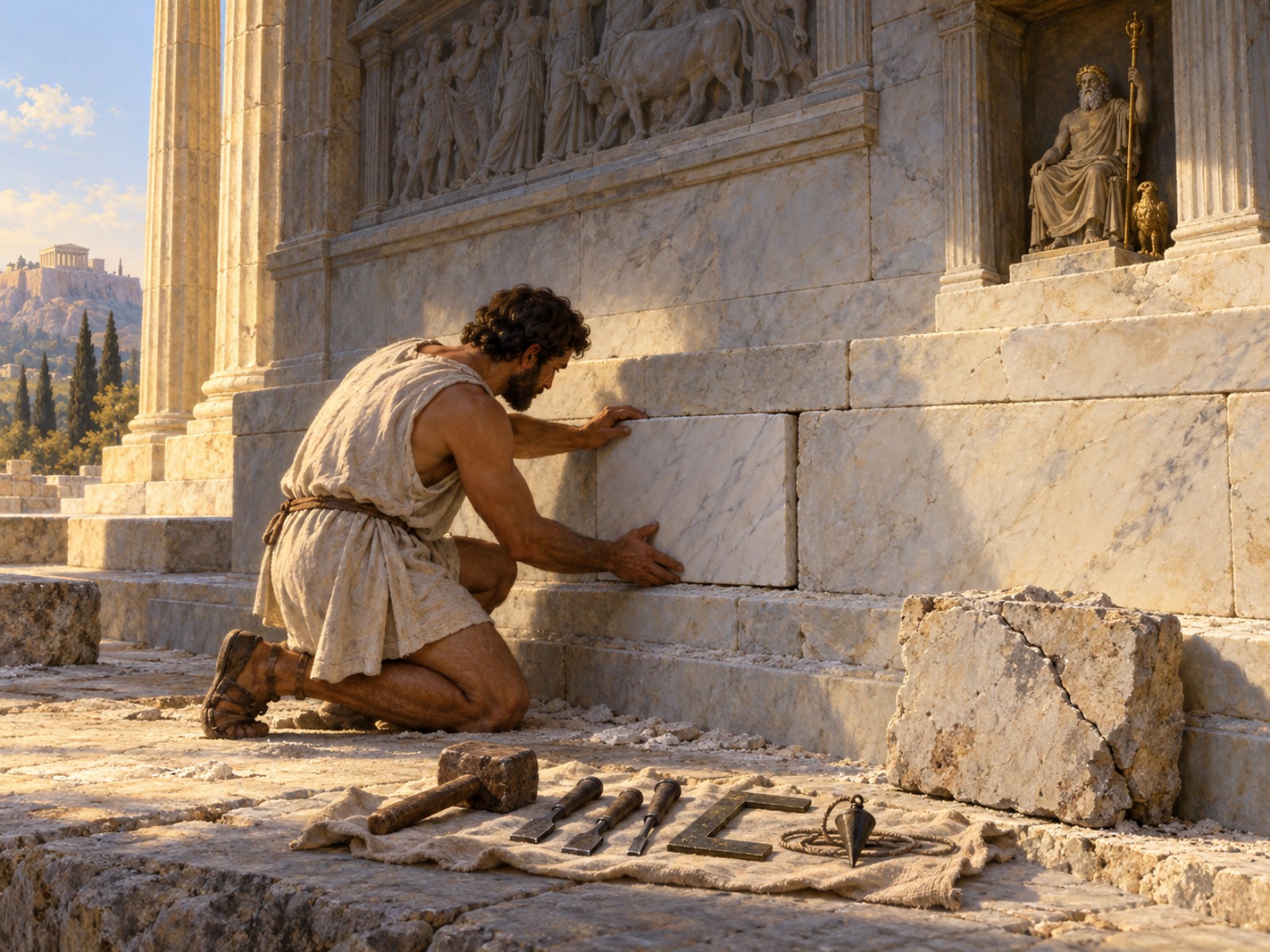
Repair must respect the person harmed. No one acquires a right to another person's attention, reconciliation, or renewed trust merely by announcing a religious transformation. Where direct contact is unwelcome or inappropriate, rectification can require respecting that boundary and pursuing any necessary practical remedy through an appropriate channel.
The new response must then be practiced until it becomes dependable. The change becomes credible because it persists when the same difficulty appears again.
Some effects cannot be fully reversed. An opportunity may have been lost, or another person may choose never to resume the relationship. In such cases, rectification includes doing what remains possible and carrying forward the understanding that prevents another injury. An imperfect repair can still be necessary and substantial. Its limits should be acknowledged honestly.
Remorse has served its purpose when it helps produce clearer understanding and better conduct. Endless self-accusation cannot return what was taken or make a person reliable. The soul needs enough honesty to recognize the fault and enough courage to move into the work.
Some consequences reach beyond the private life of the soul. A person may dedicate themselves while a dispute, debt, investigation, or legal proceeding is still unresolved. Their dedication does not make the underlying events disappear, and it does not itself dispose of the claims or proceedings that concern them.
Where they have done wrong, they must address the matter honestly and intelligently. Where repair is possible, they should work toward repair. Where an obligation is properly established, they should deal with it. A spiritual declaration cannot substitute for the practical work the situation requires.
At the same time, responsibility must be joined to wisdom and legitimate self-interest. A person can seek competent legal counsel, understand their rights, contest an inaccurate allegation, and pursue a lawful and proportionate resolution. Acknowledging a real fault does not require accepting every accusation that someone attaches to it.
The initiate should neither use the Gods as an excuse for evasion nor imagine that loyalty to the Gods requires abandoning sound judgment. They should prepare, seek appropriate advice, meet the responsibilities that are theirs, and protect themselves against what is false or unjust. In an actual legal matter, the practical steps belong to the circumstances and the advice of a qualified legal professional.
Suppose a person behaved dishonestly in a business relationship and later sincerely entered Zevism. Their improved character matters profoundly. Yet the affected person's loss may still need to be addressed. Honest records, appropriate advice, practical restitution where warranted, and reliable conduct all belong to the work. The new life gives the person a better way to face the old matter.
The Gods cannot be invoked to absolve every worldly ramification of acts performed through our own volition. Their acceptance does not make another person's injury cease to matter. Their help may strengthen us to face what remains, understand it more clearly, and find the best available course through it.
As a person becomes better, stronger, and more discerning, the Gods behold a real change. They see the soul learning what it previously refused or failed to understand. They see an old error losing its command over the person's will.
This gives mercy its proper place in the teaching.
Someone persisting in a wrong and someone who has deeply understood and rectified it do not stand in the same present condition. The deed remains known, but the person has changed. Where correction has already taken root, the Gods may judge that the full severity of a consequence is no longer fitting to the soul's present state. They may grant help or, in exceptional circumstances, mercy that lessens the burden of what follows.
This judgment belongs to Them. We cannot measure a quantity of meditation and demand a corresponding reduction of consequences. We cannot offer an appearance of reform as payment for an escape. Nor can another person promise, on behalf of the Gods, that a particular case will end favorably.
Divine assistance may come through warnings that help someone stop before adding to their mistakes. It may come through signs that call attention to a neglected duty or a better course. It may come through an opportunity to make repair, through timely assistance, or through the strength to endure what cannot presently be removed.

The recipient must meet such help with discernment. A warning should lead to clearer attention and wiser conduct. A sign does not take over the work of judgment, make established facts irrelevant, or relieve us of practical obligations. To receive guidance fruitfully is to become more capable of acting well.
Mercy can also mean that the person is given room to complete a transformation that is already under way. Yet the timing, form, and extent of that mercy remain in Divine hands. Our part is to make the correction sincere and sustained.
We must also avoid judging another person's Divine standing by the ease of their circumstances. Someone may be developing sincerely while an old consequence remains unresolved. Someone else may enjoy temporary success while continuing in error. Outward relief and inward rectification do not always arrive together.
The Gods' care should therefore never be reduced to a promise that every difficulty will disappear. Their care reaches the becoming of the person, including the wisdom and strength with which that person meets difficulty.
The world in which we live does not distribute justice perfectly. A good and holy person can be misrepresented, betrayed, falsely accused, or attacked without deserving it. Their suffering does not prove a hidden guilt. Their dedication does not place them beyond the actions of other people.

In such a case, the work is to establish the truth and protect what is right. The Gods can help set the matter straight. The person can pray for guidance and justice while taking the practical steps available to them: preserving what establishes the facts, seeking sound assistance, and maintaining the steadiness needed to act effectively.
To tell an innocent person that every injury must be accepted as their karmic debt would confuse the categories we have taken care to distinguish. Responsibility concerns what is actually one's own. Protection concerns what threatens one unjustly. Both require discernment.
Some situations contain both. A person may have made a real mistake and then become the subject of exaggeration, exploitation, or unrelated mistreatment. They should correct the mistake and resist the injustice. Rectification does not require consenting to new wrongs against oneself.
The same care is needed when considering the conduct of others. Another person's claim to have changed can be heard without immediately restoring access or trust. Genuine reform has room to demonstrate itself over time. Mercy toward someone and prudent boundaries can coexist.
The Zevist teaching given here begins with dedication to Zeus and the Gods and develops through the soul's participation in a path of mastery, rectification, and creation. Its account of healing stands upon that relationship and that work.
It rejects the claim that calling oneself “born again,” changing religious affiliation, or completing an initiation grants a blanket release from everything one has done. Wherever conversion is presented as a complete cancellation of history, obligations, and consequences, the essential work has been left out of the account.1
Our own principle is clear: the past exists, and its effects can continue into the present. The Gods receive the person who has turned toward Them as one beginning a new life. That person then takes up the work of correcting the patterns, repairing the injuries, and developing the capacities through which this new life becomes real in the world.
Forgiveness therefore carries a task within it. The welcome gives the soul a place from which to begin. The teaching shows the way. Practice makes the turning durable.
Healing asks for time because established patterns have depth. It asks for energy because attention and action must repeatedly return to the work. It asks for effort because some corrections are difficult. It asks for patience because development and outward resolution proceed at different speeds.
A person may become more honest before others trust them again. They may stop a destructive habit before the financial consequences are settled. They may learn composure while still facing an unfair accusation. They may recognize an error quickly and require much longer to make the appropriate repair.
These differences in timing must be understood. Otherwise the initiate may conclude that genuine progress is worthless simply because every consequence has not yet disappeared.
We can look for progress in definite ways. Does the person recognize the harmful pattern earlier? Can they interrupt it more reliably? Do they make fewer excuses? Are their commitments becoming more dependable? Are they carrying out the repairs within their reach? Are their decisions becoming more intelligent and less governed by immediate impulse?
Such changes are substantial. They show the new trajectory entering the details of life.
When a setback occurs, the proper response is to examine it, address any new harm, and return to the discipline with a clearer understanding. A setback must not become an excuse to continue the wrong. Neither should it be made into a declaration that all previous effort was meaningless.
Patience is active here. It means sustaining the necessary work long enough for it to take root. It means giving a repaired habit time to become stable, a fulfilled promise time to rebuild confidence, and a clearer understanding time to guide many decisions.
The person who learns this becomes less occupied with appearing transformed and more committed to becoming dependable. Their life gradually carries the evidence of their dedication.
This teaching can enter ordinary life through a simple and sustained rhythm.
Begin by remembering to Whom you have dedicated yourself and what kind of person you are seeking to become. Let that remembrance give direction to the day. Choose one duty that needs to be fulfilled and one recurring pattern that needs attention.
Give study a definite place. Receive the teaching carefully enough that it can challenge an assumption, clarify a responsibility, or show a better way to act. Carry one point into meditation rather than passing over many things without inward attention.
During the day, notice the place where the old pattern asks to resume its authority. Use what you have learned there. The moment may be small: a conversation, a promise, an expense, an irritation, an opportunity to conceal something. Small moments repeatedly inhabited become the structure of a life.
Where practical repair is needed, take an appropriate step. Make the necessary preparation, keep the appointment, obtain sound advice, organize the obligation, or complete the work you have postponed. Let the spiritual intention reach the actual circumstances.
At the day's close, review yourself accurately. Recognize what improved. Name what failed without embellishment or evasion. Identify the next correction. Give thanks for help received, and return to the Gods with a clearer understanding of what tomorrow requires.

This rhythm is not a payment for mercy. It is a way of making dedication active. Over time, the soul ceases merely to admire a teaching and begins to live through it.
Let the beginner understand the dignity of the threshold they have crossed. The Gods receive the sincere turning of the soul. They see the person who has entered the good path and the being that person can become.
Let the same beginner understand the dignity of the work ahead. Every truthful correction gives the new direction a place in the world. Every act of self-command makes the soul less captive to its former movements. Every appropriate repair restores something that words alone could not restore.
There is room here for hope because a person can change. There is room for justice because deeds and injuries still matter. There is room for mercy because the Gods behold the whole person, including the depth of their transformation. There is room for strength because healing calls upon us to develop the power to live well.
If you carry an old burden, bring understanding and effort to it. If you have wronged someone, undertake the repair that is yours to make. If you face consequences, meet them with truth, preparation, and wise regard for your future. If you suffer unjustly, seek protection and the establishment of what is right. In all these conditions, continue to study, meditate, and make your dedication visible through your life.
The past is known. The present is the place of action. The life ahead is still being formed.
May Zeus and the Gods receive our sincere turning, illuminate what requires correction, and strengthen our capacity to carry it out. May we become discerning in judgment, steady in practice, courageous in responsibility, and patient in healing. May the good we profess acquire a living form in what we do.
To become a child of Zeus is to enter a new life. To walk that life is to become, through sustained healing and creation, the person that dedication calls us to be.
ZEFS AENAOS.
High Priest Zevios Metathronos
Temple of Zeus Foundation
Note
1The contrast concerns consequence-free conversion, rather than every Christian or Abrahamic account of forgiveness. The Catholic Catechism, §§1455 and 1459–1460 connects forgiveness with responsibility, reparation, and continuing spiritual healing. The Southern Baptist Faith and Message, Articles IV–V distinguishes new birth and justification from continuing growth and acknowledges temporal judgments. These sources clarify the comparison in Section XI; the Zevist teaching developed in this sermon follows its own stated premises.
 አማርኛ
አማርኛ العربية
 বাংলা
বাংলা Български
 中文
中文 Čeština
 Dansk
Dansk Deutsch
 Eesti
Eesti Ελληνικά
 Español
 Français
 हिन्दी
 Hrvatski
 IsiZulu
 Italiano
 日本語
日本語 Kiswahili
 Magyar
 Македонски
 नेपाली
 Nederlands
 فارسی
فارسی Polski
 Português
 Română
 Русский
 Slovenščina
 Suomi
Suomi Svenska
 Tagalog
 Türkçe