Osiris
author: High Priest Zevios Metathronos
co-authors: Karnonnos
The knowledge presented contains information for those who want to understand the great God known as Osiris and in his
Hellenistic guise, Serapis. Osiris is a member of the Great Heliopolitan Ennead of Egypt and was regarded as the King of
Kings of Egypt, being a supreme deity of supernal and extreme importance. In the Goetia, he was labeled as the demon Oriax. Here are
some of his names:
Hieratic Information about Osiris
| Names |
|---|
| 2500BCE | Osiris |
|---|
| 1000BCE | Osiris-Serapis |
|---|
| 320BCE | Serapis |
|---|
| Christian era | Oriax · Orias |
|---|
| Contemporary | Osirias |
|---|
| Divine Names |
|---|
- Osiris
- Usir
- Ube-Khet
- Oreya
- Serapis
|
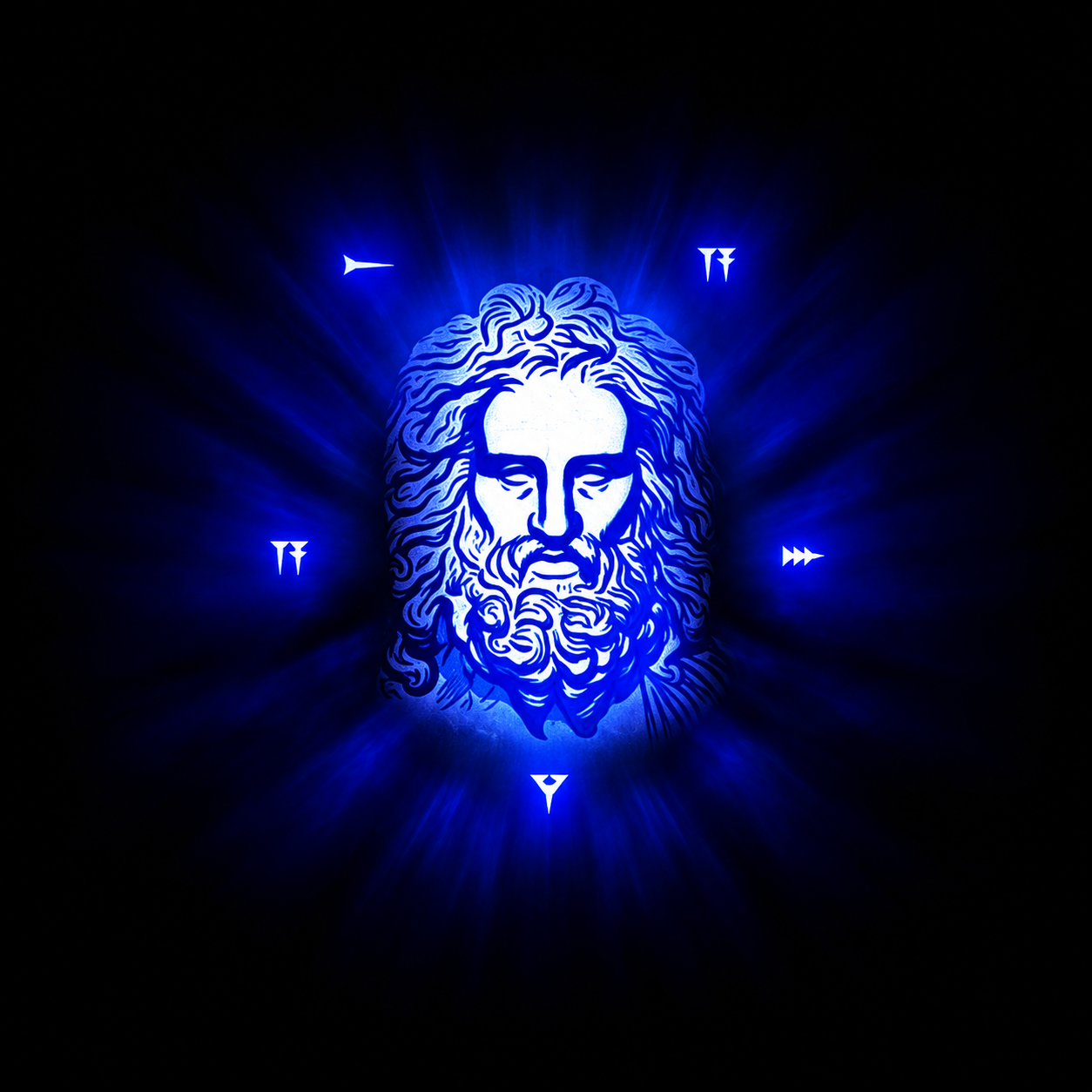
The Osiris Ritual above involves great communion with this God, the King of Egypt and great God of Death, who was deeply beloved by
the Egyptians as their collective protector.
OSIRIS
Osiris is an extremely complex and multi-faceted deity who sat at the head of the Egyptian pantheon. The highly esteemed nature of
Osiris is evident in every single facet of the civilization of the Nile. He was regarded as a God of resurrection, the afterlife,
silence, fertility, agriculture, medicine, vegetation, and many other domains1. Highly prominent in the pantheon of the
state of Egypt, Osiris was considered the Father of Egyptian civilization and the husband of Isis.2
He represented both the heliacal rising of the star Sirius and the stars of Orion directly as Sah3, a very holy
matter for the Egyptians, and the annual agricultural cycle that united their civilization was closely tied to the exploits of
Osiris. Egypt was a farm-centered civilization, and Osiris represented the germination of the seed, the sowing of the soil, and the
resurrection of the grain. The silt created by the inundation phase of the Nile was also associated with him, as it was the
lifeblood that allowed farms to prosper.
Representing fertility and abundance, he was therefore a very pivotal deity for common concerns in day-to-day matters.
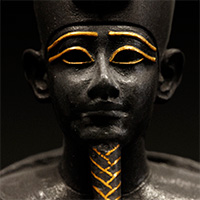
Osiris Statuette, Louvre
Primarily, however, Osiris was the God of Death in Egypt whose importance to tombs and rites of the dead was
paramount4. Funerary inscriptions relay that the ankh of a deceased person was related to the judgement of
Osiris. Those who had practiced goodness in the form of right meditation and virtue would receive a good ankh and be seated
in proximity to him in death, being above the confusing decay of the world of the lesser individuals.
It was said that Osiris would distribute bread and beer to the worthy in the afterlife 5, something later stolen
in Christian ritual for the so-called 'mass.' While Anubis, the son of Nephthys
and Osiris, was invoked in shaping the bodies of all people after death, Osiris was regarded as being closer to a more
select group of people. To have the esteemed ankh was no small accomplishment. Appealing to the great King of Two Lands was
a large preoccupation for the well-to-do Egyptian, held to be strongly noble in mortuary scenes.
Although Osiris was regarded as a powerful deity, the Egyptians believed in an incarnated earthly aspect2 who first served
as the royal herald under Shu and later became the right hand of the Pharaoh and the High Priest of Egypt6, until at the
age of twenty eight the violence of the Set drama ensued 7 Plays and other types of dramatic
enactments describing his life story and acts started in Egypt and survived well into the Christian period, appearing far into the
Middle Ages. Osiris was regarded as a personable God and the most humanlike of all Gods, but these portrayals of his life also
reveal that godhood is not simply a given; it must be earned by all who seek to defy death.
Being a symbol of working towards the state of divinity, Osiris deals with the ultimate and highest sphere of free will: the question
of orientation towards the Gods and true dedication, being the Lord of Ma'at. This form of free will in relation to the Gods is
utterly sacrosanct and cannot be violated. One cannot follow a fake or distorted form of Zevism, nor can one be a Zevist while
acting in opposition to the Gods, nor can anyone be forced into Zevism without being fully informed. For this reason, Osiris
represents an oppositional figure of Truth against the compulsory slave creeds people are born into called 'religions' that populate
the Earth, as well as the ideology of meaningless communism simmering beneath their surface.
One subject that Osiris represents heavily is silence and contemplation 8, in line with Zeus, the Most Holy Father. This
is one of the major reasons Harpocrates, the son of Isis and Osiris, is represented with a shushing gesture; from ancestor to son to
grandson9, the importance of silence and rest is paramount and eternal in progression to a higher form.
The Egyptian priesthood was trained under the symbolism of Osiris in the cities of Heliopolis and Avaris10 under the guise
of a Brotherhood that spread to many cities of Egypt, including Abydos and Alexandria. Much like the Mysteries of Isis, the Mystery
was conceptualized in the guise of a ladder with levels of Initiation, Progression, Distillation, and Completion for those who had
gone through the threshold of its doors, a matter that is conveyed with complexity in the Platonic dialogues. When travelling in
Egypt after the death of Socrates, Plato went to observe these holy rites directly. Despite being heavily corrupted, elements of
this Osirian system still survive in Freemasonry.
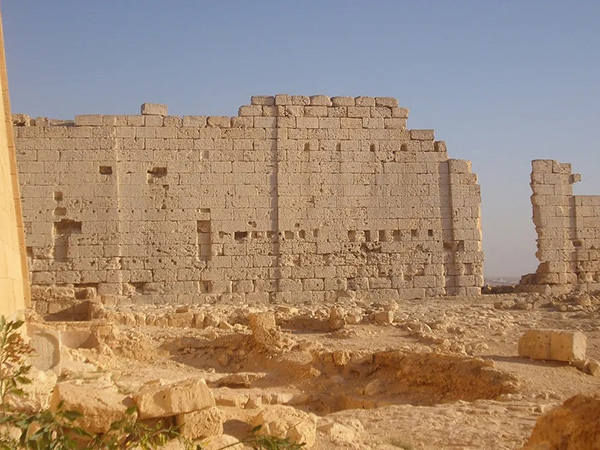
Taposiris Magna
The Great Temple of Osiris, also known as Taposiris Magna, was located at Abydos. This complex featured three sanctuaries and
ceremonial rooms of great length. It housed the primary Festival of Osiris, which was continually expanded by the Pharaohs and
celebrated throughout Egypt. Cleopatra VII is known to have orchestrated a significant renovation of this complex, incorporating
Hellenistic elements, likely to cement her popularity among the inhabitants of Upper Egypt. Osiris was also worshipped on the island
of Philae.
The rites of Osiris were complex, recorded on the Ikhernofret Stela11 in the temple complex of Abydos. The stela was
installed during the reign of Senusret III, describing the dramatic procession of the
holiday. Complex mourning rites were also discovered from Ptolemaic sources and the Bremner-Rhind Papyrus from
Khentamenti.12 Osirian processions were important to the Heb-Sed festival of the Pharaoh. The Ikhernofret Stela's
procession goes as follows:
Banebdjedet
The Banebdjedet was the sacred ram of Osiris. The Egyptians called it the Ba of Osiris, the Active Presence of the Lord of
the Pillar. At Mendes, a ram was kept representative of Osiris himself. The imagery of this ram is represented otherwise in
the crook and flail of the great King of Kings, suggestive of his role as a divine shepherd.
The Book of the Heavenly Cow14 associated this God with Osiris himself, although it could also be taken on by Geb,
Shu and Ra-Atum. Oddly, in the Osirian myth, the Banebdjet appears as a judge before Horus and Set, ruling in Set's favor on
account of his seniority as a being.
The Apis Bull
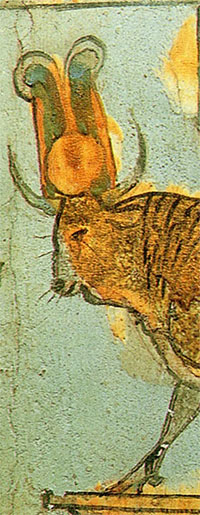
Osiris was closely associated with the Apis Bull2,
a sacred being in Egypt. The Bull, selected for its purity and
physical perfection, symbolized aspects of Pharaonic power.
The bull also represented the fertility aspect of Osiris,
particularly when Osiris was equated with the phallic God
named Min.
While alive, it represented some of the might and power of
Ptah, but upon its death, it became associated with Osiris,
embodying mastery over the four directions and the powers in
death. It was equated with Taurus in the Dendera temple complex.
As far as the bull was concerned in the Osirian symbolism,
it represented endings and was worshipped after its death,
opposed to the role of a great herald that it was said to pertain
to with Ptah in life.
The bull was said to protect and stand for believers as a
the animal itself does for the heifers of the field in vigilance.
It was part of a triad of bull cults, along with those of Mnevis
and Buchis which were primarily associated with Ra and Montu.
The prerequisite for the bull to be chosen lay in peculiar
markings (a white square upon its forehead and a black eagle)
and a lack of visible defects, as Herodotus15
explained. Greek accounts describe a court or stable in
Memphis where the bull was kept, often associated with
the Temple of Hephaestus-Ptah. On certain days only women
were permitted to see the bull, approaching its face.
After the bull died, it was mummified, buried in the Serapeum in Saqqara. Demotic texts have shown the process of
mummification for the Apis Bulls. It was said the likeness of the God in the form of a bovine animal was to teach humanity
respect for the days when they were few in number and imperiled by the forces of nature.
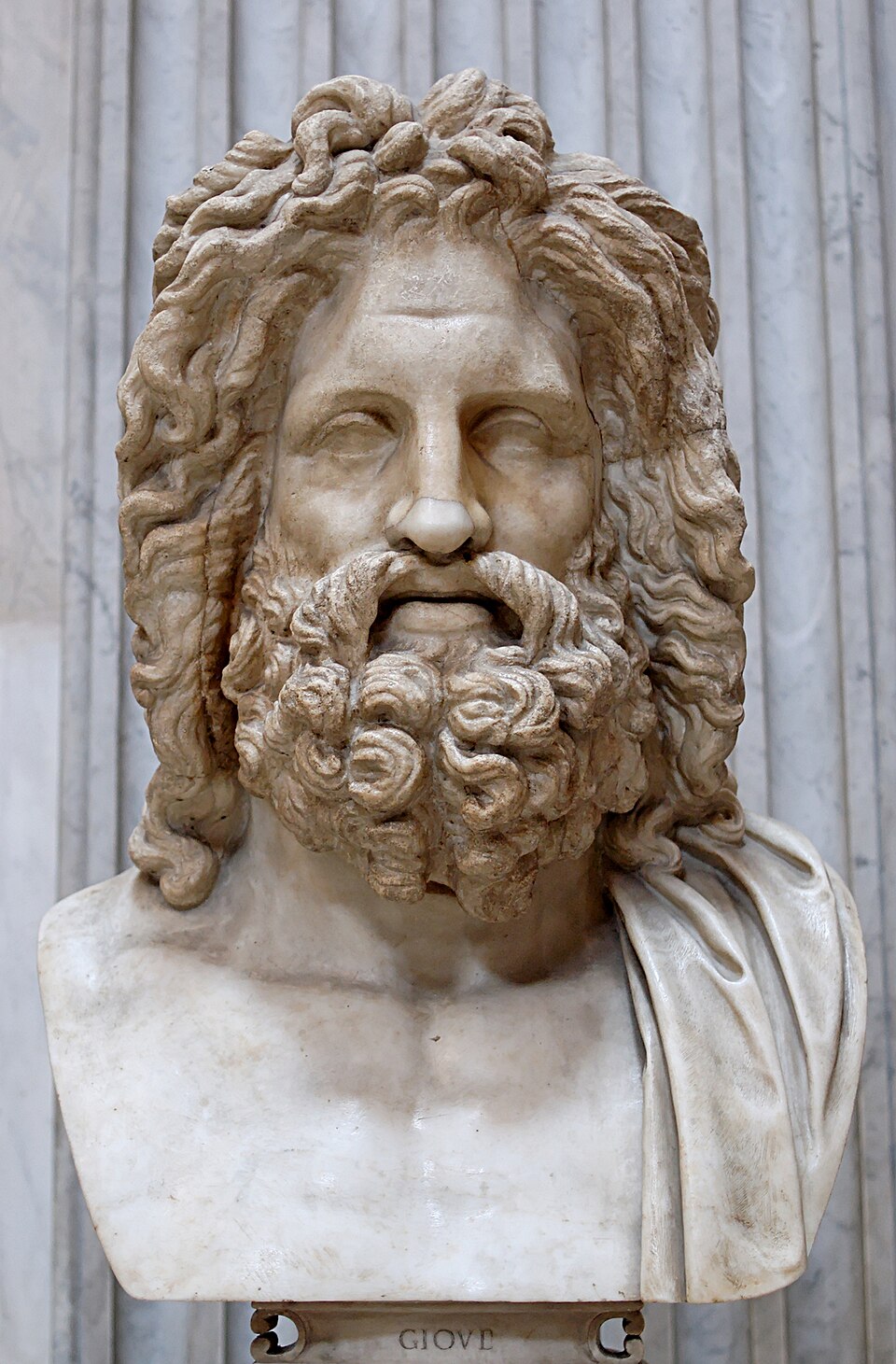
Serapis
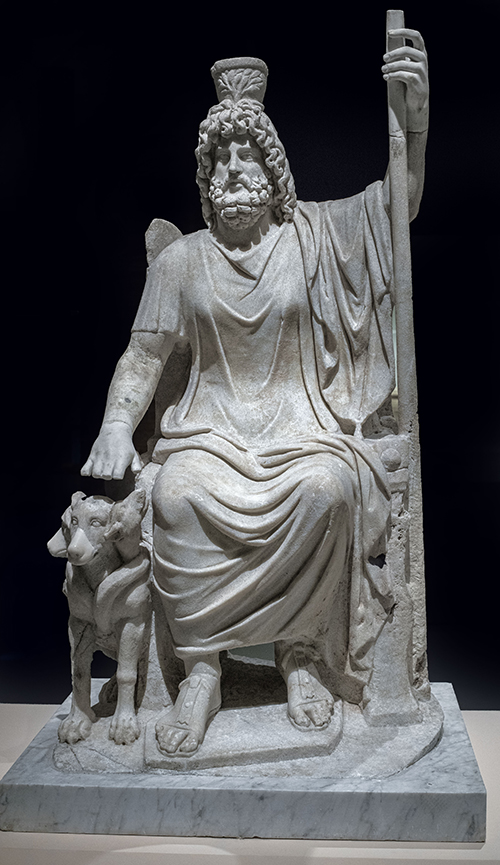
Serapis
After the Greek conquest of Egypt by Alexander the Great, Serapis came to represent Osiris in a Greek guise and with aspects
of the Apis interwoven into his symbolism. Curiously, however, the first Temple of Serapis is recorded in Babylon rather than Egypt.
Alexander is known to have participated in certain rites adjacent to this temple, leading some to believe major aspects of Serapis
have origins in Mesopotamian imagery.16
Nonetheless, the Egyptians clearly equated this deity too with Osiris:
Following Osiris - Perspectives on the Osirian Afterlife from Four
Millennia, Mark Smith:4
The identification of Sarapis with Osiris-Apis was more common among the Greeks than among the Egyptians. Nevertheless, there are
clear examples where Egyptian texts use the divine name Osiris-Apis to refer to Sarapis. In Ptolemaic Egypt, as in earlier
periods of Egyptian history, it was customary to swear oaths by the ruler. Specimens of such oaths are attested in Greek and
Demotic documents from various Egyptian sites, including Elephantine, Thebes, Herakleopolis, Hawara, and Tebtunis.
The historical record shows that Osiris-Serapis maintained his status as one of the most popular and enduring Gods by the time the
Romans had conquered Egypt. His cult had spread as far as Scotland and India. By this point, he had become the patron God of the
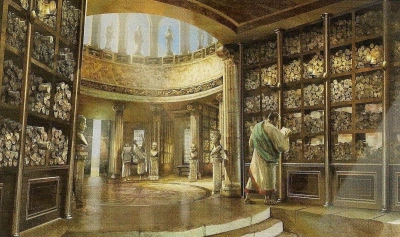
city of Alexandria. The Serapeum dedicated to him in that city, built by Ptolemy III Euergetes, was the greatest academic temple
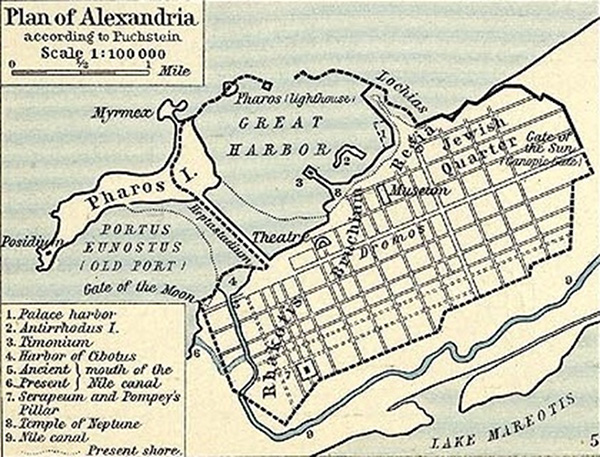
complex in the entire known world and one of the greatest centers of ancient learning. As one can see on this map, it took up a
significant amount of urban space in Alexandria:
The temple was built on a high platform accessible only by stairways, overlooking the sea and Lake Mareotis on the other side. It
housed a significant annex containing a vast collection of research and tomes from the Great Library of Alexandria, the central
scientific and religious hub of the world. The Serapeum spanned several hundred feet in length and width, exceeding the base
dimensions of many modern skyscrapers and civic buildings. Underground tunnels in the Serapeum, associated with priestly functions
and the Mysteries, were so long that they extended deep into the lake and harbor.
Symbolism
His name relates to the constellation Orion and the star Sirius, something that blatantly survives in the Greek rendition of his
name. The code of his name, Usir, both in sound and in the shape of the hieroglyphs, also relates to 'the throne of the Eye,'
signifying his connection to the activation of the Third Eye and surrounding chakras. His name is also associated with Might and
Power, correlating to the ability of Daemons to 'see' beyond human perception, as well as the power of the 'act', a Daemon is no
longer a force purely 'acted upon' but one that animates itself.
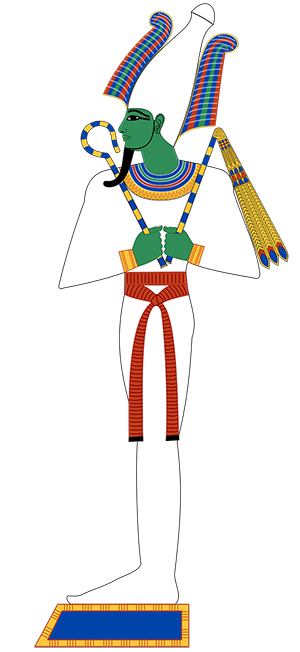
The crook and flail he wields represent royal and stately power, as does the Crown of Atef showing truth and justice, also showing
the union of Egypt. Osiris embodies the wisdom and responsibility of rulership, symbolizing the Pharaoh's duty to make the land and
state fertile. In this, however, is a reference to Orion, the true original realm of civilization and the abode of the Gods who
taught humanity civilization and agriculture.
Serapis-Osiris is given the thyrsus, a staff with a pinecone relating to the powers of the Pineal gland and the seat of witchcraft in
the soul. Iamblichus stated in his Life of Pythagoras17 that the meanings of the Greek and Egyptian theology were shared
in content beyond the surface in a complex manner. On his head he wears the calathus, a particular type of chthonic crown shaped
like a basket or pillar.18
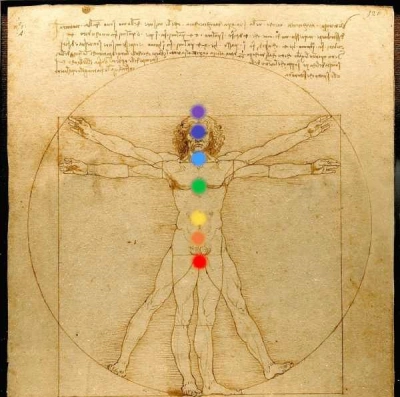
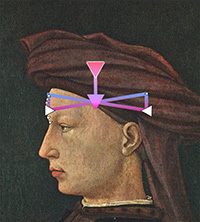
Osiris is associated with the Rune of Dagaz, with which he shares many mysteries with Thoth and other divinities. The
circulation of energy around the Sixth Chakra is one of the symbols of Osiris. Notable in this is a reference to the visual
shape of the constellation Orion, hidden in the form of the Upper Chakras:
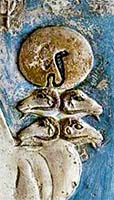
Dagaz is also shaped like a butterfly, another symbol of Osiris, representing resurrection and rebirth from the pupillary
stage of existence. It also symbolizes the two opened eyes present on the Sigil of the God and even the traditional shape of
an hourglass. The two triangles of Dagaz intersect in the middle, symbolizing union and the perfect instant, while alluding
to other geometric mysteries through which one can comprehend deeper processes of the universe.
Plutarch and other Platonist philosophers identified Osiris-Serapis with the Logos principle, the Intelligble and the Good that can
withstand mutilation, being the first born son of the Sun. He connects the death and resurrection of Osiris with many of the
mysteries of the moon cycle and linked the mourning rituals with Pythagorean rites.2 Later philosophers would build on
this type of metaphysic.19
Osiris was a major God representing the specifically masculine aspects of fertility and sexuality; consequently, he was often
depicted with an erection when synthesized with Min. Beyond symbolizing the seed of the masculine principle, this also relates to
the symbolism of Dagaz in orgasm and union. Another aspect of this is the uniting function between the Sixth Chakra and the Sacral
Chakra in sexual matters, as visual and sensory stimuli lead to physical arousal. In some languages, orgasms are referred to as 'the
little death.'
This relates to one of the meanings of the traditional story of Set cutting Osiris into fourteen (sometimes twenty-six or forty-two,
the latter representing the number of provinces in Egypt) parts and scattering them throughout the land. The human left to the
forces of nature is metaphorically 'cut up' into pieces, unable to resist the forces of existence, and reduced to the basics of
survival, with only the life-force sustaining them.
The widow of Osiris, Isis, accomplishes the feat of finding the missing pieces and stitching them back together. The Osirian myth
pertains to Isis presiding over major aspects of connection in the soul and accessing the inert feminine powers of the soul. Only in
establishing the connection of the fourteen Chakras and making them work in together does someone transcend the mortal realm of
their existence by progressing on the path of Godhood. Naturally, this should begin with the Third
Eye or Ajna of Osiris, as we recommend on the site.
Finally, our esteemed Hall of Osiris is named after him; the Sacred Rituals of
the Hall of Osiris are his divine path to ascension. An important meditation of Osiris is the Djed
Pillar of Osiris, linked to awareness.
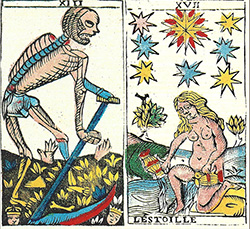
As one of the major Gods of Death, Osiris is associated with the Death card of Tarot, of which the scythe cuts not only the head of
the peasants but also the crowned kings, meaning it will reach both regardless of earthly prestige. Just as Osiris triumphs against
Set, Death also represents the potential reversal of this process. For this reason, Osiris is represented in the Star card where
Sirius is beheld by Isis in the reflection of the water. Certain aspects of this and the Set myth parallel the meanings of steps of
the Magnum Opus itself, with putrefaction being purified by spirit and leading directly to conjunction, leading to the Union of the
father and son after various types of transmutation.
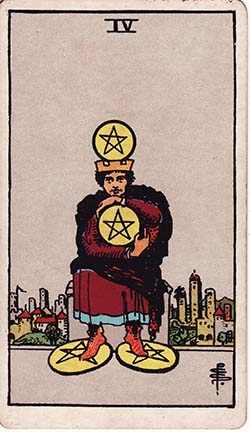
Death represents a sort of finality, a severing away from both the mortal body and the 'social self.' It is a stage of contemplation
where the pure self is ideally meant to come to a valuation of their actions. Osiris is represented by the Four of Pentacles in
light of this. This is a card that frequently represents a necessity to move forward from feelings of scarcity or to contemplate
one's situation keenly. The Tarot was connected to Osiris 20, and Antoine Court de Gebélin considered it an expression of
the Serepean Mysteries elaborated by Plutarch.21
Unsurprisingly, as the God associated with Orion, he also represents many aspects of masculinity, and is linked to the Odhal rune. Just as He represented the body of Egypt scattered by Set, Osiris symbolizes the active
union of individuals into a collective biological and spiritual entity, bound by their heritage, a mechanism that perfectly
complements reincarnation and rebirth.
Most importantly, among all the symbolism, Osiris sits upon the waters of creation, existence, and consciousness, transcending these
as a celestial and holy entity. These waters reflect the believers' status as fish within the ocean. They also represent the powers
of procreation, linked to the Sacral Chakra. The famous blue-green skin of Osiris in Egyptian symbolism represents the high atmic
level of spiritual power he possesses, symbolizing both the sky reflecting onto the deep ocean and nature's rejuvenating power.
Christian Theft and Goetia
As could be expected of the God who was the patron of the city where Christianity originated, Osiris is one of the most stolen from,
reinterpreted, and attacked Gods by the foolish. Alexandria was essentially the New York City of its time, a bustling metropolis
with hundreds of thousands of Greek, Phoenician, Yehuborim and Roman residents. Riots between Greeks and Hebrews went as far back as
the 2nd century BCE, if not earlier. The Serapeum was first fully attacked and ransacked by a mob during the Kitos War during the
reign of Trajan. Later, Hadrian rebuilt much of the temple and gave it a greater grandeur, remodelling part of it on the Platonic
Academy in Athens.
As Christianity developed from the immense portion of Alexandrian Hebrew peoples and the ascetics around Lake Mareotis, the theft had
to be covered up for the new religion festering within Rome to cover its tracks. A great design emerged among the anti-theist groups
to destroy the Serapeum and obliterate any remnant of the true God. The lunatic Tertullian elaborated more on why the Serapeum was a
prime target:
On the Spectacles, Tertullian: 22
The whole world is filled with Satan and his angels. Yet not because we are in the world do we fall from God but only if in some
way we meddle with the sins of the world. Thus, if, as a sacrificer and worshipper, I enter the Capitol or the temple of
Serapis, I shall fall from God, just as I should if a spectator in a circus or theatre. Places do not of themselves defile us,
but the things done in the places, by which even the places themselves (as we have argued) are defiled. We are defiled by the
defiled.
The Serapeum was subjected to a relentless assault in 39123, the same year Theodosius II decreed that no one was permitted
to enter any pagan temple on pain of death24. During this year, it was ransacked and destroyed by hordes of Yehubor
terrorists, which is celebrated widely in the literature of the church.
Eunapius, the Neoplatonic philosopher, claims in his work Lives of the Philosophers and Sophists that the Christians simply stormed
the emptied building unprovoked and copiously stole its valuables. The mob then took a large amount of bones of criminals and slaves
condemned to death and erected a monastery to worship these individuals whom they named as saints and intercessors. The Empire
erupted into a civil war within months, and Theodosius died of a cancer characterized by extreme water retention three years later,
leading the Empire to officially be split into two parts. The Church of Pergamon in Revelation was located inside the Serapeum of
that city.
Yehuboric context
Osiris was pilfered from to construct the image of the Nazarene more than any other God. The imagery of the resurrecting grain,
bread, alcohol, fish, the ram, the boat and endless other facets were stolen from his imagery. Marsilio Ficino noted
the similarities between Osiris and Jesus in his hermetic codex26; Ficino himself had translated the Golden Ass of
Apuleius describing Osirian ritual in large detail 27, leading this to become a contention among the Platonic Academy
circle.
There are many other aspects related to this, such as the figure of ‘Peter’ the Apostle. As Tertullian explains28, Peter
walks and wades on the surface of the waters of consciousness, with the ‘ship’ of Christians torn here and there by ‘persecution’
from Satan, representing the so-called Church. As one should understand by now, the Church is used here to supplant the Cults of
Osiris-Serapis, who ordinarily would transform the souls of those coming to the surface.
De Baptismo, Tertullian:
...the apostles then served the turn of baptism when in their little ship, were sprinkled and covered with the waves: that Peter
himself also was immersed enough when he walked on the sea." It is, however, as I think, one thing to be sprinkled or
intercepted by the violence of the sea; another thing to be baptized in obedience to the discipline of religion. But that little
ship did present a figure of the Church, in that she is disquieted "in the sea", that is, in the world, "by the waves", that is,
by persecutions and temptations; the Lord, through patience, sleeping as it were, until, roused in their last extremities by the
prayers of the saints, He checks the world, and restores tranquility to his own.
Many of these mythologies orient themselves around the code word of ‘Pator’ or father. St. Peter was stolen from a variety of Gods,
as Supreme Guardian ThomaSsS29 explained years ago. As Osiris was the Father of Egypt and much of Christianity originated
among the Yehuborim contingent in Alexandria that had infiltrated the Mystery Schools, the curse on the Great God was necessary to
construct in a set of symbols and allegorical meanings, but also to appropriate the Mystery Cult for the Catholic Church.
For example, the appearance of Osiris with the Crown of Atef and the cross in the shape of the Djed Pillar should suggest to the
viewer immediately that his attributes were stolen and appropriated for the ‘Pope’ (papa, father) and other religious authorities in
Christianity, along with similar priestly regalia of the Mesopotamian civilizations. This thievery was not merely based on the
temporal claims to power of the Pope, but also on an arrogant mockery, suggesting that this individual controls all aspects of life
and death through the ‘rock’ of ‘Saint Peter’ and the ‘baptismal water’ of Christ. Insidiousness is the essence of the Yehuboric
program, and as HPS Pythia elaborated two decades ago, these corruptors made a very real deal to exchange power for souls.
Pseudomonarchia daemonum, Johann Weyer: 30
Orias is a great marquesse, and is seene as a lion riding on a strong horsse, with a serpents taile, and carrieth in his right
hand two great serpents hissing, he knoweth the mansion of planets and perfectlie teacheth the vertues of the starres, he
transformeth men, he giveth dignities, prelacies, and confirmations, and also the favour of freends and foes, and hath under him
thirtie legions.
In the Goetia, Osiris is shown to be a lion riding upon a steed burnished with two serpents named Oriax or Orias, who
can teach the adept the knowledge of all the stars and planets. The claimed ability of Oriax to metamorphose a man into any shape is
related to his mysterious powers of resurrecting the soul.
Bibliography:
1Library, Diodorous Siculus
2Isis and Osiris, Plutarch
3The Complete Gods and Goddesses of Ancient Egypt, Richard H. Wilkinson
4Following Osiris - Perspectives on the Osirian Afterlife from Four Millennia, Mark Smith
5Osiris: Death and Afterlife of a God, Bojana Mojsov
6Aspects de la culture pharaonique: Quatre leçons au Collège de France, J. Osing
7Der pränatale Geschlechtsverkehr von Isis und Osiris sowie eine Notiz zum Alter des Osiris, Joachim Friedrich Quack
8The Burden of Egypt, 4th imp 1964, J. A. Wilson,University of Chicago Press
9Reflections of Osiris: Lives from Ancient Egypt, John Ray
10The Complete Temples of Ancient Egypt, Richard H. Wilkinson
11Ikhernofret Stela
12Bremner-Rhind Papyrus
13Passion plays of Osiris, Ancient Worlds
[accessible via Internet Archive]
14Book of the Heavenly Cow
15Book 3, Herodotus, Histories
16Life of Alexander, Plutarch
17Life of Pythagoras, Iamblichus
18Sarapis Under the Early Ptolemies, John E. Stambaugh
19Platonic Theology, Marsilio Ficino
20Mystical Origins of the Tarot: From Ancient Roots to Modern Usage, Paul Huson
21Game of Tarots, Antoine Court de Gébelin
22On the Spectacles, Tertullian
23Lives of Philosophers and Sophists, Eunapius
24Codex Theodosianus
26Corpus Hermeticum, Marsilio Ficino
27Metamorphoses (the Golden Ass), Apuleius
28De Baptismo, Tertullian
29St. Peter, ThomaSsS [SG]
30Pseudomonarchia daemonum, Johann Weyer