
 አማርኛ
አማርኛ العربية
 বাংলা
বাংলা Български
 中文
中文 Čeština
 Dansk
Dansk Deutsch
 Eesti
Eesti Ελληνικά
 Español
 Français
 हिन्दी
 Hrvatski
 IsiZulu
 Italiano
 日本語
日本語 Kiswahili
 Magyar
 Македонски
 नेपाली
 Nederlands
 فارسی
فارسی Polski
 Português
 Română
 Русский
 Slovenščina
 Suomi
Suomi Svenska
 Tagalog
 Türkçe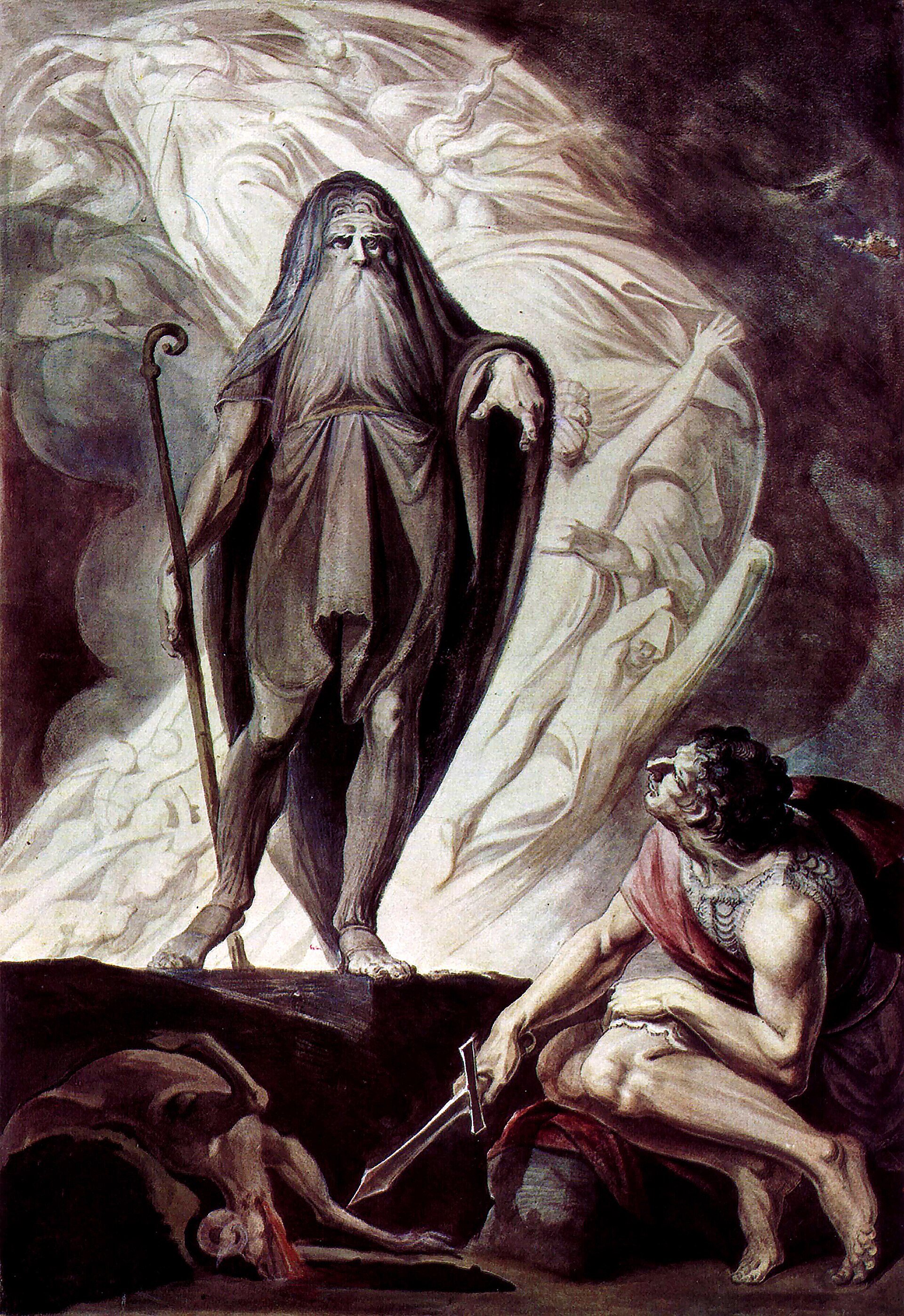

Descent, consultation, and return
The Nekyia is an advanced Zevist rite of contemplative descent and consultation. The practitioner settles into the meditative state cultivated through long practice, approaches the boundary of the dead under divine guidance, and completes an ordered return. The name recalls the encounter of Odysseus with the departed in the eleventh book of the Odyssey.
In that ancient encounter, the questions of the living meet the needs and knowledge of the dead. Tiresias gives counsel; Elpenor asks for an obligation to be fulfilled; Anticleia speaks of the household. The traveler must carry what he has learned back into life. Odyssey 11.23-224.
Choose one deceased person or one clearly defined ancestral group. Prepare no more than three questions that belong to the purpose of the meeting. The descent described here takes place through meditation. Every stage remains under Zeus and the Gods of passage. For a recent death, the Funeral and Genesia precede this observance.
Experience before these rites
Before undertaking any of these necromantic rites, one must have at least three to four years of consistent meditation experience, have practiced beyond the intermediate level, and already be comfortable performing God Rituals. Years of practice should have brought familiarity with sustained concentration, meditation, and the opening and completion of a ritual.
The Hades Power Ritual may be performed beforehand to deepen the connection with the God who governs the realm of the dead and to prepare for these procedures. Allow a quiet interval before beginning the chosen rite.
Dreams when contacting the dead
When contacting the dead, one must attend to dreams and remember what is seen in them. To avoid creating false expectations, no more will be discussed on this page. Pay attention to your dreams.
The words and the inner action
The indented words are ritualistic incantations. Speak them with the image, intention, and feeling described in the surrounding instructions. Read each movement beforehand, enter its visualization, and then give voice to the words. Let the voice be measured and resonant, with a comfortable breath between phrases. After speaking, remain within the prescribed meditation before continuing.
For the Greek opening and optional blessing, speak the Greek text. The transliteration guides pronunciation; the English rendering supplies its meaning. Speak the other incantations in English as printed, replacing each bracketed name or purpose with the one you have prepared.
Imagination gives the will a definite object. In a rite for the dead, form the remembered person before you, or hold a name when the face is unknown. In communion with the Gods, attend to the divine presence and office being honored. Bring sincere feeling to that attention: gratitude, affection, reverence, compassion, or the courage to release. Give each feeling time to become clear without losing command of the mind.
During consultation, alternate deliberate mental address with receptive silence. Once the question has been sent, let the inner voice become quiet. Keep the person's image gently present while allowing room for an impression to arise. The ritual frame explains this practice and links the Temple's meditation teachings.
What is required
Prepare the chosen name and no more than three questions. Know the order of descent, audience, blessing, release, and return before beginning. A quiet seat and an uninterrupted interval allow the imagination to deepen without losing the thread of the ceremony. Use the meditative state you have learned to enter and leave through consistent practice.
A light, a libation, and clean drinking water for Mnemosyne may accompany the rite. The cup of Memory is also contemplated inwardly. Keep your attention upon the person, the Gods, and the successive movements of the soul.
1. Consecration and permission
Close your eyes and allow the conversation of the day to subside. Feel the settled weight of your body. Recall the composure you know from your God Rituals. Visualize a clear white-gold radiance around you, extending evenly through the space of the meditation. Within it, remember your dedication to Zeus. Let reverence become a firm, quiet confidence in the Gods under whose care you approach.
Speak the common invocation with that whole intention gathered into the voice.
Incantation
ΕΝ ΟΝΟΜΑΤΙ ΤΟΥ ΖΕΒ ΥΨΙΣΤΟΥ, ΠΑΤΡΟΣ ΘΕΩΝ ΤΕ ΚΑΙ ΑΝΘΡΩΠΩΝ
En Onomati tou Zev Hypsistou, Patros Theon te kai Anthropon.
In the Name of Zev Most High, Father of Gods and humanity.
Incantation
Zeus Most High, receive this descent beneath your sovereignty. Establish clarity in my mind and constancy in my purpose. Let what I learn serve the life entrusted to me.
Hold the radiance steadily while the final words become silent. Before you, imagine a stone threshold opening upon a deep, still passage. Approach it inwardly as a guest in the dominion of Pluto and Persephone. Let the greatness of their charge bring dignity to your own petition.
Incantation
Pluto and Persephone, sovereigns below, I approach the boundary of your realm concerning [name or ancestral group]. Grant the meeting that may rightly take place, according to the condition of the departed and the order of the Gods.
Visualize Hekate's torch illuminating the entrance. Attend to its warm light upon the stone and to the clear direction of the path. Remember Hermes as the guide of both approach and return. The way behind you remains known.
Incantation
Hekate, bear your torch before me. Hermes Psychopompos, guide the approach and the return. Let the road remain clear through every stage of this rite.
Pause with the torch before you. Let eagerness settle into attentive readiness before you begin the descent.
2. The descent of attention
Imagine nine broad steps descending toward a quiet meeting place. Give the scene a few enduring details: the firmness of stone, the torchlight along its edge, and the spacious silence below. Count slowly from nine to one. Allow several ordinary breaths at each stage, according to the depth of meditation familiar to you.
At nine, eight, and seven, feel yourself taking the first steps inward. The concerns of the day recede behind you. Keep the presence of the Gods clear while the imagined passage becomes more distinct.
At six, five, and four, let attention gather around the chosen name. Recall why you have come. Feel the affection, gratitude, or solemn responsibility belonging to that purpose. Allow these feelings to deepen without beginning an imagined conversation.
At three, two, and one, arrive at the place of audience. Visualize a level space within the light of the torch. Know where you stand, where the other may be received, and where the returning path begins. At one, say:
Incantation
I stand at the threshold beneath the Gods. I remember my name, the life to which I belong, and the road by which I return.
Remain there until you can hold the setting without continually adding to it. Your body stays at rest in its seat throughout the descent.
3. Forming the image of the departed
Bring the deceased to mind as a recognizable person before you, a few paces away. Begin with the face as you remember it in life. Add the familiar carriage of the head, the hands, and the manner of standing or sitting. Recall one ordinary, living moment that carries their character: an expression of attention, a habitual gesture, or the warmth of a welcome. Let recognition enter the heart.
If the face is unknown, hold the name within the light at the place of audience. For an ancestral group, imagine the named figures together, with room beyond them for those whose names are lost. Keep the image simple enough to remain steady.
Turn your mental attention toward the person represented. Attempt the connection inwardly and psychically through the name, the remembered presence, and the purpose of your approach. Address the departed directly as you speak:
Incantation
[Name or ancestral group], I approach with reverence concerning [purpose]. If this audience is permitted, receive my greeting. May our meeting serve truth, worthy memory, and the duties that belong to each of us.
Let the greeting pass into silence. Continue to hold the image lightly, without arranging a reply or animating its mouth. Attend to whatever arises while keeping the original intention clear.
4. The audience and the question
Bring the face or name into focus again. Feel yourself addressing this particular soul. Ask the first prepared question once, aloud or with a clear inward voice. Direct its complete meaning toward the departed, including the sincere concern that brought you here.
Then cease speaking inwardly. Maintain the quiet attention learned in void meditation. Allow a sustained interval in which you are receiving rather than composing. If memories, words, images, or feelings arise, notice them without immediately extending them into a story. If you notice yourself rehearsing the answer you want, let that rehearsal fall quiet and return to attentive presence.
Before another question, return briefly to the chosen name. Gather the next question into a single thought, address it, and become silent again. Keep the audience within the interval appointed before the rite. When the questions or the time are complete, let the desire to ask more subside. Turn toward Mnemosyne.
5. The cup of Mnemosyne
Visualize a clear spring beside the path of return. Hear the small movement of water and see its surface receiving the light. Hold in mind what actually belongs to this audience: the questions asked, any impressions noticed, and the feeling with which you now prepare to leave. Let these remain distinct from explanations you may consider later.
Imagine lifting a cup of that clear water. As you speak, direct the wish for faithful remembrance through every phrase.
Incantation
Mnemosyne, keeper of remembrance, preserve what is worthy of being carried into life. Let understanding remain clear when this descent is complete. May knowledge become faithful action in the days before me.
Contemplate the water becoming inward clarity. If clean drinking water was prepared, take a little now. Remain for a few quiet breaths with the intention to remember accurately and to give worthy understanding a place in life.
The cup recalls the water of Memory in the Orphic funerary tradition. The tablets address the soul after death; this meditative cup belongs to the present Zevist ceremony. The Orphic Gold Tablets.
6. Optional blessing
Bring the departed's image gently before you again. Let the feeling of questioning give way to benevolence. You now wish the soul clarity, remembrance, guidance, and peace in the care of the Gods.
In lines 1 to 5, attend to the named Gods and the illuminated road. In lines 6 to 8, recall the person's name and the good that deserves remembrance. In lines 9 to 14, visualize the soul accompanied upon its course, with the water of Memory and the light of truth. In lines 15 and 16, let affection become a willing farewell. Pause where needed so the image and feeling can accompany the Greek incantation.
Ancient Greek blessing
16 lines with transliteration and English
An original prayer in Ancient Greek, inspired by the Orphic tradition of passage and Memory. Speak it after the consultation and before the release. Each of its sixteen lines is followed by a transliteration and an English rendering.
- Ὦ Ζεῦ πάτερ, πάντων ἀρχὴ καὶ τέλος, κλῦθι.
Ō Zeu pater, pantōn archē kai telos, klythi.
O Father Zeus, beginning and end of all, hear. - Ὦ Πλούτων, χθονὸς ἄναξ, τήνδε εὐχὴν δέξαι.
Ō Ploutōn, khthonos anax, tēnde eukhēn dexai.
O Pluto, lord of the earth below, receive this prayer. - Ὦ Περσεφόνη, σεμνὴ βασίλεια, ἵλεως ἴσθι.
Ō Persephonē, semnē basileia, hileōs isthi.
O Persephone, revered queen, be gracious. - Ἑρμῆ ψυχοπομπέ, τὴν ὁδὸν τῇ ψυχῇ φύλαττε.
Hermē psykhopompe, tēn hodon tēi psykhēi phylatte.
Hermes, guide of souls, guard the soul's road. - Ἑκάτη δᾳδοῦχε, φῶς ἐπὶ ταῖς τρίβοις φέρε.
Hekatē dāidoukhe, phōs epi tais tribois phere.
Hekate, torch bearer, bring light upon the paths. - Μνημοσύνη, τὴν ἀγαθὴν μνήμην τρέφε.
Mnēmosynē, tēn agathēn mnēmēn trephe.
Mnemosyne, nourish good remembrance. - Τὸ ὄνομα τοῦ τεθνεῶτος μετὰ τιμῆς λέγω.
To onoma tou tethneōtos meta timēs legō.
I speak the name of the departed with honor. - Τὰ καλὰ ἔργα ἐν καρδίᾳ φυλάσσω.
Ta kala erga en kardiāi phylassō.
I keep the good deeds in my heart. - Ἡ ψυχὴ ἐν τάξει θεῶν πορευέσθω.
Hē psykhē en taxei theōn poreuesthō.
May the soul go forth within the order of the Gods. - Ἀγαθὸς δαίμων αὐτῇ πάρεστω.
Agathos daimōn autēi parestō.
May a good Daemon be beside it. - Ἡ κρήνη τῆς Μνημοσύνης ὕδωρ καθαρὸν παρεχέτω.
Hē krēnē tēs Mnēmosynēs hydōr katharon parekhetō.
May the spring of Mnemosyne provide clear water. - Τὰ ἄχθη τοῦ βίου λυέσθω.
Ta akhthē tou biou lyesthō.
May the burdens of life be released. - Ἡ ἀλήθεια αὐτῇ φῶς παρεχέτω.
Hē alētheia autēi phōs parekhetō.
May truth give the soul light. - Ἡ εἰρήνη παρὰ θεοῖς αὐτῇ γιγνέσθω.
Hē eirēnē para theois autēi gignesthō.
May peace be granted to it among the Gods. - Ἡμεῖς δὲ τὴν μνήμην πιστῶς φυλάσσομεν.
Hēmeis de tēn mnēmēn pistōs phylassomen.
We faithfully preserve the memory. - Χαῖρε, ὦ ψυχή· πορεύου ἐλευθέρα ὑπὸ Διός.
Khaire, ō psykhē; poreuou eleuthera hypo Dios.
Farewell, O soul. Go freely under Zeus.
After the last line, remain briefly with the wish for the soul's good. Continue to the release whether or not you have spoken this optional blessing.
7. Release of the audience
Visualize Hermes at the soul's side and Hekate's light upon its onward road. Hold the departed's face for one final greeting of gratitude. Feel what it means to care for this person while allowing their course to continue beyond the audience.
Incantation
[Name or ancestral group], receive my thanks. The audience is complete. I entrust your course to the Gods and release every claim of mine upon you. Depart in peace according to the order of the realm to which you belong.
Let the image turn toward its own road. As it recedes, withdraw the attention you have extended toward it. The meeting place becomes quiet and unoccupied. Complete this inward act even when the consultation remained silent. Its completion rests in your release of the audience.
8. The return
Face the path by which you descended. Count slowly from one to nine, imagining the same steps leading upward.
At one, two, and three, leave the meeting place and feel your attention returning along the path. At four, five, and six, become aware of your breath, your hands, and the weight of the seated body. At seven, eight, and nine, attend to the floor, the room, and its ordinary sounds. Move your fingers and toes gently. Open your eyes when the room is clear to you.
Incantation
My descent is complete. I return wholly to the life of the body, to this place, and to the duties of this day. May whatever understanding was granted find its rightful use.
Rest with the simple certainty of being here. Let the imagined steps and landscape fade while the remembrance of the Gods remains.
9. Thanksgiving and completion
Recall the torch at the threshold one last time. Visualize that threshold closing as Hekate receives your thanks. Let the radiance of the opening remain evenly around your own body, expressing the order and composure with which you return to life.
Incantation
Hermes, guide the departure and receive my gratitude. Hekate, close this threshold and receive my gratitude. Pluto and Persephone, receive the honor of this rite. Zeus Most High, establish the order of this place and the steadiness of my return.
Offer a small libation if one was prepared, and extinguish any lights used. Attend to your surroundings until your ordinary awareness is fully restored. Write the record after this return: what you deliberately visualized, what you remembered, what arose without being composed, and what you later understood. Give each its own place. Carry any worthy undertaking into the days that follow.