
 አማርኛ
አማርኛ العربية
 বাংলা
বাংলা Български
 中文
中文 Čeština
 Dansk
Dansk Deutsch
 Eesti
Eesti Ελληνικά
 Español
 Français
 हिन्दी
 Hrvatski
 IsiZulu
 Italiano
 日本語
日本語 Kiswahili
 Magyar
 Македонски
 नेपाली
 Nederlands
 فارسی
فارسی Polski
 Português
 Română
 Русский
 Slovenščina
 Suomi
Suomi Svenska
 Tagalog
 Türkçe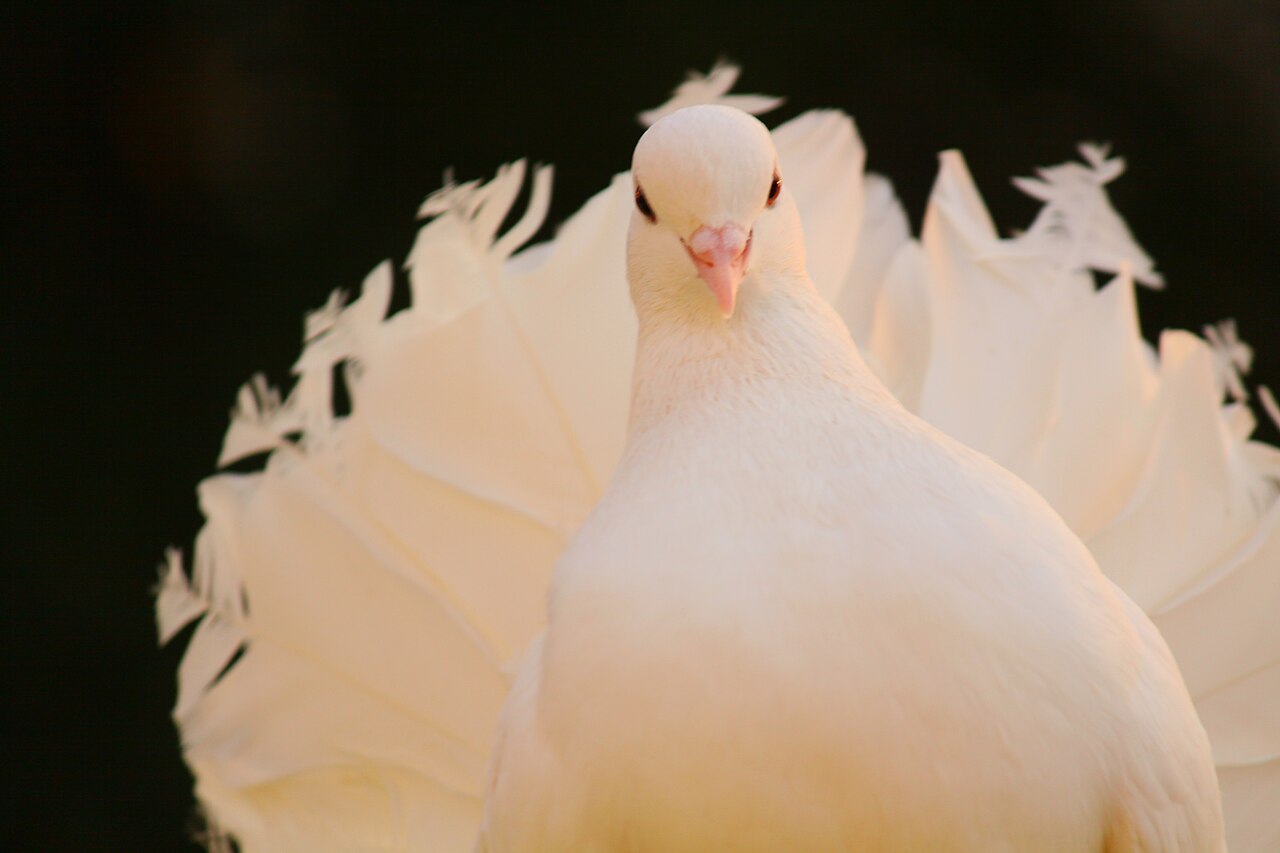


The gentle bird of the Goddess
The dove of Aphrodite expresses a soul enlivened by divine love and made receptive to guidance from the Gods. Its luminous plumage and upward movement unite the powers of the heart with the soul’s capacity for spiritual flight. Within Zevism, this receptivity belongs to an active energetic life: the heart receives, the inner sight perceives, and awakened powers carry the devotee beyond the ordinary limits of awareness. Aphrodite’s bird brings grace to this movement, joining affection with the freedom of the spirit. [4][5]
Apollonius of Rhodes makes the connection explicit in the Argonautica. A dove fleeing a hawk falls into Jason’s lap, while the pursuing hawk is impaled on the ship’s stern ornament. The seer Mopsus interprets the event as a sign of Aphrodite’s aid and calls the escaped dove Her gentle bird. The company is directed toward seeking Medea’s assistance. The episode gives the bird a particular place in the narrative of divine guidance. [1]
The white bird and the awakened wings
The Temple’s chakra teaching gives wings a precise inward significance. The shoulder chakras, when empowered, are associated with the soul’s wings and spiritual freedom. The dove gives that teaching a living image: power gathered within opens outward and supports a higher movement. Its flight can therefore be contemplated as the soul’s release into fuller spiritual action, sustained by a balanced and luminous energetic structure. Aphrodite’s grace gives this ascent its quality of harmony. [5]
The white bird adds another correspondence. In the Temple’s colour teaching, white belongs to cleansing, the balancing of the aura, and the Third Eye. The dove’s radiance can consequently join purification with spiritual perception. The devotee honours Aphrodite as the power that makes the heart receptive while the inner eye becomes capable of recognising what is received. Love and Gnosis approach one another: affection opens a relationship, and awakened perception makes that relationship increasingly conscious. [6]
As a devotional focus, the dove gathers these powers into a single form. Its image accompanies the intention to receive divine guidance with a clear aura, an open heart, and a steady will. The guiding birds in the ancient narratives acquire an inward resonance: the soul learns to move with the divine influence that calls it forward. The feathered wings announce spiritual freedom, while the gentle presence of the bird preserves the grace through which that freedom becomes beautiful.
Love that shows a path
In the Aeneid, two doves appear when Aeneas needs to find the golden bough. Recognising the birds of his mother Venus, he asks them to guide him. They move ahead and eventually settle in the tree containing the bough. Virgil gives the familiar bird an active role: affection and kinship become guidance at the threshold of a difficult sacred journey. [2]
For the Zevist reader, these stories reveal the guiding power of divine love. Aphrodite’s aid awakens the faculties needed to recognise a path: spiritual receptivity, inward sight, and the will to follow understanding into action. Her bird gathers these powers into a living form. The devotee honours the Goddess through a heart prepared to receive and a consciousness prepared to perceive, carrying Her guidance forward into the work of spiritual ascent.
The discipline of gentleness
Gentleness requires steadiness. A person who can listen closely, speak with care, and remain faithful to a valued relationship possesses a form of strength that deserves cultivation. Aphrodite’s dove brings this power into view. It invites the devotee to make affection trustworthy, so that warmth becomes a reliable presence in the lives of others.
The symbol also concerns the soul’s relation to itself. Harsh inward speech can scatter attention and obscure what needs patient development. A more graceful discipline sees clearly, corrects with purpose, and leaves room for growth. In the order of life honoured by Zevism, the capacity to join and reconcile contributes to the flourishing of the whole. The dove therefore belongs beside symbols of wisdom and power as a reminder of the divine work accomplished through love.
From ancient attribute to living contemplation
Ancient material evidence complements the poets. The British Museum’s record for a limestone female figure from Naukratis discusses the bird she bears as probably a dove associated with Aphrodite. The qualification concerns that individual object’s identification. The photograph here instead presents a living white fantail dove, allowing the bird’s luminous plumage and composed presence to carry the page’s contemplative theme. [3]