
 አማርኛ
አማርኛ العربية
 বাংলা
বাংলা Български
 中文
中文 Čeština
 Dansk
Dansk Deutsch
 Eesti
Eesti Ελληνικά
 Español
 Français
 हिन्दी
 Hrvatski
 IsiZulu
 Italiano
 日本語
日本語 Kiswahili
 Magyar
 Македонски
 नेपाली
 Nederlands
 فارسی
فارسی Polski
 Português
 Română
 Русский
 Slovenščina
 Suomi
Suomi Svenska
 Tagalog
 Türkçe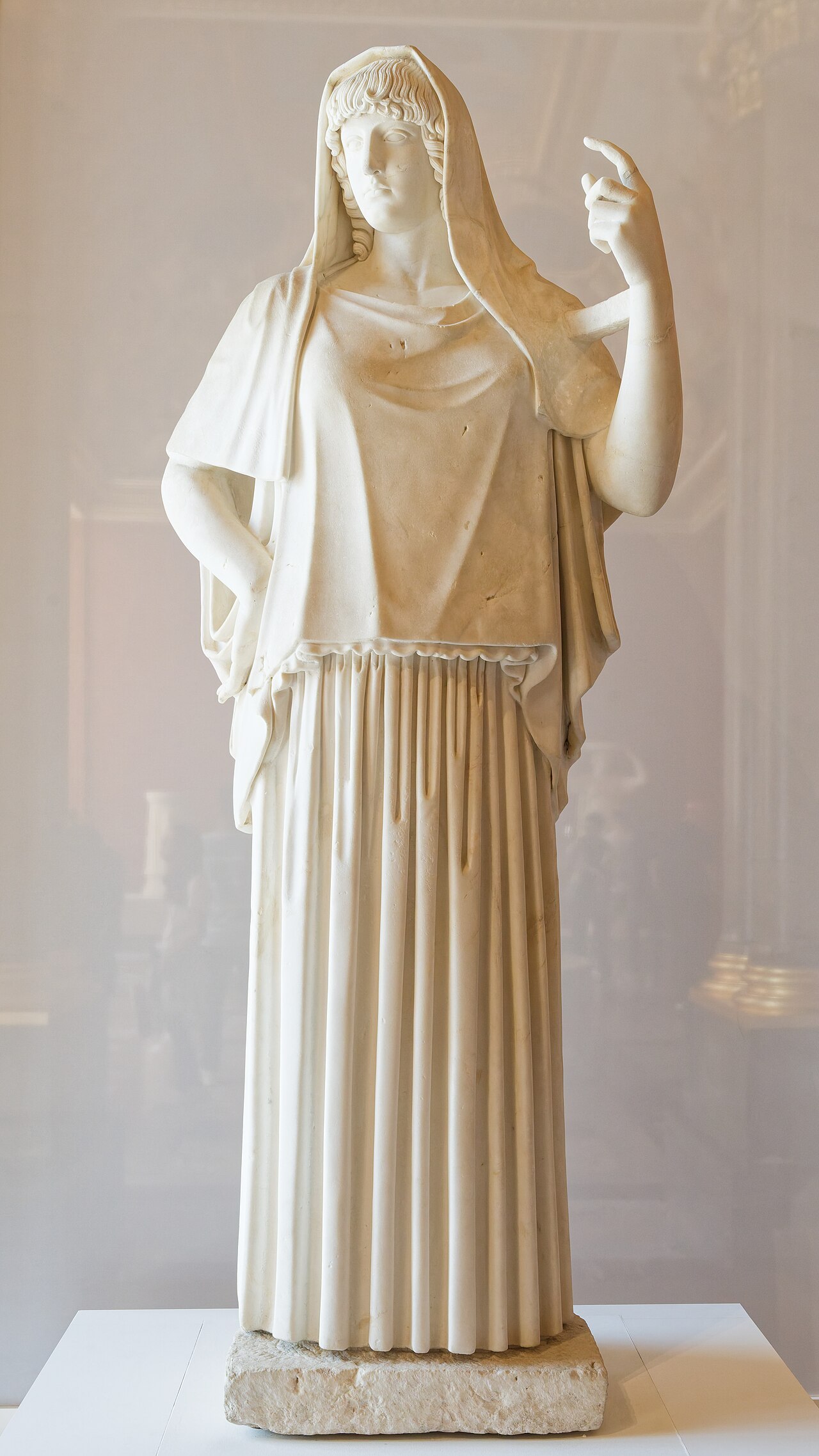


The flame that makes a dwelling sacred
The hearth of Hestia is the centre around which a sacred life gathers. Its fire warms, illuminates and receives the attention of those who dwell beside it. In Zevist contemplation, this centre is also inward: the place from which the soul becomes present to itself and receptive to the Gods. Hestia gives dwelling a spiritual meaning. A place becomes a home when life acquires a centre that can be tended, remembered and shared.
Her power is the continuity of sacred presence. Other symbols show movement, ascent or expansion; the hearth reveals the source to which these movements remain related. It is the enduring flame that allows departure and return to belong to one life. Hestia's quiet majesty therefore expresses an essential strength: the capacity to hold a clear spiritual centre through changing circumstances.
The inner hearth and the solar vessel
The Temple presents the solar chakra as a principal vessel of spiritual power and gives the soul an ordered structure of centres. Within this Zevist correspondence, the hearth can be contemplated in relation to the inward gathering of energy. The fire has a defined place in which its force can be held and made useful. A spiritual centre likewise gives coherence to power that would otherwise be dispersed among passing impressions. [1]
The surrounding home can then be understood as the whole luminous being. The central flame gives warmth to its many chambers, just as an ordered spiritual life brings the faculties into a sustaining relationship. Hestia's symbol teaches concentration with hospitality: power is gathered at the centre so that the whole can be nourished. It is an image of inward abundance capable of becoming a stable presence for others.
Ancient honours of Hestia
Homeric Hymn 29 honours Hestia with wine at the beginning and end of the feast. Homeric Hymn 5 describes the honour Zeus grants Her and Her place within the house. The sacred centre thus frames the activity of communal life and gives ordinary nourishment a Divine setting. [2]
The imposing sculpture traditionally called Hestia Giustiniani offers a visual companion. The Fondazione Torlonia describes it as an imperial Roman statue of a veiled Goddess in a peplos. Its identification as Hestia is traditional; the foundation also notes affinities with Hera and Demeter. Its upright stillness and enveloping garment nevertheless provide a beautiful form through which to contemplate the dignity of the sacred centre. [3]
Theurgy as the tending of a flame
The hearth reveals the difference between a passing spark and a sustained fire. Spiritual awakening requires the ability to preserve and cultivate what has been kindled. The Temple's Kundalini teaching emphasizes preparation and continuing development of the soul. Hestia's image gives that continuity a sacred form: the inner fire is tended until its warmth and radiance become a stable part of one's life. [4]
The hearth's boundary is equally meaningful. A contained flame can illuminate a dwelling; its form allows its power to serve a clear purpose. In the spiritual life, this corresponds to the gathering of intention, the ordering of one's practices and the maintenance of a coherent aura. Hestia's power is expressed through the sanctuary that holds the light and the attention that keeps the sanctuary alive.
Beginning and ending with Her also gives devotional time a centre. The first movement gathers the soul into presence; the final movement receives and preserves the fruit of the work. These two gestures enclose a sacred act without severing it from daily life. What has been cultivated within the sanctuary is carried into the day, and the day's experience returns to the sanctuary for reflection and renewal.
The Divine guest and the sacred home
In contemplation, behold a clear flame resting within a beautiful hearth. Let the surrounding space become an image of the soul brought into order: each faculty has its place, each power receives what sustains it and the centre remains undivided. Offer Hestia the wish that your dwelling, inward and outward, may become worthy of Divine presence.
The home also extends into a community. A shared centre allows different people to gather without losing their distinct gifts. Hestia's hearth expresses that unity through warmth, nourishment and a place of return. Her symbol teaches the worshipper to become a keeper of sacred continuity, preserving a living flame through which devotion, understanding and generosity can enter the ordinary spaces of existence.