 አማርኛ
አማርኛ العربية
 বাংলা
বাংলা Български
 中文
中文 Čeština
 Dansk
Dansk Deutsch
 Eesti
Eesti Ελληνικά
 Español
 Français
 हिन्दी
 Hrvatski
 IsiZulu
 Italiano
 日本語
日本語 Kiswahili
 Magyar
 Македонски
 नेपाली
 Nederlands
 فارسی
فارسی Polski
 Português
 Română
 Русский
 Slovenščina
 Suomi
Suomi Svenska
 Tagalog
 Türkçe
The vessel of spiritual life
In Zevism, the Grail signifies the soul becoming capable of receiving and holding Divine life. The Temple understands its elixir as the refined power of the awakened chakras, and the Magnum Opus as the great work through which human nature advances toward the Godhead. Its language of royal blood belongs to this sacred account of spiritual transformation. The cup gives visible form to a capacity developed within the practitioner. [1]
A vessel has an interior, a boundary, and an opening. Together these suggest three requirements of the spiritual life: depth in which understanding can mature, coherence that preserves what has been gained, and receptivity toward the Gods. To contemplate the cup is therefore to consider how a person receives inspiration, retains it through disciplined practice, and allows it to nourish conduct.
The solar Grail and the light of the head
The Grail has a definite place within our sacred physiology. The Temple identifies it with the solar chakra, slightly above the navel: the center of will, spiritual authority, and the power that sustains the inward work. Its color is white-gold, brilliant like the Sun. The sixth center, associated in this teaching with the pineal gland, is its feminine counterpart. Their relationship joins the reception of illumination with the power to contain and establish it. The traditional elixir of life names this mystery of the soul becoming nourished by its own awakened Divine capacities. [4][5]
The cup therefore concerns the passage from vision into being. A moment of inward light can disclose a possibility; the solar vessel gives that possibility steadiness and purpose. Intuition becomes understanding, understanding becomes a governing intention, and intention becomes a life capable of carrying the presence of the Gods. The gold of the Grail expresses this maturation. What has passed through the work gains a dignity that passing excitement cannot supply.
The Gods are the living sources and guides of this ascent. Zeus presides over the completion toward which the vessel is directed. To honor His Grail is to strengthen the soul that receives His instruction and to make that instruction fruitful within the whole person.
Becoming a vessel worthy of the Gods
Contemplate the cup as upright, luminous, and whole. Its open rim signifies attention turned toward Divine understanding; its rounded interior signifies the capacity to hold that understanding without immediately dispersing it. Its foundation signifies the steadiness that permits spiritual power to remain gathered. This simple contemplation can accompany quiet, natural breathing and the recollection of a clear intention for the day.
The Temple teaches that each chakra has a vessel-like form and its own power. The Grail gathers this language into the work of integration: the many cups belong to one soul. The practitioner learns to distinguish their functions while preserving a common direction. Intuition should enrich will; will should support contemplation; the heart should give warmth and relation to what the mind has perceived. [5][6]
The deeper question is what one permits to fill the vessel. Sustained devotion, lucid study, and disciplined attention enrich its contents. Repeated agitation scatters them. The sacred cup teaches spiritual economy: receive deliberately, preserve faithfully, and give from a source that has been cultivated. Its generosity comes from fullness, and its fullness grows through a lasting relation with the Gods.
Receiving, refining, and giving
The Zevist reading draws its unity from the work of the soul. What is received must be made one's own through attention, understanding, and continuity of practice. A beautiful vessel that cannot retain its contents is an apt image of inspiration continually lost through distraction. A sealed vessel, by contrast, suggests the opposite difficulty: a person who possesses knowledge but has ceased to receive or grow.
The cup moves between receiving and giving. In the ancient phiale, a portion of what is held is poured as an offering. This sacred gesture gives reciprocity a visible form: the life cultivated inwardly issues outwardly as wisdom, generosity, beauty, and effective action. A soul capable of receiving Divine life also learns how to offer the fruits of that life.
The sacred cup directs attention to spiritual capacity. Its worth is fulfilled by what it can contain and convey. Within the path toward the Godhead, the Grail names an inward completion in which Divine life is received with understanding and expressed through the whole person.
Ancient vessels and the medieval Grail
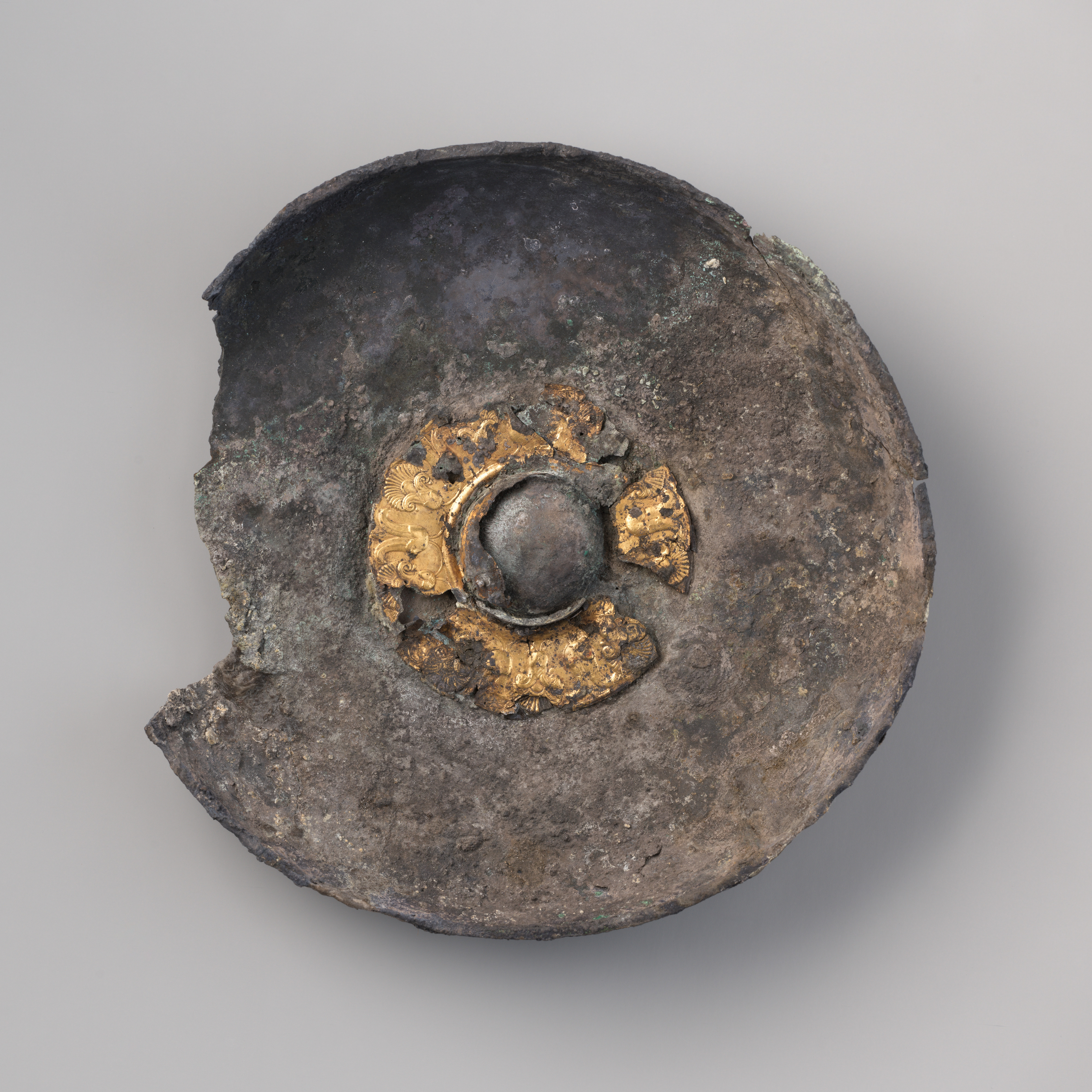
The ancient Mediterranean provides abundant material examples of ceremonial vessels. A silver and gold phiale in the Metropolitan Museum of Art, dated to the late sixth century BCE and identified as Cypriot, has a shallow body and central boss. The museum traces the vessel type from the Near East into the Greek world by about 700 BCE. The illustrated object is a libation bowl, giving the page an authentic ancient example of a vessel used in offering. [2]
The Grail of Arthurian literature belongs to medieval France. In Chrétien de Troyes' Perceval or Conte du Graal, a mysterious vessel appears in a procession at the Fisher King's residence. Ancient ritual cups and the medieval Grail therefore provide two distinct historical settings for sacred vessels. Their shared capacity to receive, contain, and convey gives a fruitful basis for comparison. [3]