 አማርኛ
አማርኛ العربية
 বাংলা
বাংলা Български
 中文
中文 Čeština
 Dansk
Dansk Deutsch
 Eesti
Eesti Ελληνικά
 Español
 Français
 हिन्दी
 Hrvatski
 IsiZulu
 Italiano
 日本語
日本語 Kiswahili
 Magyar
 Македонски
 नेपाली
 Nederlands
 فارسی
فارسی Polski
 Português
 Română
 Русский
 Slovenščina
 Suomi
Suomi Svenska
 Tagalog
 Türkçe
Equilibrium in the soul
Astarte’s emblem is the seal of equilibrium within the awakened soul. The Temple identifies its power with Ida and Pingala brought into balanced activity and Sushumna released from dormancy. Its interwoven geometry gathers distinct currents around one centre, revealing the spiritual order through which greater power can circulate. Within Zevism, Astarte/Aphrodite is an active divine presence in the work of harmony, generation, and the heart. Her symbol draws the devotee toward a living balance capable of supporting the ascent of the serpent and the flowering of higher perception. [1][4]
Ida, Pingala, and the awakened centre
The two side currents carry differentiated powers within the soul, while the central channel provides the path of ascent. Their equilibrium permits the inner work to become coherent. The Temple gives Astarte’s emblem this exact spiritual meaning: balanced activity and an awakened Sushumna. The two overlapping square forms can therefore be contemplated as powers brought into relationship, while the shared centre gives the eye a stable place of return. Geometry becomes a visible expression of the living structure. [1]
The work includes both reception and direction. Spiritual energy must be gathered, and the will must give it purpose. The Temple’s account of the soul relates its receptive side to intuition, dreams, and creative manifestation, while its directing power brings intention and conscious movement. Astarte’s equilibrium joins them without diminishing either. Their union supports the ascent toward the higher centres, where the Third Eye opens the field of spiritual vision. The Goddess’s harmony becomes the condition of a fuller awakening. [1][5]
The heart and the eightfold radiance
Astarte’s connection with the heart gives equilibrium a living centre of relationship. The ankh presents this power as the key of life; Her interwoven emblem presents it as ordered force. The Temple also associates the number eight and the radiating star with the Goddess and the perfected soul. The points surrounding the centre can thus be contemplated as a power whose expressions remain united through their source. Expansion and inward steadiness sustain one another. [1]
In theurgic contemplation, the devotee holds the emblem as a focus for communion with the Goddess and for the harmonisation of the soul’s powers. The repeated return to its centre accompanies the intention to become a capable vessel of divine influence. The pattern gathers attention, while devotion gives that attention a sacred direction. Its purpose is equilibrium made active: the currents participate fully, the centre awakens, and the soul becomes able to carry a greater spiritual light. [1][4]
The emblem and the ancient Goddess
The Temple's displayed emblem is formed from two overlapping square outlines, one rotated in relation to the other, producing an eight-pointed figure around a central space. Its particular design and meaning are documented by the Temple's own page. The accompanying ancient object is a comparison from Astarte's wider historical setting; it is not presented as the excavated original of this exact diagram. [1]
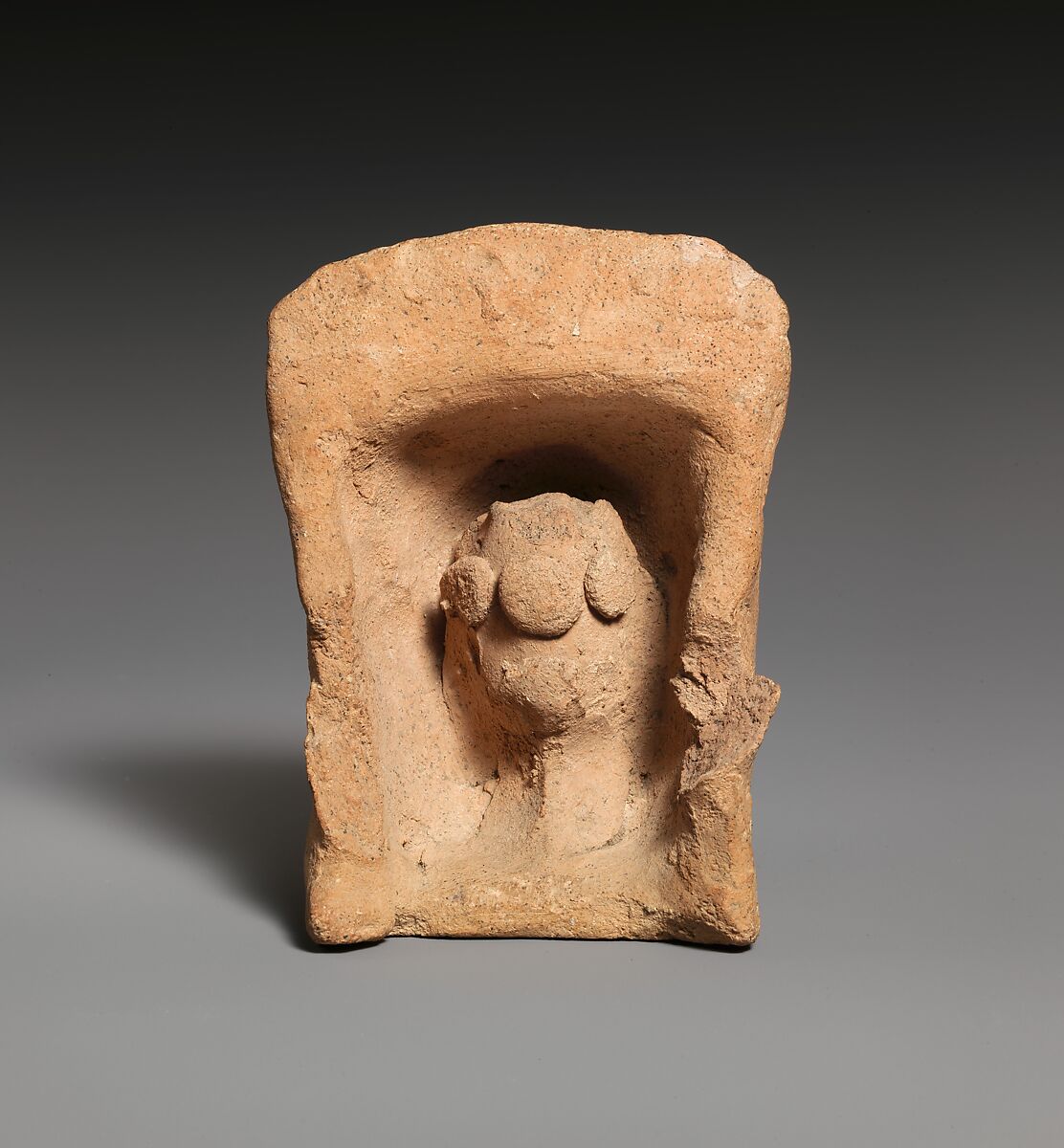
An ancient Cypriot terracotta shrine model in the Metropolitan Museum contains a vertical, non-figural representation identified by the museum with Astarte. Dated to approximately 600–480 BCE, it shows that divine presence could be expressed through a simple sacred form housed within a shrine. A separate Cypriot female figurine, approximately 950–750 BCE, belongs to a type the museum connects with a fertility divinity later known as Astarte-Aphrodite, while retaining uncertainty about whether the individual figure depicts a Goddess. These objects document diversity of representation. [2][3]
Reading the sacred geometry
The emblem’s two square outlines remain visible within the eight-pointed figure they produce together. Their interrelation gives the eye several paths to follow: along one square, around the outer points, or back toward the central field. This visible structure serves the spiritual work by giving attention a form that can be held, examined, and remembered. The pattern’s power as a devotional focus rests in the union of its definite shape with the sacred meaning supplied by Astarte’s teaching. [1]
The surrounding points draw the gaze outward while their shared construction returns it inward. A practitioner can contemplate this movement as the relation between the soul’s varied activities and its abiding spiritual purpose. Study, creation, affection, and the direction of energy each enter the day through different circumstances. The emblem recalls the unity within which they belong, giving the devotee a visible point of return to the Goddess and the work of equilibrium.
Harmony as a continuing work
Balance must be cultivated through the way one attends, studies, acts, and returns to spiritual practice. The emblem offers a stable visual focus for that continuing work. Its repeated relations encourage the eye to move around the whole while returning to the center. Within Zevism, this movement can express the soul's effort to gather its powers into a coherent life under divine guidance, preserving both fullness and proportion.