 አማርኛ
አማርኛ العربية
 বাংলা
বাংলা Български
 中文
中文 Čeština
 Dansk
Dansk Deutsch
 Eesti
Eesti Ελληνικά
 Español
 Français
 हिन्दी
 Hrvatski
 IsiZulu
 Italiano
 日本語
日本語 Kiswahili
 Magyar
 Македонски
 नेपाली
 Nederlands
 فارسی
فارسی Polski
 Português
 Română
 Русский
 Slovenščina
 Suomi
Suomi Svenska
 Tagalog
 Türkçe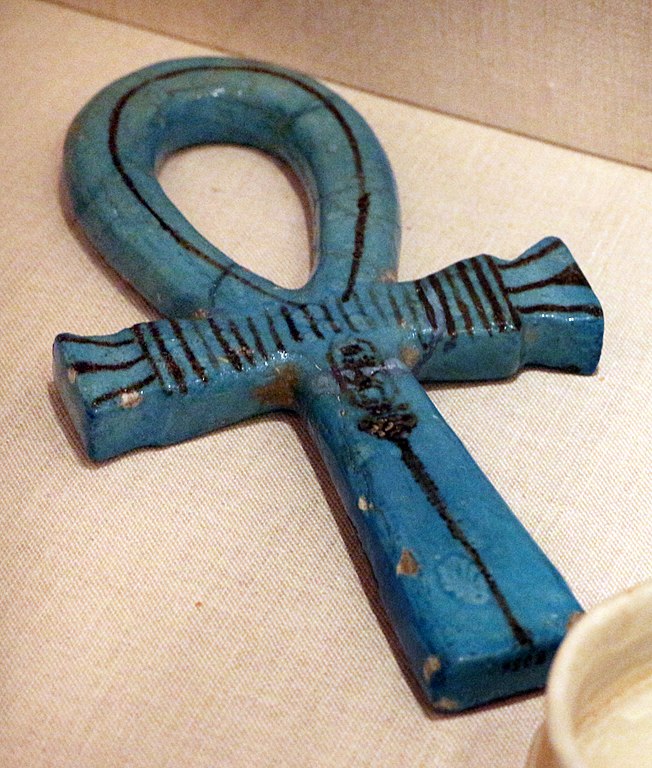
The key of living presence
The ankh is the key of life and the heart’s spiritual power. The Temple relates it to the heart chakra, the breath, and the living current governed by Astarte/Aphrodite. In Zevism, this key opens a mystery within the soul: vitality becomes conscious, the heart receives divine influence, and the inner centres enter a more powerful circulation. The loop and extended arms gather the movements of reception and expression into one form. The ankh declares that life can be awakened into a fuller participation in the Gods. [1][4]
The heart as a gate of divine life
Astarte/Aphrodite’s relation to the heart gives the ankh its inward centre. The heart chakra receives and radiates the powers of love, beauty, and harmony. Its awakening draws the soul’s faculties into a closer relationship, so that vitality becomes capable of a more ordered expression. The ankh’s arms suggest this outward extension, while its central meeting point gathers the movement into unity. The key signifies access to a living power already present within the spiritual structure of the person. [1]
The Temple associates green with the heart and with the Venusian powers of fertility, attraction, renewal, and balance. These correspondences give the ankh a field of spiritual meaning beyond its outline. Life grows, joins, and renews itself through the power of the Goddess. In contemplation, the devotee may receive the ankh as an image of the heart made luminous, its inward life becoming a source of harmony within the whole soul. [7]
Breath, spiritual energy, and the elixir of life
Breath gives the symbol an immediate relation to practice. The Temple treats breathing as a means of cultivating spiritual power and directing it through the soul’s centres. The ankh gathers that living movement into the form of a key: the devotee receives, holds with awareness, and releases. Its meaning is the opening of spiritual capacity through a more conscious participation in life. The breath becomes an expression of the relationship between the embodied person and the powers that sustain the soul. [1][8]
The loop can also be contemplated as a vessel, preserving the power that has been gathered. In the Temple’s account, the chakras themselves hold energy, and the solar centre is identified with the Grail. The ankh stands beside this teaching as a sign of life made inwardly available. The great work joins heart, solar power, and higher perception within one transformed being. The key opens the way toward that integration, and Aphrodite’s presence gives its living movement beauty and harmony. [4]
The Egyptian sign for life
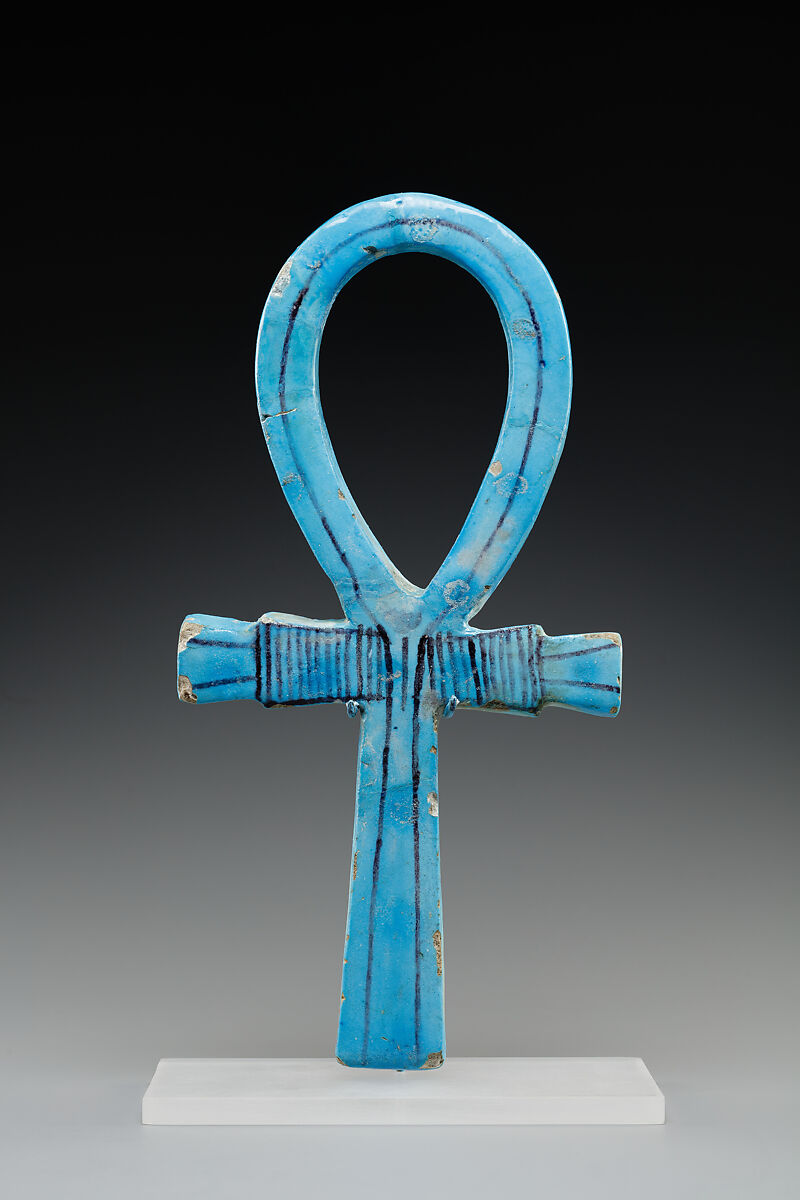
Historically, the ankh is an Egyptian hieroglyph used for words meaning life, alive, and to live. Its established linguistic meaning is the starting point for understanding its religious importance. A faience ceremonial implement from the tomb of Thutmose IV takes the shape of the sign and dates to approximately 1396–1386 BCE. This object demonstrates that the ankh could exist as a physical sacred form as well as a written character. [2]
The Metropolitan Museum’s educational guide notes that deities frequently offer the ankh toward the king’s face, giving the sign a direct place in images of divine life bestowed. The guide discusses a sandal strap and an elaborate bow among interpretations of its original form. Its hieroglyphic meaning is firmly established, while the physical model behind its shape remains a subject of interpretation. The object and the written sign both testify to its religious importance. [3]
Venus and the gift of divine life
The offering of life gives the ankh a relational meaning. In the Egyptian image, a divine presence extends the sign toward the king; in Zevist devotion, the person approaches the Gods as the source of spiritual illumination and guidance. The key becomes a fitting focus for receiving that gift with reverence. Gratitude answers the life bestowed, while spiritual work develops the capacities through which the gift can become fully active within the soul. [1][3]
The Temple also brings the ankh into correspondence with the planetary sign of Venus. Their related forms join the heart’s living power with Astarte/Aphrodite’s divine presence. This spiritual relation directs contemplation toward the Goddess as a source of attraction, harmony, and renewal within the soul. The loop receives, the arms extend, and the central meeting point gives the movement a coherent shape. The two emblems illuminate a common field of sacred life. [1]
Life made worthy of its source
The symbol invites a broad understanding of vitality. To be alive is also to become capable of attention, affection, creation, and purposeful action. In the Temple's spiritual language, the heart joins power with beauty and directs the soul toward a fuller participation in divine life. The ankh's enduring value lies in this concentration of meaning: an ancient sign of life becomes a focus for gratitude, inner cultivation, and the unfolding of the soul's sacred possibilities.