
 አማርኛ
አማርኛ العربية
 বাংলা
বাংলা Български
 中文
中文 Čeština
 Dansk
Dansk Deutsch
 Eesti
Eesti Ελληνικά
 Español
 Français
 हिन्दी
 Hrvatski
 IsiZulu
 Italiano
 日本語
日本語 Kiswahili
 Magyar
 Македонски
 नेपाली
 Nederlands
 فارسی
فارسی Polski
 Português
 Română
 Русский
 Slovenščina
 Suomi
Suomi Svenska
 Tagalog
 Türkçe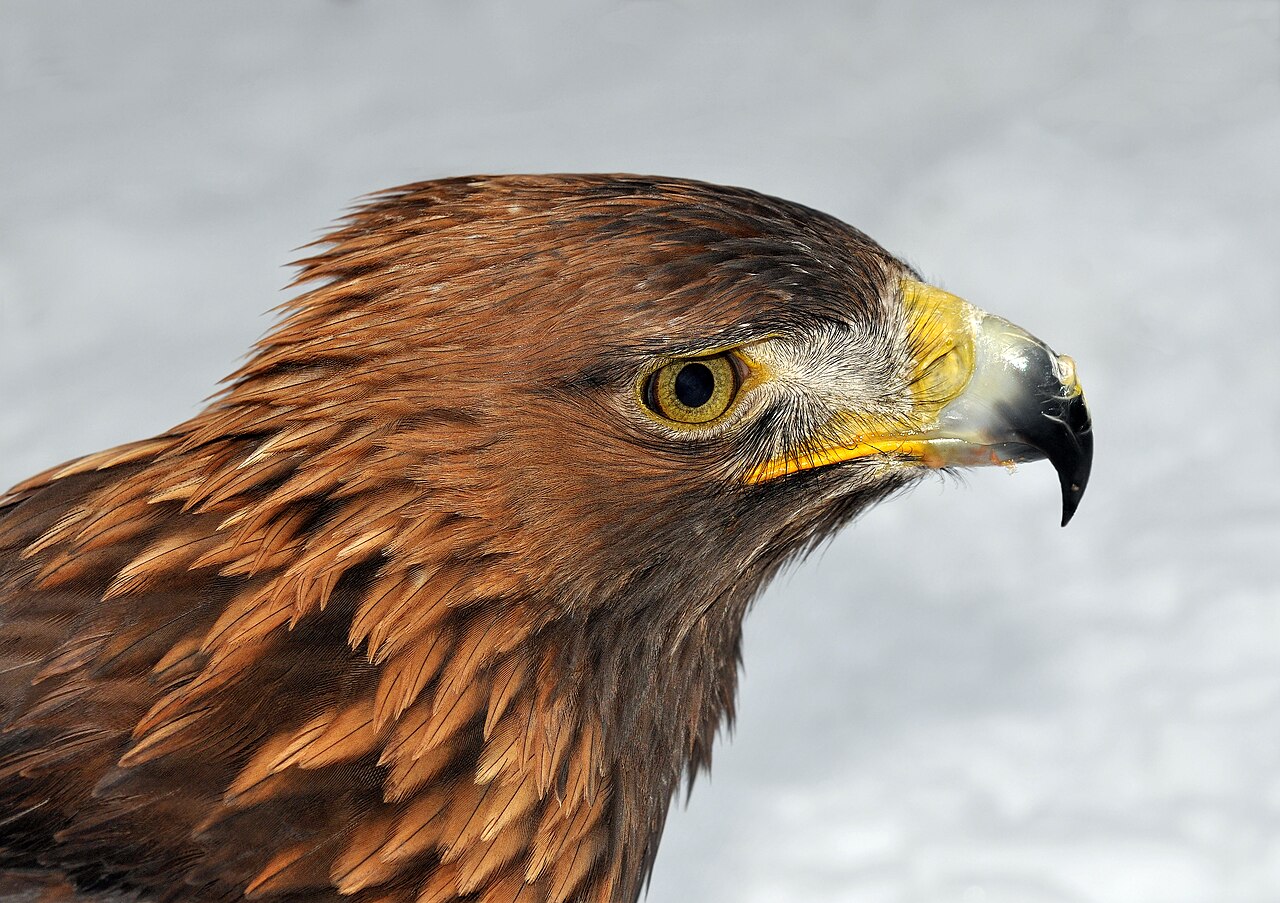
Vision under divine sovereignty
In Zevism, the Eagle of Zeus signifies elevated understanding and sovereign spiritual power. Its height and penetrating gaze make it a fitting image for the aspiration to see beyond immediate confusion. The Temple also relates the eagle carrying a serpent to the ascent of Kundalini and the restoration of divine power within the human being. These meanings concern the soul's development under divine guidance. [1]
The image joins two responsibilities that are easily separated: seeing clearly and acting with authority. Height alone is insufficient if it loses sight of the earth; force alone is insufficient if it lacks understanding. Contemplating the eagle can therefore remind the practitioner that spiritual advancement should enlarge perspective while making judgment more exact, more patient and more capable of distinguishing the essential from the distracting.
The eagle’s eye and the light of Gnosis
The eagle’s gaze gives a powerful image of awakened inner sight. In Zevist contemplation it corresponds to the third eye’s capacity to perceive beyond the immediately visible, and to the pineal center’s relation with inward illumination. Its high station gathers the wider field into one view. The spiritual movement is toward Gnosis: understanding that recognizes relationships, receives Divine guidance, and brings the powers of the soul into conscious order. The eagle belongs to Zeus because this sight answers to sovereign intelligence. [7]
The gaze and the wings must be considered together. Perception gives ascent direction, while ascent enlarges the field of perception. The Temple associates the shoulder centers with the spiritual wings of the soul. The eagle unfolds this teaching in a majestic living form: inward power becomes capable of wider movement. Its wings express spiritual freedom sustained by a developed energetic being, while its gaze preserves the clarity needed to move with purpose. [5]
The eagle and the serpent: power carried upward
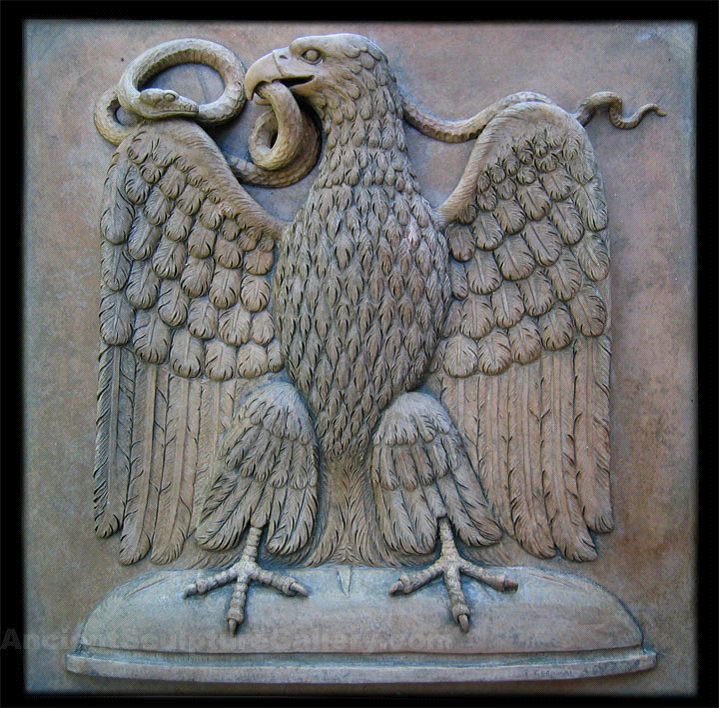
The serpent in the eagle’s grasp joins the depths of life with the heights of illumination. The Temple reads the serpent through Kundalini, the coiled force whose ascent is central to spiritual awakening. In this sacred composition, the eagle gives upward direction to the living current. The soul’s foundational power participates in a higher order, moving toward the illumination of its centers and the opening of its spiritual capacities. [6]
This union is especially rich because it includes both rooted vitality and sovereign sight. The eagle’s mastery signifies that the force of life has entered a conscious relationship with Divine purpose. The image can be contemplated as an ascent of the whole being: the deeper currents are gathered, the inner centers become responsive, and the spiritual wings open toward a wider freedom. Devotion to Zeus gives the ascent its governing intention, joining power with understanding and elevation with self-command.
Ascent joined to discernment
In the Temple's inward reading, the serpent represents a power capable of rising, while the eagle directs attention toward the heights. Together they can be contemplated as a relationship between depth and elevation. The practitioner does not merely flee the embodied condition: life within it becomes part of a greater ascent. The eagle and serpent gather the depth, movement, and height of the spiritual being into a single powerful form.
The eagle also invites a question about the use of perspective. To see a wider field is to notice relationships that a narrow view conceals: the consequence of a choice, the place of a single emotion within a longer development, or the difference between urgency and importance. A developed Zevist contemplation of the bird can therefore unite aspiration with self-command. Its sovereignty becomes a summons to clarity, and its ascent a summons to worthy action.
The eagle in ancient texts and objects
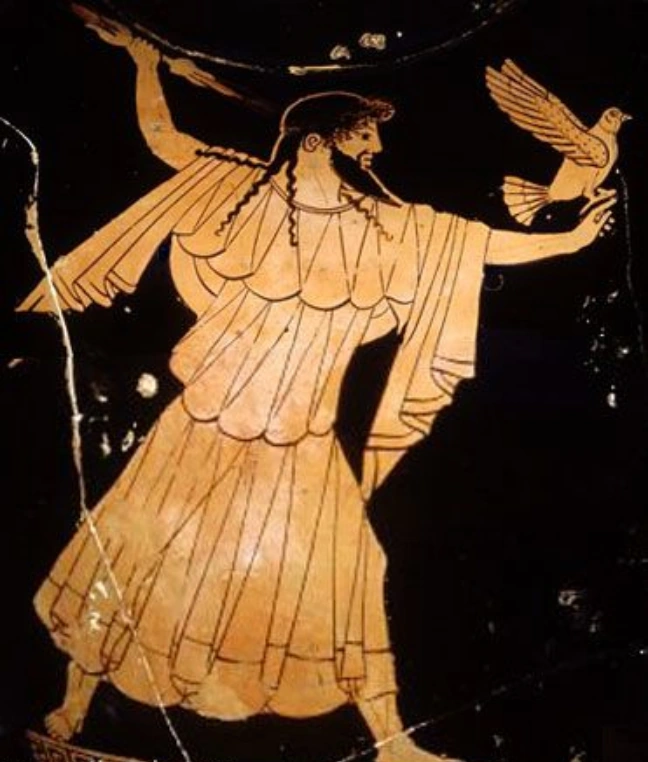
The association with Zeus is explicit in Pausanias' description of the great image at Olympia. At Description of Greece 5.11.1, Zeus holds a sceptre with an eagle perched upon it. The bird belongs to a coordinated representation of divine kingship: throne, sceptre, divine figure and attendant attributes establish the identity and majesty of the God. [2]
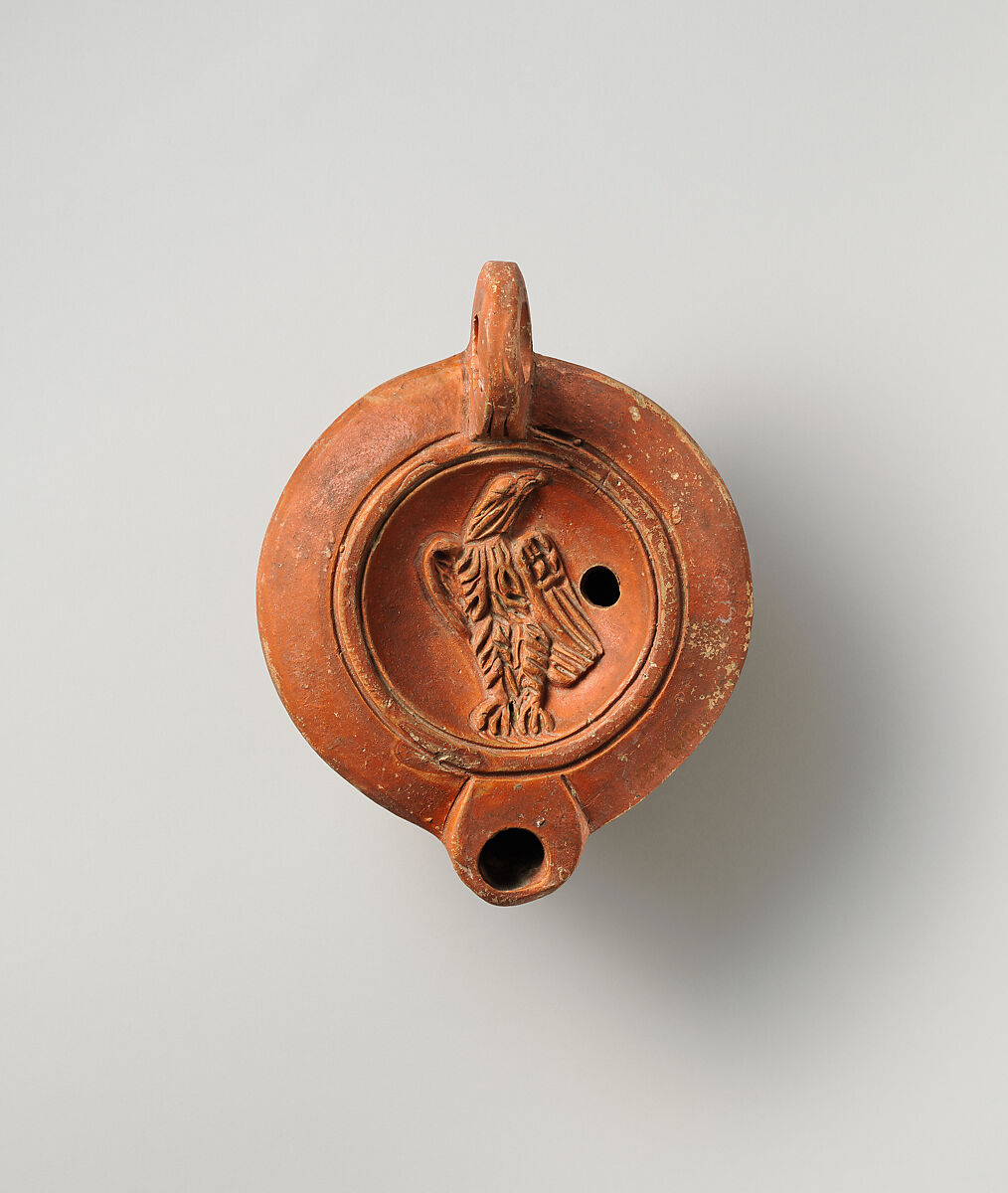
The motif also appears on smaller objects. A Roman terracotta lamp in the Metropolitan Museum, dated to the late first or early second century CE, shows an eagle in relief. The museum connects the bird with Greek Zeus and Roman Jupiter and notes its subsequent imperial associations. Such objects demonstrate that the motif could enter daily surroundings as well as monumental sanctuaries. The original Temple gallery also preserves later eagle imagery, each with its own historical setting. [3]
An eagle and serpent appear together in Iliad 12.200–229. The snake wounds the eagle, which drops it; Polydamas interprets the event as an unfavourable omen for the Trojan assault. Homer’s particular omen concerns the fate of an assault. The Temple’s spiritual exposition develops the eagle and serpent through the mysteries of ascent. [4]


.jpg)
