 አማርኛ
አማርኛ العربية
 বাংলা
বাংলা Български
 中文
中文 Čeština
 Dansk
Dansk Deutsch
 Eesti
Eesti Ελληνικά
 Español
 Français
 हिन्दी
 Hrvatski
 IsiZulu
 Italiano
 日本語
日本語 Kiswahili
 Magyar
 Македонски
 नेपाली
 Nederlands
 فارسی
فارسی Polski
 Português
 Română
 Русский
 Slovenščina
 Suomi
Suomi Svenska
 Tagalog
 Türkçe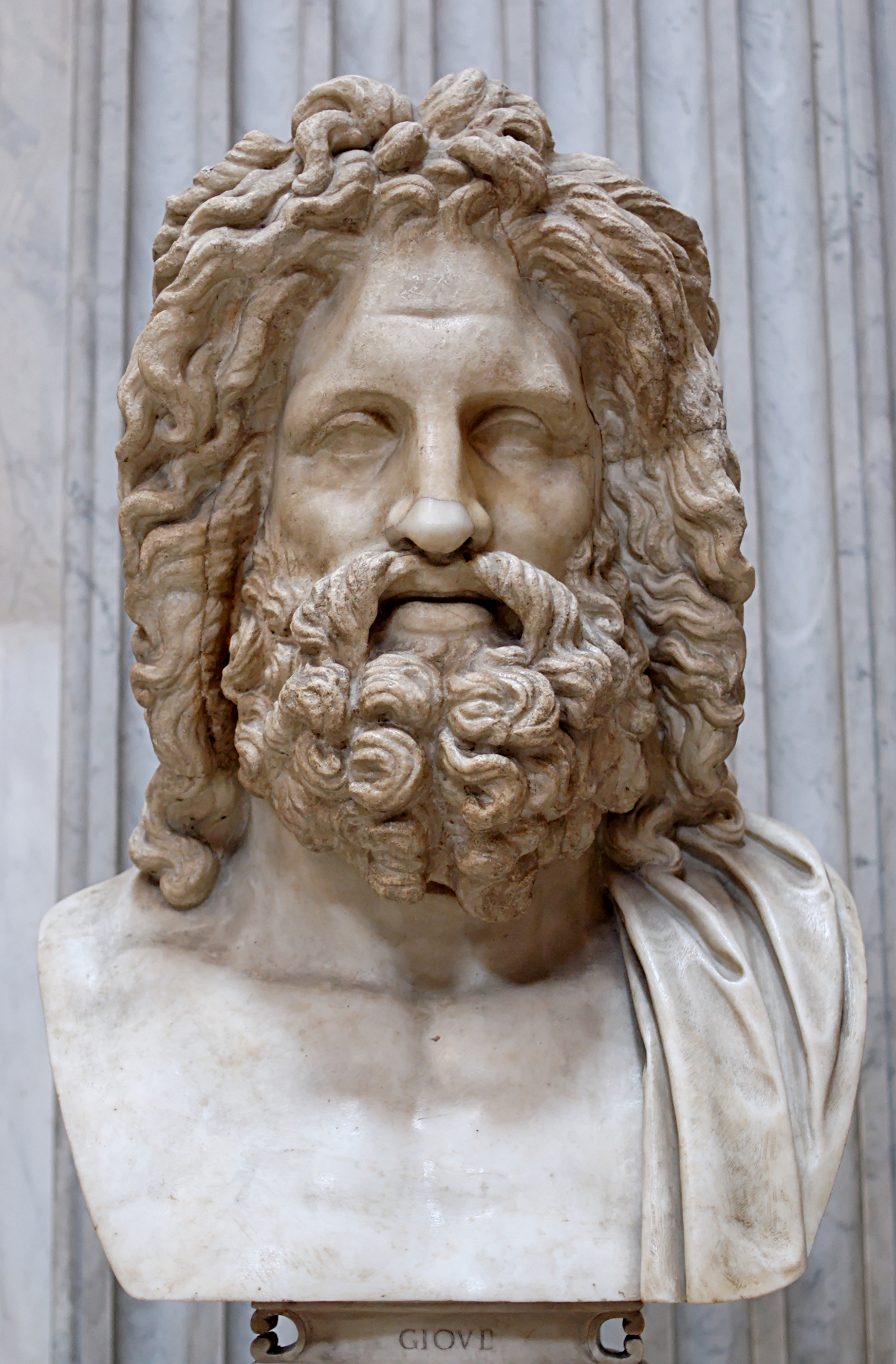
The countenance of divine authority
In Zevism, the Head of Zeus represents supreme spiritual authority: the Father of the Gods presides over the powers of creation. A sacred head or bust concentrates attention upon His presence, while the ordered expression invites the worshipper to contemplate intelligence joined with power. The image has a practical place in devotion: it gathers dispersed attention and establishes the divine centre from which the rest of the symbolism is understood. [1]
To contemplate this image is to ask what sovereignty means within the soul. Thought, intention, feeling and action can pull in different directions; their reconciliation requires a governing purpose. The divine countenance offers a model of gathered strength. Its stillness need not signify inactivity. It can express the composure from which a clear decision becomes possible, and the steadiness that allows a decision to be carried into action.
The Divine head and the awakening of higher sight
The head is the summit of the embodied human form, and the countenance of Zeus directs contemplation toward the highest powers of the soul. The crown, the sixth center, and the third eye belong to the Temple’s teaching of spiritual awakening. In this sacred correspondence, the head gathers illumination, inward sight, and governing intelligence. Zeus reveals the authority through which these powers receive direction: understanding becomes luminous, and the will learns to act from a center greater than passing impulse. [4]
The third eye concerns the awakening of perception; the pineal center belongs to the inward mystery of spiritual light. To contemplate the Divine countenance is to approach these faculties through reverence for their source. The practitioner attends to the majesty of the God and the clarity of His gaze, allowing devotion to gather the mind into steadiness. The image becomes a focus for Gnosis: the soul seeks a living knowledge of the Gods and an increasingly conscious participation in Their order. [6]
The five elements within the living temple
The elemental powers surrounding Zeus have an inward life. Earth gives stability, Water receptivity, Air movement and understanding, Fire the force of transformation, and Aether the unity in which the other powers participate. Within Zevist contemplation, their coordination concerns the whole spiritual being. The Divine head at the center gives the arrangement its governing meaning: the elements develop under a sovereign intelligence, and their different qualities contribute to a single work of awakening. [4]
This is the formation of the living temple within the soul. Its foundation must sustain its height; its power must remain joined to knowledge; its capacity to receive must be matched by the capacity to act. The devotee can contemplate each elemental quality in relation to Zeus, then gather them again around His countenance. Such contemplation gives spiritual intention a coherent form. The God’s majesty remains the point of return, drawing the whole being toward composure, illumination, and command of its own powers.
The five elements around the centre
The Temple also describes an elemental composition in which Air, Water, Earth, Fire and Aether surround the Head of Zeus in a five-pointed arrangement. Its theological purpose is to place the elemental powers under His authority: the Divine centre holds the powers of the world in an intelligible order. The sculptural photograph reproduced here illustrates the Head itself. [1]
Within that reading, the arrangement also teaches proportion. No element is contemplated in isolation from the whole. Solidity needs movement; illumination needs receptivity; aspiration needs a form through which to act. Zeus at the centre expresses the coherence of these powers. The emblem therefore leads from the recognition of divine majesty to a task for the practitioner: to cultivate an ordered life capable of receiving and expressing divine guidance.
Ancient forms and the Temple emblem
Ancient literature gives particular weight to the head of Zeus. In Iliad 1.524–530, His nod confirms a promise to Thetis; the movement of His immortal head shakes Olympus. The force of the passage lies in the certainty of divine assent. It provides an ancient literary setting for the head as a visible bearer of authority, although it does not describe the Temple's present emblem. [2]
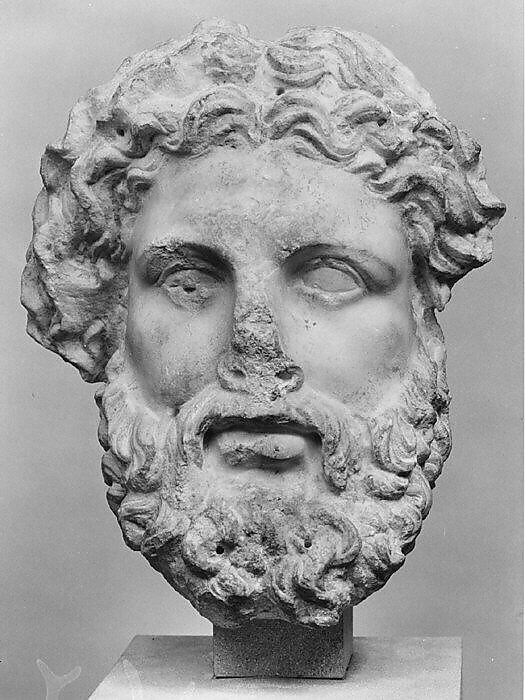
Surviving sculpture supplies a material comparison. The Metropolitan Museum preserves a Hellenistic marble head identified cautiously as probably Zeus, dated to the third or second century BCE. The supplementary photograph shows this Hellenistic work. The leading image is the sculptural Head of Zeus retained from the Temple’s original collection. [3]