
 አማርኛ
አማርኛ العربية
 বাংলা
বাংলা Български
 中文
中文 Čeština
 Dansk
Dansk Deutsch
 Eesti
Eesti Ελληνικά
 Español
 Français
 हिन्दी
 Hrvatski
 IsiZulu
 Italiano
 日本語
日本語 Kiswahili
 Magyar
 Македонски
 नेपाली
 Nederlands
 فارسی
فارسی Polski
 Português
 Română
 Русский
 Slovenščina
 Suomi
Suomi Svenska
 Tagalog
 Türkçe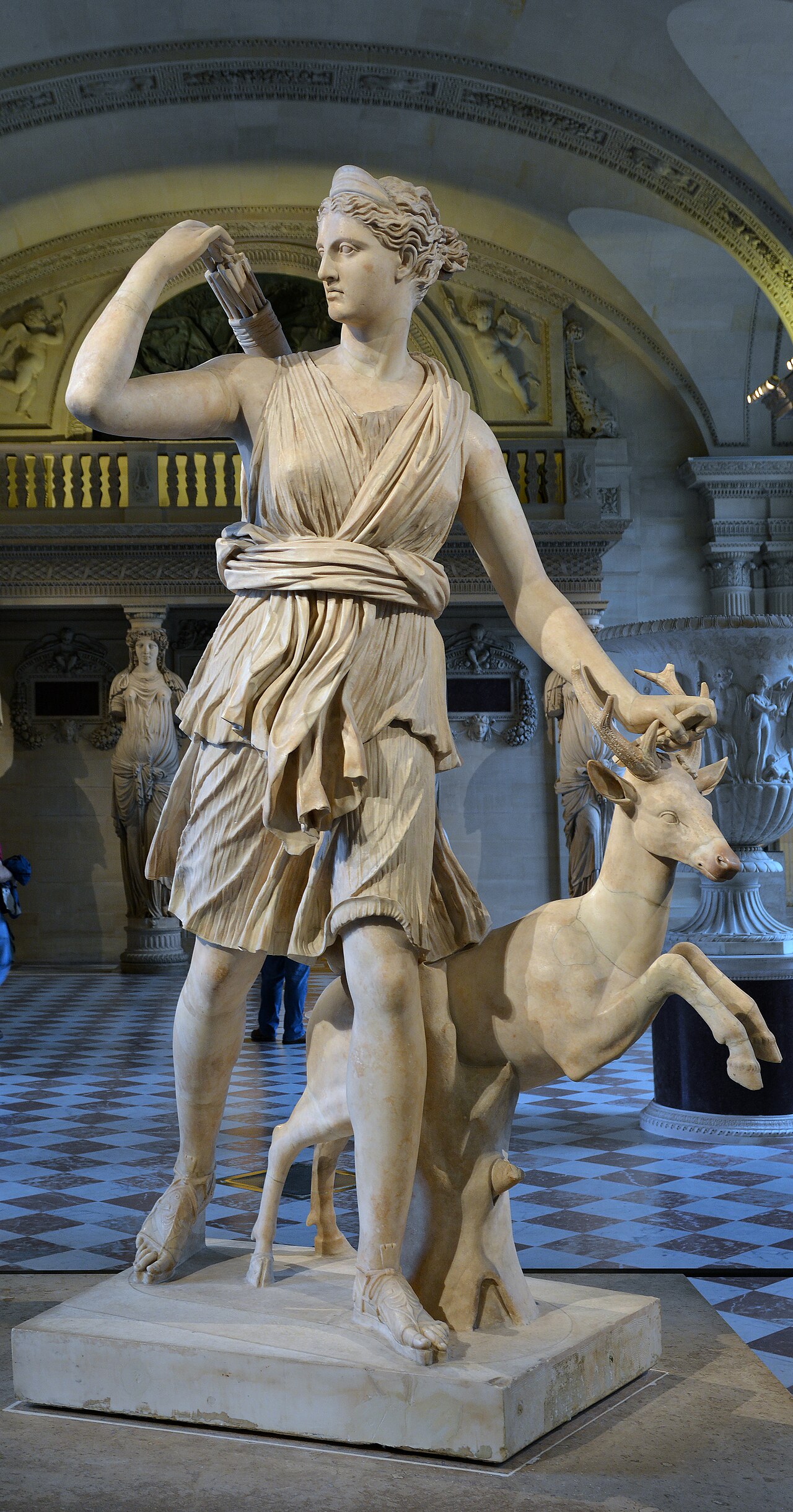
The living sanctuary of Artemis
The fawn belongs to the sacred language of Artemis because it makes visible the preciousness of life at the beginning of its unfolding. Its light limbs, attentive ears and quiet presence speak of powers that have awakened before they have reached their full strength. In this Zevist reading, the animal expresses the Goddess's guardianship over the soul as its hidden faculties begin to open. Artemis preserves the integrity of what is growing and gives it the space in which to become itself.
The Gods are approached in Zevism as living Divine intelligences. Their animals and attributes reveal particular expressions of their powers. Thus the fawn is more than an image of gentleness: it is life consecrated to a Divine guardian. Its purity means an undivided nature, a being whose movement proceeds from its own centre. The spiritual task expressed by this symbol is to recover that inward coherence while developing the strength to preserve it. [1]
The awakening of subtle perception
The alertness of the fawn offers an image for the first opening of spiritual perception. In the Temple's teaching, the chakras belong to the soul's luminous structure, while the pineal centre is associated with intuition and inward illumination. Under the sign of Artemis, these teachings gather around watchfulness: the capacity to perceive a change in the atmosphere of the soul before it becomes a settled condition. Spiritual sensitivity is cultivated through clarity, steadiness and a reverent relationship with the Goddess. [2] [3]
The fawn's large eyes can therefore serve as a sacred correspondence for receptive vision. This is the soul learning to see without being scattered by everything it sees. Artemis joins perception to a boundary: the power to admit what nourishes one's spiritual life and to withdraw from what disperses it. Her wild sanctuary is a place within the soul where devotion remains whole, where the noise of the world does not determine the direction of awakening.
Deer in ancient testimony
Callimachus describes Artemis capturing four golden-antlered deer for Her chariot; a fifth escapes and becomes the Ceryneian hind associated with Heracles. These are wondrous mature animals, not fawns. The young deer contemplated here belongs to the wider sacred association between Artemis and deer, while its emphasis upon developing spiritual life is the present Zevist exposition. [4]
The illustrated Diana of Versailles gives that association a majestic sculptural form. The Louvre identifies the figure as Artemis the huntress and tentatively dates the Roman sculpture to 125–150 CE. Its present appearance includes later restorations, including the deer's head and legs. The accompanying living fawn photograph brings the specific symbol of youth into view without confusing it with the antlered animal beside the Goddess. [5]
Purity as spiritual sovereignty
Artemis's purity can be contemplated as the preservation of one's sacred power. A soul becomes stronger when its intentions, devotions and actions cease to contradict one another. The fawn represents the tender beginning of this unity; the Goddess represents its complete sovereignty. Between them stands the path of growth. What begins as sensitivity can mature into discernment, and what begins as vulnerability can mature into a clear and self-possessed spiritual presence.
The bow and the fawn illuminate complementary aspects of Her power. The bow concentrates force toward a chosen point; the fawn receives the world with awakened senses. Together they express precision and receptivity. In contemplation, the worshipper may hold these two qualities together: an open inner sight and a firm direction of will. The aim is a luminous soul that can respond freely while remaining faithful to its Divine centre.
Contemplating the sacred animal
Place the fawn before the inward eye as a living creature in a peaceful woodland, beneath the guardianship of Artemis. Let its stillness become an invitation to gather the scattered faculties of the soul. Offer the Goddess the wish that what is newly awakening may grow in beauty, proportion and strength. This contemplative use complements the Temple's established teachings on gradual spiritual development; the image gives a sacred form to that development. [1] [2]
The symbol also turns devotion outward. To recognize the Divine guardianship of young life is to acquire a more attentive relationship with living things. Care, restraint and patient cultivation become expressions of spiritual strength. The fawn of Artemis teaches that majesty can protect what is delicate, and that the delicate can carry within itself the first radiance of a power still to unfold.