
 አማርኛ
አማርኛ العربية
 বাংলা
বাংলা Български
 中文
中文 Čeština
 Dansk
Dansk Deutsch
 Eesti
Eesti Ελληνικά
 Español
 Français
 हिन्दी
 Hrvatski
 IsiZulu
 Italiano
 日本語
日本語 Kiswahili
 Magyar
 Македонски
 नेपाली
 Nederlands
 فارسی
فارسی Polski
 Português
 Română
 Русский
 Slovenščina
 Suomi
Suomi Svenska
 Tagalog
 Türkçe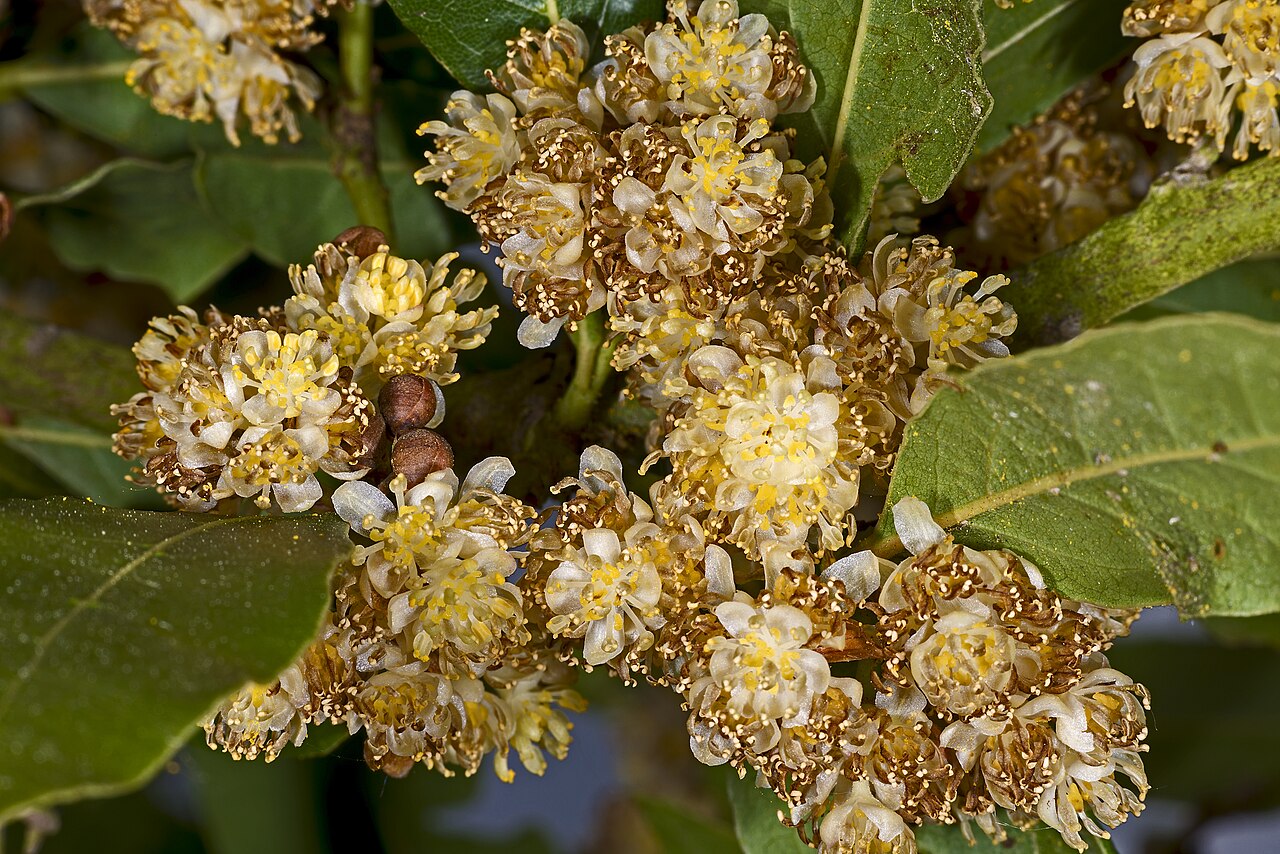


A crown worthy of the work
Apollon’s laurel is the living crown of illumination. It gathers the powers of inspiration, spiritual clarity, and accomplishment into a circle around the head, where the Temple places the higher faculties of the soul. Within Zevism, the laurel belongs beside the solar crown and the lyre: the soul receives light, its centres enter harmony, and the completed work becomes worthy of the God. The wreath declares an attainment that is both luminous and active, joining inward awakening with the power to give that awakening beautiful expression. [3][5]
The laurel and the head’s spiritual centres
The Temple’s sacred language relates the halo and solar crown to the activation of the head chakras and the ascent of the serpent. The laurel wreath brings a living form to this same field of contemplation. Its leaves surround the place of higher perception, gathering the eye toward a crowned centre. The Third Eye gives spiritual sight; the pineal light deepens inward illumination; the crown opens the upward movement. Apollon’s wreath honours the awakening of these powers as a work of divine clarity. [3][5][6]
The circle also signifies a completed relation among many parts. Each leaf retains its form while contributing to one crown. Inwardly, the devotee contemplates the powers of the soul brought into agreement, so that illumination becomes stable and usable. The God’s radiance receives an answering order within the person. The laurel is therefore a symbol of spiritual accomplishment as well as artistic excellence, a sign that the work has acquired a form worthy of consecration.
Inspiration, vision, and the golden work
Apollon’s clarity belongs to the mysteries of receiving and expressing divine knowledge. The Temple’s pineal teaching associates white-gold light with spiritual empowerment and intuitive understanding. Through the laurel, this illumination can be contemplated as a crown of inspired consciousness. The devotee seeks to become capable of receiving the God’s influence and carrying it faithfully into word, song, image, or action. Inspiration becomes a power within a cultivated spiritual instrument. [6]
The golden work gives the wreath its larger horizon. Gold signifies the perfected soul in the Temple’s colour teaching, and the Sun presents the radiance of an empowered being. The living laurel crown stands at the meeting of growth and fulfilment: a power has developed, an undertaking has reached completion, and the result is offered to the God. Such attainment calls forth gratitude and renewed devotion. The crown becomes a promise that further light can be received through continued spiritual labour. [7][3]
The laurel at Delphi
Pausanias identifies laurel as the crown awarded for victory at the Pythian games. He connects the choice with the tradition of Apollo’s love for the daughter of Ladon. In the same account, he describes changes in the festival’s musical and athletic competitions. The wreath thus belongs to the sacred setting of Delphi, where excellence received recognition within worship of the God and the victor’s achievement became part of a public act of honour. [1]
The plant itself is bay laurel, Laurus nobilis, an evergreen native to the Mediterranean. The Metropolitan Museum's discussion of wreaths notes its ancient association with victory and traces later religious uses. Those later uses are part of the symbol's reception and should be distinguished from its ancient Delphic context. Botanical identification is also useful: a laurel wreath and an olive wreath may look similar in simplified drawings, yet they preserve different sacred associations. [2]
Consecrating the finished work
A crown invites an honest encounter with the work it honours. Has the hymn been shaped with care? Has the sacred image received the attention its subject deserves? Has an undertaking reached the quality and completeness required by its purpose? Such questions give dedication substance. The devotee brings a real accomplishment before Apollon, allowing the God’s clarity to govern both the making and the judgment of what has been made.
The laurel also teaches how to receive recognition. Honour binds the person more closely to the standard expressed by the crown. A well-completed work establishes a capacity that can be cultivated further and placed in the service of a greater purpose. Gratitude therefore leads naturally to renewed dedication. The wreath remains alive in its meaning when the excellence it recognises continues through the person’s conduct and the quality of the next offering.
Apollon's clarity
Placed beside the lyre, the laurel joins harmonious form with accomplished action. Placed beside the solar crown, it joins achievement with illumination. Its value in the Zevist section is consequently more than decorative. It provides an accessible emblem of the relationship between divine inspiration and human cultivation. The devotee receives an image of excellence that is living, ordered, and capable of being offered with dignity, while the historical notes preserve its specific connection to Apollon's sanctuary and games.