 አማርኛ
አማርኛ العربية
 বাংলা
বাংলা Български
 中文
中文 Čeština
 Dansk
Dansk Deutsch
 Eesti
Eesti Ελληνικά
 Español
 Français
 हिन्दी
 Hrvatski
 IsiZulu
 Italiano
 日本語
日本語 Kiswahili
 Magyar
 Македонски
 नेपाली
 Nederlands
 فارسی
فارسی Polski
 Português
 Română
 Русский
 Slovenščina
 Suomi
Suomi Svenska
 Tagalog
 Türkçe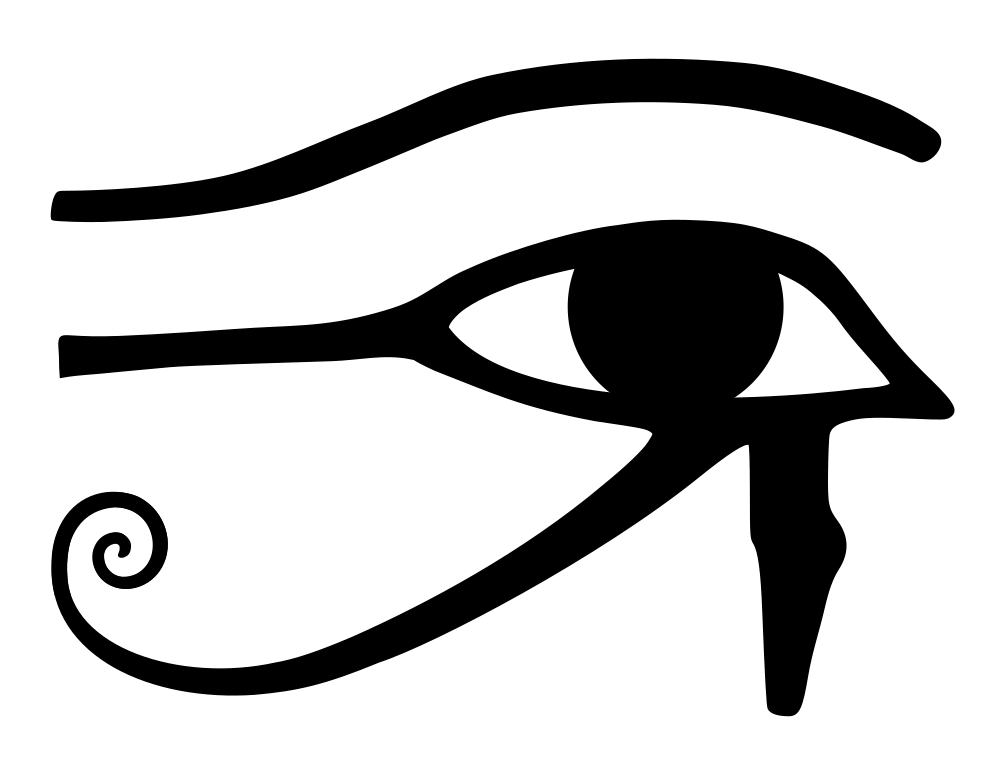
The eye that awakens
The sacred eye is the eye of awakened consciousness. In Zevism, it signifies the Third Eye, astral vision, the perception of spiritual energy, and the Gnosis through which the soul approaches Godhead. Its gaze reaches inward to the powers concealed within the human being and outward to the divine world those powers reveal. The Eye of Horus, the Eye of Ra, and the All-Seeing Eye enter this sacred language as forms of restored perception and luminous awareness. The Gods awaken the capacity to see, and the soul learns to receive Their light. [1][5]
The Third Eye and the pineal light
The Temple places the Third Eye at the centre of the forehead and understands it as the forward extension of the sixth chakra, in relation to the pineal gland. Within this spiritual anatomy, it is the faculty through which astral images reach consciousness. Seeing auras, perceiving energy, and receiving impressions from the spiritual world belong to its sacred work. The visible eye therefore signifies an inward organ of perception, whose awakening expands the field in which the soul can know and act. [5]
The pineal teaching adds the image of white-gold light. The Temple’s Pineal Meditation directs attention to this luminous power as a means of spiritual empowerment and the expansion of intuitive understanding. The eye’s radiance is thus more than an ornament: it presents the soul becoming a vessel of light. The gold recalls solar perfection, while white gathers the powers of cleansing and illumination. Through the sacred eye, the devotee contemplates the passage from concealed potential into conscious spiritual sight. [6][7]
The pyramid, the capstone, and Gnosis
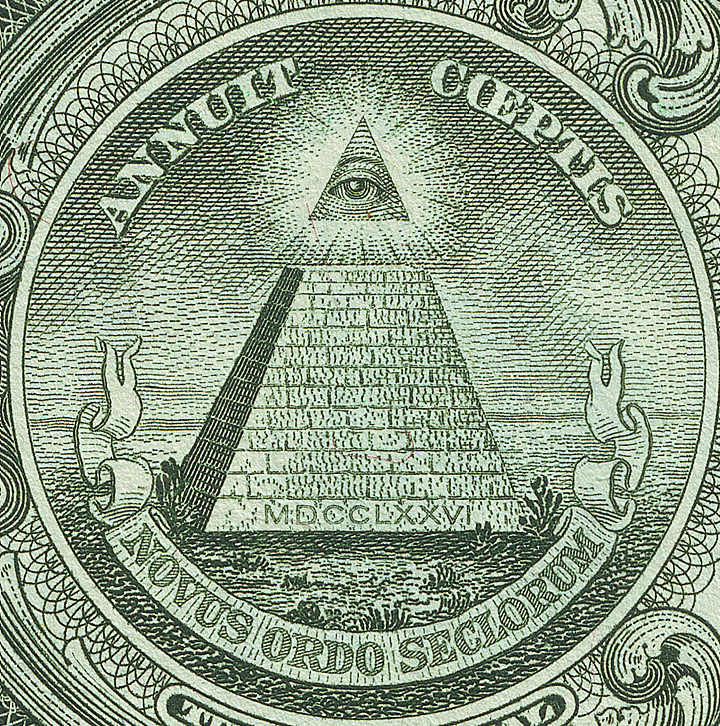
The pyramid gives this awakening a complete structure. In the Temple’s symbolism, it represents the human chakra system and the great work of spiritual development. The missing capstone signifies an attainment still to be completed; the radiant eye above it signifies the spiritual knowledge toward which the whole structure rises. The soul’s powers must become aligned and empowered so that the summit can receive its proper light. This is the meaning of completion expressed through the sacred architecture. [1]
The All-Seeing Eye declares Gnosis: the soul’s participation in a higher and more comprehensive spiritual awareness. The Temple also names this consummation Samadhi or Super-Consciousness. Its image on the United States dollar brings the eye and unfinished pyramid into a widely recognised form, while Freemasonry gives the eye another setting in the language of divine watchfulness. Zevist teaching receives these forms through the mysteries of the perfected soul, reading their illumination as a sign of the path toward Godhead. [1]
Horus, Wadjet, and the Eye of Ra
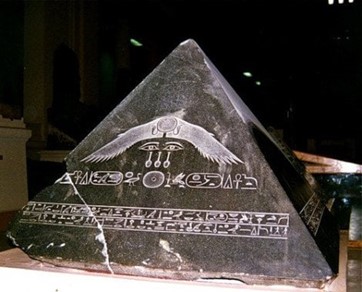
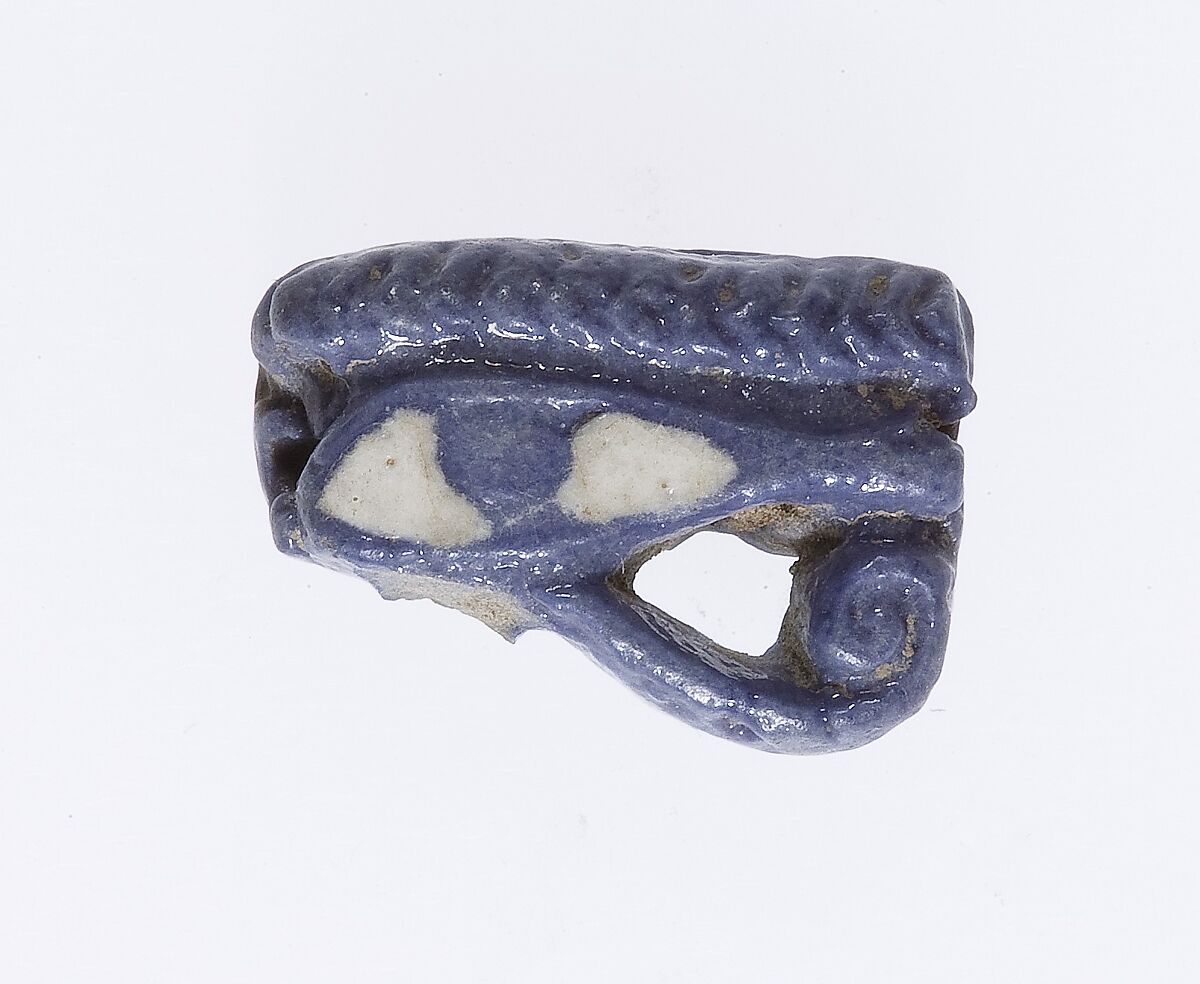
In Egyptian history, the wedjat is the restored eye of Horus. Its form combines features of a human eye with markings associated with a falcon. The Metropolitan Museum explains its name through the idea of becoming sound again; in the myth, Horus's damaged eye is restored by Thoth. The amulet consequently carried meanings of healing, regeneration, and protection. The illustrated New Kingdom example dates to approximately 1386–1347 BCE. [2]
Wadjet is also the name of an Egyptian Goddess, especially associated with the royal cobra. A separate Met statue shows Her in lion-headed form as an Eye of Re, an expression of the Sun God's protective and enforcing power. Thus wedjat, Wadjet, and Eye of Ra belong to connected religious imagery, but are not simply three interchangeable labels. Identifying the object and its context preserves the particular dignity of each form. [3]
The Eye of Providence and Freemasonry
The All-Seeing Eye has a place in Masonic symbolic teaching, where it expresses divine watchfulness. The Grand Lodge of British Columbia and Yukon distinguishes that use from the specific eye above an unfinished pyramid seen on the American Great Seal. The National Archives documents William Barton’s 1782 design with the thirteen-step pyramid and Eye of Providence. These records establish the history of the composition while keeping the broader symbolic uses of the eye visible. [9][10]
The Temple reads the light preserved in Masonic symbolism through the sacred knowledge of the Gods. Within this Zevist understanding, the eye announces awakening, the pyramid presents the structure of the soul, and the completed summit signifies the attainment of Gnosis. The spiritual meaning remains the living centre of the image: the devotee becomes capable of seeing, knowing, and participating more fully in divine consciousness. Freemasonry and the dollar’s emblem provide additional settings in which these forms can be contemplated. [1]
Knowledge made spiritually active
The awakened eye asks the whole person to answer what has become visible. Spiritual knowledge acquires power through its relation to conduct, devotion, and the further development of the soul. The devotee learns to preserve clarity amid the changing circumstances of life and to return to the Gods as the source of illumination. The eye’s sacred gaze thus continues beyond a moment of vision, becoming an enduring orientation toward divine truth.