 አማርኛ
አማርኛ العربية
 বাংলা
বাংলা Български
 中文
中文 Čeština
 Dansk
Dansk Deutsch
 Eesti
Eesti Ελληνικά
 Español
 Français
 हिन्दी
 Hrvatski
 IsiZulu
 Italiano
 日本語
日本語 Kiswahili
 Magyar
 Македонски
 नेपाली
 Nederlands
 فارسی
فارسی Polski
 Português
 Română
 Русский
 Slovenščina
 Suomi
Suomi Svenska
 Tagalog
 Türkçe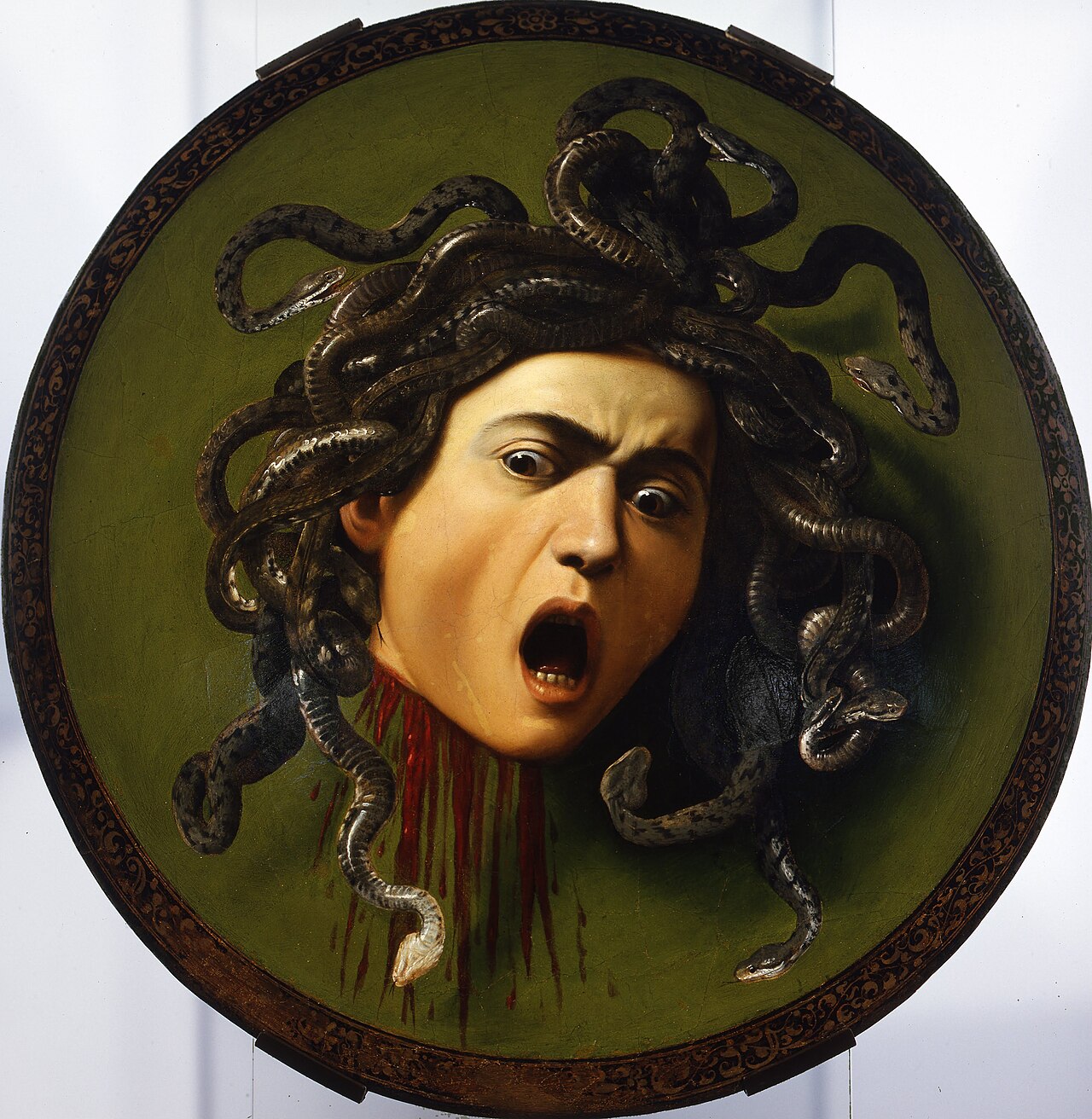
A presence that confronts disorder
The gorgoneion is a face of vigilant protection. It meets the approaching gaze directly and establishes a sacred boundary. Its place upon the aegis brings it into the authority of Zeus and Athena. In Zevist contemplation, the protective face expresses awakened presence, steadfast attention, and the courage that preserves the soul's inward work. [1][4]
The frontal face addresses whoever stands before it. Its immediacy gives protection the character of conscious encounter. The soul recognizes what approaches and remains gathered within its center. Through the image, vigilance becomes a visible spiritual faculty: the power to stay awake, perceive clearly, and guard what is being cultivated.
Athena and the authority of the awakened gaze
The protective face gives vigilance a Divine form. Upon Athena's aegis, the Gorgon belongs to a power that sees, distinguishes, and acts. Its direct gaze arrests careless approach and establishes the presence of a guarded center. In Zevist spiritual life, that center is the soul becoming conscious of what it receives, what it permits to govern attention, and what it chooses to preserve. [1][4]
Athena's wisdom gives protection its measure. Spiritual strength becomes reliable when it can distinguish a passing agitation from a matter requiring action, and an attractive impression from a coherent understanding. The gorgoneion expresses the firmness that allows this discernment to remain present under pressure. Its severity belongs to the guardianship of an ordered inward life.
Zeus' authority stands behind the aegis. The protective image therefore joins local vigilance to a greater Divine order. The practitioner guards the chamber of contemplation because something worthy is being cultivated there: clearer sight, a stronger will, and a more capable relation with the Gods. Protection serves the growth of those powers.
The spiritual boundary and the integrity of the aura
The Temple teaches the cultivation of the aura as part of the soul's spiritual development. Its color correspondences assign protective uses to blue, gold, white, and black, each with a different quality: calm depth, solar strength, clarity, or containment. Within this sacred framework, the gorgoneion provides a form for the same intention, the preservation of an inward field in which the work can mature. [5][6]
Contemplate the face as complete and steady. Let its frontal presence recall the ability to meet a difficulty without surrendering attention to it. Then name the boundary needed for the spiritual work: time preserved for meditation, speech kept free of careless distortion, or an intention maintained through interruption. Give that boundary a simple, repeatable expression in daily life.
The occult work and its practical expression strengthen one another. A protective visualization has greater coherence when the practitioner also preserves the conditions of concentration and study. The mind learns to gather itself, the will learns to maintain a chosen form, and the receptive powers gain a stable chamber. The face upon the aegis then becomes an inward standard: vigilance that remains awake, strength governed by wisdom, and a soul prepared to carry Divine illumination without losing its integrity.
Knowing what the guardian serves
A protective image gains clarity when the practitioner can name what is being guarded. Before placing the gorgoneion within a devotional setting, identify that purpose: the quiet needed for contemplation, the fidelity of a teaching, or the continuity of a sacred commitment. The face then stands in relation to something definite and worthy. Its presence recalls the responsibility already undertaken.
After a period of study or meditation, consider whether that purpose was preserved and what interrupted it. The response may be simple: a clearer schedule, a more orderly space, or a decision to complete one task before beginning another. Athena's wisdom gives protective intention an exact application. Strength becomes useful because it recognizes the conditions the work requires. The sacred face is the guardian of a living possibility: a mind free to understand, a will able to remain faithful, and a soul with room to unfold its relation with the Gods. This positive purpose gives vigilance its proportion and its enduring dignity.
The aegis and the ancient image
In Iliad 5.738–742, Athena takes up the aegis, and its imagery includes the head of the Gorgon. Homer relates the terrifying emblem to Zeus, who bears the aegis. The passage provides an ancient literary basis for placing the Gorgon's face within Divine protective and martial imagery. It does not reduce the image to ornament; its appearance participates in the overwhelming presence of the Goddess as she prepares for action. [1]
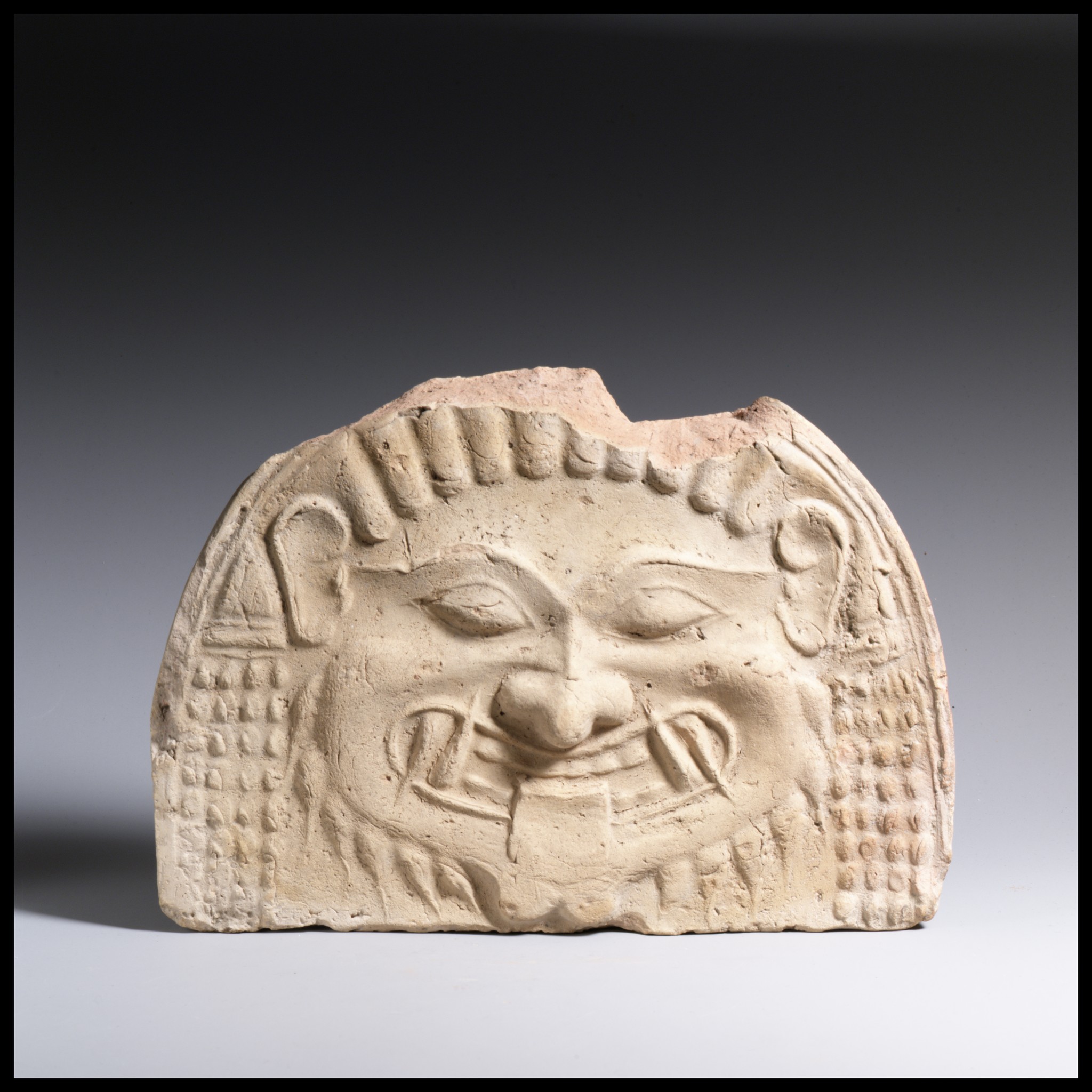
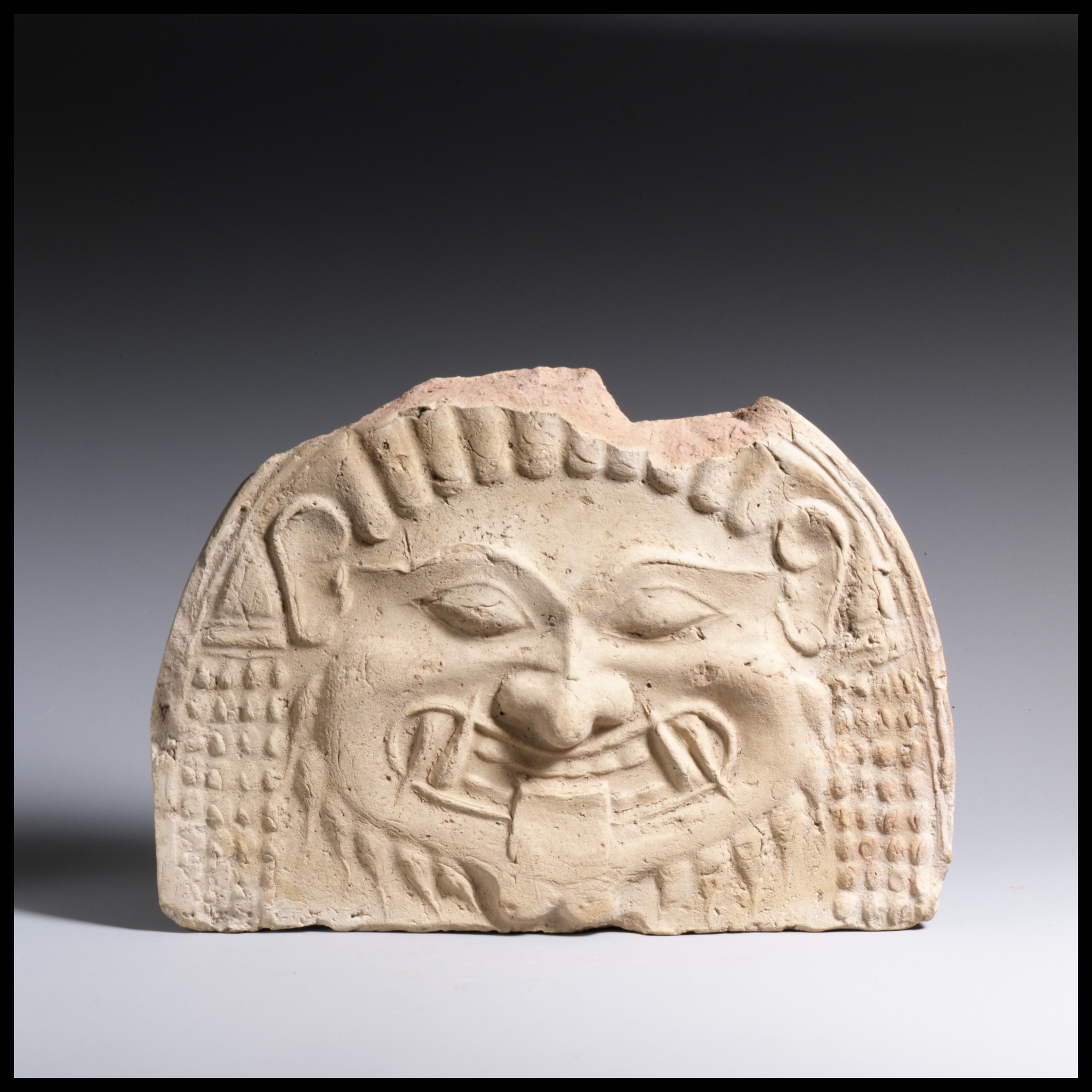
Ancient objects show the motif beyond poetry. The Metropolitan Museum's Greek terracotta gorgoneion antefix, dated to about 580–570 BCE, was a roof ornament. The museum interprets its frightening eyes and sharp teeth as likely intended to ward off evil. Such architectural placement made the face visible at the edge of a building, where a protective image could address the surrounding space. [2]
The gorgoneion changed considerably over time. The Met's study of Medusa in Greek art traces the movement from more fearsome Archaic faces toward increasingly human and idealized forms. The frontal encounter remained recognizable even as the appearance changed. This range cautions against assuming that every gorgoneion must have the same expression or that a later, beautiful face has lost its connection with the older motif. [3]