
 አማርኛ
አማርኛ العربية
 বাংলা
বাংলা Български
 中文
中文 Čeština
 Dansk
Dansk Deutsch
 Eesti
Eesti Ελληνικά
 Español
 Français
 हिन्दी
 Hrvatski
 IsiZulu
 Italiano
 日本語
日本語 Kiswahili
 Magyar
 Македонски
 नेपाली
 Nederlands
 فارسی
فارسی Polski
 Português
 Română
 Русский
 Slovenščina
 Suomi
Suomi Svenska
 Tagalog
 Türkçe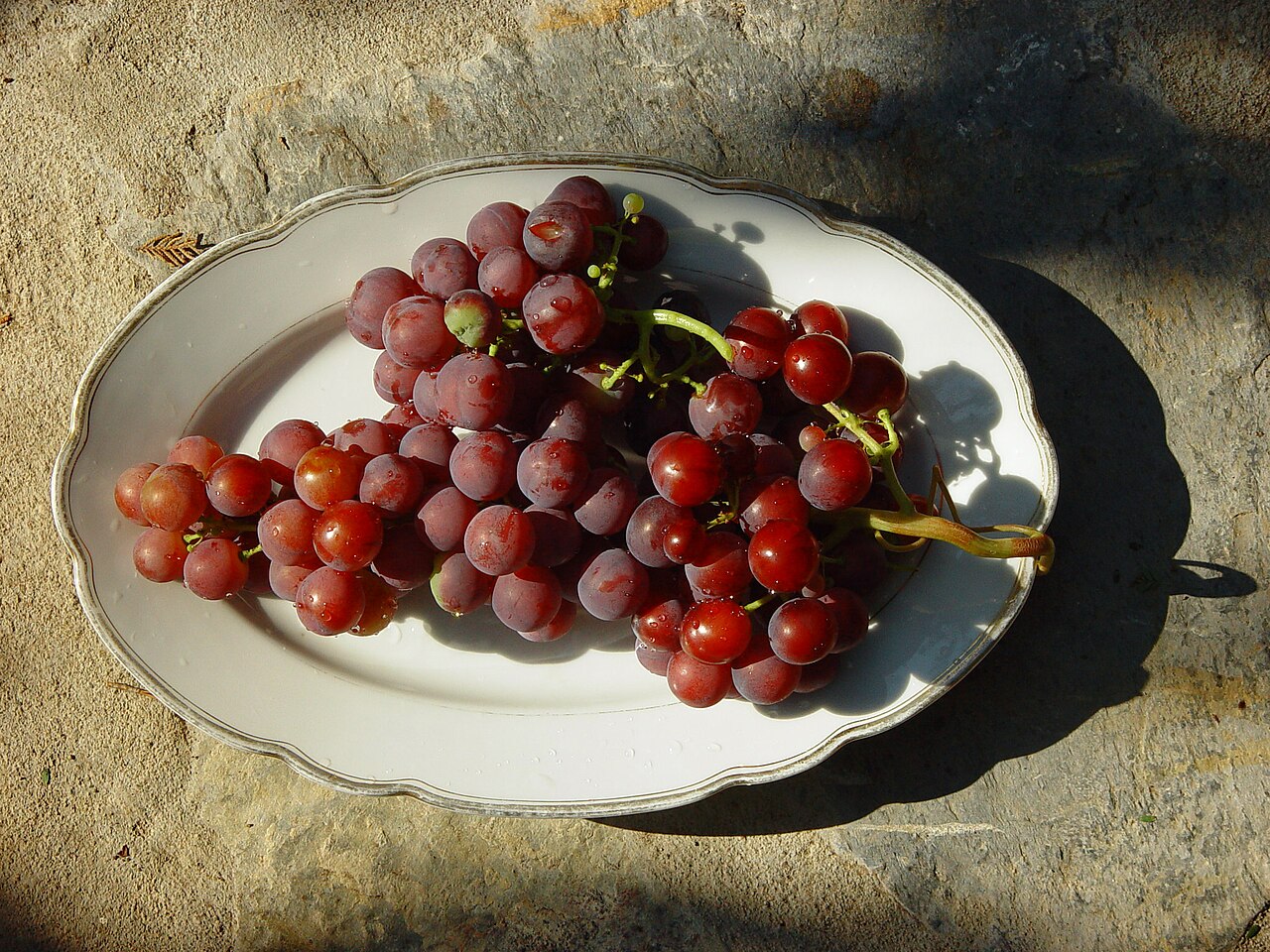


The God within the living vine
The grapevine expresses the power of Dionysus through a life that roots, climbs, spreads and bears clusters of fruit. Its movement is both vigorous and responsive: it finds support, extends through space and gathers nourishment into sweetness. In Zevist symbolism, the vine reveals Divine vitality circulating through the soul until its hidden powers become fruitful. It is the living counterpart of the thyrsus, the God's abundance seen in its growing form.
The cluster is especially rich in meaning. Many fruits hang together from one branching life, presenting an image of differentiated powers sustained by a common source. The individual grape remains distinct, while its place within the cluster reveals a greater unity. So the soul's faculties may grow in their particular excellence while sharing one consecrated direction. Dionysus brings their vitality into an abundant relationship.
The channels of spiritual life
The Temple describes the soul through centres and channels of power and uses the tree as an image of spiritual structure. The vine offers a related contemplation: the central growth carries life into branches, leaves and fruit. Its tendrils suggest the subtle extensions through which energy reaches the wider spiritual being. The image gives visible form to circulation, connection and the distribution of power. [1]
Within this reading, the roots correspond to the source of vitality, the ascending vine to its movement through the central axis, and the clusters to faculties brought to maturity. The Temple's Kundalini teaching presents awakening as a development involving the whole soul. Dionysus's vine expresses the luxuriance of that development: spiritual life becomes capable of greater perception, richer feeling and more purposeful creative expression. [2]
The ancient vine of Dionysus
In Homeric Hymn 7, the captors of Dionysus witness extraordinary signs aboard their ship: wine flows, a vine bearing grapes spreads along the sail, and ivy winds around the mast. The vegetation announces the God's presence by transforming the space in which He has been confined. [3]
Euripides also joins the vine to Divine nourishment. In Bacchae 274–285, Teiresias places Demeter's gift of solid food beside the gift of the grape associated with Dionysus. These are the character's words within a religious drama. An Attic skyphos of about 470 BCE, catalogued by the Metropolitan Museum, gives the God a wreath of vine leaves, providing a material witness to the same botanical association. [4] [5]
Transformation and sacred sweetness
The passage from grape to wine has long supplied the symbol with a second life: what has ripened can undergo a further transformation. In Zevist contemplation, this becomes an image of spiritual alchemy. Experience is gathered, inwardly worked upon and changed into understanding. Raw vitality becomes a power that the soul can hold and direct. Abundance acquires depth through transformation.
The sweetness of the grape can also signify the joy that accompanies a living relationship with the Gods. Joy here is a spiritual capacity, the soul's ability to receive the goodness of existence and respond to it with fullness. Dionysus loosens the contracted form in which life has become merely mechanical. His vine reminds the worshipper that awakening concerns vitality and participation as well as knowledge.
The symbol can be contemplated through the living plant, its fruit or its artistic image. Its spiritual meaning is present in the vine itself: rootedness, circulation, ripening and shared abundance. These forms allow the devotee to honour Dionysus through beauty, song, gratitude and meditation, each becoming a way of participating in the sacred richness that the plant reveals.
A fruitful soul
The growth of a vine requires both extension and support. This gives the symbol a practical mystical meaning. The awakening soul needs a clear devotional direction through which its expanding powers can be sustained. The Temple's emphasis on regular spiritual work supplies that continuity. Dionysian vitality acquires lasting expression when it enters a life capable of cultivating it. [2]
In contemplation, behold the vine as a network of living radiance, with each cluster receiving from the same sacred source. Ask Dionysus that the powers of the soul may circulate freely, ripen fully and contribute to a harmonious whole. The mature fruit then becomes an image of spiritual generosity: what has grown within can nourish creative work, deepen companionship and bring a more abundant presence into the world.