
 አማርኛ
አማርኛ العربية
 বাংলা
বাংলা Български
 中文
中文 Čeština
 Dansk
Dansk Deutsch
 Eesti
Eesti Ελληνικά
 Español
 Français
 हिन्दी
 Hrvatski
 IsiZulu
 Italiano
 日本語
日本語 Kiswahili
 Magyar
 Македонски
 नेपाली
 Nederlands
 فارسی
فارسی Polski
 Português
 Română
 Русский
 Slovenščina
 Suomi
Suomi Svenska
 Tagalog
 Türkçe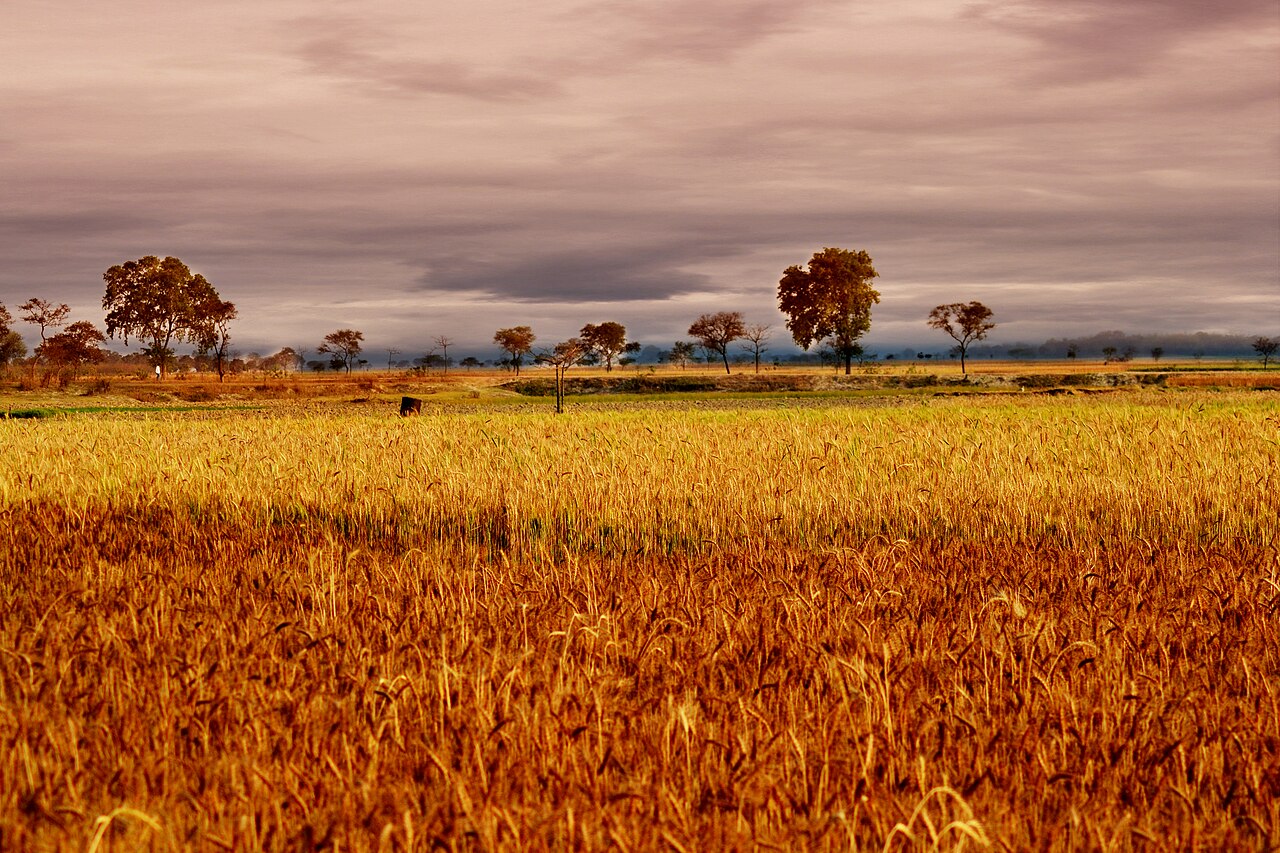


The golden gift of the Mother
The wheat of Demeter is the visible promise that hidden life can become nourishment. A seed enters the earth, sends forth a living form and ripens into a head heavy with grain. Within Zevist contemplation, this movement reveals the Goddess's power to sustain manifestation and bring potential into fruitful expression. Her gift embraces the body that receives food, the community that shares it and the soul that learns to cultivate what has been entrusted to it.
Golden grain also carries the splendour of maturity. Its radiance belongs to a life that has gathered earth, water, air and sunlight into a form capable of sustaining other life. Demeter's symbol therefore expresses spiritual abundance as a completed relationship among powers. Fertility is more than multiplication. It is the capacity to bring forth something sound, nourishing and ready to enter the greater order of existence.
The seed and the awakening of power
The buried seed offers a sacred correspondence for power still concealed at the roots of the soul. The Temple's teaching on Kundalini describes a force awaiting awakening and ascent. The grain supplies a living image for that movement: the potential held below reaches upward and unfolds through successive stages. Its ascent remains joined to its root. Spiritual elevation likewise requires a foundation capable of sustaining what develops above it. [1]
The standing stalk can be contemplated in relation to the central axis of the soul, while the full head expresses the flowering of its awakened faculties. The Temple teaches that the major chakras extend along the spine and that their empowerment contributes to the development of the whole spiritual being. In Demeter's grain, this sacred anatomy is expressed through growth, nourishment and ripening. Every centre participates in the harvest; the upper flowering draws upon the life of the entire plant. [2]
Demeter and grain in ancient sources
The Homeric Hymn to Demeter describes the Goddess withholding growth during Her separation from Persephone, then restoring the earth's fertility after their reunion. The poem's agriculture includes barley. Wheat here represents one principal cereal within Demeter's wider dominion over grain, rather than replacing every ancient reference to grain with a single species. [3]
A hydria attributed to the Niobid Painter, about 460–450 BCE, depicts Triptolemos between Demeter and Persephone. The Metropolitan Museum explains the scene as the hero's dispatch to teach humanity grain cultivation. The sacred gift consequently includes knowledge and transmission: nourishment becomes a cultivated art through which Divine generosity enters human life. [4]
The spiritual harvest
Demeter's harvest gives a precise meaning to the fruit of spiritual labour. A meditation may begin as an act performed at a particular hour, but its ripening is seen when the soul possesses greater steadiness, clearer perception and a more coherent power of will. The seed has become nourishment when the practice begins to sustain life beyond the moment of practice. Devotion has entered one's manner of being.
The golden ear may also be contemplated in relation to the solar centre, which the Temple presents as a principal vessel of spiritual power. Its gathered grains resemble a treasury held in readiness for use. Within this correspondence, the solar force is cultivated so that energy can be ordered toward a definite and worthy purpose. Demeter teaches the wisdom of gathering, preserving and distributing abundance in its proper season. [2]
Cultivation as a sacred relationship
The farmer receives the field and also tends it. This union of gift and effort is central to the symbolism. Divine power invites human participation: the soil is prepared, the seed is placed, the growing life is cared for and the harvest is received with gratitude. In the spiritual life, attention, regularity and understanding prepare the conditions through which the soul can receive more fully the gifts of the Gods.
Contemplate an ear of golden wheat as the completion of a cycle of sacred work. Bring to Demeter the faculty, undertaking or quality of life that requires cultivation. Let the image remind you that growth has roots, stages and a season of fulfilment. Her grain joins the mystery of awakening to the generosity of nourishment: what becomes strong and fruitful within the soul can enrich the life around it.