
 አማርኛ
አማርኛ العربية
 বাংলা
বাংলা Български
 中文
中文 Čeština
 Dansk
Dansk Deutsch
 Eesti
Eesti Ελληνικά
 Español
 Français
 हिन्दी
 Hrvatski
 IsiZulu
 Italiano
 日本語
日本語 Kiswahili
 Magyar
 Македонски
 नेपाली
 Nederlands
 فارسی
فارسی Polski
 Português
 Română
 Русский
 Slovenščina
 Suomi
Suomi Svenska
 Tagalog
 Türkçe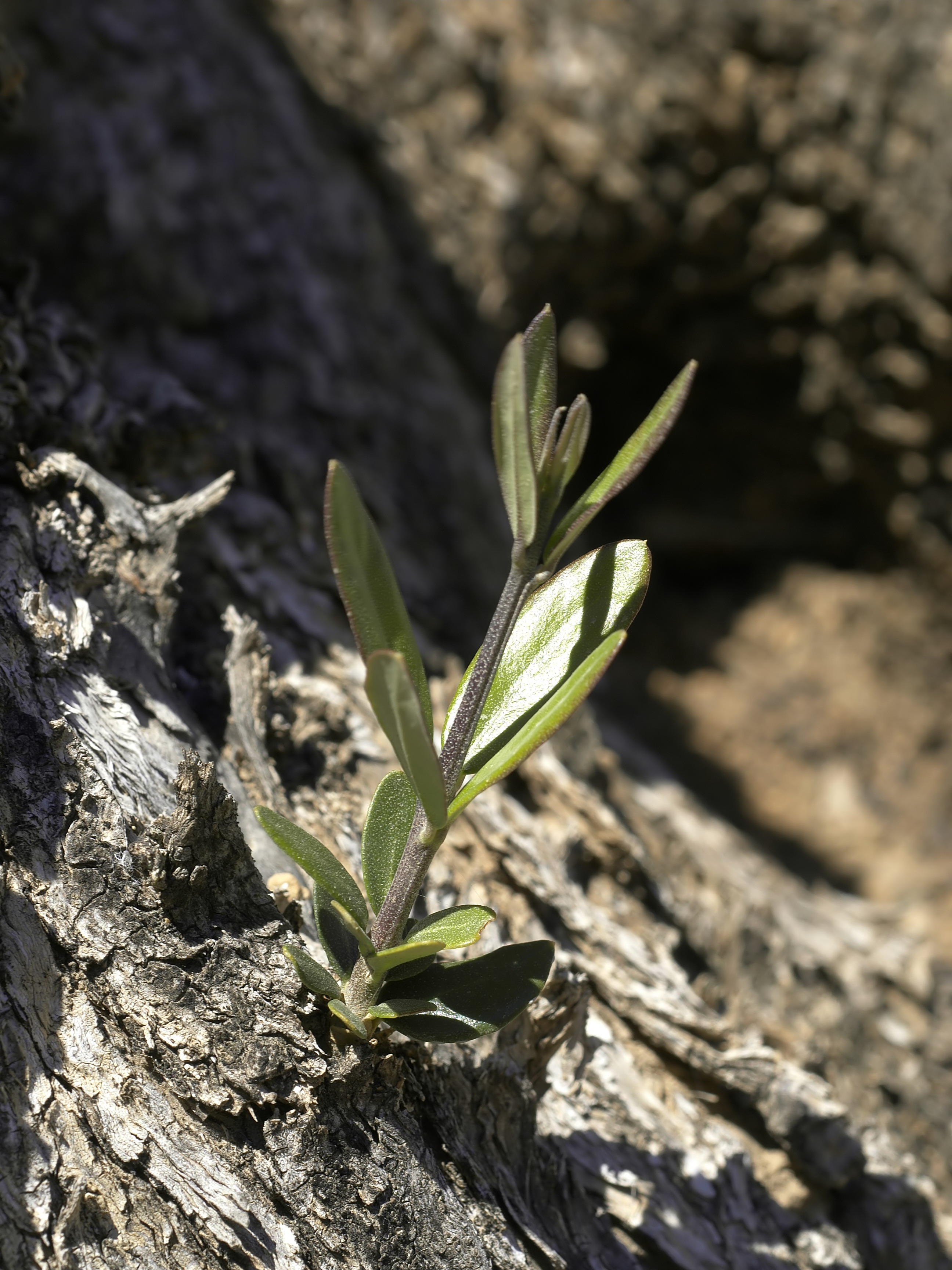


Life cultivated under the Gods
The olive tree expresses divine life rooted, rising, and made fruitful. Sacred to Athena and present in the victories of Zeus’s sanctuary at Olympia, it joins wisdom with the fulfilment of spiritual labour. Within Zevism, the living tree also discloses the structure of the soul: the spine forms its trunk, the currents of energy extend as branches, and the fruits signify the powers gained through cultivation. Athena’s olive therefore belongs to the sacred work of awakening, in which hidden roots sustain an increasingly luminous and fruitful life. [5]
The tree within the soul
The Temple interprets the Tree of Life as a map of the human soul. Its trunk corresponds to the spine, its branches to the nadis that circulate spiritual energy, and its fruits to the rewards of meditation. Applied to the olive, this teaching gives the tree an inward dimension that joins its ancient divine associations with the work of the devotee. The seven principal chakras stand along the central path, while the wider network carries their power through the spiritual structure. [5]
A tree grows through continuity between root and crown. The soul’s awakening likewise gathers foundation, generative power, solar will, heart, and higher perception into one movement. The olive’s living form can be contemplated as the stability required by this ascent: rooted strength sustains upward expansion. Its branches reveal the distribution of energy, and its fruit makes the result visible. The devotee honours Athena by cultivating a spiritual life capable of bearing knowledge, power, and beneficial action. [5][9]
The oil, the light, and the victor’s branch
The olive’s fruit offers a natural image of concentrated life becoming available for use. In the spiritual reading, this concentration signifies power gathered through sustained work. The Temple identifies the solar chakra with the Grail, the central vessel of spiritual energy. The fruitful tree and the filled vessel meet in the same mystery: what has been cultivated inwardly becomes a source of light and action. Athena’s wisdom gives that power a clear direction. [5]
The branch awarded at Olympia adds the sacred recognition of attainment. The tree has grown, the discipline has borne fruit, and excellence stands before Zeus. Within the soul, this victory can be contemplated as the fulfilment of a stage of awakening. The branch crowns the head and joins cultivation with the higher centres of perception. It reminds the devotee that the aim of spiritual labour is an actual increase of consciousness and capacity, worthy of dedication to the Gods. [4]
Athena's tree on the Acropolis
Herodotus records the Athenian tradition that an olive tree and a sea on the Acropolis were witnesses to Athena’s contest with Poseidon for the land. He adds that after the sanctuary was burned during the Persian invasion, the olive put forth a new shoot. His narrative preserves the tree’s sacred importance within Athenian memory, joining the presence of the Goddess with renewed life at the city’s religious centre. [1]
The olive also appears beside the owl in Athenian art. A fifth-century BCE drinking cup in the Metropolitan Museum places the bird between olive sprigs on both sides. The pairing carries the tree beyond a single narrative into a repeated visual language. Its presence on an everyday vessel shows how recognizable sacred and civic imagery could accompany ordinary social life. [2]
The crown at Olympia
Pausanias gives the wild olive a place in the mythical beginnings of the Olympic games. In his account, Heracles of Ida sets His brothers a footrace and crowns the winner with a branch of wild olive. This figure belongs to the Idaean guardians associated with the infant Zeus in the preceding passage. The account should therefore not be silently merged with every tradition about the better-known son of Zeus and Alcmena. The text preserves a particular genealogy of the sacred contest. [3]
Cultivation as an offering
A living tree asks for care suited to its conditions. The image therefore gives spiritual dedication a practical rhythm: a power is cultivated through what it receives repeatedly. Meditation, study, and reverence become enduring contributions to the soul’s development. Their results appear through greater steadiness, clearer spiritual perception, and an increased capacity to undertake the work. Athena’s wisdom governs the quality of that cultivation, while Zeus gives the whole its sacred horizon.
The tree also invites the devotee to consider what is being left for future growth. Knowledge can be preserved accurately, sacred places can be maintained, and a developed skill can be passed to someone prepared to receive it. Such acts carry the fruit beyond a single moment of achievement. The olive becomes an image of spiritual continuity, in which the gifts received from the Gods are cultivated with enough care to sustain further life.