 አማርኛ
አማርኛ العربية
 বাংলা
বাংলা Български
 中文
中文 Čeština
 Dansk
Dansk Deutsch
 Eesti
Eesti Ελληνικά
 Español
 Français
 हिन्दी
 Hrvatski
 IsiZulu
 Italiano
 日本語
日本語 Kiswahili
 Magyar
 Македонски
 नेपाली
 Nederlands
 فارسی
فارسی Polski
 Português
 Română
 Русский
 Slovenščina
 Suomi
Suomi Svenska
 Tagalog
 Türkçe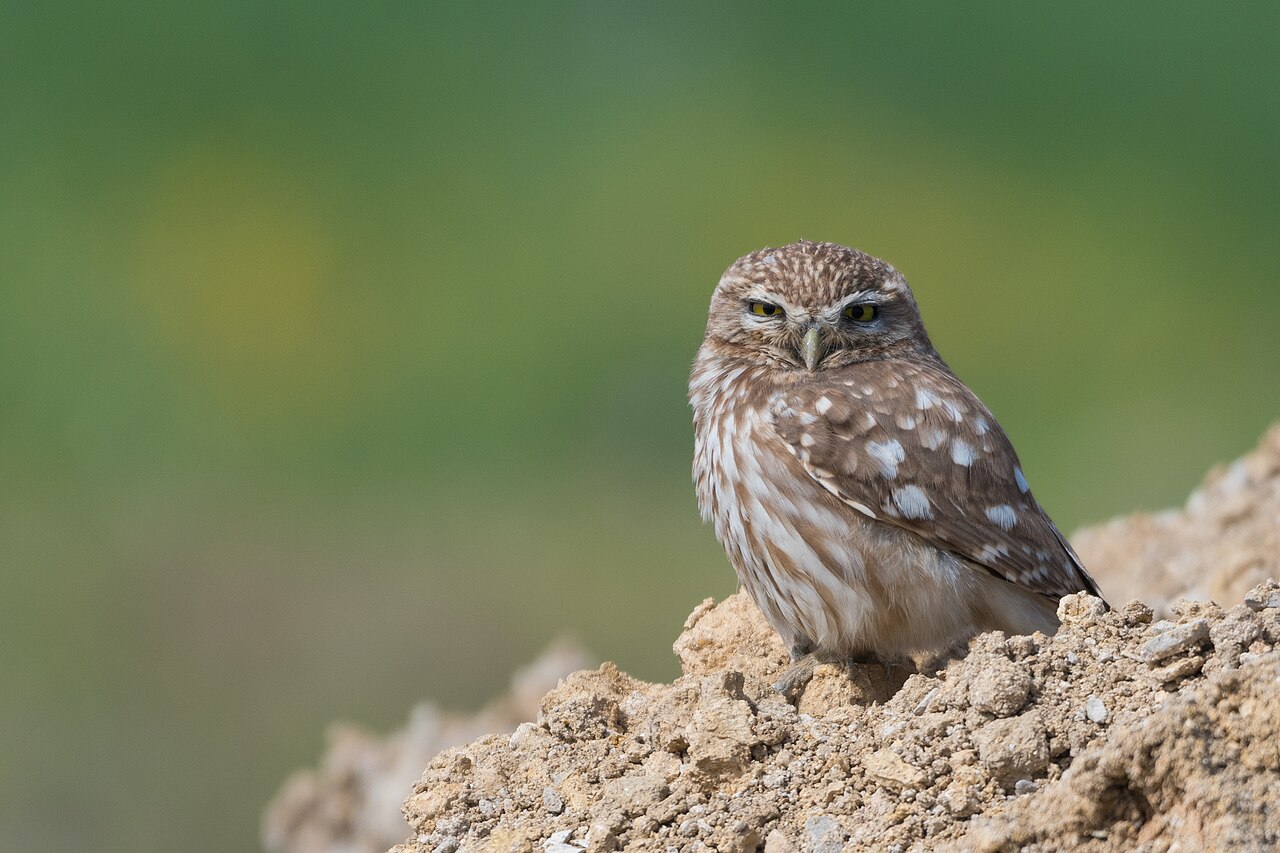
An emblem of attentive wisdom
Athena’s owl is the guardian of awakened spiritual intelligence. Its concentrated gaze expresses the power to perceive what ordinary awareness overlooks and to bring that perception under the command of wisdom. Within Zevism, the Third Eye opens the soul’s field of vision, while divine instruction gives that vision understanding and purpose. The owl joins these powers in the presence of Athena. It signifies lucid perception, discrimination among spiritual impressions, and the capacity to act from knowledge that has become inwardly clear. [5][4]
The inner eye under the guidance of Athena
The Temple understands the Third Eye as the faculty through which astral images reach awareness. Its development opens a field of perception that asks for steadiness and discrimination. Athena’s owl gives that disciplined sight a divine guardian. The bird’s watchful presence expresses a consciousness that remains awake to what it receives, allowing knowledge to acquire form before the will acts upon it. Wisdom and spiritual sight become partners within the soul’s ascent. [5]
The pineal teaching deepens this connection through white-gold illumination and the expansion of intuitive understanding. The devotee contemplates Athena as the divine power through whom illumination becomes intelligible. A bright impression acquires meaning; a relation becomes visible; an inward insight enters the ordered work of knowledge. The owl’s gaze gathers this process into one image. It calls the spiritual eye toward clarity and the whole person toward a more conscious participation in divine intelligence. [6]
Wisdom as a power of the awakened soul
The Gods reveal spiritual knowledge as the devotee advances through meditation, according to the Temple’s chakra teaching. Athena’s wisdom belongs within that living relationship. The owl represents the soul prepared to receive instruction with a clear and steady faculty of perception. Its vigil signifies continuity: the inner light is cultivated, the received knowledge is examined, and understanding becomes capable of directing action. Spiritual power gains a more precise instrument through this union. [4]
The bird’s association with the olive also enriches the inward meaning. Perception becomes fruitful through the life it is able to guide. An awakened faculty asks for a worthy use, just as a cultivated tree asks to bear its fruit. In a devotional setting, the owl can focus an intention for illumination governed by wisdom: may the eye open clearly, may the mind understand faithfully, and may the will carry that understanding into the work entrusted to it by the Gods.
The owl in Athenian imagery
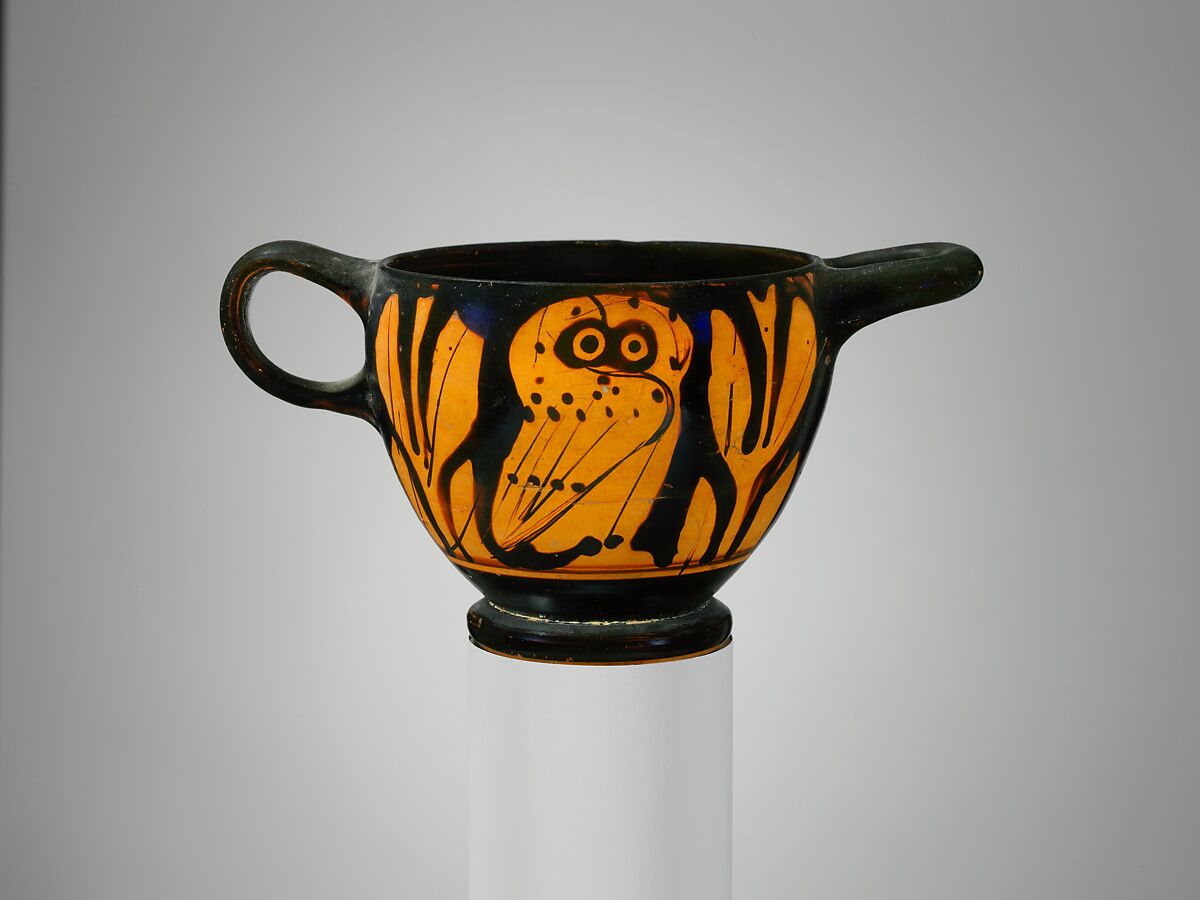
The owl and olive sprig are well documented in the visual culture of ancient Athens. An Attic red-figure drinking cup in the Metropolitan Museum, dated to the middle of the fifth century BCE, places an owl between olive branches. The museum identifies its shape as a glaux, the Greek word for owl, and notes its unusual combination of one vertical and one horizontal handle. This is a concrete historical object through which the symbol can be studied. [1]
The National Gallery of Victoria's study of owl cups situates such imagery alongside Athenian coinage and civic identity. It also cautions against assuming that the association between Athena and the owl was equally ancient or equally prominent throughout Greece. The Homeric epithet glaukōpis has been understood in several ways, including gleaming-eyed, and cannot alone settle the origin of the owl association. The surviving images give firmer evidence for particular times and places. [2]
Seeing with precision
For Zevist contemplation, the owl's concentrated gaze can represent an intelligence that remains present to what it encounters. Wisdom requires a right relation between observation and interpretation. A first impression is examined, details are held in memory, and understanding is allowed to become more exact. The symbol consequently offers an image of spiritual study as a disciplined act of attention.
The owl also complements the olive tree. In the ancient cup they share one field of representation; in Zevist contemplation they join awakened understanding with fruitful spiritual development. Athena’s wisdom gives the opened eye a purpose and the growing soul a direction. Perception becomes complete through the powers it can guide, and knowledge bears fruit through a life made more capable of receiving and expressing the influence of the Gods.
A guardian of sacred study
The owl can accompany the actual labour of sacred study. A passage is read closely, its meaning examined, and its relation to the larger teaching considered. The devotee returns to what remains obscure with patience and a clear purpose. In this work, Athena’s vigilance becomes an influence upon the manner of inquiry. The acquired knowledge strengthens the inner instrument, preparing it for a more conscious reception of the Gods’ instruction.