 አማርኛ
አማርኛ العربية
 বাংলা
বাংলা Български
 中文
中文 Čeština
 Dansk
Dansk Deutsch
 Eesti
Eesti Ελληνικά
 Español
 Français
 हिन्दी
 Hrvatski
 IsiZulu
 Italiano
 日本語
日本語 Kiswahili
 Magyar
 Македонски
 नेपाली
 Nederlands
 فارسی
فارسی Polski
 Português
 Română
 Русский
 Slovenščina
 Suomi
Suomi Svenska
 Tagalog
 Türkçe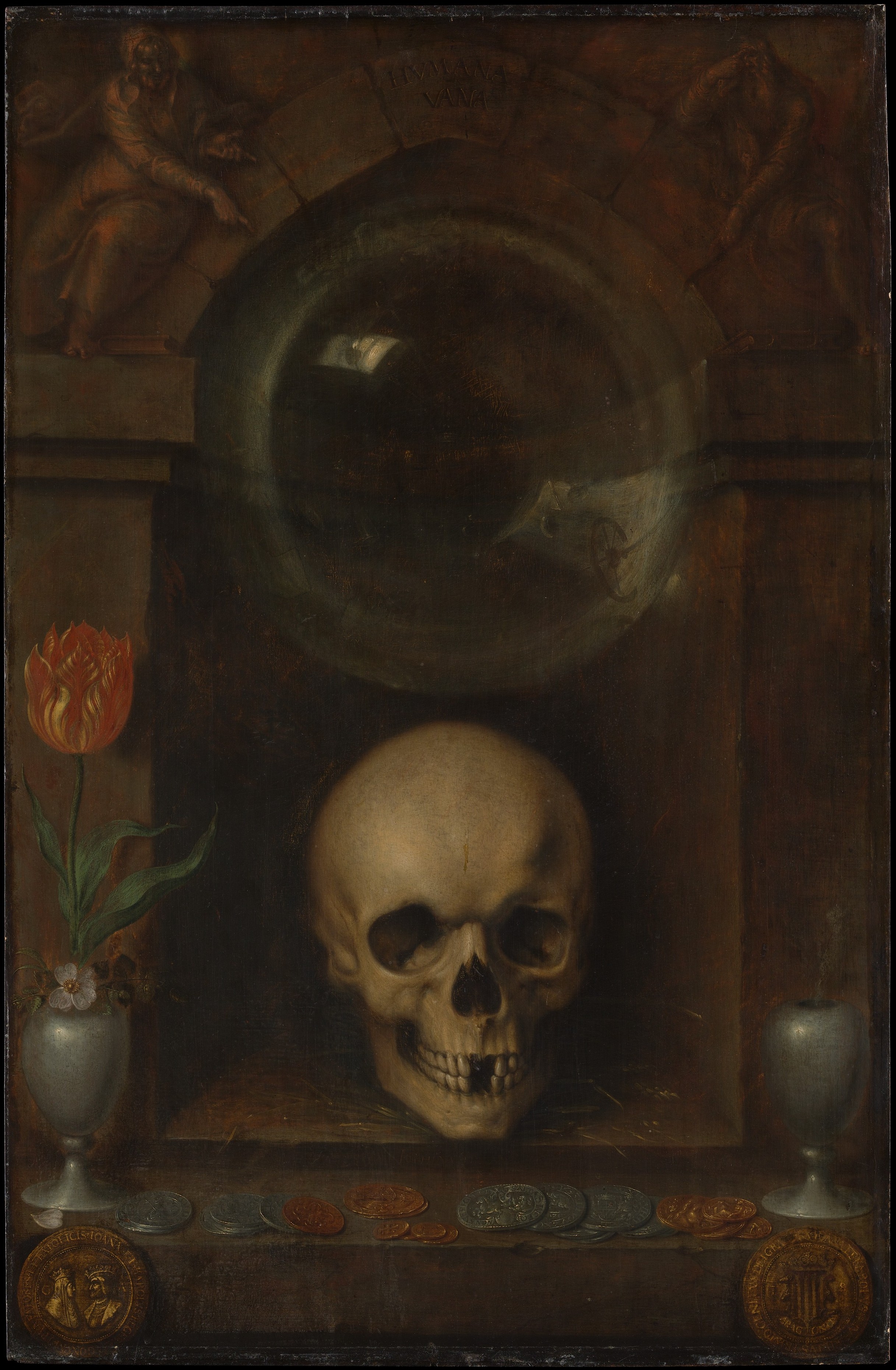
What remains when appearances fall away
In Zevism, the skull represents nigredo, the dark or dissolving stage of the Magnum Opus. The Temple understands this as a separation of the impure from the pure in preparation for the soul's ascent toward the Godhead. The symbol directs attention to transformation at its most uncompromising point: whatever obstructs the work must become visible and lose its power to govern the whole person. [1]
The skull removes many of the signs by which a person is ordinarily recognized: expression, ornament, rank, and the changing appearance of the face. For spiritual contemplation, that removal poses a question about what can endure. The purpose is to bring life into sharper focus, so that the time available for cultivation is understood as valuable.
Nigredo and the recovery of hidden power
Nigredo is the chamber in which the work reaches beneath the accustomed surface of identity. The skull shows the supporting structure after the ornaments have fallen away. Within the Magnum Opus, this image directs the practitioner toward what continues to govern the soul beneath profession, reputation, and habit. A limitation must become intelligible before its hold can be loosened. [1]
The Temple's color teaching associates black with containment, endurance, self-control, and the opening movement of alchemical transformation. These are the powers needed to remain present during examination. The practitioner gathers attention instead of scattering it into excuses. What has been repeated unconsciously can then be recognized as a pattern, and what has been mistaken for necessity can become a subject of deliberate change. [5]
The occult significance is the recovery of power bound into disorder. A divided intention consumes itself; a recurring fear can govern decisions before thought begins. Nigredo brings such relations into the inward light. The soul becomes more available for its Divine work as attention, will, and imagination cease to serve patterns that diminish their reach.
The passage from dissolution to living gold
The skull belongs to a complete alchemical movement. Its darkness prepares clarification; clarification prepares a fuller embodiment of spiritual life. The practitioner therefore holds the image together with the Grail and the Sun. The vessel receives what the work refines, and the solar center establishes it as a governing power. The Temple's teaching of the soul as light supplies the destination toward which this transformation is directed. [1][7]
A fitting contemplation is to choose one habit of attention that repeatedly interrupts the spiritual work. Observe its beginning, the promise it appears to make, and the result it actually brings. Then establish a clear alternative: a period of study, a completed task, a truthful acknowledgment, or a return to meditation. The change becomes real through repeated embodiment.
The Gods guide the soul toward greater capacity. The seriousness of nigredo should therefore preserve the dignity of the person undertaking it. Honest examination and patient reconstruction belong together. The Temple's emphasis on gradual preparation supports this rhythm: understanding must settle deeply enough to alter the life that carries it. In this way the skull becomes a threshold of renewal, and the gravity of mortality strengthens the resolve to cultivate what is enduring. [6]
The seriousness of renewal
The skull asks the practitioner to distinguish enduring purpose from borrowed appearance. A reputation may be impressive while the inner life remains neglected. A habit may feel inseparable from identity while limiting the person's growth. The work examines these relations with seriousness and makes that examination serve renewal.
Transformation also requires continuity beyond the moment of recognition. Seeing an obstruction is the beginning of changing one's relation to it. The next movement is to establish a clearer form through repeated action, study, and spiritual practice. Within the Temple's symbolism, nigredo belongs to a larger process whose direction is awakening and completion.
The image gains its full meaning when placed beside the brighter symbols of the corpus: the peacock's unfolding richness, the radiance of the Sun, and the vessel of Divine life. Together they express a path in which dissolution has a purpose and illumination acquires substance. The skull gives gravity to that path by reminding the practitioner that genuine transformation must reach beneath appearances.
Contemplated in this setting, the skull is a sober emblem of spiritual resolve. It calls life back to what matters and prepares the mind to value what can be made truthful, strong, and whole in its relationship with the Gods.
Ancient mortality and later alchemical imagery
Herodotus reports that at wealthy Egyptian banquets a small wooden representation of a corpse was carried among the guests as a reminder of their own mortality. His account, in Histories 2.78, concerns a complete model body in a coffin, not a skull emblem. It nevertheless provides ancient testimony to the deliberate use of an image of death within reflection on the conduct and enjoyment of life. [2]
The later European vanitas tradition often made the skull central. Jacques de Gheyn II's Vanitas Still Life, painted in 1603, combines a skull with fragile and transient objects. The Metropolitan Museum reads these elements as reminders of life's brevity. The work supplies a precisely dated example of early modern reflection on mortality. [3]
Alchemical color sequences provide another context. The Fitzwilliam Museum identifies black, white, and red as the material and symbolic colors of transformation in its Ripley Scroll. That evidence establishes a documented alchemical sequence. The Temple's interpretation of nigredo as a stage in the soul's ascent is a religious application of such transformational language. [4]