
 አማርኛ
አማርኛ العربية
 বাংলা
বাংলা Български
 中文
中文 Čeština
 Dansk
Dansk Deutsch
 Eesti
Eesti Ελληνικά
 Español
 Français
 हिन्दी
 Hrvatski
 IsiZulu
 Italiano
 日本語
日本語 Kiswahili
 Magyar
 Македонски
 नेपाली
 Nederlands
 فارسی
فارسی Polski
 Português
 Română
 Русский
 Slovenščina
 Suomi
Suomi Svenska
 Tagalog
 Türkçe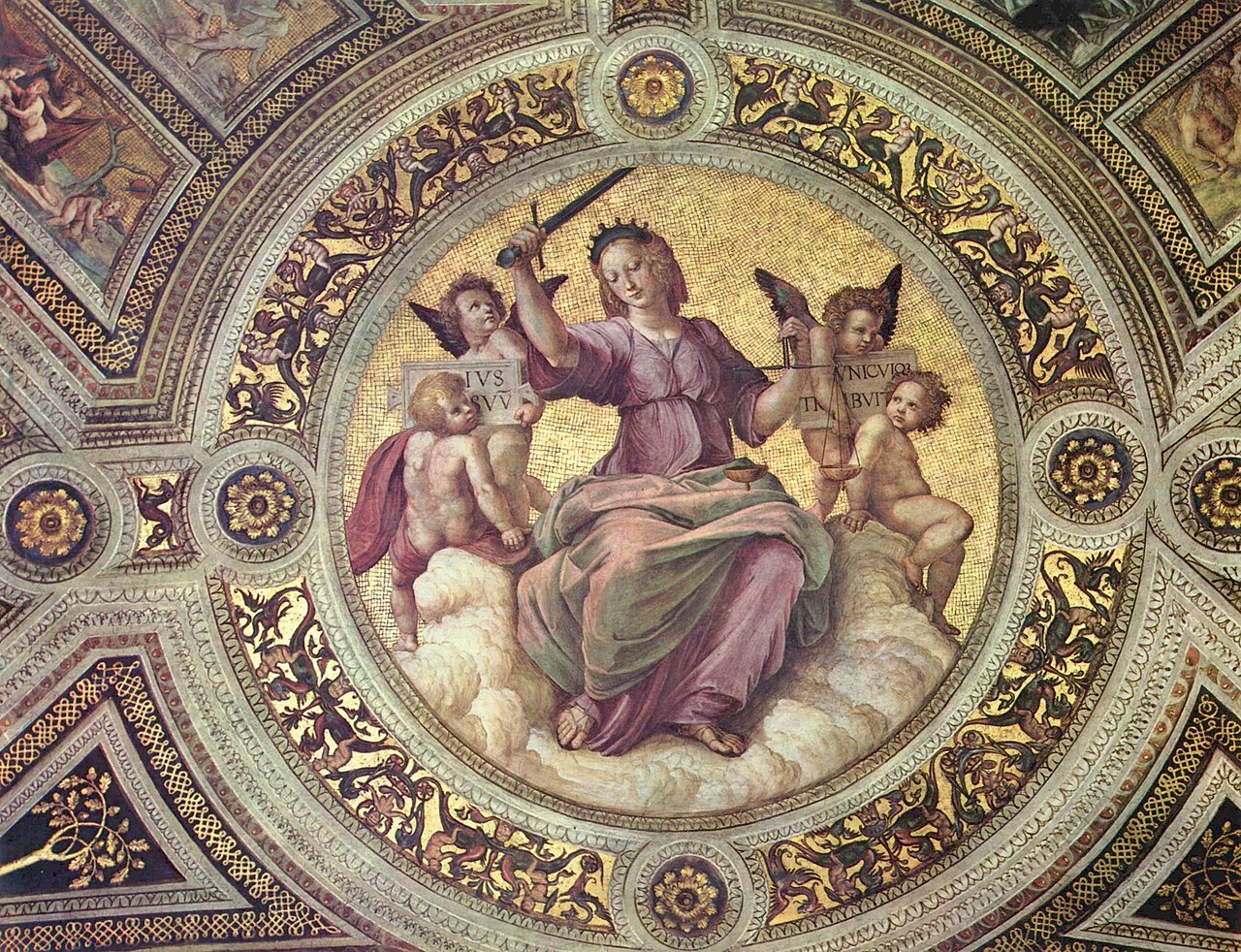

Order in the company of Zeus
The scales of Themis express the divine power that brings the soul’s forces into right relationship. In Zevism, spiritual equilibrium is active: the currents of the soul become capable of working together, the centres receive their proper measure, and awakened power answers to conscious direction. Themis presides over this sacred ordering. The common beam gathers two sides within one measure, revealing a unity able to preserve distinction. Her scales call the devotee to become inwardly ordered and therefore capable of participating more fully in the sovereignty of Zeus. [4][5]
Hesiod names Themis as the wife of Zeus and mother of the Horae: Eunomia, Dike, and Eirene, whose names express good order, justice, and peace. He also gives Her the Moirai as daughters by Zeus. The genealogy binds ordering powers closely to the Father of the Gods. It provides the ancient foundation for contemplating Themis through relations that preserve a coherent and flourishing world. [1]
The equilibrium of the sacred currents
The Temple teaches equilibrium through the relation of Ida, Pingala, and Sushumna. The two side currents come into balanced activity while the central channel awakens. Astarte’s emblem gives this relation a geometric form; the scales of Themis give it the form of a living measure. Their two pans can be contemplated as differentiated powers held within one order, while the upright support draws attention to the centre that makes their relationship possible. [4]
This balance belongs to the work of inner alchemy. The soul’s receptive and directing powers must both participate in its awakening. Receptivity without direction leaves power without a purpose; direction needs the living energy through which it can become effective. Their accord permits the whole spiritual structure to develop coherently. Themis’s measure signifies the divine intelligence through which each power receives its place, and the devotee’s will learns to serve that order. [5]
The balanced soul also becomes a clearer vessel of perception. The Third Eye receives within an energetic structure whose condition matters to the work of Gnosis. When agitation gives way to ordered power, contemplation can deepen and the divine image can be held with greater steadiness. Themis’s scales therefore concern the preparation of the whole person for sacred knowledge. They bring justice inward as a power of alignment, then carry that alignment outward through truthful speech, measured action, and responsibility before the Gods.
The divine act of weighing
Homer gives the balance a powerful place in the imagery of Zeus. During the pursuit of Hector by Achilles, Zeus raises golden scales containing their two fates of death. Hector’s portion descends. This scene concerns the weighing of mortal destinies, rather than a courtroom judgment, and the scales belong to Zeus in the passage. It nevertheless supplies an ancient image of a decisive comparison held in divine hands. [2]
Themis’s ordering presence and Zeus’s balance meet here in a Zevist symbolic reading. Judgment requires a stable point of reference and a faithful consideration of what is placed before it. The beam must remain responsive to its contents. Similarly, an attentive mind allows evidence, circumstances, and the real nature of an action to inform its conclusion.
The measure within the soul
Contemplating the scales begins with consistency. A standard gains integrity when the person can apply it to personal conduct as carefully as to the conduct of others. The symbol asks whether desire has altered the measure, whether haste has excluded something relevant, or whether an obligation has received its proper weight. Such examination strengthens the soul’s capacity to act with understanding.
Balance also concerns proportion. Different responsibilities may deserve different amounts of time, attention, and effort. The aim is a relationship that answers to the nature of the whole. Themis’s scales encourage the devotee to recognise these distinctions and to bring thought, feeling, and action into an ordered life. Peace becomes more durable when it rests upon clear responsibilities and trustworthy conduct.
Justice made visible
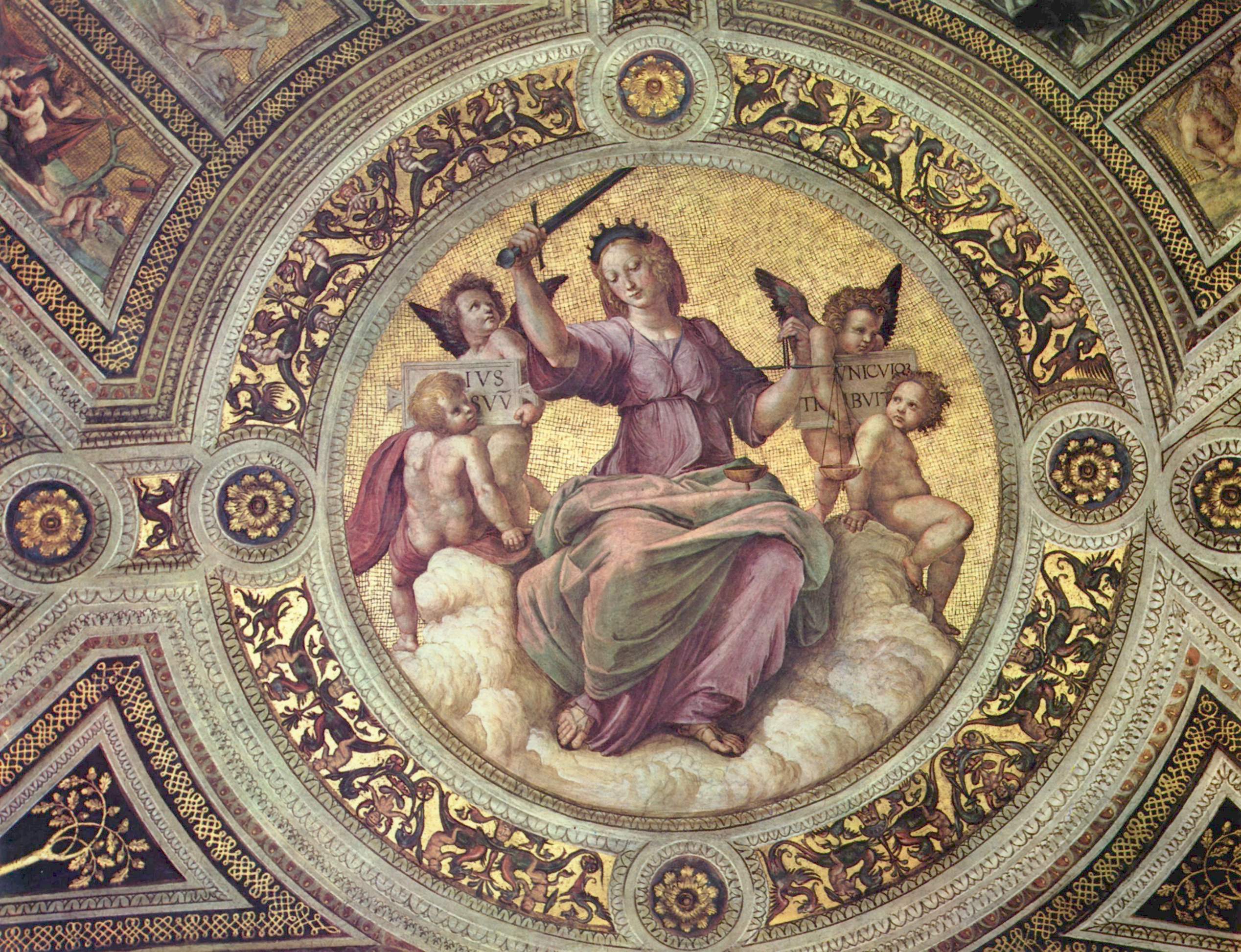
Raphael’s Justice, painted for the ceiling of the Vatican’s Room of the Segnatura around 1508, presents a complete female personification with scales and sword. The Vatican identifies Justice as one of the ceiling’s four allegories of the human spirit’s faculties. This Renaissance image belongs to the later artistic language of justice; it is presented here as a visual companion to Themis’s measure, with its actual identity preserved. [3]
The scales invite a deliberate pause before action. Attend to what is present, establish the relevant measure, and accept the responsibility of deciding. Within Zevism, this disciplined clarity honours Themis and brings the person’s conduct into a more conscious relationship with Zeus’s order.