 አማርኛ
አማርኛ العربية
 বাংলা
বাংলা Български
 中文
中文 Čeština
 Dansk
Dansk Deutsch
 Eesti
Eesti Ελληνικά
 Español
 Français
 हिन्दी
 Hrvatski
 IsiZulu
 Italiano
 日本語
日本語 Kiswahili
 Magyar
 Македонски
 नेपाली
 Nederlands
 فارسی
فارسی Polski
 Português
 Română
 Русский
 Slovenščina
 Suomi
Suomi Svenska
 Tagalog
 Türkçe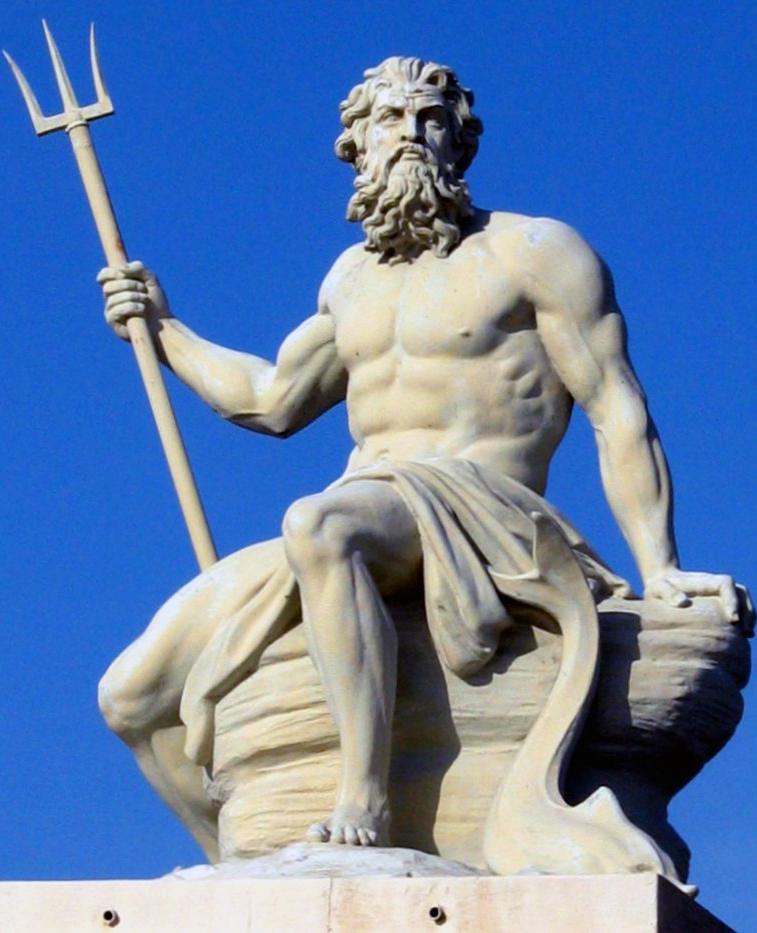
The three points and the path of ascent
Poseidon’s trident expresses divine authority over the depths and the spiritual power that opens the way of ascent. The Temple relates its three points to the piercing of the three granthis, the knots that obstruct the serpent’s movement through the soul. One shaft gathers the threefold force into a single purpose. In Zevism, the trident therefore signifies liberation through directed power: the hidden depths become accessible, the passage clears, and the awakened soul rises toward a fuller consciousness of the Gods. [1][10]
The three knots and the serpent’s passage
The knots belong to the Temple’s account of the obstacles within the energetic structure of the soul. The trident gives their opening a commanding visual form. Its points concentrate power, while its shaft preserves the continuity of the work. The symbol calls the devotee to consider spiritual liberation as an awakening that must reach through the whole being. A single centre cannot fulfil the work of the entire soul; the path must become capable of carrying the ascending force. [1][6]
This is why the trident stands beside the serpent and sacred eye. The serpent supplies the movement of awakening; the trident signifies the opening of its passage; the eye signifies the higher perception that the work reveals. Poseidon’s power acts within the symbolic depths, bringing direction to forces that ordinary consciousness has not yet mastered. Through this sequence, the sacred implement becomes an image of spiritual agency within the soul’s hidden life. [1][7]
The waters of the soul and divine command
The sea is a fitting field for contemplating the soul’s receptive and generative depths. Its surface moves, while its deeper life remains concealed from casual sight. Within the Temple’s spiritual language, the receptive side of the soul is a source of intuition, dreams, and creative power. Poseidon’s trident brings sovereignty into that field. It signifies the capacity to enter the depths with a clear purpose and to bring their power into conscious relationship with the whole. [1]
The spiritual work therefore joins receptivity with will. The devotee becomes capable of receiving what rises from the depths and directing the energy that has been gathered. This accord belongs to inner alchemy: hidden powers awaken, obstacles yield, and consciousness gains a wider field of action. The trident’s threefold form provides a focus for honouring Poseidon as the divine presence within this work. Its authority is the authority of a God who commands profound and living forces.
Poseidon's ancient attribute
The trident is securely present in ancient Greek religious imagery. Homer describes Poseidon taking it in His hands and stirring the sea against Odysseus. In the Library attributed to Apollodorus, the Cyclopes give Zeus His thunderbolt, Hades His helmet, and Poseidon His trident before the Gods overcome the Titans. These passages establish the weapon within the divine division of powers; they do not derive it from a later image of a devil. [2][3]
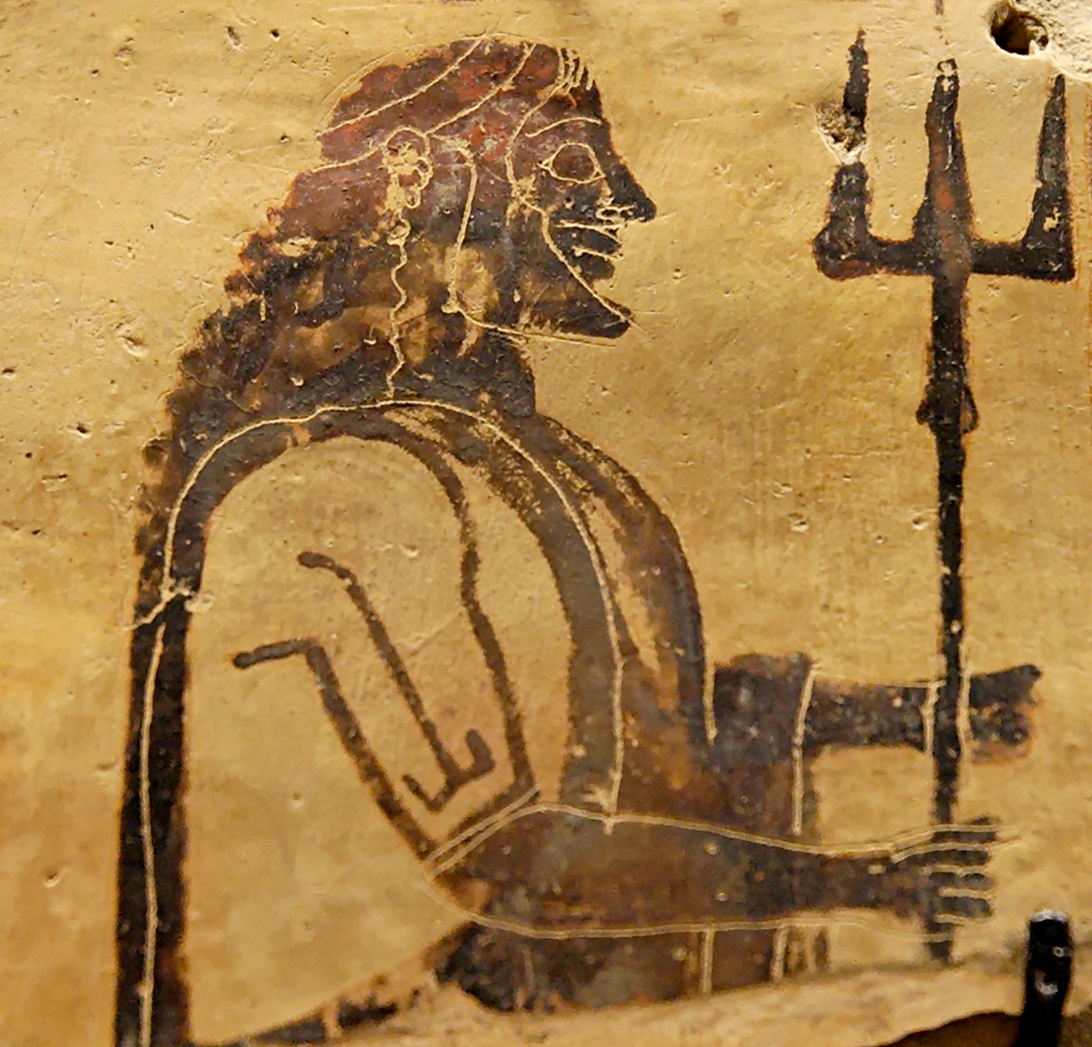
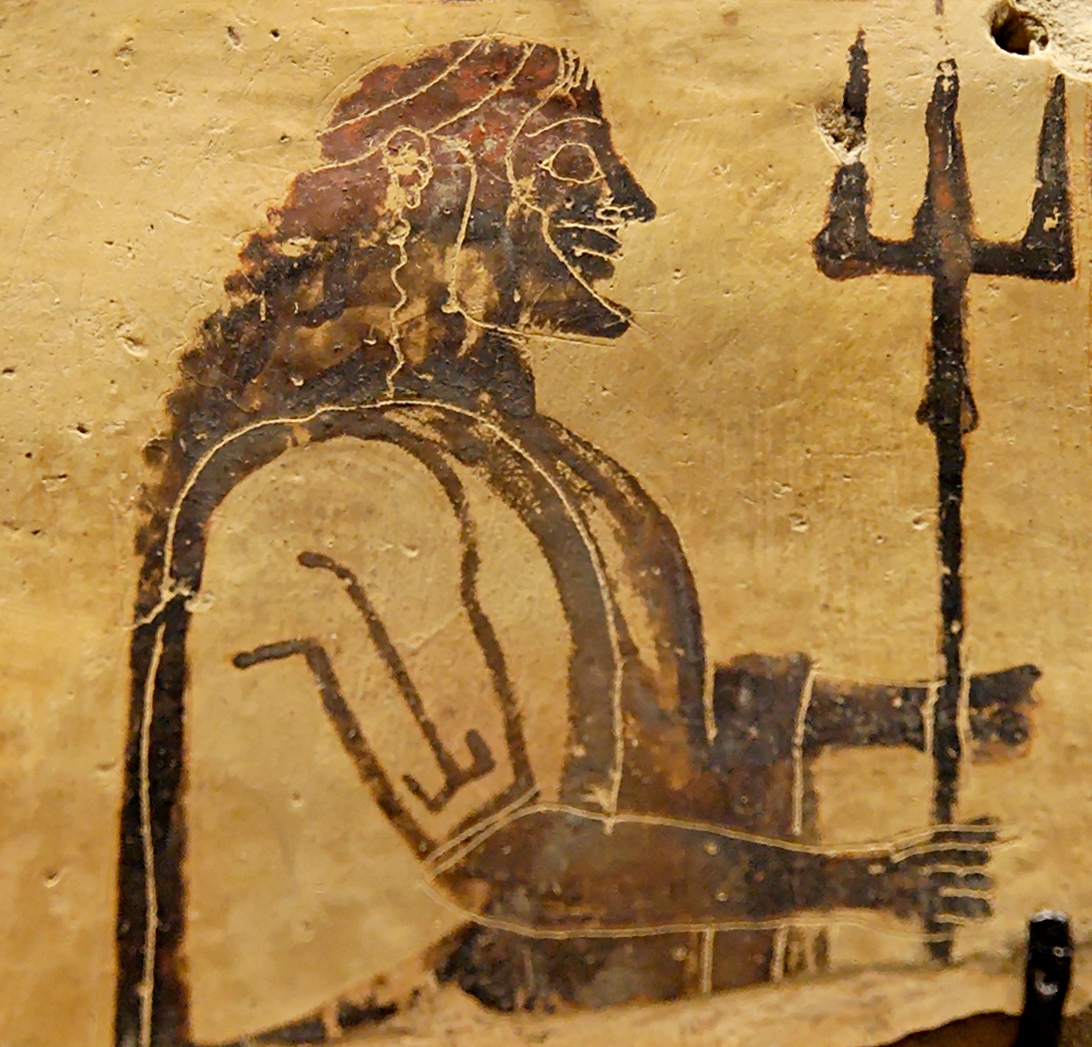
Material evidence accompanies the texts. A Corinthian painted plaque in the Louvre depicts Poseidon holding a three-pronged trident and is dated to approximately 550–525 BCE. This small dedication from Penteskouphia makes the ancient attribute visually explicit. Its value lies in the conjunction of a recognizable God, a distinctive implement, and a datable archaeological object. [4]
The trident and the triśūla
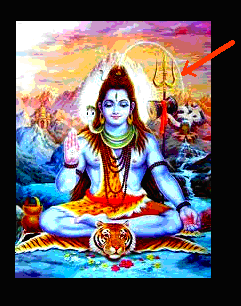
The Temple also relates the threefold form to the Indian triśūla. A Metropolitan Museum relief fragment identifies a three-headed, four-armed figure as Shiva/Oesho and describes the trident He holds. This object supplies a historical witness from the Kushan world, with its own divine and cultural setting. The Greek and Indian forms can be placed beside one another as distinct expressions of a three-pronged sacred implement, enriching the visual field through which its spiritual powers are contemplated. [5]
In the Temple’s inner interpretation, the threefold form signifies the opening of the spiritual knots and the continuity of the serpent’s ascent. The whole soul participates in this work, from its foundation to its higher powers of perception. The shaft represents the sustained passage, while the points concentrate the force that opens the way. Poseidon’s sacred implement gives this liberation a visible form of divine authority. [1]
Power held in order
Poseidon’s implement belongs to a God whose realm is both sustaining and formidable. In spiritual contemplation, the sea reveals depth, movement, and powers greater than the ordinary surface of awareness. The trident brings divine direction into that depth. Its points gather force toward a coherent purpose, and its shaft holds their movement in unity. The devotee honours Poseidon through this image of spiritual command, seeking a soul capable of awakening and rightly directing the powers concealed within it.