
 አማርኛ
አማርኛ العربية
 বাংলা
বাংলা Български
 中文
中文 Čeština
 Dansk
Dansk Deutsch
 Eesti
Eesti Ελληνικά
 Español
 Français
 हिन्दी
 Hrvatski
 IsiZulu
 Italiano
 日本語
日本語 Kiswahili
 Magyar
 Македонски
 नेपाली
 Nederlands
 فارسی
فارسی Polski
 Português
 Română
 Русский
 Slovenščina
 Suomi
Suomi Svenska
 Tagalog
 Türkçe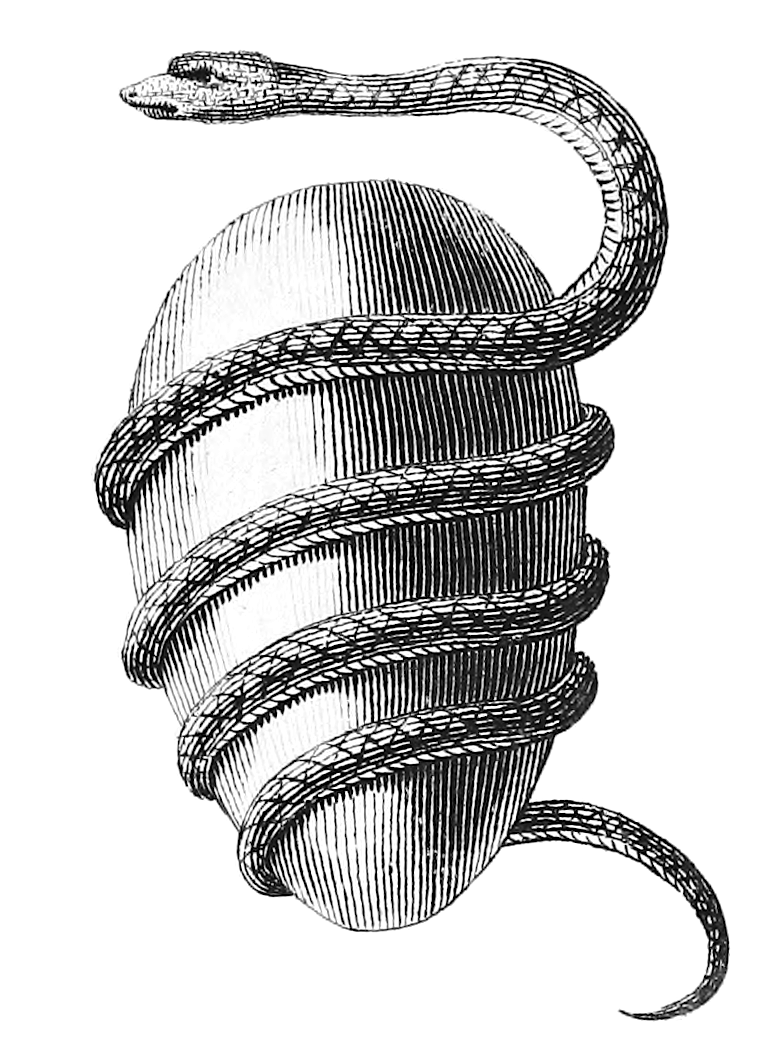

The Divine life concealed within the egg
The Orphic Egg is a sacred image of the power by which hidden life becomes manifest. Within its unbroken form, the many are held together before their unfolding. The God who emerges is Phanes, the radiant First-born: revelation itself taking Divine form. For the Zevist, this is a mystery of both the cosmos and the soul. What the Gods establish in the greater order can be contemplated within the spiritual life of the human being. The egg gathers potential; the serpent animates it; the appearance of light announces its awakening.
The Gods are the living sources of this transformation. Phanes illuminates the mystery of emergence, while the sovereignty of Zeus gathers the manifested order into unity. Their powers have inward correspondences without being exhausted by those correspondences. A God can reveal a power within the soul because Divine being exceeds and sustains the soul. The sacred image therefore directs devotion toward the Gods and directs spiritual attention toward the work Their powers make possible.
The luminous egg and the wholeness of the soul
In the spiritual language of this collection, the egg expresses the soul held within its own luminous enclosure. Its rounded boundary corresponds to the aura: the field in which the powers of the spiritual being are gathered and given coherence. Its interior contains many possibilities within one life. Contemplating the egg calls the practitioner to collect scattered attention, preserve inward strength, and recognize the soul as an ordered whole. This correspondence develops the Temple’s teachings on the luminous soul and its centers of power. [5]
The shell signifies a sacred boundary that serves maturation. A power must be cultivated before it can be expressed with steadiness. The hidden life of the egg is consequently rich with purpose: it is formation, incubation, and the deepening of inward order. Its eventual opening signifies a change in spiritual capacity. The soul can receive more light, sustain greater understanding, and act with a clearer relation between intention and deed. The image joins receptivity with strength, and inward preparation with the freedom to emerge.
The serpent, the third eye, and the birth of inner light
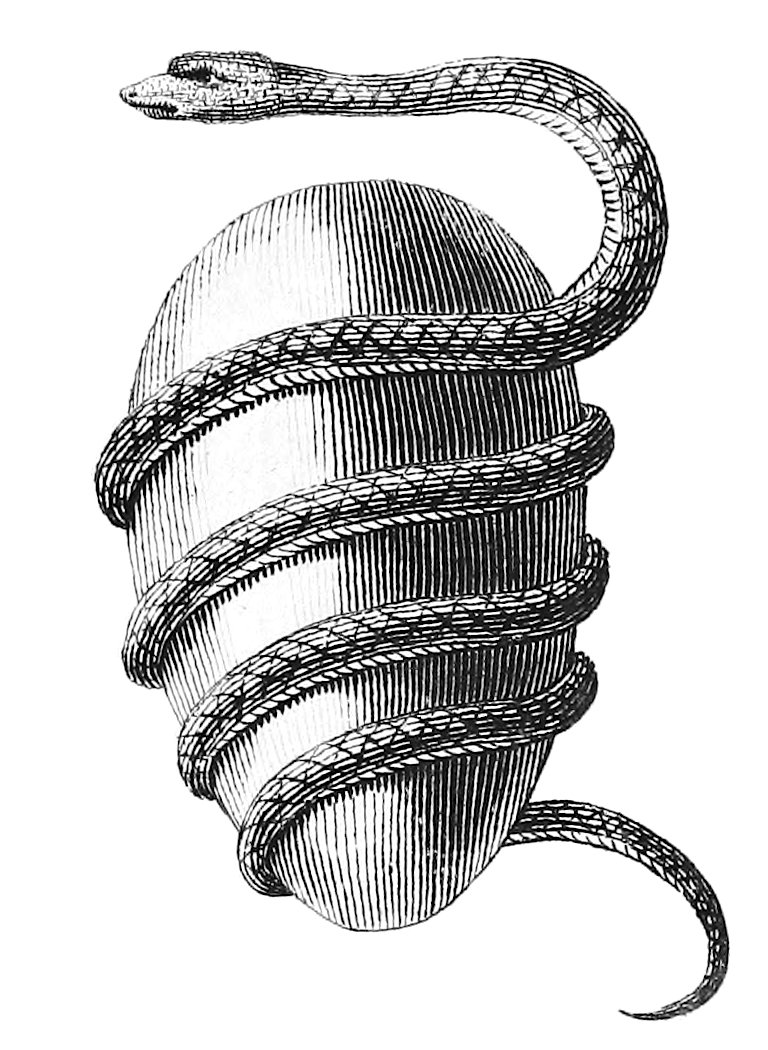
The serpent coiled around the egg gives movement to this gathered wholeness. In Zevist teaching the sacred serpent corresponds to Kundalini, the life power whose ascent through the soul’s centers is associated with awakening. Joined to the egg, it expresses the living force that nourishes spiritual birth. Its coils contain and sustain the form; its upward movement draws contemplation toward the opening of higher awareness. The Temple teaches gradual cultivation of this power through a prepared and ordered spiritual life. [6]
The emergence of Phanes gives this ascent its luminous fulfillment. The third eye and pineal center belong to the Temple’s language of inward perception; the crown belongs to the completion of ascent. In the egg’s spiritual reading, the revealing light of the First-born corresponds to the passage from concealed potential into conscious spiritual sight. The image holds together power and illumination: the serpent stirs life, and the Divine light makes that life aware of its greater purpose. [7]
Here the act of birth is an initiation into greater wholeness. The awakened soul does not discard all that nurtured it; it carries that formation into a wider freedom. The wings of the First-born express this release into a larger order. Meditation upon the egg can therefore gather three related intentions: the preservation of inward coherence, the cultivation of living spiritual power, and receptivity to Divine illumination. These are spiritual correspondences of the emblem within Zevist teaching.
The ancient egg and the first-born God
In Aristophanes’ Birds, performed in 414 BCE, the chorus offers a comic account of cosmic beginnings: Night produces an egg in Erebus, and golden-winged Eros emerges from it. The relevant passage is Birds 693–702. Its dramatic purpose matters. It witnesses a cosmic-egg narrative in classical Greek literature, but its speaker is a comic chorus arguing for the primacy of birds, not a neutral compiler of a single Orphic creed. [1]
The Orphic Hymn to Protogonos invokes the first-born God as egg-born, winged, and radiant, and names Him Phanes. This is Hymn 6 in the usual modern numbering; the linked Thomas Taylor edition labels the same hymn V because its numbering differs. The hymn joins cosmic generation with illumination: the God who brings life into manifestation also dispels obscurity. It therefore supplies a direct ancient devotional source for the relation between the egg, Divine emergence, and sacred light. [2]
Time, cosmic unity, and the serpent’s embrace
Damascius preserves several theogonies associated with Orpheus. In his account of the Rhapsodies, Chronos, Time, precedes Aether and Chaos, and the egg figures as a principle of unity. In the account attributed to Hieronymus and Hellanicus, a winged serpentine power is associated with Time; the egg and the First-born belong to the subsequent unfolding of the cosmos. These accounts give the cosmic egg a place within a sacred understanding of the passage from unity to manifestation. [3]
Chronos, Χρόνος, is Time; Kronos, Κρόνος, names the Titan. Preserving the names clarifies the particular account under discussion. The serpent’s embrace of the egg can be contemplated through the mystery of time: life develops through an ordered sequence, and each stage prepares the conditions for the next. Within the soul, this becomes a teaching of spiritual maturity. The fruit of practice emerges through its own completed formation. Divine awakening has depth, continuity, and an inward season.
The emblem and the work of spiritual becoming
The serpent-wrapped egg illustrated here is James Basire’s engraving for Jacob Bryant’s A New System, or, An Analysis of Ancient Mythology, volume II, plate IV, published in 1774. Its original description associates the serpent and world egg with the Tyrians. Its later circulation as the Orphic Egg belongs to the visual reception of the mystery; the ancient egg-born Phanes is witnessed directly in the Orphic hymn. [4]
The whole form invites sustained contemplation. Consider the egg as the unity of the soul, the serpent as its living power, and Phanes as the Divine revelation toward which that power is cultivated. Bring these meanings together with reverence for the Gods. The symbol then speaks of a life gathered into order and made capable of illumination: the mystery concealed within the soul becoming conscious, radiant, and fruitful.