
 አማርኛ
አማርኛ العربية
 বাংলা
বাংলা Български
 中文
中文 Čeština
 Dansk
Dansk Deutsch
 Eesti
Eesti Ελληνικά
 Español
 Français
 हिन्दी
 Hrvatski
 IsiZulu
 Italiano
 日本語
日本語 Kiswahili
 Magyar
 Македонски
 नेपाली
 Nederlands
 فارسی
فارسی Polski
 Português
 Română
 Русский
 Slovenščina
 Suomi
Suomi Svenska
 Tagalog
 Türkçe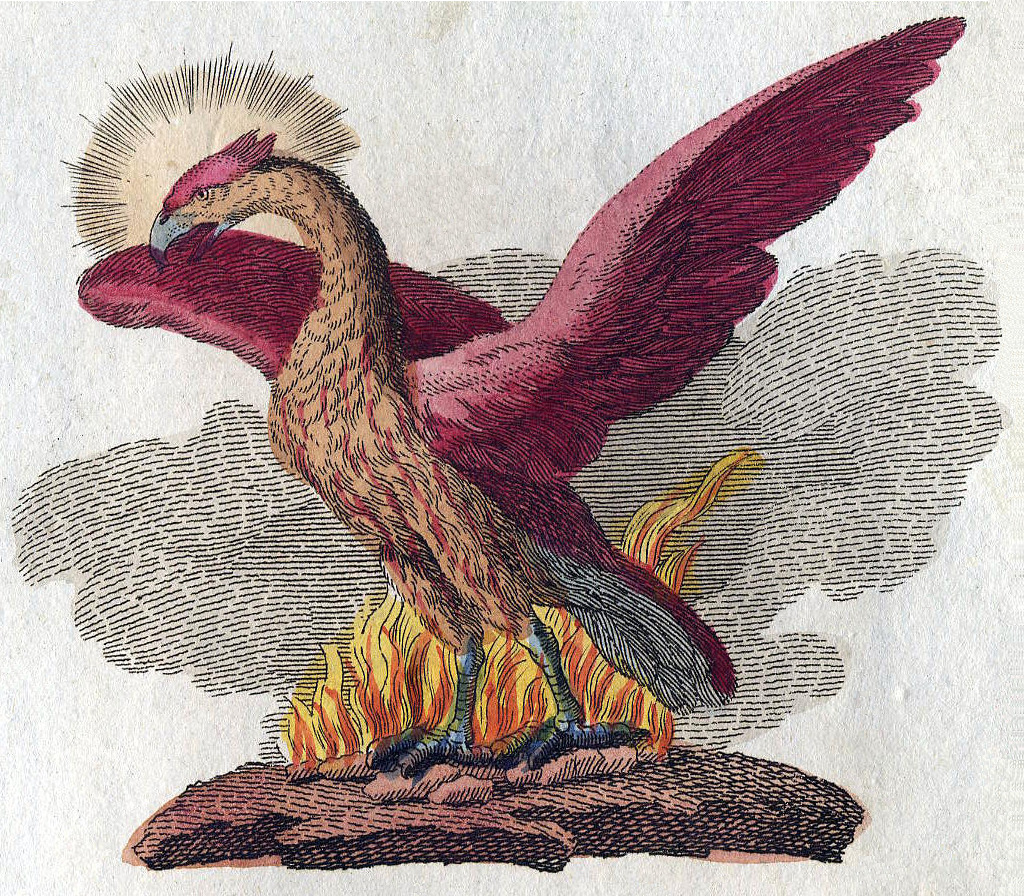

The soul that rises renewed
The phoenix expresses a great mystery of the spiritual path: the capacity of the soul to emerge with renewed life after a former condition has reached its end. Its radiance belongs to transformation brought to fruition. Within Zevist contemplation, the bird directs attention toward the Great Work, through which the soul develops its faculties and approaches a more luminous state of being. The Temple places this transformation at the center of spiritual practice. [1]
The emblem speaks to the practitioner who has completed one stage and must become capable of the next. What was sufficient for an earlier condition may need refinement before a greater responsibility can be received. Regeneration gathers the substance of experience and gives it a higher form. The phoenix therefore joins courage with recollection: the soul advances through what it has understood, preserved, and transformed.
The solar fire of inner alchemy
The fire surrounding the phoenix can be contemplated as the force by which a settled pattern yields to a more luminous organization of the soul. The Temple’s solar teaching associates Manipura with will, Fire, the Sun, and brilliant white-gold light. These correspondences give the emblem an inward center: the work of regeneration requires a will able to hold its purpose through change. [2]
In this sacred reading, the flame consumes the exhausted form while spiritual substance is carried forward. Knowledge becomes clearer; desire acquires direction; the power previously lost in conflict becomes available for creation. The rising bird expresses the integration that follows. Fire and flight are spiritual images here, giving form to purification and ascent. Their fulfillment is a soul more capable of attention, understanding, devotion, and sustained participation in the work of the Gods.
Osiris, Khepri, and the continuity of becoming
The Temple’s teaching of Osiris places resurrection beside silence and initiation; its account of Khepri emphasizes renewed solar emergence and repeated creation. Together, these Divine powers illuminate two moments of regeneration. Osirian stillness gathers and preserves the being. Khepri’s dawn gives renewed form its movement into life. The phoenix can hold both moments within one contemplative image: the completion of a cycle and the beginning that its completion makes possible. [3][4]
The practitioner learns to distinguish fruitful renewal from mere repetition. A new stage should carry greater consciousness of the soul’s purpose. Returning to meditation with steadier attention, restoring a neglected faculty, or bringing a long study into practical expression can each embody this movement. The enduring center is the Divine orientation of the life; the forms through which it acts become more complete.
The Egyptian Bennu and the Greek phoenix
The Egyptian Bennu, also written Benu, and the Greek phoenix must retain their distinct historical forms. The Metropolitan Museum identifies the Bennu as a sacred heron associated with Atum, Re, and Osiris, with creation and renewal among its meanings. Its discussion of scarab 04.2.784 also describes the later Greek assimilation of this bird to the phoenix. The Bennu’s long legs, neck, straight beak, and feathered crest differ from the eagle-like bird described by Herodotus. [5]
In Histories 2.73, Herodotus says he has seen the phoenix only in pictures. He reports a Heliopolitan account of its appearance after five hundred years, its red and golden plumage, and its journey from Arabia carrying its father’s remains enclosed in myrrh to the Sun’s temple. He expresses doubt about that story. His passage does not describe a bird burning and rising from ashes. [6]
Wings, remembrance, and a renewed vocation
For Zevist contemplation, the outspread wings express the soul’s capacity to act from the condition it has attained. Regeneration must become a living faculty. The renewed being carries its light into speech, study, work, and devotion, allowing spiritual understanding to acquire a visible effect in the conduct of life. The wings thus complete the image: transformation receives freedom of movement.
Remembrance also belongs to the emblem. Herodotus’s account, with the young bird carrying its father to a sacred destination, offers a distinct ancient image of continuity between generations. In contemporary spiritual contemplation, this can direct attention toward gratitude for what has sustained the soul and discernment about what should be carried onward. The practitioner preserves the living inheritance while giving the next stage its proper form. [6]
The illustrated phoenix
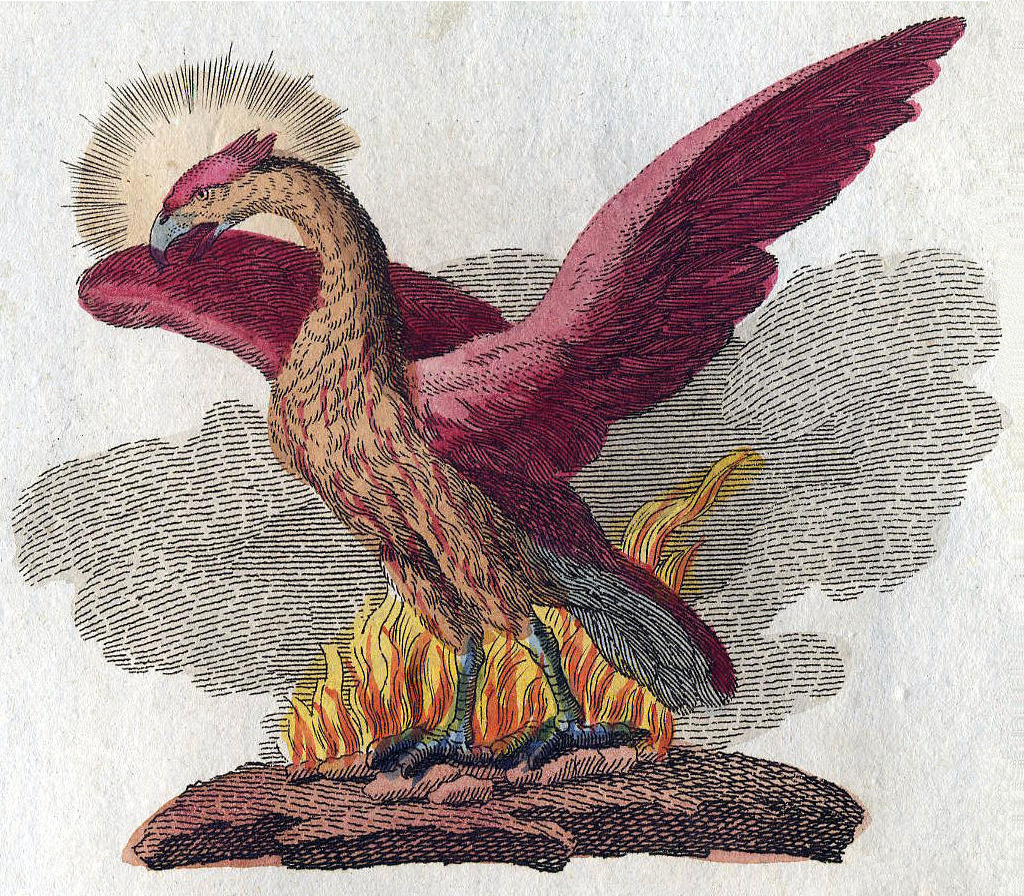
The illustration comes from Friedrich Justin Bertuch’s Bilderbuch für Kinder and is dated 1806 in its image record. It shows a red and golden bird with raised wings, a radiant head, and flames beneath its body. This later European artwork presents the familiar fire-associated phoenix; it is not an ancient Egyptian image of the Bennu or an illustration contemporary with Herodotus. [7]
Its complete, luminous figure gives the chapter a fitting contemplative focus. Within the Temple’s spiritual context, the phoenix speaks of a life repeatedly made more conscious, a will renewed in its Divine purpose, and the soul’s ascent through the work of transformation.