BAHRAM
author: High Priest Zevios Metathronos
co-author: Novice Priest Karnonnos
Hieratic Information about Bahram
| Divine Names |
|---|
| Verethragna (𐬬𐬆𐬭𐬆𐬚𐬭𐬀𐬖𐬥𐬀) | the Avestan name, "the smiting of resistance" |
|---|
| Warahrān (wlhlʾn) | the Zoroastrian Middle Persian form |
|---|
| Bahram (بهرام) | the New Persian name still in use |
|---|
| Dāmōiš Upamana | an Avestan by-name of the same divinity |
|---|
| The name is a neuter noun compounded from vərəθra ("obstacle, resistance") and the root gan ("to smite"), and it is invoked as a divinity in his own hymn, the Bahram Yasht (Yasht 14). In Zoroastrian Middle Persian it is written wlhlʾn and read Warahrān, contracted to Wahrām and thence to the New Persian Bahram.1,5 |
| Divine Symbols |
|---|
- The Golden Sword of the Warrior
- The Sharp-Tusked Boar
- The Bird of Prey (vārəgna) and the Eagle-Crested Helm
- The Golden-Horned Bull and the White Horse
- TheAtash Bahram, the Fire of Victory
|
| Divine Forces |
|---|
- Victory and the Smiting of Resistance
- War and Offensive Might
- Virility and Generative Strength
- Healing and the Making Wonderful
- The Unblocking of the Waters
|
| Avestan Epithets1,2 |
|---|
| amavant- | strong, endowed with attacking might |
|---|
| ahuraδāta- | created by Ahura |
|---|
| barō.xᵛarəna- | bearing the Glory (xᵛarənah) |
|---|
| aršō.kara- | conferring virility |
|---|
| frašō.kara- | making wonderful |
|---|
| Names Across Civilizations1 |
|---|
| Avestan | Verethragna (𐬬𐬆𐬭𐬆𐬚𐬭𐬀𐬖𐬥𐬀) |
|---|
| Middle Persian | Warahrān, Wahrām (𐭥𐭫𐭧𐭫𐭠𐭭) |
|---|
| Parthian | *Warθagn |
|---|
| Sogdian | Wašaγn (Wšγn) |
|---|
| Kushan / Bactrian | Orlagno (ΟΡΛΑΓΝΟ) |
|---|
| Armenian | Vahagn (Վահագն) |
|---|
| Greek | Artagnes (Ἀρτάγνης), identified with Herakles |
|---|
I. The Name
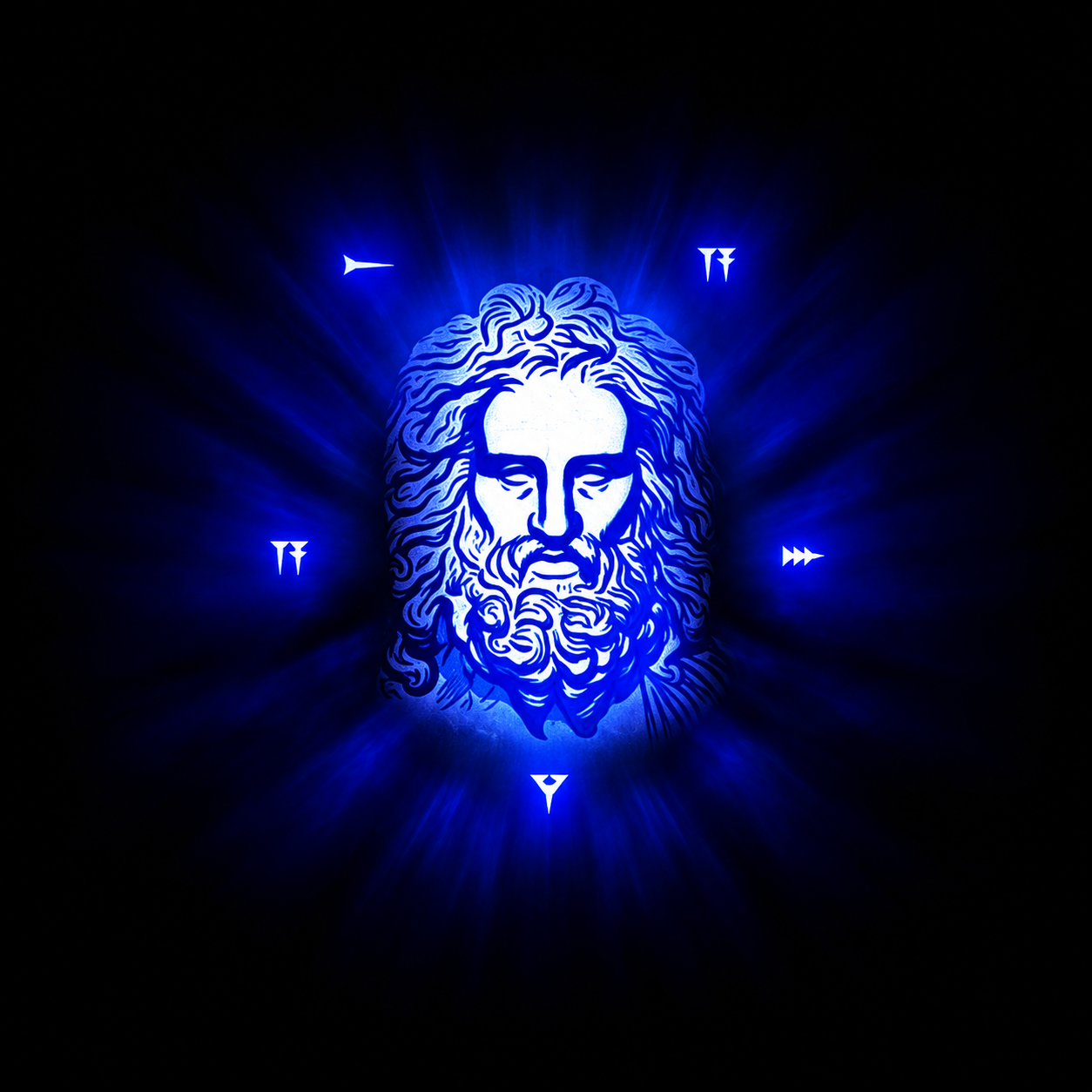
The name tells us the entire god before we are told who he is. Avestan Verethragna (𐬬𐬆𐬭𐬆𐬚𐬭𐬀𐬖𐬥𐬀) is a neuter noun made up of vərəθra (“barrier,” “resistance”) and the verbal root gan (“to conquer”), so it literally says “the conquest of resistance.” Therefore, the name is victory itself as a person. In Middle Persian, the name Warahran was shortened to Wahram and eventually to New Persian Bahram, the name by which the deity continues to live today in spoken Iranian1,2
The Iranian name has a precise equivalent in Indic. Avestan Verethragnan (“victorious”) corresponds to Vedic vṛtrahán (वृत्रहन्, “killer of Vṛtra”), the fixed title of Indra after he broke the serpent that blocked the water, and both come from Proto-Aryan *vṛtraghan. Using this equivalence Émile Benveniste and Louis Renou used in 1934 to argue that there existed a single ancient Indo-Iranian warrior god of the type slaying dragons behind these two names. Paul Thieme agreed with the linguistics of this argument but noted that, although the interpretation of divine names can never be certain, the names were clearly being interpreted as referring to the same warrior god.1,2,3
The equation is correct, however, it must be limited. Benveniste and Renou demonstrated using other evidence that the main act of Verethragna is not the killing of a dragon since he does not have a story about this anywhere in the Avesta, but rather it is the shattering of every barrier or obstacle and especially the opening of the blocked waters (the most holy of the five elements.) Thus, the god of victory is the essence of triumph as such; he is a concept before he is a character.1,2,4
Wherever possible, the name followed where the arms of Iran marched as the Parthians knew it as *Warθagn; the Sogdians knew it as Wašaγn; on the gold of the Kushans it appeared as Orlagno; it entered into Armenian as Vahagn; and the Greeks called it Artagnes and placed it next to Herakles. As well, under the Sasanians the same word referred to Mars (the most elevated level of sacred fire); it also referred to six consecutive kings of kings.1
II. The Bahram Yasht
TThe god has one major hymn and it is very old. The Bahram Yasht, number fourteen of the yahts, is part of the most primitive parts of the Younger Avesta; Arthur Christensen and later Mary Boyce saw much archaic material within its pages as an insight into pre-Zoroastrain thought. James Darmesteter translated it into English for The Sacred Books Of The East in 1883 and separated it into a list of the ten forms taken by Verethragna; a description of the powers given to Zarathuštra through those forms; a description of war magic using the feather of a raven; and finally a final section praising Verethagna.5,6,4
Within the hymn Verethragna is described using superlatives of strength. The heavenly Yazatas call him the strongest among them all for arms (Yt 14.1), the strongest because of his might (Yt 14.13); with a radiating glory (Yt 14.3) and victorious over the enemy (Yt 14.64). In constant warfare he battles against both the Daēvas (the demons) and wicked people (Yt 14.4 & 14.62).5
Not limited to just bloodshed, the same hymn describes him as one who gives virility (Yt 14.29), heals (Yt 14.3), and as making things “wonderful” or frasho kara; his victories spill over into fertility, health, and repairs.1,5
![Bahram]() Bahram
Bahram
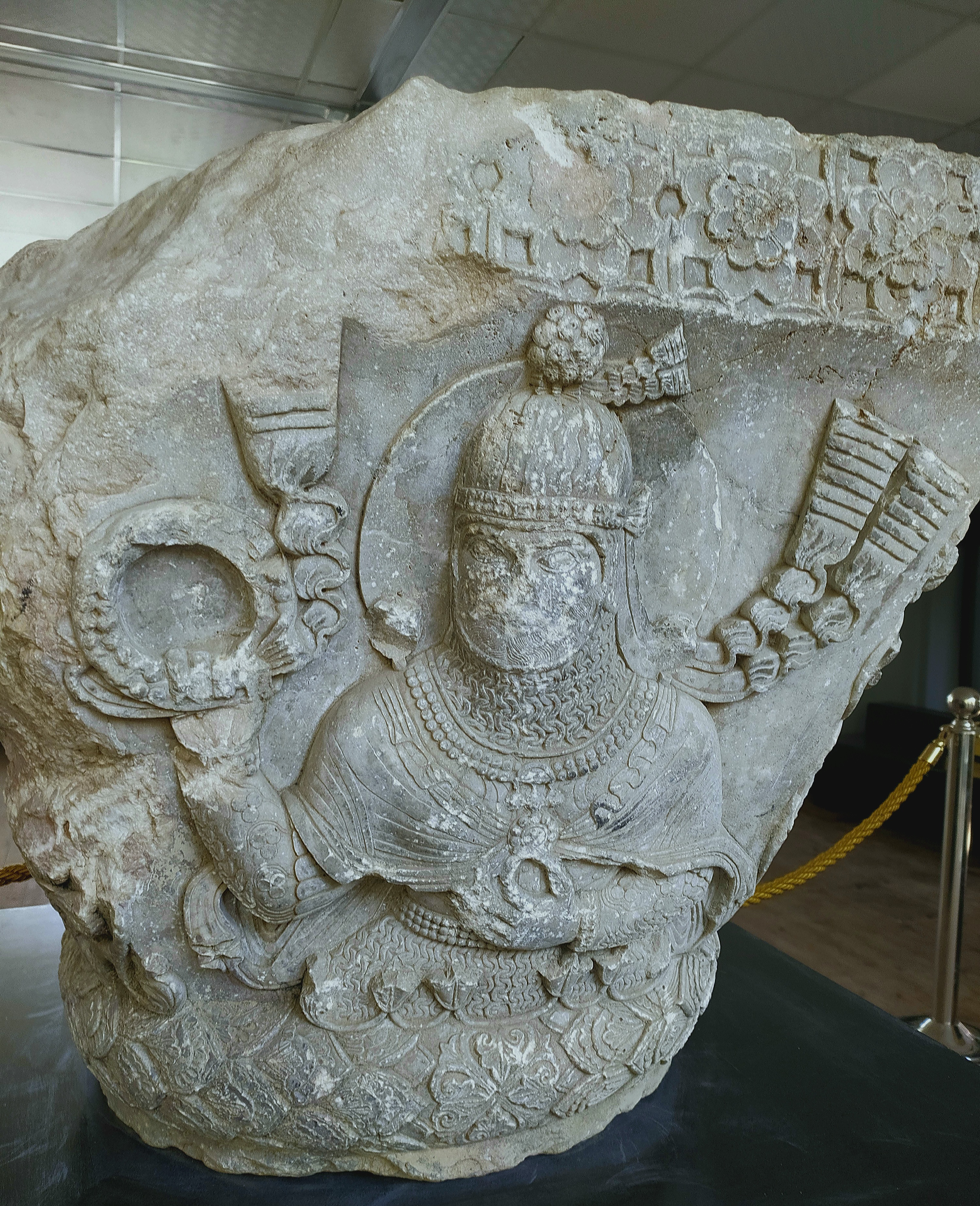
Verethragna as the armed warrior, the tenth incarnation, bearing the golden sword of the Bahram Yasht
The strangest gift of the hymn is a talisman. The feather of the vārəgna, the bird of prey that is the god's seventh form, is prescribed as a charm to be carried into war: rubbed over the body and borne against the foe, it turns aside the weapons of enemies and scatters their host in terror (Yt 14.34–46). Victory, in the oldest hymn, is a thing a man may wear and carry.5
III. The Ten Incarnations
Vividly perhaps the most defining characteristic of the god is that he does not have a set countenance. The Bahram Yasht begins its description of the ten forms or manifestations of Verethragna as they were shown to Zarathushtra, an ascending list of animal, human and elemental powers. It is difficult to find another similar listing anywhere else in the Avesta. Gherardo Gnoli noted that while there is little similarity in detail between this series and those of the Avatars of Vishnu, and those of Indra in later texts, the two share a general familial resemblance, but not borrowings5,1
Two of the forms carry a weight beyond their fellows. The seventh, the bird vārəgna, is also the shape in which the royal Glory, the xᵛarənah, takes flight when it abandons an unworthy king, so that the swiftest of birds is at once the god of victory and the fortune of kingship on the wing. The fifth, the boar, is the god at his most ferocious, and it is in this form that Verethragna runs ahead of Mithra in the Mihr Yasht (Yt 10.70), a passage Ilya Gershevitch set at the centre of his study of that hymn.5,1,7
The boar had the longest afterlife of the ten. Parivash Jamzadeh and, before her, Kurt Erdmann traced the sharp-tusked emblem across Sasanian stucco, silver, textiles, and seals, where it stands for Bahram in his most attacking aspect. The god of victory has no single face because victory itself wears many.8,9
IV. The Fire of Victory
The Atash Bahram, the "Fire of Victory," is the highest of the three grades of Zoroastrian sacred flame, above the Atash Ādarān and the humble Atash Dādgāh, and its founding is the most elaborate rite in the religion. As Mary Boyce described the consecration, sixteen distinct fires are gathered, among them fire from lightning, fire from the hearths, and fire from the furnaces of the trades, each purified in turn before all are united; the labour occupies many priests across the better part of a year. Once enthroned, the victory-fire is tended without pause and may burn for a thousand years and more. It is the sacred fire par excellence.10,11
The Sasanians made Bahram a crown as well as a fire. In their calendrical and astronomical reforms the planet Mars was named for him, the red wanderer given to the god of war, and the twentieth day of every month was already his in the older Zoroastrian calendar (Sīrōza 1.20). To reign under his sign was to reign under victory.1,5
Bahrams emblem's were added to the crown of kings. Jamzadeh demonstrated how the wings of a bird of prey representing Bahram II (who bore a divine name) were used to create a crown for himself and were followed by Perows and Khosrow Parvez, kings whose names translate to "the victorious". The boar became an emblematic symbol of government. Therefore, a major military commander would be referred to as Shahvaraz, "boar of the realm". "8
No name was worn by more kings. Touraj Daryaee counts six kings of kings called Bahram across the Sasanian centuries, from the son of Šāpūr I who ruled briefly in the third century to the rebel general Bahram Čōbīn who seized the throne at the century's end and whose by-name, Mehrbandak, "servant of Mithra," bound him to the god who runs beside Verethragna. In later Persian memory the most beloved of them is Bahram V, Bahram Gūr of the hunt, whose exploits fill the Šāhnāma. To be named Victory was to place a reign beneath the god's stylus of the sword.12
V. Artagnes, Orlagno, and Vahagn
The God of Victory was too valuable to remain restricted to one region. Eastward, as shown on gold coins of Kushan king Kanishka in the second century CE, he appeared as Orlagno (ΟΡΛΑΓΝΟ), a standing warrior wearing an eagle crested helmet. Scholars like John Rosenfeld note that the winged headpiece resembled that of the Glory (farr) of the Kushans, identical to that which flees as his own bird. Similarly to Kanishka, in eastern regions Sogdians called him Washaγn so wherever Iranian languages were spoken, his name spread outside of Iran. 13,1
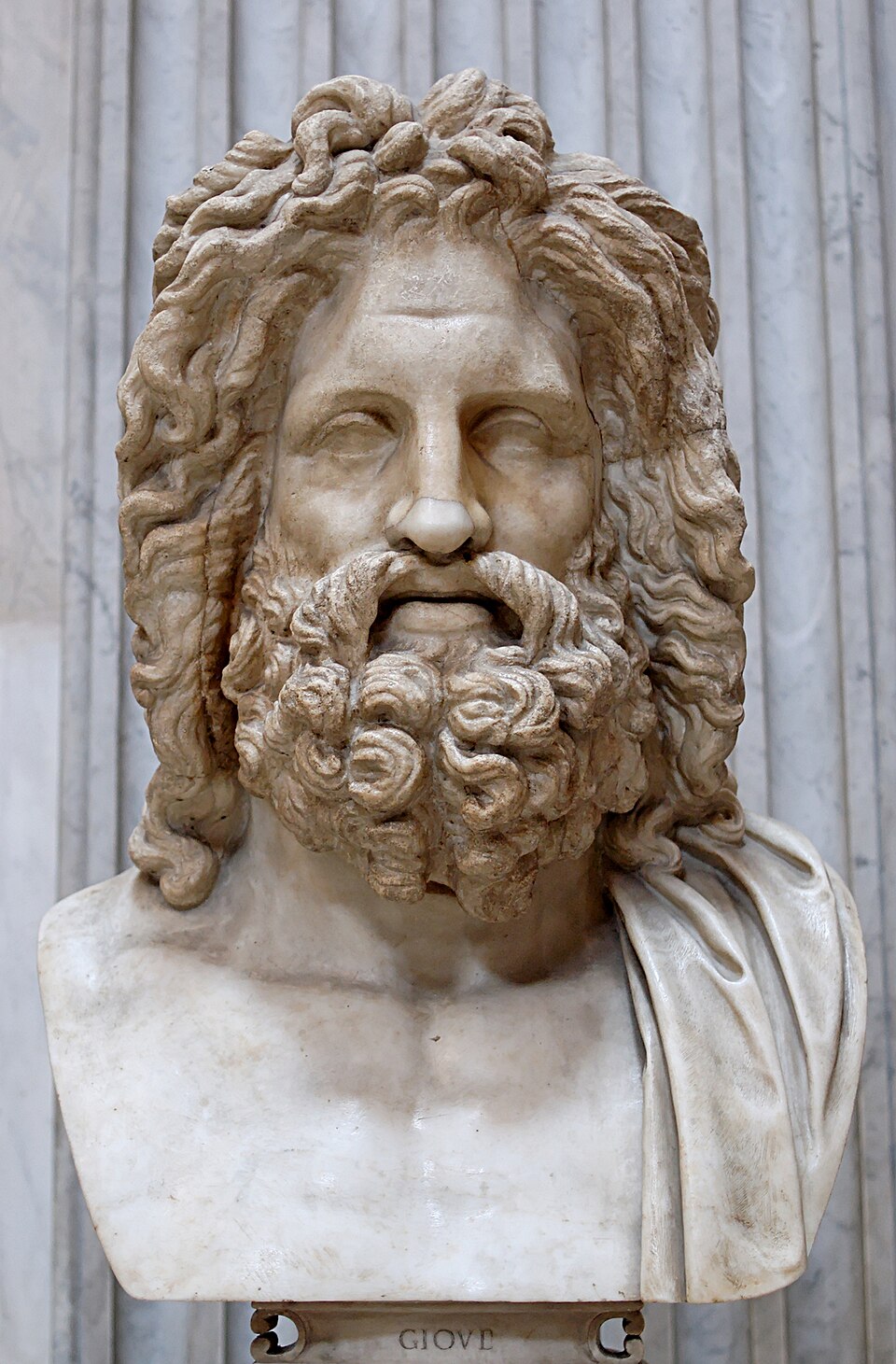
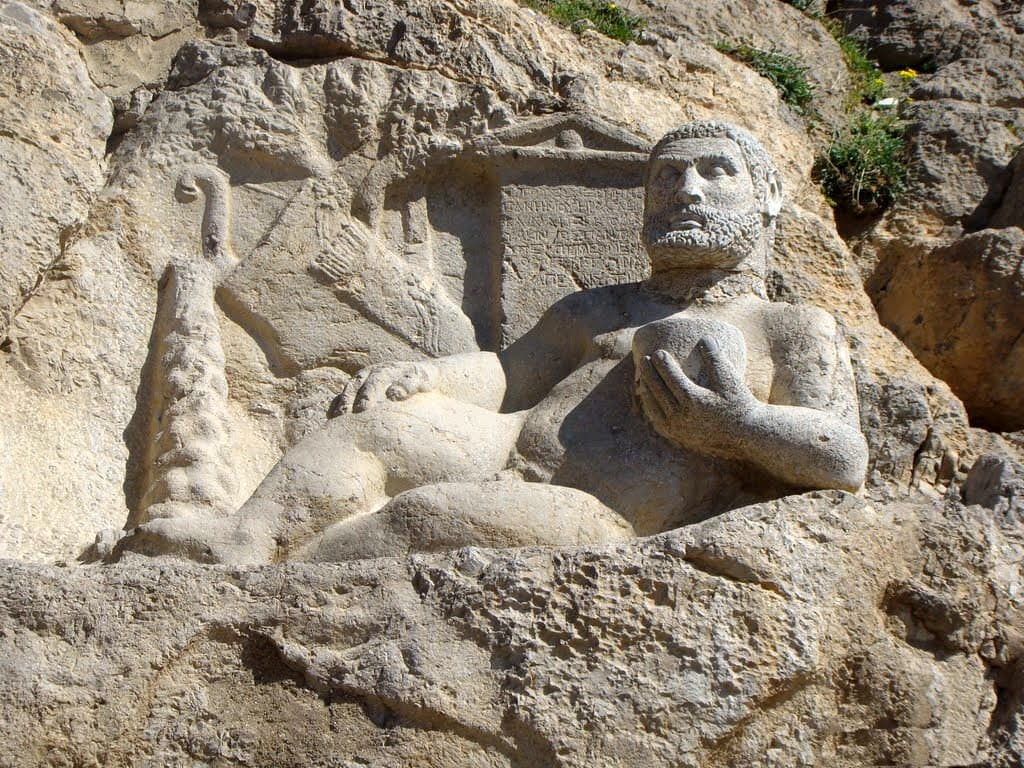
To the west, he merged into the legend of a Hellenistic king. King Antiochus I Theos of Commagene built atop Nemrud Daği a Hierothesion whose colossal sitting gods were endowed with double and triple names like, Zeus-Oromasdes (Ahura Mazda), Apollo-Mithras-Hermes, and Artagnes-Herakles-Ares. Verethragna is of the last identification. The extensive cult law, or nomos, appears inscribed on the backsides of the thrones (OGIS 383. The programmatic unity of the monument was rediscovered through scholarly work by Karl Sester, Otto Puchstein, and archeological work conducted by Theresa Goell.14,15
The four figures of the Hierothesion have been interpreted in different ways. Henrik Samuel Nyberg identified Oromasdes, Mithras, Artagnes and Commagene as aspects of Zurvān, limitless Time, the all-encompassing deity of the Zurvanite heresy. Robert Charles Zaehner rejected such identification. It remains unclear how to interpret the syncretism practiced by Antiochus.16,17
![Bahram]() Bahram
Bahram
The colossal head of Artagnes-Herakles-Ares from the east terrace of Nemrud Dağı, the hierothesion of Antiochus I of Commagene
In Armenia he was especially rooted as the Parthian form of his name developed into Vahagn (Վահագն) (the dragon-reaper Vishapakagh Վիշապաքաղ), a god of fire, war and courage for whom Armenian kings would pray while marching. Vahagn's hymn, recorded by Movses Xorenac'i (5th c.), translated by Vyacheslav Ivanov and Robert Thomson, tells of heavenly and earthly travail and a red reed in the purple sea. From this comes a young man with hair of flames and a beard of fire and eyes of two suns. Vahagn's large temple existed at Ashtishat.18,19
The parallels are tempting, but according to James Russell they need to be carefully evaluated. Vahagn is a native Armenian deity who has taken an Iranian name. He is hardly simply an imported deity carrying foreign garb. Although there are numerous Avestan forms recalling the avataras of Vishnu, none correspond completely.4,18
VI. The Metaphysics of Victory
The god returns, in the end, to the abstract noun that made him. Verethragna is victory hypostatised. Mary Boyce named him precisely so, the hypostasis of triumph who of old enjoyed the greatest popularity of any yazata. The bare noun keeps its own power apart from the person: in the liturgy the vərəθragna is the weapon of the future Saviour, the Saošyant, in his overcoming of all resistance (Yasna 59.1). Victory in this religion is not one event among many; it is the shape of the whole drama.4
The Zoroastrian universe is a struggle between Ahura Mazda, the wise lord, and Angra Mainyu, the destroyer. It is said in this fight Verethragna is fighting on behalf of Asha Vahishta (Best Truth), the force by which order defeats lie. By the time of the later pahlvi texts, Wahram had become an arch-angel and was honored because he drove the adversary back into hell. He is the dynamic of the good creation, the cutting edge of justice.1,4,22
Aristotle interpreted this dualism as a philosophical idea even before the Neoplatonists did. Aristotle identified the two principles of the magi as Oromasdes and Areimanios in his lost work 'Peri Philosophias' (1.8) as reported by Diogenes Laertius. And in the 'Metaphysics', he placed the magi among those who were precursors of Plato. Joseph Bidez and Franz Cumont collected all of the tradition of what they called the "hellenized magi". Plutarch wrote down the clearest description, placing Oromazes as light and Areimanios as darkness in his 'De Iside et Osiride (46-47)', with mithras situated in between both as mediator/μεσίτης.21,20
It must be said plainly that the philosophers reached for Mithra and the two principles, and that Verethragna is nowhere named among them. Yet he is the motion the philosophy leaves implicit. The dualism the Greeks admired is a static frame, two principles facing one another across the world; it becomes a drama only when something smites, and vərəθragna is the ancient name of the smiting. Victory is the verb of the Zoroastrian world.4,20
The Zoroastrian philosophy started to create corruptions, however. The core god that Verethragna came from, Indra, became demonized, a process eventually leading to the demons Royne and Vine.
Sources and Bibliography
- Gnoli, Gherardo. "Bahram (Verethragna) i. In Old and Middle Iranian Texts." In Encyclopædia Iranica, vol. 3, fasc. 5, 510–13. London and New York: Routledge & Kegan Paul, 1989. Online edition, iranicaonline.org.
- Benveniste, Émile, and Louis Renou. Vṛtra et Vṛθragna: Étude de mythologie indo-iranienne. Cahiers de la Société Asiatique 3. Paris: Imprimerie Nationale, 1934.
- Thieme, Paul. "The 'Aryan' Gods of the Mitanni Treaties." Journal of the American Oriental Society 80, no. 4 (1960): 301–17.
- Boyce, Mary. A History of Zoroastrianism, Volume One: The Early Period. Handbuch der Orientalistik I.8.1.2.2A. Leiden: Brill, 1975. See esp. 62–64.
- Darmesteter, James, trans. The Zend-Avesta, Part II: The Sīrōzahs, Yashts, and Nyāyiš. Sacred Books of the East 23. Oxford: Clarendon Press, 1883. (Bahram Yasht = Yt 14; Mihr Yasht = Yt 10; Sīrōza.)
- Christensen, Arthur. Études sur le zoroastrisme de la Perse antique. Det Kgl. Danske Videnskabernes Selskab, Historisk-filologiske Meddelelser 15.2. Copenhagen: Andr. Fred. Høst, 1928. See 7–8.
- Gershevitch, Ilya. The Avestan Hymn to Mithra. University of Cambridge Oriental Publications 4. Cambridge: Cambridge University Press, 1959. (On Yt 10.70, Verethragna as the boar that runs before Mithra.)
- Jamzadeh, Parivash. "Bahram (Verethragna) ii. Representation in Iranian Art." In Encyclopædia Iranica, vol. 3, fasc. 5, 513–22. London and New York: Routledge & Kegan Paul, 1989.
- Erdmann, Kurt. "Eberdarstellung und Ebersymbolik in Iran." Bonner Jahrbücher 147 (1942): 345–83.
- Boyce, Mary. "On the Sacred Fires of the Zoroastrians." Bulletin of the School of Oriental and African Studies 31, no. 1 (1968): 52–68.
- Boyce, Mary. Zoroastrians: Their Religious Beliefs and Practices. Library of Religious Beliefs and Practices. London: Routledge & Kegan Paul, 1979.
- Daryaee, Touraj. Sasanian Persia: The Rise and Fall of an Empire. International Library of Iranian Studies 8. London: I. B. Tauris, 2009.
- Rosenfield, John M. The Dynastic Arts of the Kushans. Berkeley and Los Angeles: University of California Press, 1967. See 92–96 (the god Orlagno on the coinage of Kaniṣka).
- Dittenberger, Wilhelm, ed. Orientis Graeci Inscriptiones Selectae. Vol. 1. Leipzig: S. Hirzel, 1903. No. 383 (the nomos of Antiochus I of Commagene).
- Sanders, Donald H., ed. Nemrud Dağı: The Hierothesion of Antiochus I of Commagene. Results of the American Excavations Directed by Theresa B. Goell. 2 vols. Winona Lake, IN: Eisenbrauns, 1996.
- Nyberg, Henrik Samuel. Die Religionen des alten Iran. Translated by H. H. Schaeder. Mitteilungen der Vorderasiatisch-Ägyptischen Gesellschaft 43. Leipzig: J. C. Hinrichs, 1938. See 117f.
- Zaehner, Robert Charles. Zurvan: A Zoroastrian Dilemma. Oxford: Clarendon Press, 1955.
- Russell, James R. Zoroastrianism in Armenia. Harvard Iranian Series 5. Cambridge, MA: Harvard University Press, 1987.
- Movses Xorenacʿi. History of the Armenians. Translated by Robert W. Thomson. Harvard Armenian Texts and Studies 4. Cambridge, MA: Harvard University Press, 1978. (The birth-song of Vahagn, I.31.)
- Plutarch. Isis and Osiris. Translated by Frank Cole Babbitt. In Moralia, vol. 5, Loeb Classical Library 306, 1–191. Cambridge, MA: Harvard University Press, 1936. (De Iside et Osiride 46–47, 369D–370C.)
- Bidez, Joseph, and Franz Cumont. Les Mages hellénisés: Zoroastre, Ostanès et Hystaspe d'après la tradition grecque. 2 vols. Paris: Les Belles Lettres, 1938.
- Gershevitch, Ilya. "Zoroaster's Own Contribution." Journal of Near Eastern Studies 23, no. 1 (1964): 12–38. (See 15 on the dualist transformation.)